This guide is general education for pet owners. If your pet has urgent symptoms, possible poisoning, injury, breathing trouble, collapse, severe pain, or sudden decline, contact a licensed veterinarian or local emergency service.
Editorial standard
How this guide was prepared
A low-stress trip begins with a go, modify, or postpone decision—not a packing list. The right answer depends on this dog’s current health and coping, the exact route, weather, transport mode, official requirements, lodging, and what the household will do when one part of the plan fails.
Clinical Quick Answer & Immediate Actions
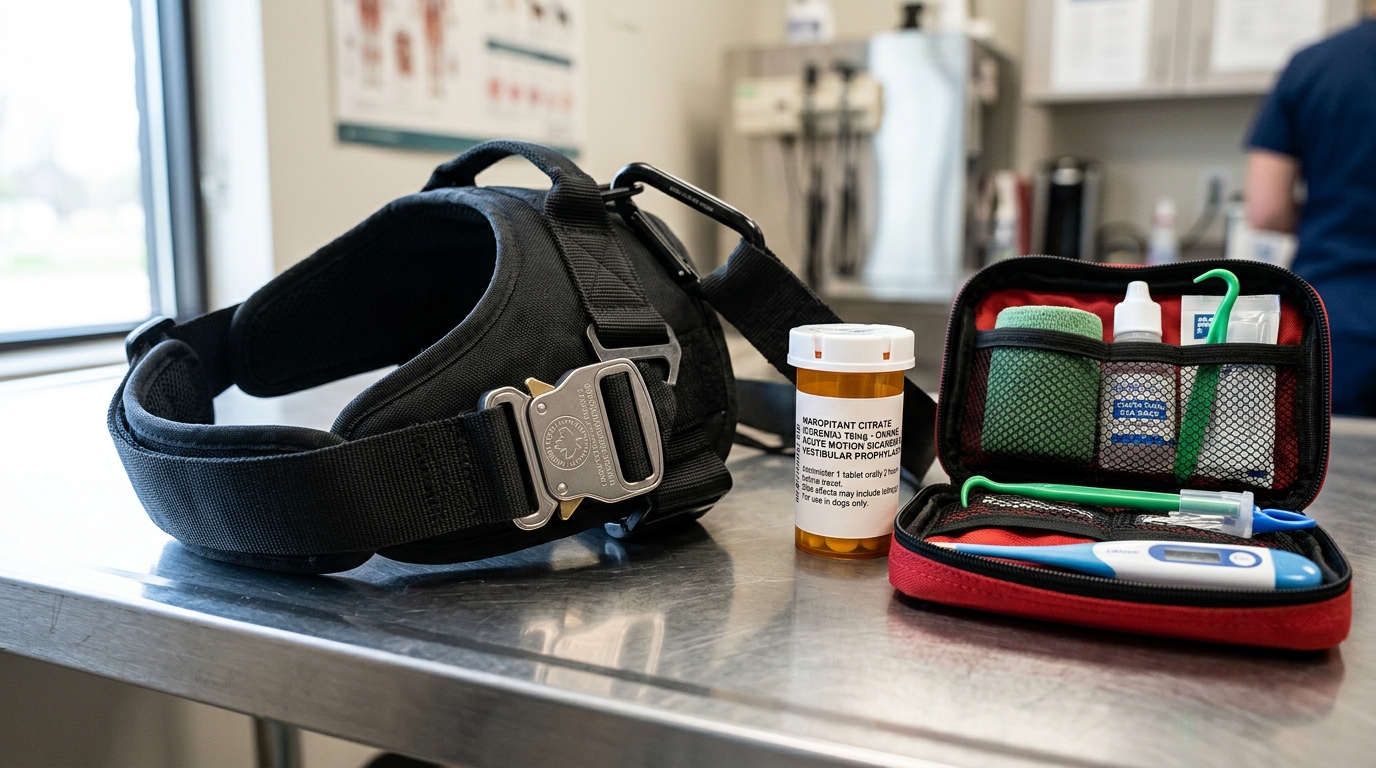
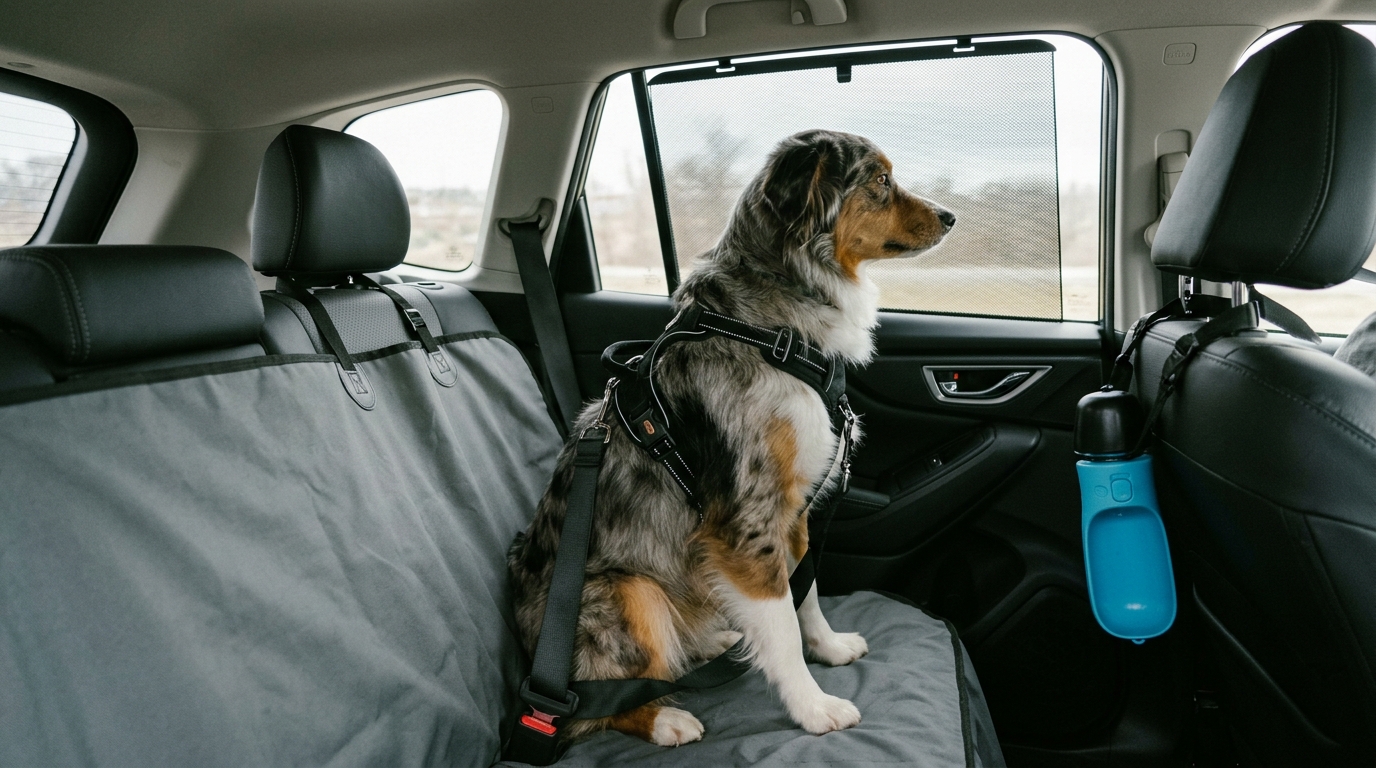
Safe vehicular and air travel with companion canines requires rigorous biomechanical security and physiological preparation. Unrestrained dogs in passenger vehicles present severe clinical risks: during a 30 mph collision, an unrestrained 50-pound dog exerts approximately 1,500 pounds of projectile impact force, causing fatal blunt trauma to occupants and pet. Safe transport mandates using Center for Pet Safety (CPS) crash-tested harnesses anchored directly to vehicle seatbelt webbing or securely strapped travel crates in cargo areas. Physiological travel distress combines vestibular motion sickness (endolymph fluid turbulence causing emetic center trigger in the brainstem) and autonomic anxiety. Targeted veterinary antiemetics (such as maropitant citrate / Cerenia) safely block neurokinin-1 receptors preventing emesis without heavy sedation. Interstate or international travel requires a legal Certificate of Veterinary Inspection (CVI) verifying current rabies vaccination and microchip compliance.
Build the itinerary around the dog rather than forcing the dog through a fixed booking. Commercial operators and destination authorities can change rules, restrict routes, or refuse an animal even when a general travel guide says the trip is possible. Confirm every important condition for the date, dog, and journey.
When to contact a veterinarian about fitness for this trip
Describe the proposed journey to the dog’s veterinarian when health, age, recent treatment, pregnancy, breathing, mobility, pain, medication, motion sickness, or previous travel distress could affect fitness. Ask about duration, altitude, climate, activity, access to care, feeding, medication timing, and any required examination or documentation. A past successful trip does not prove fitness for a different route or life stage.
| Decision | What must be true | Typical response |
|---|---|---|
| Go as planned | The dog is medically fit, can rest in the planned containment, and the route, climate, lodging, records, and backup options are confirmed. | Proceed with rehearsed equipment and scheduled checkpoints. |
| Modify | The dog can travel if the household changes timing, duration, mode, stop frequency, lodging, activity, or caregiver support. | Change the booking before departure and record the new stop conditions. |
| Postpone or arrange other care | Health or welfare is unstable, severe distress is likely, required rules cannot be met, or safe transport and destination containment are unavailable. | Protect the dog rather than the itinerary; use an appropriate home or professional care plan. |
Do not first trial a prescribed travel medication, supplement, or new containment setup on departure day. Follow the veterinarian’s timing and observation instructions in a familiar setting, and report an unsuccessful trial before assuming a higher dose or another product is appropriate.
Verify official rules for the exact route and return
Work backward from the destination authority, return authority, every transit country or jurisdiction, the commercial operator, and the issuing veterinarian. USDA APHIS emphasizes that requirements depend on destination and that owners must identify the destination’s rules. Possible steps include microchip timing, rabies records, laboratory tests, parasite treatment, permits, government endorsement, certificates, designated entry points, or quarantine.
Record the authority page, requirement, deadline, appointment, document owner, and recheck date. Verify the return journey separately; a dog admitted at the destination may still need different evidence to come home. Do not rely on an old “pet passport” article, another traveler’s experience, or a clinic appointment that has not been matched to the current route.
For air, rail, ferry, bus, or commercial pet transport, obtain the operator’s current written rules for the booked service. Air acceptance, cabin or hold access, carrier dimensions, breed or temperature restrictions, transfers, seasonal embargoes, and handling vary by carrier and route. This article cannot promise that an air option exists or judge it safe for an individual dog.
Match restraint and containment to the mode
Define the job before choosing equipment: prevent driver distraction, prevent escape at doors and stops, remain attached at the intended vehicle point, allow the dog to rest, and preserve ventilation. A walking harness is not automatically a vehicle restraint, and a crate or carrier is not automatically approved for every commercial operator. Follow the equipment maker, vehicle maker, local law, and operator rather than transferring a claim from one use to another.
Inspect seams, latches, doors, straps, anchors, ventilation, fit, and any removable parts before each travel day. Practice attaching the restraint while the vehicle is stationary. Place identification where it remains readable without blocking airflow. Keep a lead attached or ready according to the loading plan, but do not create an entanglement hazard inside containment.
Write the opening sequence for each transition: which doors remain closed, who attaches the lead, who opens containment, and where the second barrier is. Busy fuel stops, terminals, parking areas, and lodging corridors turn a small handoff error into an escape.
Design a heat-safe route, not just a cool departure
Check forecast, humidity, direct sun, road delays, parking, surface temperature, border queues, terminal access, and whether climate control reaches the dog’s actual position. Schedule cooler periods and identify indoor or shaded alternatives before the route. Never make an unattended parked vehicle the ordinary waiting plan; an engine, battery, timer, connection, or air-conditioning system can fail.
Carry drinking water and a usable bowl, but do not assume a water bottle compensates for unsafe heat. Pre-cool a vehicle, prevent direct sun without blocking ventilation, and keep the travel area free of luggage that restricts airflow. At planned stops, reassess comfort, alertness, movement, and ability to settle. If the environment or dog no longer fits the plan, use the authorized diversion instead of racing toward the destination.
Weather changes can invalidate a route that looked acceptable when booked. Give one person authority to postpone, change stops, or choose alternative lodging without seeking group consensus while the dog waits in a worsening environment.
Train the journey as separate, reversible steps
Rehearse approach, voluntary entry, a brief closed door or attached restraint, resting in a stationary vehicle, engine sound, a very short movement, unloading, and recovery at home. Advance one variable at a time. The useful measure is whether the dog can settle and recover, not merely whether the dog stayed physically contained.
Use familiar rewards and short sessions. Stop before panic, frantic escape attempts, self-injury, repeated vomiting, or an inability to recover becomes a rehearsal. A veterinarian can address motion sickness or medication questions, while a qualified reward-based professional can help redesign gradual travel training. Severe distress is a reason to change the travel plan, not proof that the dog needs a longer forced exposure.
Include the actual caregivers and equipment. A dog that enters a crate for one person at home may still need practice with the loading surface, lift, station noise, vehicle door, or hotel corridor that the trip will introduce.
Protect food, water, and medication continuity
Pack the dog’s familiar diet for the planned trip plus a realistic disruption reserve. Keep labels and lot information, use clean individual bowls, and avoid a last-minute food change. Decide where food will remain dry and temperature appropriate, and how waste and used bowls will be separated from food supplies. CDC travel guidance supports planning food, water, medicines, records, and waste hygiene.
Keep prescription medication in original labeled packaging with storage instructions and enough authorized supply. Ask the prescribing clinic how to handle time-zone changes, travel-day meals, a missed or vomited dose, refrigeration, and a delayed return. Do not improvise a schedule or put essential medicine where it becomes inaccessible during transit.
Use a small travel-day pouch for scheduled doses and a separate reserve. Assign one person to log administration so a second caregiver does not repeat it. Put refrigerated and daily-use items on a final grab list rather than pretending they can remain packed for weeks.
Choose lodging for containment and recovery
Confirm species, number, size or breed rules, fees, unattended-dog policy, housekeeping access, relief areas, stairs or lifts, and current emergency procedures directly with the property. “Pet friendly” does not describe whether the room and service routine work for this dog.
Before release, inspect the room’s doors, connecting doors, windows, balcony, gaps, bins, food, cleaners, cords, folding furniture, and places where a lead or tag could catch. Establish a two-barrier routine for deliveries and housekeeping. Keep the dog contained or attached before an exterior or corridor door opens.
Protect normal rest, toilet, food, water, and medication before adding sightseeing. RSPCA guidance notes that travel and environmental change can be stressful and that the dog’s age, health, and holiday plan matter. A quiet inspected zone and familiar bedding are more useful on arrival than immediate greetings or a full-property tour.
Keep identity, records, and handoffs usable offline
Carry current microchip and registry details, visible travel contact identification, recent photographs, vaccination and health documents required for the route, prescriptions, insurance information, regular and destination veterinary contacts, booking records, and a brief handling note. Keep paper and digital copies in separate places.
Create a one-page handoff for another caregiver: dog’s identity, destination, route, restraint sequence, food, medication, toilet routine, known handling risks, owner and backup contacts, veterinarian, and who can authorize a diversion or veterinary visit. Protect sensitive full records rather than displaying them outside the carrier or vehicle.
Update identification for the travel location when appropriate. Confirm the microchip registry before departure; carrying the number is not useful when the associated contact is obsolete.
Pre-authorize the response to predictable disruptions
Name the decision maker, spending authority, and backup for route closure, vehicle breakdown, lost document, rejected certificate, lodging cancellation, containment damage, caregiver delay, dog distress, or an extended return. Store roadside, operator, authority, clinic, lodging, and out-of-area contacts offline.
| Disruption | Pre-authorized choice |
|---|---|
| Heat, traffic, or service delay | Move to the identified indoor or climate-controlled stop, change departure, or use backup lodging. |
| Document rejected | Do not pressure staff or continue unlawfully; contact the issuing clinic and authority and use the rebooking plan. |
| Containment damaged | Keep the dog behind the secure secondary barrier and use the identified replacement source; do not improvise a structure that blocks ventilation or releases a latch. |
| Dog cannot continue comfortably | Stop the itinerary and contact the veterinary or local care resource already listed for the route. |
Pair the trip supplies with the go, shelter-in-place, and daily-grab emergency kit plan, but tailor quantities to the route. The travel plan decides when to divert; the kit only makes that choice easier to execute.
Treat arrival as a decompression phase
Use the planned toilet area, offer water, and move into the inspected quiet zone. Keep the first period simple: familiar bedding, ordinary food and medication schedule, minimal greetings, no off-lead experiment, and no immediate meeting with unfamiliar dogs. Confirm that exterior doors and gates follow the written barrier routine.
Watch whether the dog can drink, eliminate, rest, and engage in the familiar routine without pushing for tourism. Reduce demands after a difficult journey. If the dog cannot settle or continue the ordinary plan, contact the veterinary or professional resource chosen before the trip rather than adding uncontrolled exposure.
Review the next trip after returning home
Clean and inspect restraint and containment, rotate food and water, reconcile medication, save final documents, and update contacts. Record which forecast, stop, rule, handoff, lodging feature, or training step failed and whether the dog recovered readily after each travel segment.
Use that record to decide whether the next trip should repeat, shorten, change mode, change lodging, add preparation, or not include the dog. Contact the veterinarian about a health change during or after travel and provide the destinations, animal contact, foods, medication timing, and relevant records. The post-trip review improves the next decision; it is not a generic requirement to monitor every dog for a fixed number of days.
Road Trip Safety: Safe rest stop potty breaks depend on reliable leash control in unfamiliar environments; practice our leash walking training steps before heading out on long trips.
Clinical Practice Tool: Moving With Pets Checklist
Plan interstate car safety, packing supplies, and pet travel logistics with our complete printable Moving With Pets Checklist. Download and print your copy of the Moving With Pets Checklist, or explore all practical pet care guides in the NewsPet Resource Center.
Frequently Asked Questions
How should dogs be restrained inside a motor vehicle for crash safety?
Secure dogs using a crash-tested safety harness anchored to vehicle seatbelt systems or inside a crash-certified transport crate secured in the cargo or back seat area. Never allow dogs to ride unrestrained or in open truck beds.
What medical supplies should be packed for long car trips with a pet?
Pack printed rabies and vaccination records, a 7-day surplus of daily medications, portable collapsible water bowls, bottled water, a pet first-aid kit, and proof of microchip registration.
How can car sickness and nausea be managed in traveling dogs?
Withhold meals for 3 to 4 hours prior to departure, maintain good cabin ventilation, keep the dog forward-facing, and ask your veterinarian about non-sedating antiemetic medications like maropitant citrate.
Sources
Sources checked: September 8, 2026.
- USDA APHIS: Pet Travel
- CDC: Traveling With Pets
- RSPCA: Taking Your Pet on Holiday
- AVMA: Traveling with Your Pet FAQ
- AAHA: Traveling with Pets Safely
Emergency Triage Matrix: Clinical Presentation & Required Response
| Triage Level | Clinical Signs & Presentation | Immediate Action Protocol |
|---|---|---|
| Tier 1: Immediate Emergency (0–2 Hours) | Dog exhibiting severe vehicular heatstroke: rectal temperature >104.5°F, heavy glassy-eyed panting, thick ropy drool, brick red or purple gums, vomiting, or collapse after being in a parked vehicle; or traumatic impact injury following vehicular accident. | Immediate emergency veterinary transport; begin active evaporative cooling with cool (not ice) water and vehicle air conditioning, and announce critical hyperthermic shock intake immediately upon arrival. |
| Tier 2: Urgent Veterinary Care (Same-Day) | Dog experiences intractable vomiting, severe trembling, panicky hyperventilation, or diarrhea at rest stops during a road trip, with inability to retain water. | Locate an emergency or urgent veterinary hospital along your travel corridor; administer injectable antiemetics, assess hydration status, and obtain veterinary travel medication. |
| Tier 3: Home Monitoring & Scheduled Care | Dog displays mild pacing, occasional drooling, or soft whining during highway transit, but drinks water normally at rest stops and recovers immediately upon exiting the vehicle. | Consult your primary veterinarian for pre-travel maropitant antiemetic prescription; execute gradual vehicle desensitization with short 5-minute positive practice rides. |
Rule S1 Boundaries & Canine Travel Safety Rules
Vehicular transport requires strict adherence to physical and physiological safety boundaries:
- NEVER leave a dog unattended inside a parked vehicle in warm weather: Even on a mild 70°F day with cracked windows, interior vehicle cabin temperatures skyrocket to 100°F within 10 minutes and 120°F within 30 minutes, causing fatal heatstroke and brain death.
- NEVER allow a dog to travel with their head extended out an open window: Airborne debris, gravel, and insects strike corneas at highway speeds, causing severe corneal ulcerations, globe lacerations, and middle ear trauma.
- NEVER attach a vehicle seatbelt tether directly to a neck collar: Sudden deceleration or collision transfers immense force directly to the cervical vertebrae and trachea, causing severe tracheal collapse, neck fractures, and asphyxiation; use crash-tested chest harnesses only.
- NEVER administer human motion sickness or sedative medications without prescription: Human antihistamines and tranquilizers cause unpredictable paradoxical excitement, severe hypothermia, cardiovascular arrhythmias, and respiratory failure in dogs.
Caregiver Canine Travel Safety & Road Trip Checklist
- Secure your dog using a certified crash-tested harness (anchored to seatbelt latch) or a secured metal/heavy-duty plastic crate in the vehicle cargo area.
- Administer veterinary-prescribed maropitant antiemetic tablets 2 hours prior to travel with a small piece of food to block motion sickness.
- Pack a comprehensive canine travel emergency kit: pet first-aid supplies, 48 hours of bottled water, collapsible silicone bowls, and prescription medications.
- Carry laminated paper copies of your dog’s current Rabies Vaccination Certificate and legal Certificate of Veterinary Inspection (CVI).
- Plan highway rest stops every 2.5 to 3 hours in well-lit designated relief areas; keep your dog double-leashed to prevent bolting near traffic.
- Ensure your dog wears a well-fitted collar with an engraved metal ID tag featuring your active mobile phone number and microchip contact details.
Related Clinical Guides & Tools
Peer-Reviewed Clinical References & Evidence Grounding
- NCBI PubMed (PMID: 9170629) — Canine communication (Vet Clin North Am Small Anim Pract, 1997) (opens in new tab) (Peer-reviewed veterinary clinical study indexed in NCBI PubMed (Vet Clin North Am Small Anim Pract, 1997).)
- NCBI PubMed (PMID: 36906713) — Acute and chronic stress alter behavioral laterality in dogs (Sci Rep, 2023) (opens in new tab) (Peer-reviewed veterinary clinical study indexed in NCBI PubMed (Sci Rep, 2023).)
- NCBI PubMed (PMID: 39594538) — Oxidative Stress in Canine Diseases: A Comprehensive Review (Antioxidants (Basel), 2024) (opens in new tab) (Peer-reviewed veterinary clinical study indexed in NCBI PubMed (Antioxidants (Basel), 2024).)
- AVMA: Traveling Safely With Your Pet — Restraint, Acclimation, and Clinical Readiness (opens in new tab) (Verified clinical reference retrieved via Antigravity Ground-Truth Search (avma.org).)
Printable tools
Download the matching worksheet
Source transparency
Reference mix for this guide
Source labels describe the type of organization behind each reference; they are not a claim that any outside organization reviewed this article.
- USDA APHIS: Pet Travel Government or public agency · aphis.usda.gov
- CDC: Traveling With Pets Government or public agency · cdc.gov
- RSPCA: Taking Your Pet on Holiday Reference source · rspca.org.uk
- AVMA: Traveling with Your Pet FAQ Veterinary organization · avma.org
- AAHA: Traveling with Pets Safely Veterinary organization · aaha.org
- Puppy Socialization Without Overwhelm: A Vet-Safe Reference source · newspet.net
- Dog Body Language Chart: 9 Stress Signs Before a B Reference source · newspet.net
- Reward-Based Dog Training: Force-Free Steps & Reference source · newspet.net