
Health and Safety Boundary
Jump to Emergency Red Flags ↓
This guide is general education for pet owners. If your pet has urgent symptoms, possible poisoning, injury, breathing trouble, collapse, severe pain, or sudden decline, contact a licensed veterinarian or local emergency service.
Editorial standard
How this guide was prepared
Edited for decisions
NewsPet guides are structured around practical owner choices, tradeoffs, and safety boundaries.
Source policy
Sources are listed when a guide relies on outside references.
Veterinary boundary
This article does not diagnose or prescribe; urgent symptoms need veterinary care.
Corrections
Readers can flag unclear, outdated, or inaccurate information through our contact page.
Phenobarbital for Pets: Seizure Control & Liver Triage
Clinical Classification & Indications
- Drug Class: Barbiturate Anticonvulsant (GABA-A Receptor Modulator)
- Approved Uses: First-line chronic management of idiopathic epilepsy and recurrent focal or generalized tonic-clonic seizures in dogs and cats.
Mechanism of Action (Pharmacodynamics)
Enhances GABA-mediated neuro-inhibition by prolonging the opening time of chloride ionophores at the GABA-A receptor complex, stabilizing excitable neuronal membranes and elevating the seizure threshold.
Adverse Reactions & Side Effect Profile
Common / Expected Side Effects
Profound transient ataxia and sedation during the first 2-3 weeks of therapy; polyuria, polydipsia, and intense polyphagia (extreme hunger).
Emergency Red Flag Reactions
Acute hepatotoxicity: jaundice, persistent vomiting, ascites; bone marrow dyscrasia (leukopenia/thrombocytopenia); breakthrough status epilepticus.

Clinical Contraindications & Interactions
- Do Not Use In: Pre-existing severe hepatic dysfunction. Concurrent use with medications metabolized heavily by hepatic cytochrome P450 enzymes (phenobarbital is a potent CYP inducer).
Strict Rule S1 Veterinary Prescription Directive
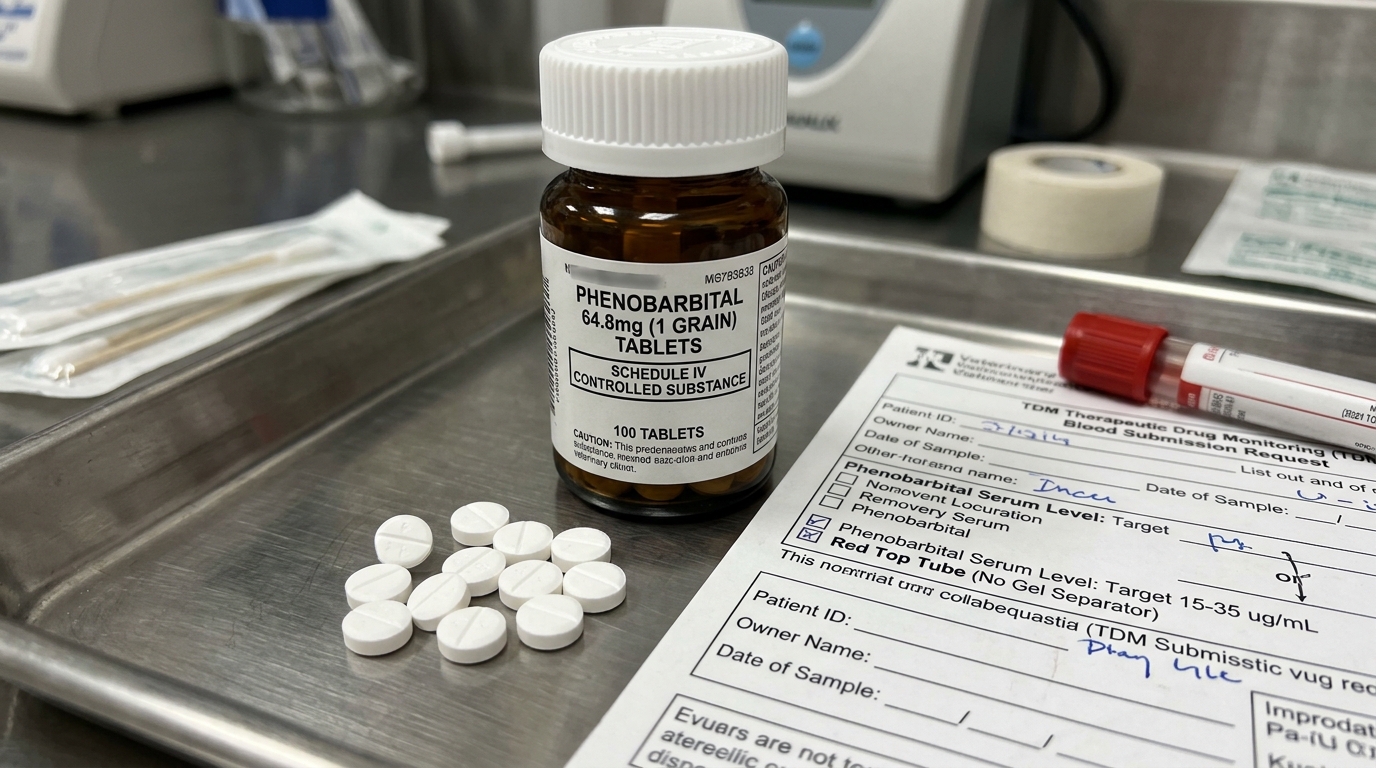
VETERINARY DIRECTIVE: NEVER stop giving phenobarbital abruptly; sudden cessation triggers catastrophic, life-threatening rebound status epilepticus. Therapeutic Drug Monitoring (TDM) serum blood tests are mandatory at 2 weeks, 6 weeks, and every 6 months thereafter. Never administer human pharmaceutical products or adjust dosages without direct examination and bloodwork by a licensed Doctor of Veterinary Medicine (DVM).
Printable tools