Health and Safety Boundary
Jump to Emergency Red Flags ↓
This guide is general education for pet owners. If your pet has urgent symptoms, possible poisoning, injury, breathing trouble, collapse, severe pain, or sudden decline, contact a licensed veterinarian or local emergency service.
Editorial standard
How this guide was prepared
Edited for decisions
NewsPet guides are structured around practical owner choices, tradeoffs, and safety boundaries.
Source policy
Sources are listed when a guide relies on outside references.
Veterinary boundary
This article does not diagnose or prescribe; urgent symptoms need veterinary care.
Corrections
Readers can flag unclear, outdated, or inaccurate information through our contact page.
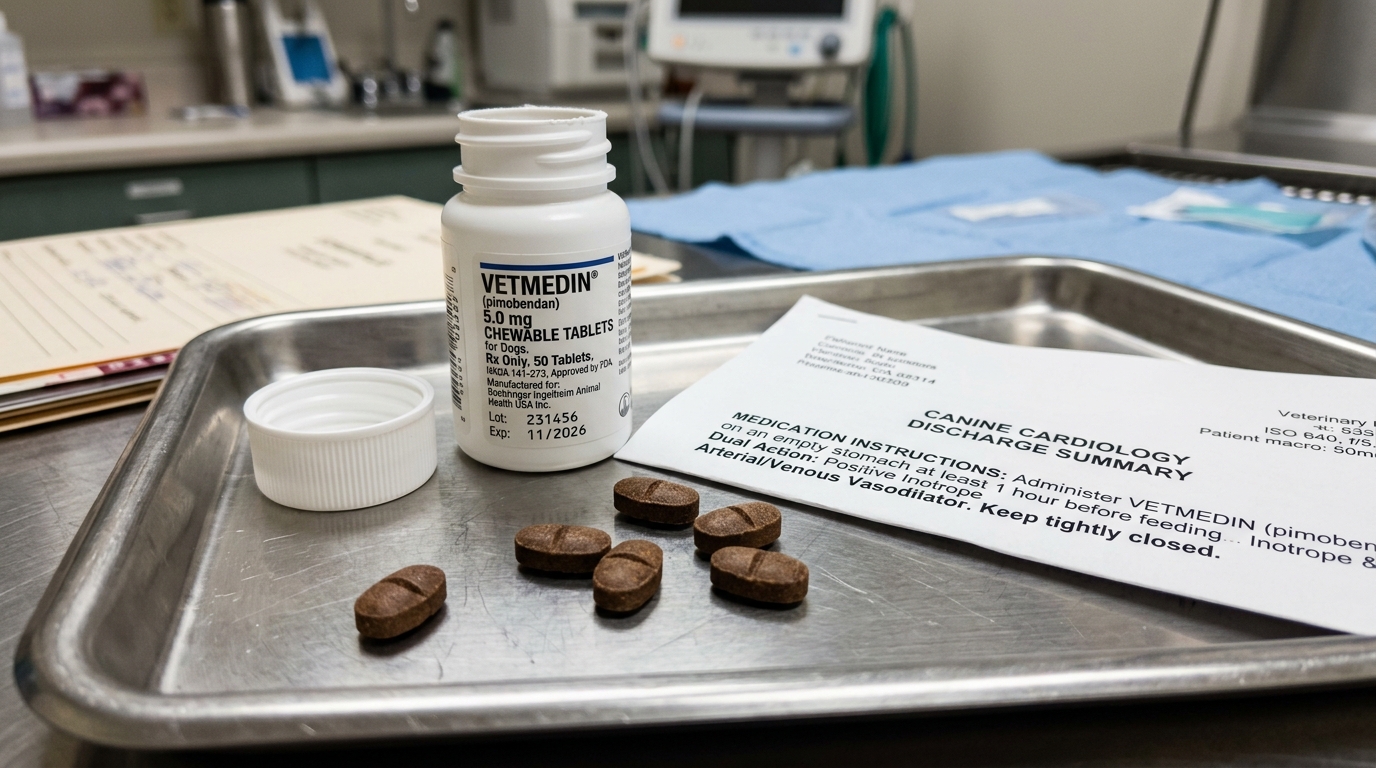
Vetmedin (Pimobendan) for Dogs: Heart Failure & Triage
Clinical Classification & Indications
- Drug Class: Inodilator (Inotrope and Vasodilator)
- Approved Uses: Management of signs of mild, moderate, or severe congestive heart failure (CHF) in dogs due to Myxomatous Mitral Valve Disease (MMVD Stage B2 and C) or Dilated Cardiomyopathy (DCM).
Mechanism of Action (Pharmacodynamics)
Sensitizes myocardial contractile apparatus to intracellular calcium without increasing oxygen consumption (positive inotropy), while simultaneously inhibiting phosphodiesterase-III (PDE-III), resulting in balanced peripheral arterial and venous vasodilation.
Adverse Reactions & Side Effect Profile
Common / Expected Side Effects
Transient mild inappetence, vomiting, diarrhea, lethargy, or mild coughing.
Emergency Red Flag Reactions
Worsening respiratory distress (sleeping respiratory rate >35 breaths/min), pale or cyanotic gums, acute syncopal collapse (fainting), pulmonary edema.
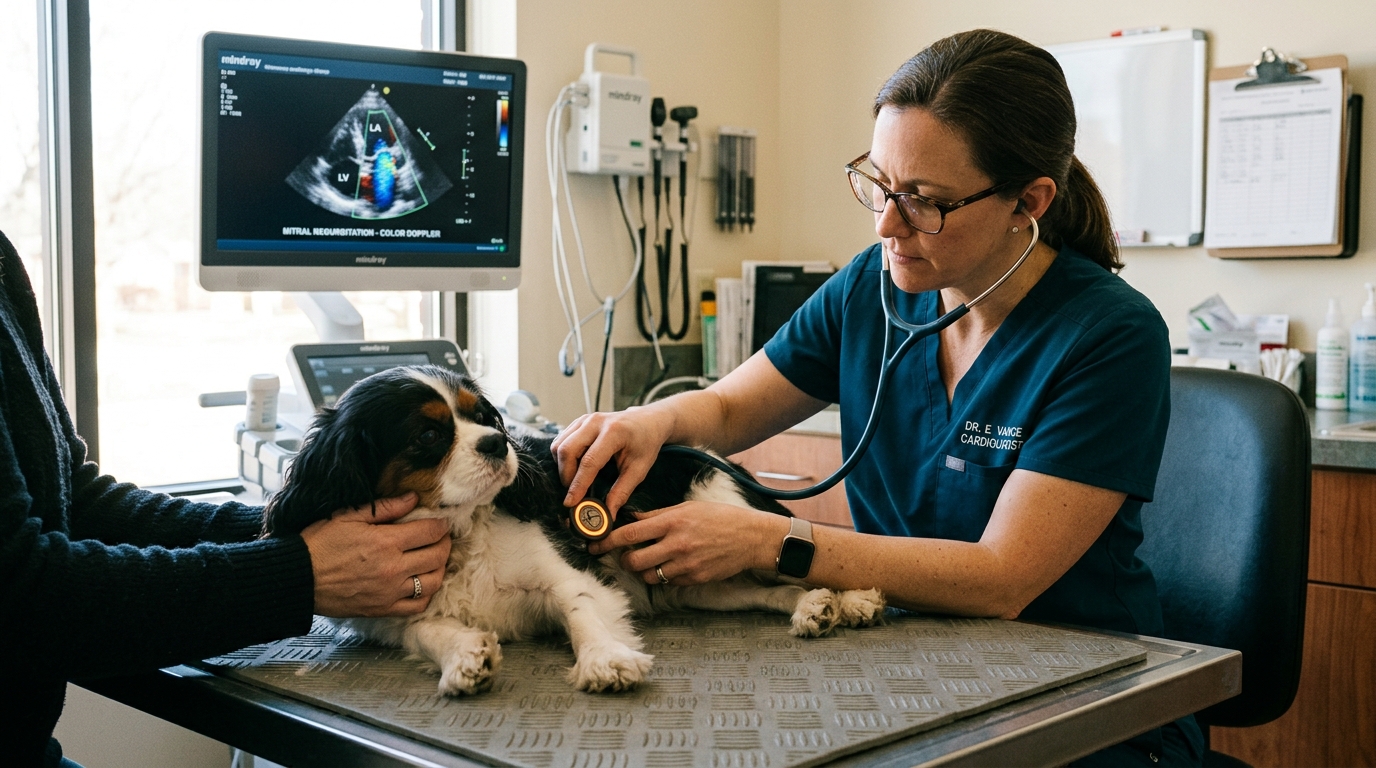
Clinical Contraindications & Interactions
- Do Not Use In: Aortic stenosis, hypertrophic cardiomyopathy (HCM), or any clinical cardiac condition where an increase in cardiac output is inappropriate for anatomical reasons.
Strict Rule S1 Veterinary Prescription Directive
VETERINARY DIRECTIVE: Vetmedin MUST be administered on an empty stomach at least 1 hour before feeding; food significantly impairs bioavailability. Count and record your dog’s resting respiratory rate (RRR) while sleeping daily—a sudden rise over 30-35 breaths/min requires immediate veterinary intervention. Never administer human pharmaceutical products or adjust dosages without direct examination and bloodwork by a licensed Doctor of Veterinary Medicine (DVM).
Printable tools