Health and Safety Boundary
Jump to Emergency Red Flags ↓
This guide is general education for pet owners. If your pet has urgent symptoms, possible poisoning, injury, breathing trouble, collapse, severe pain, or sudden decline, contact a licensed veterinarian or local emergency service.
Veterinary Medication & Dosage Boundary
Dosages must be calculated by a licensed veterinarian based on species, weight, and bloodwork. Never administer human medications or self-adjust prescription doses for pets.
Editorial standard
How this guide was prepared
Edited for decisions
NewsPet guides are structured around practical owner choices, tradeoffs, and safety boundaries.
Source policy
Sources are listed when a guide relies on outside references.
Veterinary boundary
This article does not diagnose or prescribe; urgent symptoms need veterinary care.
Corrections
Readers can flag unclear, outdated, or inaccurate information through our contact page.
Prednisone & Prednisolone: Steroid Safety & Feline Triage
Clinical Classification & Indications
- Drug Class: Synthetic Glucocorticoid (Corticosteroid)
- Approved Uses: Allergic conditions, autoimmune diseases (IMHA, ITP, lupus), inflammatory bowel disease (IBD), asthma, and multi-agent oncologic chemotherapy protocols.
Mechanism of Action (Pharmacodynamics)
Diffuses across cell membranes to bind cytosolic glucocorticoid receptors, modulating gene transcription to inhibit pro-inflammatory cytokines, leukotrienes, and arachidonic acid cascades.
Adverse Reactions & Side Effect Profile
Common / Expected Side Effects
The classic triad: Polyuria (excessive urination), Polydipsia (excessive thirst), and Polyphagia (extreme hunger). Panting, muscle wasting, pot-bellied appearance, coat thinning.
Emergency Red Flag Reactions
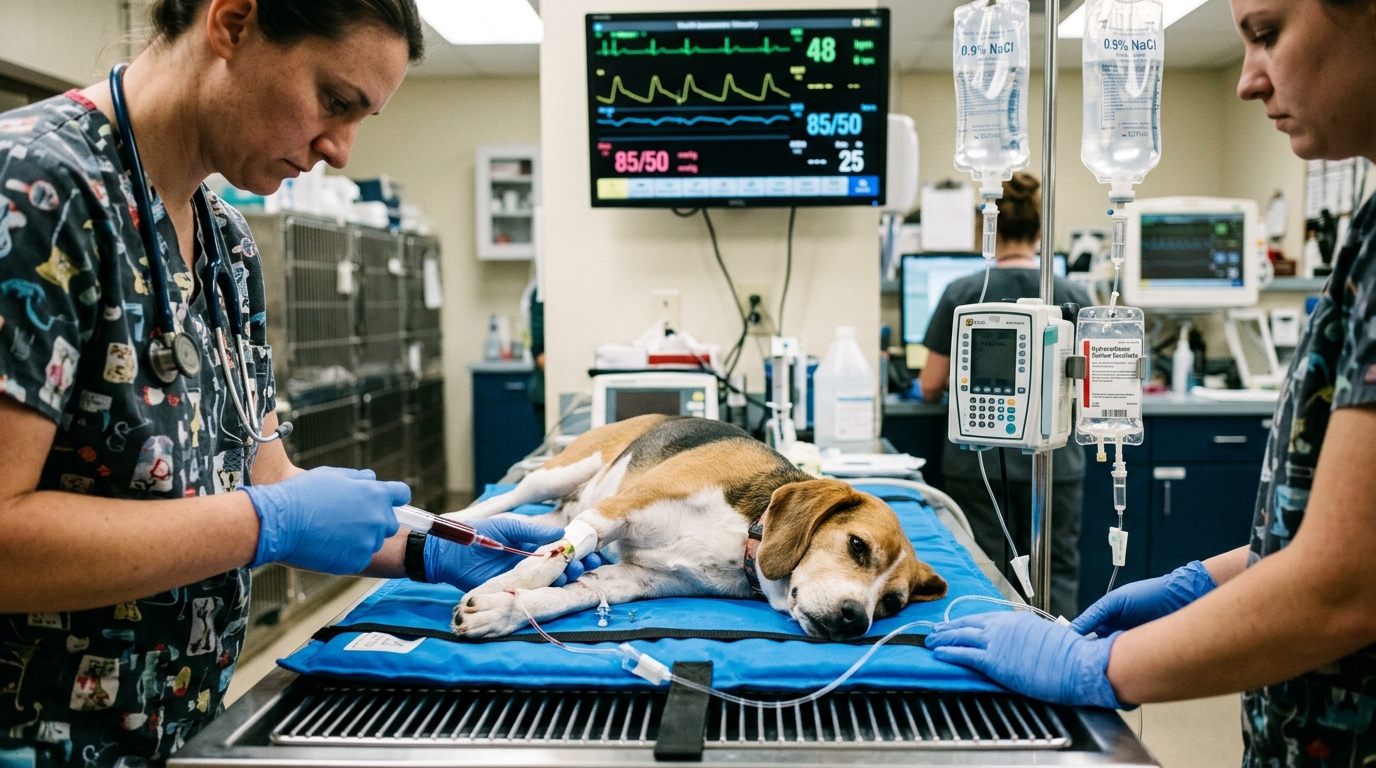
Sudden medication withdrawal causing an acute Addisonian crisis (lethargy, collapse, bradycardia, severe shock), vomiting blood, or sudden acute bacterial infections.
Clinical Contraindications & Interactions
- Do Not Use In: Systemic fungal infections (blastomycosis, histoplasmosis), active corneal ulcers (steroids cause corneal melting), concurrent NSAID administration (fatal GI perforation risk).
Strict Rule S1 Veterinary Prescription Directive
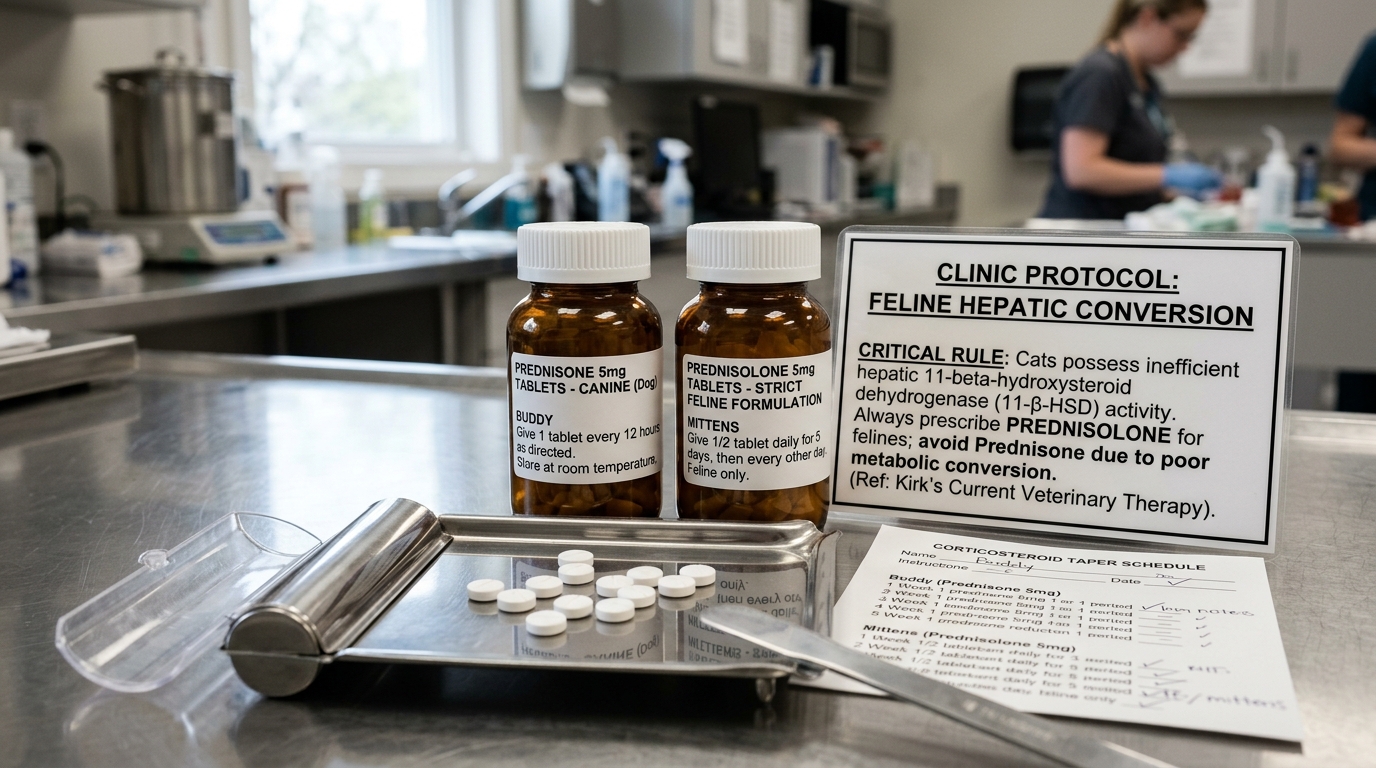
VETERINARY DIRECTIVE: CRITICAL RULE: NEVER abruptly stop giving steroids. The adrenal glands undergo physiological atrophy; doses must be slowly and progressively tapered by your DVM. CATS MUST RECEIVE PREDNISOLONE, not prednisone, due to severe feline hepatic inability to convert prednisone to its active metabolite. Never administer human pharmaceutical products or adjust dosages without direct examination and bloodwork by a licensed Doctor of Veterinary Medicine (DVM).
Printable tools