This guide is general education for pet owners. If your pet has urgent symptoms, possible poisoning, injury, breathing trouble, collapse, severe pain, or sudden decline, contact a licensed veterinarian or local emergency service.
Dosages must be calculated by a licensed veterinarian based on species, weight, and bloodwork. Never administer human medications or self-adjust prescription doses for pets.
Editorial standard
How this guide was prepared
Heatstroke kills dogs faster than most emergencies. When a dog’s core temperature climbs past the critical threshold, irreversible organ damage begins within minutes—disseminated intravascular coagulation, acute kidney failure, and cerebral edema can all cascade simultaneously. The difference between survival and death often comes down to how quickly a caregiver recognizes the signs and begins proper cooling. This guide covers the emergency warning signs, the correct tepid-water cooling protocol, the dangerous mistakes that worsen outcomes, and the clinical triage criteria that determine whether your dog needs an emergency hospital right now.
Quick Answer: Dog Heatstroke
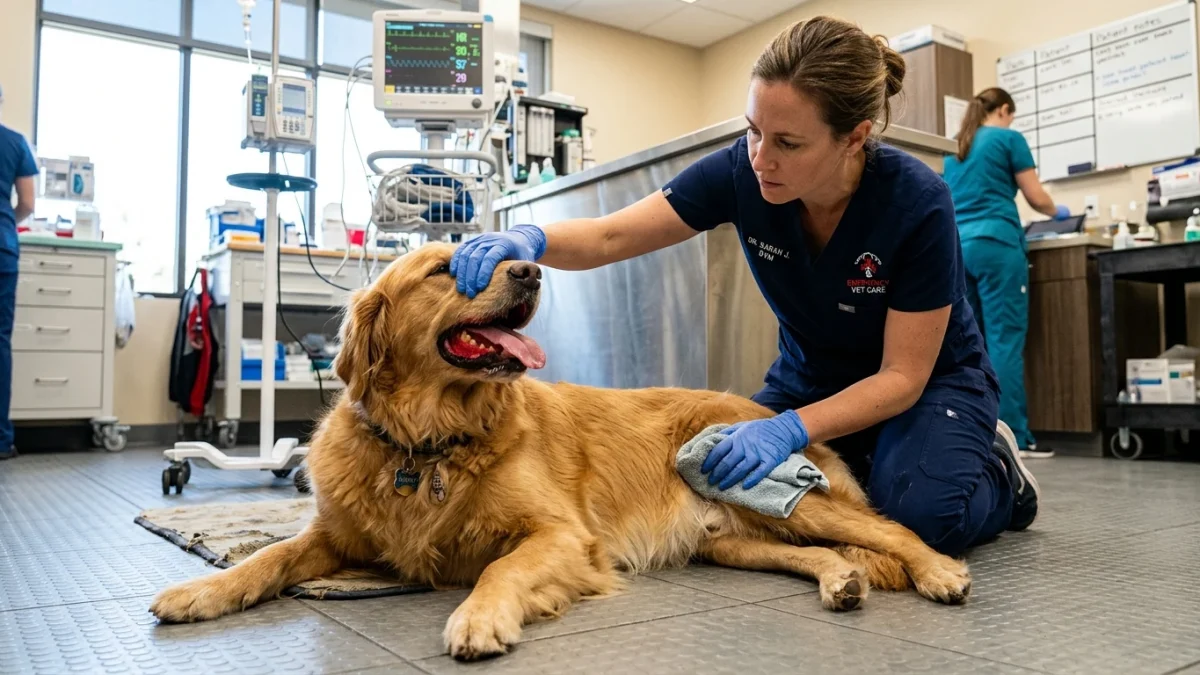
If you suspect heatstroke, move the dog to a cool environment immediately. Apply tepid (lukewarm) water to the groin, armpits, and paws, and use a fan to encourage evaporative cooling. Do NOT use ice water, which traps heat internally. Transport the dog to an emergency veterinary hospital immediately, continuing cooling efforts during the drive.
The Lethal Heat Cascade: Why Minutes Matter
Canine heatstroke is not merely severe panting; it is a profound systemic crisis. When a dog’s core temperature exceeds 41 degrees Celsius (106 degrees Fahrenheit), the body undergoes a catastrophic inflammatory cascade. The elevated temperature directly damages cellular proteins, leading to widespread endothelial injury. This vascular damage triggers disseminated intravascular coagulation (DIC), a paradoxical condition where the body simultaneously develops micro-clots in the organs and uncontrolled internal bleeding.
Furthermore, thermal injury to muscle tissue causes rhabdomyolysis, releasing myoglobin into the bloodstream and overwhelming the kidneys, leading to acute kidney injury. Concurrently, the breakdown of the blood-brain barrier induces cerebral edema (brain swelling), manifesting as disorientation, seizures, or coma. Intervention must occur within the first 30 to 90 minutes. Delaying professional care while attempting prolonged home remedies significantly decreases the probability of survival.
High-Risk Breeds and Situations
Certain dogs are physiologically predisposed to overheating. Brachycephalic breeds—such as Bulldogs, Pugs, Boxers, and French Bulldogs—possess shortened airways that severely compromise their ability to dissipate heat through panting. Obese dogs carry excessive insulating tissue that prevents heat loss. Dogs with dark coats absorb more solar radiation, and elderly dogs or those with laryngeal paralysis have reduced respiratory efficiency.
Environmental factors compound these physiological vulnerabilities. The classic and most lethal scenario remains confinement in a parked vehicle, where temperatures can escalate to lethal levels within minutes, even with cracked windows. High ambient humidity is equally dangerous; panting relies on the evaporation of moisture from the respiratory tract, a mechanism that fails when environmental humidity approaches saturation.
Clinical Emergency Triage Matrix
| Urgency Tier | Clinical Presentation | Required Action |
|---|---|---|
| Tier 1: Immediate Emergency (0-2h) | Rectal temperature exceeding 41 degrees Celsius; collapse, inability to stand, staggering; active seizures or muscle tremors; vomiting blood or bloody diarrhea; dark red, purple, or gray gums. | Begin active cooling with tepid water and transport to the nearest veterinary emergency hospital immediately. |
| Tier 2: Same-Day Care (12-24h) | Persistent heavy panting with thick, ropy saliva; profound lethargy after cooling efforts; rectal temperature between 39.5 and 40.5 degrees Celsius; localized muscle weakness. | Initiate cooling and contact your primary veterinarian or local emergency clinic for a same-day evaluation. See our guide on tremors and lethargy. |
| Tier 3: Home Monitoring | Mild panting that resolves within 10 to 15 minutes of moving to a cool environment; normal behavior and mentation; rectal temperature below 39.5 degrees Celsius. | Provide access to fresh water and a cool resting area. Monitor resting respiratory rate using the RRR Calculator. |
Emergency Cooling Protocol
If your dog is experiencing heatstroke, initiate these cooling steps immediately while preparing for transport:
- Relocate: Move the dog to an air-conditioned room or deeply shaded area immediately.
- Apply Tepid Water: Wet the dog using tepid (lukewarm) water. Focus on areas with superficial blood vessels: the groin, armpits (axillae), and paw pads.
- Evaporative Cooling: Direct a fan at the wet dog. Evaporation is the most efficient method for heat dissipation.
- Hydration: Offer small sips of cool water if the dog is conscious and able to swallow. Do not force water into their mouth.
- Monitor and Stop: Cease active cooling when the dog’s rectal temperature reaches 39.4 degrees Celsius (103 degrees Fahrenheit). The body will continue to cool, and over-cooling can precipitate dangerous rebound hypothermia.
Dangerous Home Pitfalls: What NOT to Do (Rule S1)
Improper cooling techniques can accelerate mortality. Observe these critical prohibitions:
- NEVER use ice water or ice packs: Extreme cold causes peripheral vasoconstriction (narrowing of blood vessels in the skin), which traps superheated blood in the core organs and paradoxically worsens internal thermal injury.
- NEVER wrap the dog in wet towels: A wet towel quickly warms up and acts as an insulating blanket, trapping heat against the dog’s body.
- NEVER force-feed water: Administering fluids orally to a vomiting, seizing, or severely disoriented dog carries a high risk of aspiration pneumonia.
- NEVER administer human antipyretics: Medications like acetaminophen or ibuprofen are toxic to dogs and will exacerbate kidney and liver damage already initiated by the heatstroke.
Sources
- Macintire, D. K., et al. “Prognostic Indicators in Dogs with Heatstroke.” Journal of Veterinary Internal Medicine, 2006. PubMed.
- Romanucci, M., and Salda, L. D. “Heat Stroke in Dogs: Pathophysiology and Predisposing Factors.” Journal of the American Veterinary Medical Association, 2018. PubMed.
- Bruchim, Y., et al. “Evaluation of Cooling Methods for Treatment of Heatstroke.” Journal of Veterinary Emergency and Critical Care, 2017. PubMed.
Caregiver Safety Checklist
- I have removed the dog from the hot environment immediately.
- I have applied tepid water and a fan for evaporative cooling, avoiding ice or cold wraps.
- I have checked for critical signs such as bloody diarrhea, collapse, or seizures.
- I am transporting the dog to an emergency veterinary clinic without delay.
Source transparency
Reference mix for this guide
Source labels describe the type of organization behind each reference; they are not a claim that any outside organization reviewed this article.