This guide is general education for pet owners. If your pet has urgent symptoms, possible poisoning, injury, breathing trouble, collapse, severe pain, or sudden decline, contact a licensed veterinarian or local emergency service.
Editorial standard
How this guide was prepared
Breathing difficulty, collapse, seizure, burns, severe eye pain, repeated vomiting, major drooling, or a large concentrated-cleaner exposure requires emergency help now. Call an emergency veterinarian or animal poison service while moving the pet away from exposure and starting transport. Bring the original label or clear photos only when collecting them does not delay departure.
Clinical Quick Answer & Immediate Actions
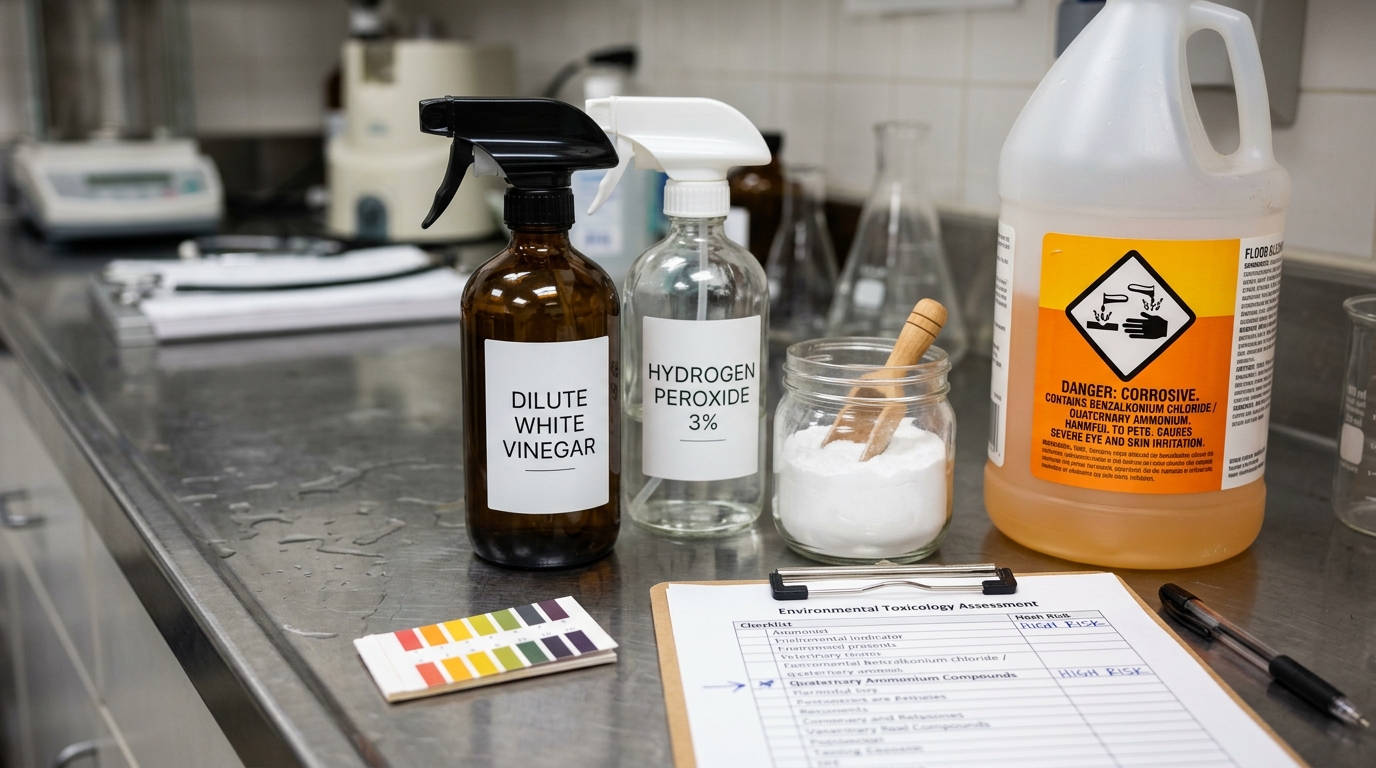
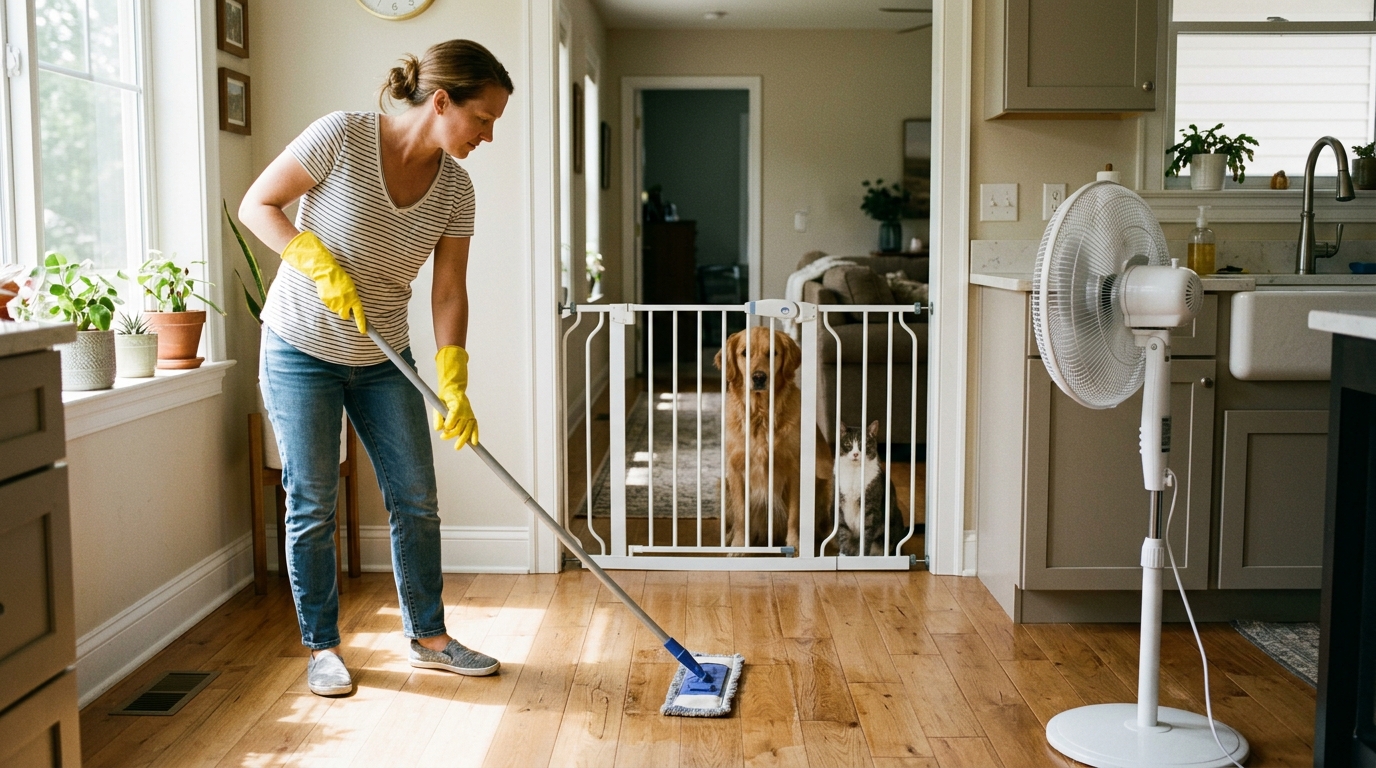
Household cleaning and disinfecting chemicals represent one of the most prevalent yet preventable causes of acute companion animal poisoning. Felines are uniquely vulnerable to toxic chemical exposure due to their evolutionary deficiency in hepatic glucuronosyltransferase enzymes, which prevents them from metabolizing phenolic compounds (found in Pine-Sol, Lysol, creosote, and coal-tar derivatives); dermal exposure or grooming ingestion causes acute liver necrosis, neurotoxicity, and death. Quaternary ammonium compounds (QACs / benzalkonium chloride) found in antibacterial wipes and floor disinfectants cause corrosive chemical burns on feline and canine footpads and severe tongue ulceration when licked off fur. Furthermore, mixing sodium hypochlorite (household bleach) with ammonia-based cleaners produces toxic chloramine gas that triggers acute pulmonary edema. Safe household cleaning mandates utilizing accelerated hydrogen peroxide, enzymatic biological stain removers, or diluted white vinegar and baking soda while keeping pets strictly excluded until all surfaces are completely dry and ventilated.
Best Non-Toxic Pet-Safe Cleaning Alternatives
To sanitize living spaces without exposing dogs and cats to toxic quaternary ammonium compounds, bleach, or phenols, use these 4 proven pet-safe alternatives:
- Diluted White Distilled Vinegar (1:1 with water): Safely cuts grease, deodorizes hard surfaces, and descales pet water bowls without harmful chemical residue.
- Baking Soda (Sodium Bicarbonate): Natural, non-toxic abrasive powder for scrubbing food bowls, sanitizing litter boxes, and lifting carpet stains safely.
- Enzymatic Pet Cleaners: Uses natural bacterial enzymes to biologically break down uric acid and organic proteins in urine and vomit stains.
- Pure Liquid Castile Soap: Gentle vegetable-oil-based cleaner ideal for mopping tile floors and washing pet bedding without volatile organic compounds (VOCs).
For any cleaner swallowed, inhaled, splashed in an eye, or left on skin or fur, contact a veterinarian or poison service promptly for product- and route-specific instructions even if signs are not yet visible. Do not induce vomiting, give a neutralizing remedy, or apply another chemical. Use fresh air or rinsing only as the label or professional directs and only when it does not delay emergency care or put a person into unsafe fumes.
Risk depends on the product, route, concentration, and residue
| Risk factor | Question | Control |
|---|---|---|
| Concentrate | Is the product ready to use or meant to be diluted? | Measure exactly with dedicated equipment and never guess a stronger mixture. |
| Route | Could the pet inhale mist, walk through liquid, lick fur, drink from a bucket, or chew packaging? | Remove pets, close access, and control spray, spills, tools, and wastewater. |
| Contact time | Must the surface remain wet to disinfect? | Follow the label without letting a pet enter during the wet period. |
| Residue | Does the label require rinsing on food-contact or animal-contact surfaces? | Rinse and dry exactly as directed before bowls, paws, skin, or bedding touch it. |
| Ventilation | Can fumes or aerosols accumulate in the room, crate, litter area, bathroom, or vehicle? | Increase ventilation and keep animals away until air and surfaces are safe. |
Read the entire label before opening the product
Confirm intended surfaces, dilution, personal protection, ventilation, contact time, rinsing, storage, first aid, and incompatible materials. A disinfectant is designed for specific organisms and uses; more product or a longer exposure is not automatically safer. In the United States, pesticide-labeled disinfectants must be used according to their label.
Keep the product in its original container. If a diluted working solution may legally and safely be stored, label it as directed with product, concentration, and date. Never use food or drink containers.
Choose the minimum effective process for the job
Routine soil removal, a contagious-disease cleanup, raw-food contamination, parasite control, mold remediation, and a litter accident are different jobs. Identify the surface and target before choosing a cleaner or disinfectant. Unnecessary mixing and repeated disinfection increase exposure without guaranteeing better hygiene.
When a veterinarian recommends infection control, ask which organism is suspected, which product is effective, what pre-cleaning and contact time are required, and which animal-contact surfaces must be rinsed.
Create a dilution and contact-time worksheet
- Product and registration or authorization details where applicable.
- Surface and target organism or cleaning purpose.
- Ready-to-use or concentrate.
- Exact water and product measurements.
- Required wet contact time.
- Ventilation and protective equipment.
- Rinse, dry, disposal, and re-entry instructions.
Make a fresh solution when the label requires it. Do not top up an old bucket or combine leftovers from different products.
Never mix cleaning products unless the label explicitly directs it
Mixing bleach with ammonia, acids, or other cleaners can release dangerous gases. Toilets, litter boxes, urine, descalers, vinegar, and multipurpose cleaners can create unexpected combinations. Rinse equipment and surfaces as directed before changing products.
If fumes cause coughing, eye pain, dizziness, breathing difficulty, or distress in a person or animal, leave the area and contact emergency or poison services. Do not re-enter an unsafe space to retrieve items without professional guidance.
Use a five-stage cleaning sequence
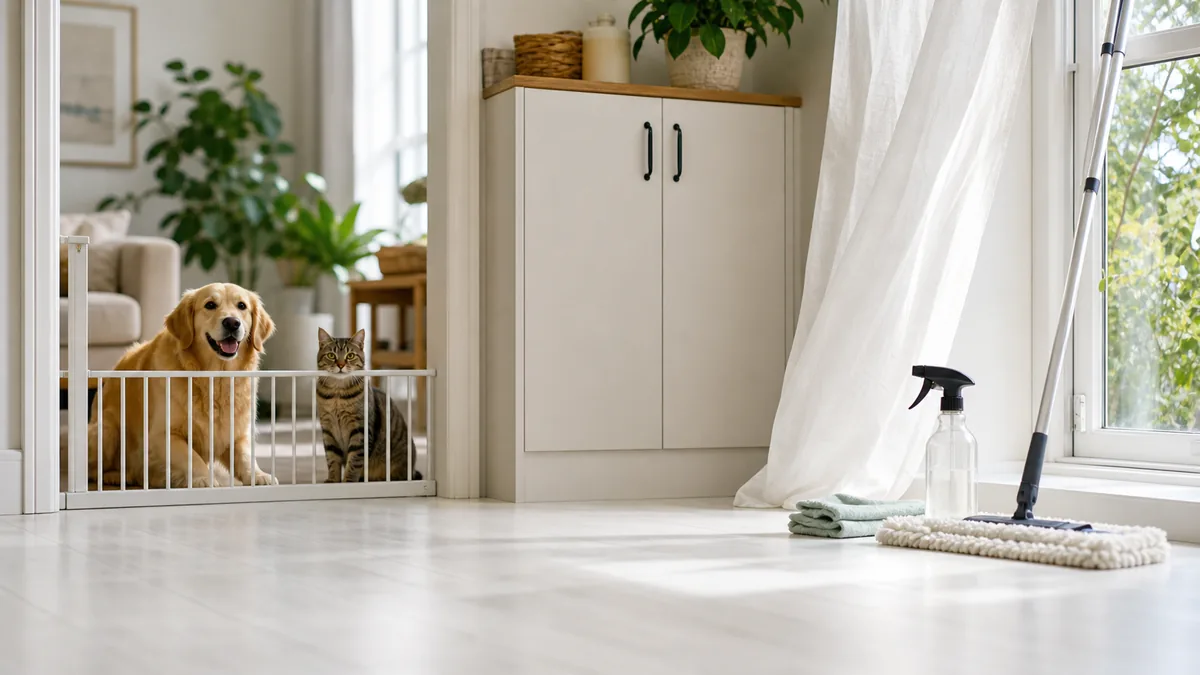
- Prepare: Read the label, ventilate, gather tools, secure products, and move pets plus bowls, bedding, toys, litter trays, and food.
- Remove soil: Pick up hair, urine, feces, vomit, food, and dirt using appropriate protective measures.
- Clean or disinfect: Use the correct product, dilution, surface coverage, and contact time.
- Rinse and dry: Follow label directions for rinsing, ventilation, and drying; manage wastewater safely.
- Reopen: Inspect for puddles, residue, fumes, unsecured tools, and accessible containers before pets return.
Cleaning removes material; disinfecting targets named organisms under specific conditions. Not every routine surface needs constant disinfection, and disinfectant cannot work reliably through heavy organic soil.
Use room-by-room exposure controls
| Area | Common route | Safer setup |
|---|---|---|
| Floors | Wet paws, licking, puddles, concentrated bucket water, slippery surfaces. | Block access, measure dilution, prevent bucket drinking, rinse if required, and dry fully. |
| Kitchen | Food contamination, spray drift, open bins, sink and counter residue. | Remove pet food equipment, separate tools, follow food-contact rinsing, and secure waste. |
| Bathroom | Toilet water, descalers, bleach mixtures, tablets, closed ventilation. | Close lids and doors, never mix products, ventilate, and store tablets and bottles locked away. |
| Litter area | Cleaner reacting with urine, fragrance, damp residue, cat re-entry. | Use a box-safe method, rinse and dry, avoid strong residual odor, and provide another box during cleaning. |
| Crate, carrier, cage | Small enclosed air volume and direct skin or mouth contact. | Remove the animal, disassemble, clean, rinse as directed, dry, and air before reassembly. |
| Laundry and bedding | Detergent pods, fragrance, residue, damp fabric, dryer products. | Store products securely, use the correct dose, complete rinsing, and dry bedding fully. |
| Garage and garden | Antifreeze, fuels, pesticides, slug bait, fertilizers, pressure-wash runoff. | Restrict access, contain spills and runoff, follow pesticide labels, and store behind a locked barrier. |
Plan for species beyond dogs and cats
Birds can be extremely sensitive to airborne fumes, aerosols, and heated products. Small mammals, reptiles, fish, and amphibians have enclosure, water, temperature, and skin-exposure risks that differ from dogs and cats. Remove or protect tanks, cages, food, substrate, and air systems according to species-specific veterinary and product guidance.
Do not assume that moving an enclosure across the room is enough. Shared ventilation and residue on hands, tools, or mist can continue exposure.
Judge natural, homemade, and scented products by the same exposure factors
The terms natural, homemade, scented, unscented, and pet friendly do not determine safety by themselves. Evaluate the exact ingredients, concentration, route, surface, ventilation, residue, and species. Essential oils, citrus concentrates, acids, powders, and plant-based cleaners differ widely; some exposures can irritate, burn, or cause systemic illness, and birds or other species may have risks that dog-and-cat advice does not cover.
Use a product because its label and formulation fit the job and the household can control exposure. Marketing language does not remove dilution, ventilation, rinse, dry, storage, or re-entry requirements.
Protect bowls, fountains, toys, and food surfaces
Use washing and sanitizing methods intended for food-contact equipment and follow manufacturer instructions for pumps, filters, rubber, plastic, ceramic, and metal. Rinse when required and dry before refilling. Do not spray disinfectant near open food, water, treats, supplements, or medication.
Replace cracked, porous, peeling, or damaged items that cannot be cleaned. Keep pet-food utensils separate from cleaning tools and raw-food equipment where applicable.
Control storage and professional treatment access
Use a closed cabinet or locked area, not a low shelf or open caddy. Secure pods, wipes, toilet products, powders, concentrates, refill pouches, buckets, sponges, mop water, and rubbish. Cats can enter high cupboards and dogs can chew child-resistant packaging.
During cleaning, keep the product with the person using it or behind two barriers. Do not leave an open bucket or soaked cloth while answering the door.
Control exposure during professional cleaning and pest treatment
Tell the contractor which animals live in the home, including aquariums, birds, reptiles, and small mammals. Request product names, labels, treatment areas, preparation, ventilation, re-entry time, residue management, and emergency contacts before the visit.
Board or relocate animals when the instructions require it, and remove food, bowls, bedding, litter, toys, and medication from treatment zones. Do not return pets early because surfaces look dry; use the documented re-entry criteria.
Maintain a product inventory for emergencies
Photograph front and back labels and store purchase date, lot, and safety data access with emergency contacts. Dispose of expired or leaking products through local guidance. When a favorite product changes formula, reread the label before using the same routine.
If exposure occurs
- Move the pet away and prevent further licking or inhalation without putting yourself at risk.
- Call a veterinarian or animal poison service with the exact product, concentration, route, amount, time, species, weight, and signs.
- Follow instructions for fresh air, rinsing, transport, food, and water.
- Take the original container or photos in a sealed separate bag if safe.
- Do not induce vomiting or apply another chemical to neutralize the product.
If product is on the coat, prevent grooming while seeking instructions. Do not use solvents or aggressive scrubbing. Eye exposure and breathing change need rapid professional advice.
Match the first response to the exposure route
| Route | Immediate priority | Information to provide |
|---|---|---|
| Inhalation | Move to fresh air without entering an unsafe atmosphere; seek urgent advice for cough or breathing change. | Product, gases or mixture, room size, ventilation, duration, and signs. |
| Eye | Prevent rubbing and follow professional or label rinsing instructions promptly. | Concentrate or diluted product, contact time, eye redness, closure, pain, or vision concern. |
| Skin or coat | Prevent licking and ask how to rinse or wash without spreading the product. | Body area, damaged skin, amount, concentration, and time. |
| Swallowed | Call before giving food, water, charcoal, or inducing vomiting. | Exact product, amount, time, species, weight, and symptoms. |
Verify re-entry and document the incident
Write what must be true before pets return: contact time complete, required rinse finished, surfaces dry, air clear, wastewater removed, tools stored, and food equipment restored. “Smells clean” or “looks dry” is not a label instruction.
For recurring cleaners, post the procedure inside the storage door so sitters, cleaners, and family members use the same dilution and barriers.
Document an exposure after the immediate response
Keep product and lot, concentration, route, time, symptoms, veterinary or poison case number, treatment, and outcome. Note why access occurred and change the storage or cleaning process before the product is used again. Reporting accurate details can help the manufacturer, regulator, and veterinary team evaluate the event.
Reassess the process when a product formula, label, package, caregiver, room use, or resident animal changes.
When to Contact a Veterinarian or Poison Service
Seek emergency care for breathing difficulty, collapse, seizure, severe weakness, burns, eye injury, repeated vomiting, marked drooling, unresponsiveness, or a large concentrated exposure. Contact a veterinarian or poison service promptly for any cleaner swallowed, inhaled, splashed in the eye, or left on skin or fur when the risk is uncertain.
Bring the label. The exact formulation matters more than the product category, smell, or claim that it is natural.
Keep the pet emergency red-flags action guide with poison and veterinary contacts; it supplements, but never replaces, product-specific poison advice.
Clinical Practice Tool: Daily Pet Care Routine Tracker
Establish safe cleaning and room ventilation routines around your pets using our printable Daily Pet Care Routine Tracker. Download and print your copy of the Daily Pet Care Routine Tracker, or explore all practical pet care guides in the NewsPet Resource Center.
Frequently Asked Questions
What household cleaners are toxic to dogs and cats?
Cleaners containing bleach, ammonia, chlorine, glycol ethers, benzalkonium chloride (quaternary ammonium compounds), and phenol-based pine cleaners are toxic to companion animals. These cause chemical burns, severe respiratory irritation, and acute liver or kidney failure if walked on or ingested during self-grooming.
Is vinegar and baking soda safe to clean around pets?
Yes, diluted white distilled vinegar and sodium bicarbonate (baking soda) are non-toxic, pet-safe alternatives for deodorizing pet stains, wiping countertops, and descaling water bowls. Always rinse surfaces thoroughly and keep pets out of the room until dried.
How long should I let floor cleaner dry before pets walk on it?
Allow hard floors to dry completely for at least 30 to 45 minutes before granting pets access. Dogs and cats absorb residual wet chemicals through paw pads and subsequently ingest them when licking their paws.
What should I do if my pet licks a cleaning product?
If your pet licks or ingests a cleaning product, check the bottle label, do NOT induce vomiting (which causes secondary caustic esophageal burning), offer small sips of water if the pet is conscious, and contact your emergency veterinarian or animal poison control immediately.
Sources
Sources checked: September 8, 2026.
- ASPCA: Poisonous Household Products
- CDC: Cleaning and Disinfecting Pet Supplies
- EPA: Introduction to Pesticide Labels
- Pet Poison Helpline: Safer Cleaning Around Pets
- AVMA: Household Hazards and Pet Safety
Emergency Triage Matrix: Clinical Presentation & Required Response
| Triage Level | Clinical Signs & Presentation | Immediate Action Protocol |
|---|---|---|
| Tier 1: Immediate Emergency (0–2 Hours) | Pet ingested concentrated caustic chemicals, acid toilet cleaners, or drain opener; or cat exhibiting violent whole-body tremors, ataxia, severe hypersalivation, or acute respiratory distress following exposure to pine-oil/phenolic disinfectants. | Immediate emergency veterinary transport; do NOT induce vomiting; flush mouth and paws gently with cool water if conscious; bring original chemical container with ingredient label to the emergency hospital. |
| Tier 2: Urgent Veterinary Care (Same-Day) | Chemical paw pad burns (red, blistering, peeling skin after walking on freshly mopped floor), painful squinting and corneal clouding after aerosol cleaning spray splash, or persistent nausea and oral redness after licking cleaner residue. | Immediate thorough veterinary decontamination; flush eyes with sterile saline for 15 minutes, apply veterinary-prescribed topical corneal protectants, and administer gastrointestinal mucosal coating suspensions. |
| Tier 3: Home Monitoring & Scheduled Care | Pet briefly walked across a floor cleaned with properly diluted enzymatic cleaner or pet-safe accelerated hydrogen peroxide, showing zero skin redness, normal pink gums, and normal behavior. | Wipe paws with a damp washcloth as a precaution, allow floors to dry completely with windows open, and store all cleaning chemicals in latched high cabinets. |
Rule S1 Boundaries & Household Toxicology Rules
Household chemical management requires strict observance of toxicological boundaries:
- NEVER use phenol or pine-oil disinfectants (Lysol, Pine-Sol) in homes with cats: Cats lack glucuronyl transferase enzymes required to metabolize phenolic derivatives; exposure induces acute centrilobular hepatic necrosis, chemical burns, and refractory neurotoxic seizures.
- NEVER induce vomiting if a pet ingests caustic or corrosive cleaning chemicals: Inducing vomiting for strong acids, alkalis (drain cleaner, bleach, lye), or petroleum products causes catastrophic re-burning of the esophagus and oral cavity, risking full-thickness perforation and fatal pneumonitis.
- NEVER mix chlorine bleach with ammonia, vinegar, or acidic cleaners: Mixing chemical agents generates deadly toxic chlorine and chloramine gases that cause rapid asphyxiation, pulmonary edema, and acute respiratory failure in companion animals.
- NEVER allow pets access to wet, chemical-treated surfaces before complete drying: Animals walk across wet floors and subsequently groom their paws, converting topical chemical residues into concentrated oral poisonings.
Caregiver Pet-Safe Household Cleaning & Disinfection Protocol
- Switch everyday surface disinfectants to accelerated hydrogen peroxide (0.5%) formulas: breaks down into harmless water and oxygen with zero toxic residues.
- Utilize enzymatic biological cleaners containing natural bacterial enzymes to degrade pet urine and fecal organic matter without caustic fumes.
- Confine all dogs and cats to an untreated, well-ventilated bedroom until cleaned floors and countertops are 100% dry and aired out.
- Rinse all mopped tile and hardwood floors with clean, warm water following chemical cleaning to remove residual surfactant films.
- Install child-safety latches on all low under-sink cabinets where cleaning detergents, bleach bottles, and dishwasher pods are stored.
- Keep emergency phone numbers for ASPCA Animal Poison Control (888-426-4435) and your local 24-hour veterinary emergency hospital taped inside your medicine cabinet.
Related Clinical Guides & Tools
Peer-Reviewed Clinical References & Evidence Grounding
- PMID: 30776257: 2019 AAHA Dental Care Guidelines for Dogs and Cats (J Am Anim Hosp Assoc, 2019) (opens in new tab)
- PMID: 9170629: Canine communication (Vet Clin North Am Small Anim Pract, 1997) (opens in new tab)
- PMID: 38625530: Nutrition and Aging in Dogs and Cats (Adv Exp Med Biol, 2024) (opens in new tab)
- Merck Veterinary Manual — Toxicology and Food Hazards in Companion Animals (opens in new tab)
Pet Toxic Food & Hazard Fast-Checker
Rapidly verify toxicity risks, toxic mechanisms, and immediate clinical steps for common household foods, plants, and human medications before calling poison control or your veterinarian.
Printable tools
Download the matching worksheet
Source transparency
Reference mix for this guide
Source labels describe the type of organization behind each reference; they are not a claim that any outside organization reviewed this article.
- ASPCA: Poisonous Household Products Animal welfare nonprofit · aspca.org
- CDC: Cleaning and Disinfecting Pet Supplies Government or public agency · cdc.gov
- EPA: Introduction to Pesticide Labels Government or public agency · epa.gov
- Pet Poison Helpline: Safer Cleaning Around Pets Reference source · petpoisonhelpline.com
- AVMA: Household Hazards and Pet Safety Veterinary organization · avma.org
- Separation Anxiety in Dogs: What to Do First (Calm Reference source · newspet.net
- Cat Litter Box Problems: Causes & Solutions (V Reference source · newspet.net
- Foods Dogs & Cats Cannot Eat: Toxic List & Reference source · newspet.net