This guide is general education for pet owners. If your pet has urgent symptoms, possible poisoning, injury, breathing trouble, collapse, severe pain, or sudden decline, contact a licensed veterinarian or local emergency service.
Dosages must be calculated by a licensed veterinarian based on species, weight, and bloodwork. Never administer human medications or self-adjust prescription doses for pets.
Editorial standard
How this guide was prepared
Bringing an adopted dog into your home marks the beginning of an enriching lifelong relationship, but navigating their initial healthcare transition requires deliberate clinical foresight. A rescue dog frequently arrives with an incomplete, fragmented, or conflicting medical history gathered across municipal shelters, transport networks, and foster homes. Scheduling an initial full veterinary wellness examination within the first 7 to 14 days of adoption is one of the most critical health investments an adopter can make. The primary objective of this introductory visit is not to perform every conceivable medical intervention immediately, but rather to establish an accurate physical baseline, reconcile prior preventative treatments, initiate required diagnostic screenings, and build a collaborative partnership between your household and your veterinary medical team.
Clinical Quick Answer & Immediate Actions
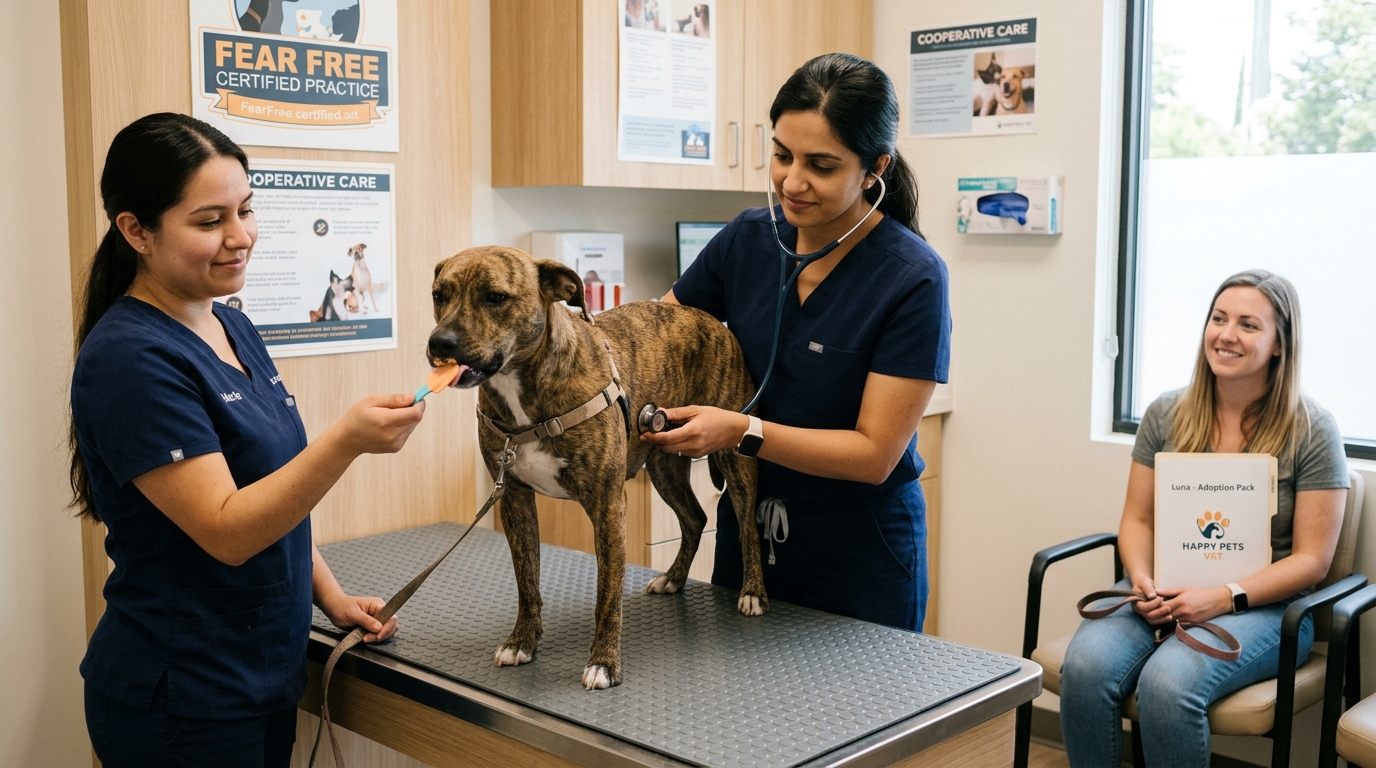
The initial veterinary examination for a newly adopted dog establishes a lifelong clinical baseline and validates early post-adoption health security. Shelter and rescue environments carry high baseline risks of infectious exposure (canine infectious respiratory disease complex, intestinal parasites, subclinical dermatophytosis, and parvovirus). A comprehensive initial consultation should occur within 48 to 72 hours of adoption and encompasses five core pillars: reconciling shelter medical certificates (lot numbers, vaccine brands, rabies tags), conducting a complete 12-system physical examination, performing non-invasive diagnostic screening (heartworm/tick-borne disease 4Dx ELISA, centrifugal fecal parasite flotation), microchip verification and national registry updating, and executing Fear Free handling protocols (high-value food rewards, non-slip mats, minimal restraint) to avoid establishing negative clinical trauma during the sensitive 3-3-3 adoption decompression phase.
During the initial decompression phase, your dog’s physiological systems—including neuroendocrine stress pathways, systemic immune responsiveness, and gastrointestinal microbiomes—are actively adapting to new dietary routines, environmental allergens, and household dynamics. Approaching this first clinical appointment with structured documentation and cooperative handling techniques ensures that latent infections, chronic parasitism, or subclinical orthopedic conditions are identified before they escalate into acute medical crises.
Phase 1: Pre-Visit Document Audit and Medical History Reconciliation
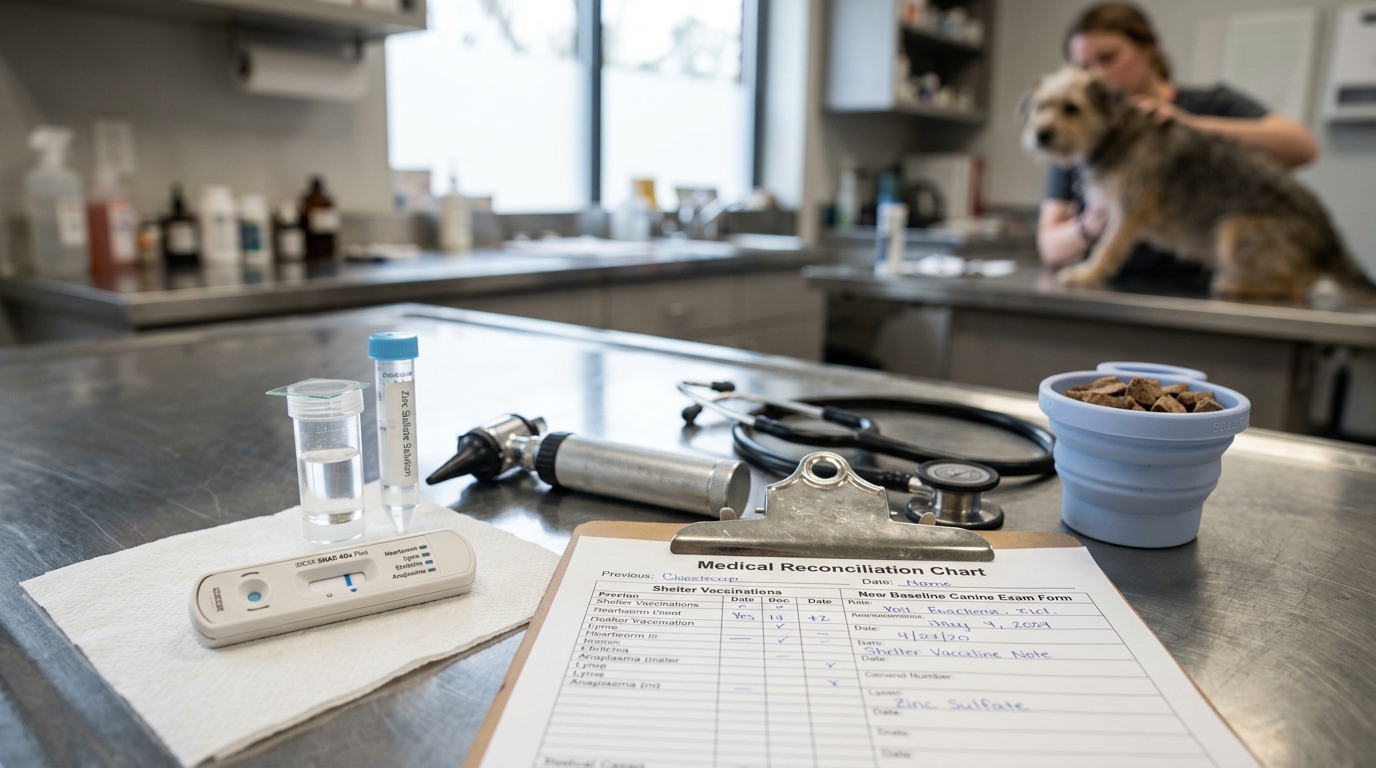
Shelter and rescue intake records can appear cryptic to pet owners unfamiliar with shelter medicine shorthand. Before your appointment, conduct a systematic audit of every document provided by the adoption agency, placing physical printouts into a dedicated binder or creating high-resolution digital backups. Your veterinarian must review these documents to differentiate between treatments administered on intake and vaccines that require upcoming booster administration.
Intake paperwork typically encompasses several distinct operational records:
- Intake and Transfer Sheets: Detail whether your dog entered the facility as a stray with unknown origins, an owner surrender with historical background, or an interstate transport transfer. Dogs transported across regional jurisdictions carry distinct regional exposure profiles, such as tick-borne pathogens common in the American Southeast or fungal endemics like Valley Fever (Coccidioides) in the Southwest.
- Vaccination Certificates and Lot Stickers: Look for specific manufacturer serial numbers, expiration dates, and routes of administration (subcutaneous vs. intranasal). Note whether a distemper combination (DAPP/DHPP) was administered once at intake or followed by a booster. Rabies certificates must show the supervising veterinarian’s state veterinary medical board license number and specify 1-year or 3-year immunization duration.
- Shelter Parasiticide Administration Logs: Shelter medicine protocols frequently administer broad-spectrum dewormers (such as pyrantel pamoate or fenbendazole) upon intake. Note the exact dates and active ingredients; many shelter protocols treat common nematodes like roundworms and hookworms but leave protozoal parasites like Giardia or Coccidia undetected without specific diagnostic testing.
- Microchip Implantation and Registration Documentation: Obtain the universal 9, 10, or 15-digit ISO 11784/11785 microchip number. The veterinary team will scan the chip to confirm placement and migration status. You must verify that the microchip is registered under your contact information with a national database connected to the American Animal Hospital Association (AAHA) Universal Pet Microchip Lookup system.
- Surgical Discharge Summaries: If spayed or neutered by the shelter, review the post-operative discharge sheet for notes regarding anatomical anomalies, retained testicles (cryptorchidism), umbilical hernia repairs, or green tattoo markers applied adjacent to the ventral midline incision.
Phase 2: Pre-Appointment Observation Log & Objective Baseline Tracking
Rather than arriving at the clinic with vague impressions, spend your dog’s first week at home recording objective physiological and behavioral markers. Clinical teams rely heavily on quantifiable data to guide diagnostic testing and nutritional planning. Avoid subjective summaries such as “he seems a bit off,” and instead record precise parameters across primary biological domains.
Monitor and document the following parameters in a dedicated notebook or smartphone log:
- Daily Appetite and Caloric Intake: Record the exact gram or cup measurements consumed versus food offered. Distinguish between hyporexia (eating less than required metabolic volume) and complete anorexia. Note eating speed, hesitant chewing, or reluctance to crunch hard kibble, which may signal periodontal discomfort.
- Fluid Intake and Hydration Patterns: Healthy adult dogs consume approximately 50 to 60 milliliters of water per kilogram of body weight per day (roughly 1 ounce per pound). Measure daily water replenishment. Marked polydipsia (exceeding prescribed clinical dosage/day) paired with frequent urination (polyuria) can indicate underlying metabolic disease, renal compromise, diabetes mellitus, or severe stress-induced psychogenic polydipsia.
- Fecal Scoring and Bowel Frequency: Evaluate every bowel movement using the standardized Purina 1-7 Fecal Scoring System. While mild softening (Score 4 to 5) is common during dietary transitions, high-volume watery diarrhea (Score 7), persistent mucus, or visible blood (hematochezia or dark melena) warrants prompt stool diagnostics.
- Resting Respiratory Rate (RRR): Count the number of chest rises and falls over 60 seconds while your dog is in uninterrupted, non-dreaming sleep. A healthy canine resting respiratory rate remains consistently below 30 breaths per minute. Elevated resting respiration exceeding 35 to 40 breaths per minute can serve as an early clinical indicator of lower respiratory infection, kennel cough complex progression, or occult cardiovascular dysfunction.
- Locomotion, Posture, and Comfort: Document stiffness when rising from resting surfaces, reluctance to climb stairs, abnormal gait asymmetries, or spontaneous knuckling of paws that could indicate untreated osteoarthritis, hip dysplasia, or neurological deficits.
| Physiological Domain | Healthy Canine Baseline | Clinical Observation Log Entry | Veterinary Triage Concern |
|---|---|---|---|
| Water Intake | 50–60 milliliters per kilogram body weight / 24 hrs | Measured 750 ml consumed in 24 hrs for 14 kg dog | Polydipsia exceeding prescribed clinical dosage/day; excessive bowl refills |
| Fecal Consistency | Score 2–3 (firm, segmented, leaves no residue) | Score 4 (moist, logs lose form when lifted) | Score 6–7 (watery, liquid puddles, hematochezia, or dark melena) |
| Resting Respiration | 15–30 breaths per minute during deep sleep | Counted 22 breaths per minute while sleeping | Persistent sleeping rate >35 bpm; audible wheezing or abdominal effort |
| Appetite / Chewing | Eager ingestion within 5–10 minutes | Finishes 100% of ration; chews kibble bilaterally | Anorexia >24 hours, unilateral head tilting, or spitting kibble |
| Mobility & Gait | Smooth, symmetrical four-limb weight-bearing | Stretches rear legs after rising; walks evenly | Non-weight-bearing lameness, bunny-hopping, or spinal guarding |
Phase 3: What to Bring: The Essential Adopter Appointment Toolkit
Careful logistical preparation prevents stressful clinic delays and equips the veterinary staff with immediate diagnostic material. Assemble your appointment toolkit the day prior to your visit:
- Fresh Fecal Specimen: Collect a fresh sample (approximately the size of a walnut) within 4 to 6 hours of the exam. Seal it securely in a clean plastic bag or airtight specimen container. If collected early in the morning for an afternoon appointment, refrigerate the sealed sample to prevent parasite egg desiccation or larval hatching, which can distort microscopic fecal flotation results.
- Complete Dietary Documentation: Take a photograph of the guaranteed analysis and ingredient panel on your current food bag, or bring the exact bag into the clinic. Note specific brand names, formula lines (e.g., grain-free, sensitive skin, large breed adult), daily cup measurements, and all training treats, bully sticks, and supplements introduced at home.
- Current Medication Containers: Bring original prescription bottles rather than loose pills in baggies. The veterinary staff must verify exact drug names, concentrations (e.g., milligrams per tablet), manufacturer lot numbers, and dispensing dates to ensure pharmacological continuity.
- Secure Restraint Equipment: Transport your dog using a standard, well-fitted 6-foot nylon or leather flat leash attached to a secure Y-shaped front-clip harness or properly fitted Martingale collar. Never use retractable flexi-leads in a veterinary setting; thin cord lines offer zero physical control in tight reception areas, create severe entanglement hazards, and frequently snap under sudden tension.
- High-Value Reinforcement Rewards: Pack a pouch of soft, highly enticing treats that your dog rarely receives at home, such as cut string cheese, cooked diced chicken breast, commercial freeze-dried liver, or squeeze tubes of dog-safe peanut butter or puréed baby food. These high-value motivators allow veterinary staff to implement Fear Free cooperative handling protocols.
Phase 4: The 12-Point detailed Physical Examination Protocol
The veterinary wellness visit revolves around a systematic, nose-to-tail physical evaluation. This structural assessment examines every organ system, establishing documented baselines against which future changes can be measured throughout your dog’s life.
1. Demeanor, Mentation, and Postural Ambulation
Before touching your dog, the veterinarian observes their mental state, posture, and exploratory gait across the examination room. The clinician evaluates Fear, Anxiety, and Stress (FAS) scores on a scale from 0 to 5, screening for hypervigilance, low-body posture, lip licking, head lowering, or unprovoked retreat behaviors that guide handling pacing.
2. Body Weight, Body Condition Score (BCS), and Muscle Condition Score (MCS)
The dog is weighed on a calibrated platform scale. The veterinarian calculates a validated 9-point Body Condition Score (BCS), where 4 to 5 represents ideal body composition, ribs are easily palpable beneath a minimal fat layer, and an evident abdominal tuck is visible from both profile and dorsal views. Concurrently, the clinician evaluates Muscle Condition Score (MCS) across the temporal bones, scapulae, spine, and pelvic wings to detect sarcopenia or cachexia often seen in undernourished rescue dogs.
3. Ophthalmic Examination
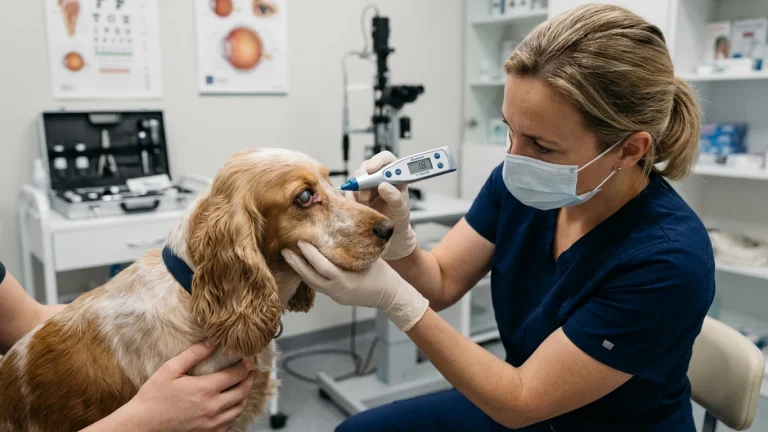
Using a focal light source and ophthalmoscope, the veterinarian evaluates the anterior chamber, cornea, iris, and lens. They screen for conjunctival hyperemia, epiphora, corneal ulceration, or lenticular sclerosis. Shelter dogs housed in high-density environments may show latent signs of dry eye (keratoconjunctivitis sicca / KCS), which can be confirmed via a rapid in-clinic Schirmer Tear Test.
4. Otoscopic Auditory Canal Evaluation
Using an otoscope equipped with an appropriately sized speculum, the clinician examines both the vertical and horizontal ear canals down to the translucent tympanic membrane. The clinician checks for erythema, inflammatory stenosis, foreign bodies (such as foxtails or plant awns), and ceruminous exudate. If exudate is identified, a cotton swab sample is rolled onto a glass microscope slide for in-house cytology to differentiate between Malassezia yeast proliferation and bacterial rod/cocci infections.
5. Oral Cavity and Periodontal Staging
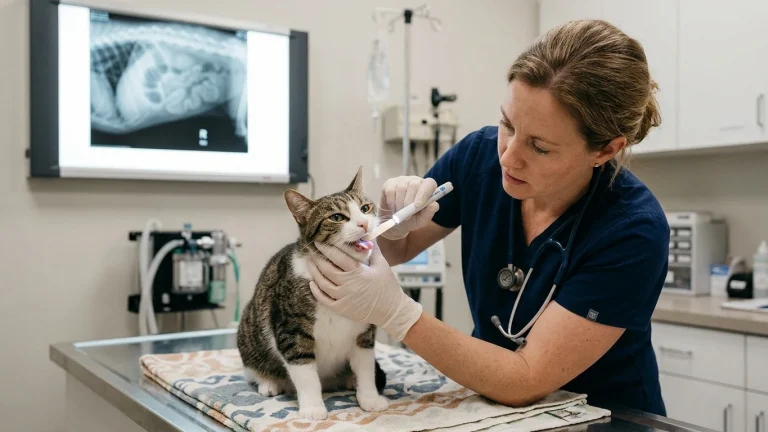
The veterinarian gently lifts the labial margins to inspect the teeth, mucosal membranes, and gingival sulcus. Periodontal disease is graded from Stage 0 (clinically normal) to Stage 4 (severe periodontitis with >50% attachment loss, furcation exposure, and mobile teeth). The clinician inspects the carnassial teeth (upper premolar 4 and lower molar 1) for slab fractures common in dogs given hard kennel enrichment toys, and verifies capillary refill time (CRT <2 seconds) to assess peripheral perfusion.
6. Cardiopulmonary Auscultation
Using a pediatric or adult stethoscope, the veterinarian systematically auscultates all four cardiac valves: mitral (left 5th intercostal space), aortic (left 4th intercostal space), pulmonic (left 3rd intercostal space), and tricuspid (right 4th intercostal space). The normal resting canine heart rate ranges from 60 to 140 beats per minute depending on body mass. The clinician listens for normal respiratory sinus arrhythmia, gallop rhythms, or systolic heart murmurs graded on the Levine I-VI scale. Lung fields are auscultated across dorsal and ventral lung lobes to detect adventitious sounds including moist crackles, wheezes, or referred upper airway stertor.
7. Peripheral Lymph Node Palpation
The clinician palpates all accessible external lymph nodes: submandibular (beneath the angle of the jaw), prescapular (cranial to the shoulder joint), and popliteal (caudal aspect of the stifle joint). Generalized bilateral lymphadenopathy indicates systemic antigenic stimulation, vector-borne disease (such as ehrlichiosis), or neoplastic proliferation.
8. Abdominal Cavity Palpation
With the dog standing, the veterinarian uses gentle two-handed cranial-to-caudal palpation to evaluate internal organ architecture. They assess liver margins, spleen size and contour, both kidneys (particularly the more mobile left kidney), small and large intestinal loops, and urinary bladder distension. Any localized discomfort, fluid wave, organomegaly, or intestinal wall thickening is documented for targeted follow-up ultrasonography or radiography.
9. Integumentary and Coat Evaluation
The clinician separates the hair coat across the dorsal lumbar spine, inguinal area, and pinnae to inspect skin health. They check for erythema, alopecia, pustules, papules, and external parasites. The presence of flea dirt is confirmed using the wet paper test, where black debris placed on a moistened paper towel dissolves into reddish-brown hemoglobin rings. Suspected fungal lesions may be evaluated using a filtered Wood’s lamp or fungal culture.
10. Musculoskeletal and Orthopedic Evaluation
The veterinarian palpates each limb joint—digits, carpus, elbow, shoulder, hock, stifle, and coxofemoral joints—evaluating range of motion, effusion, crepitus, and stability. In small rescue breeds, the clinician palpates the patella to rule out medial or lateral patellar luxation (graded I-IV). In medium-to-large breeds, stifle stability is assessed via the cranial drawer test and tibial thrust test to identify latent cranial cruciate ligament (CCL) tears.
11. Urogenital Examination
The clinician examines external genitalia, checking for discharge, vulvar recession, or prepuce inflammation. In neutered males, scrotal remnants are checked; in intact males, both testicles are palpated within the scrotum to rule out unilateral or bilateral cryptorchidism (retained abdominal testicles, which carry high testicular neoplasia risk). In females, the ventral abdomen is palpated for surgical spay scars or green tattoo ink.
12. Neurological Baseline and Proprioception
A rapid neurological screen evaluates cranial nerve function (menace response, palpebral reflex, pupillary light reflex) and conscious proprioception. The veterinarian briefly knuckles each paw so that the dorsal surface contacts the floor; a neurologically sound dog immediately corrects paw positioning back onto the pads within one second, confirming intact spinal pathways.
Phase 5: Fear-Free Cooperative Care and Clinic Decompression Strategies
For a newly adopted dog, entering a veterinary hospital can trigger profound emotional dysregulation. Intense olfactory cues, strange footing surfaces, chemical disinfectant odors, and proximity to other stressed animals can spike cortisol and adrenaline levels. Adopting low-stress handling strategies preserves your dog’s emotional well-being and ensures accurate clinical readings.
Work with your veterinary team to implement evidence-based Fear Free techniques:
- The Vehicle Check-In Protocol: Call the clinic reception desk from your vehicle upon arrival. Wait in your quiet car with your dog rather than sitting in an overstimulating waiting room filled with barking dogs or unfamiliar cats. The clinic staff will notify you when a private exam room is sanitized and ready for direct entry.
- Non-Slip Traction Surfaces: Cold stainless steel examination tables and polished linoleum floors cause anxiety-inducing loss of footing. Request that the veterinary staff place a textured yoga mat or non-slip rubber pad on the table or scale. For large dogs, conduct the majority of the examination on the floor with the clinician seated alongside.
- Enrichment Lick Mats and Distraction Therapy: Affix a silicone suction lick mat spread with xylitol-free peanut butter, cream cheese, or wet canine pâté to the examination wall or table. Repetitive rhythmic licking stimulates parasympathetic vagal tone, lowering resting heart rate and diverting attention during thermometer insertion, blood draws, or subcutaneous injections.
- Pre-Visit Pharmacological Anxiolysis: If your adopted dog exhibits severe clinical distress, panic, or protective aggression, do not attempt to physically force an exam. Collaborate with your veterinarian to schedule a rescheduled visit utilizing evidence-based pre-visit pharmaceuticals, such as oral trazodone or gabapentin administered 90 to 120 minutes prior to arrival.
Phase 6: The Diagnostic Minimum Database: Parasitology and Blood Chemistry
A visual examination alone cannot detect internal organ dysfunction, occult blood-borne infections, or subclinical intestinal parasitism. To establish true diagnostic clarity, the American Animal Hospital Association (AAHA) and the American Veterinary Medical Association (AVMA) recommend completing a diagnostic minimum database for all newly adopted canines.
Vector-Borne Disease Screening (The 4Dx Plus SNAP Test)
This rapid in-house ELISA blood test requires three drops of anticoagulated whole blood and delivers results in eight minutes. It screens for four major vector-borne pathogens:
- Heartworm Disease (Dirofilaria immitis): Detects circulating uterine antigens produced by adult female heartworms. Because heartworms require a 6-month pre-patent incubation period, every adopted dog over 6 months of age must be tested at intake and retested 6 months post-adoption, even if shelter tests were negative.
- Lyme Disease (Borrelia burgdorferi): Detects C6 peptide antibodies transmitted by Ixodes deer ticks.
- Ehrlichiosis (Ehrlichia canis / E. ewingii): Identifies exposure to brown dog ticks that transmit destructive intracellular rickettsial pathogens causing thrombocytopenia.
- Anaplasmosis (Anaplasma phagocytophilum / A. platys): Screens for granulocytic and thrombocytic vector-borne organisms causing lethargy, lameness, and cyclic bleeding disorders.
Centrifugal Fecal Flotation with Zinc Sulfate & Giardia ELISA
Passive benchtop fecal flotation methods fail to detect dense or fragile parasite ova. Veterinary laboratories utilize centrifugal flotation in zinc sulfate solution (specific gravity 1.18), spinning samples at high speeds to force ova to the surface of a coverslip. Concurrently, a fecal antigen ELISA test is performed to identify Giardia cell wall proteins, which are shed intermittently and frequently missed on standard microscopic smears.
detailed Baseline Hematology and Serum Biochemistry
For adult and senior adopted dogs, collecting baseline blood work is essential. A Complete Blood Count (CBC) quantifies erythrocytes, leukocytes (neutrophils, lymphocytes, monocytes, eosinophils), and platelets. The accompanying serum chemistry profile assesses renal function (BUN, creatinine, symmetric dimethylarginine / SDMA), hepatic integrity (ALT, AST, ALP, total bilirubin), protein balance (albumin, globulin), and endocrine stability (blood glucose and electrolytes).
Phase 7: AAHA Vaccination Catch-Up Protocol for Rescue Dogs
When an adopted dog arrives with unknown or unverified vaccination history, veterinarians adhere to the evidence-based American Animal Hospital Association (AAHA) Canine Vaccination Guidelines. Administering booster vaccines to a previously immunized adult dog does not increase adverse reaction risk, but failing to immunize an unprotected animal leaves them vulnerable to fatal pathogens.
| Vaccine Type | Immunization Classification | Unvaccinated / Unknown Shelter Protocol | Standard Re-Vaccination Interval |
|---|---|---|---|
| DAPP / DHPP (Distemper, Adenovirus, Parvovirus, Parainfluenza) | Core | Administer 1 dose upon intake; administer 1 booster dose 2–4 weeks later | Booster at 1 year, then every 3 years thereafter |
| Rabies (Killed Virus) | Core (Legally Mandated) | Administer 1 single dose (valid for 1 year in adult dogs with unverified history) | Booster at 1 year; subsequent boosters valid for 3 years where permitted by law |
| Bordetella bronchiseptica | Non-Core (Lifestyle) | Administer 1 dose intranasally or orally (requires no booster; rapid mucosal immunity) | Annual or every 6 months for dogs boarding, daycare, or frequent dog parks |
| Leptospirosis (4-Serovar) | Non-Core (Lifestyle / Regional) | Administer initial dose; administer mandatory booster dose 2–4 weeks later | Annual revaccination required to maintain renal and hepatic bacterin protection |
| Canine Influenza Virus (Bivalent H3N2 / H3N8) | Non-Core (Lifestyle) | Administer initial subcutaneous dose; administer booster dose 2–4 weeks later | Annual revaccination recommended for social dogs in regional outbreak zones |
Notice that bacterin vaccines—such as Leptospira and Canine Influenza—require two initial doses spaced 2 to 4 weeks apart to achieve adequate immune priming. A single dose of a bacterin vaccine will fail to produce protective immunological memory.
Phase 8: Red-Flag Emergency Symptoms: When to Bypass Routine Scheduling
Routine preparation and pre-appointment tracking are intended solely for dogs that are clinically alert, eating, drinking, and ambulating comfortably. Shelter environments are hotbeds for infectious pathogens, and incubation periods can culminate in acute medical emergencies within days of adoption. If your newly adopted dog displays any of the following clinical red flags, do not wait for an upcoming routine appointment—transport them immediately to an emergency veterinary hospital:
- Respiratory Distress: Open-mouth breathing, flared nostrils, exaggerated abdominal effort during inhalation, extended neck posture, or resting respiratory rates continuously exceeding 50 breaths per minute.
- Severe Gastrointestinal Compromise: Repeated projectile vomiting, persistent inability to hold down water for more than 12 hours, or voluminous hemorrhagic diarrhea (parvovirus or acute hemorrhagic diarrhea syndrome).
- Abnormal Mucous Membrane Perfusion: Gums that appear stark white, pale porcelain, muddy grey, or deep brick-red, paired with a capillary refill time exceeding 2 to 3 seconds.
- Neurological Impairment: Active tremors, localized or generalized seizures, severe ataxia, inability to bear weight on hindquarters, or unresponsive mental stupor.
- Suspected Toxic Ingestion or Foreign Body Obstruction: Known ingestion of human medications, rodenticides, xylitol, chocolate, lilies, coins, or fabric toys, accompanied by non-productive retching or extreme abdominal guarding.
Clinical Practice Tool: New Pet First Week Checklist
Make your adopted dog’s first clinic appointment smooth and stress-free with our printable New Pet First Week Checklist and intake preparation template. Download and print your copy of the New Pet First Week Checklist, or explore all practical pet care guides in the NewsPet Resource Center.
Frequently Asked Questions
How soon after adoption should I schedule my dog’s first vet checkup?
Schedule the appointment within the first 7 to 14 days of bringing your dog home. This provides a brief window for initial household decompression while ensuring timely physical baseline establishment, parasite testing, and vaccination reconciliation. If the dog shows any acute signs of illness, contact a veterinary clinic immediately.
Should I bring a stool sample to the first vet visit?
Yes. Bring a fresh stool sample collected within 4 to 6 hours of your appointment in a clean, sealed container. Internal parasites like hookworms, whipworms, and Giardia are highly prevalent in shelter environments and require specific laboratory centrifugation and antigen screening to diagnose accurately.
What if the shelter gave my dog vaccines right before adoption?
Bring the complete shelter record showing exact dates, vaccine brands, and serial lot numbers. Your veterinarian will determine if those vaccines were complete or if specific boosters (such as the second distemper or leptospirosis shot) are necessary to establish full protective immunity.
How can I prevent my rescue dog from feeling terrified at the vet?
Utilize Fear Free protocols: wait in your car until the exam room is ready, use high-value treats (like squeeze tubes or cut cheese) throughout the exam, bring a non-slip mat for table footing, and ask the veterinarian to perform the physical exam on the floor if your dog feels insecure elevated on a table.
Sources
Sources checked: September 8, 2026
- American Animal Hospital Association (AAHA): 2022 AAHA Canine Vaccination Guidelines
- American Veterinary Medical Association (AVMA): Canine Preventive Healthcare Guidelines
- VCA Animal Hospitals: Preventive Health Care Guidelines for Dogs
- Ross University School of Veterinary Medicine: Veterinary Preventive Care: From Puppy Wellness Exams to Senior Pet Health
- Fear Free Pets: Veterinary Certification and Low-Stress Clinical Handling Protocols
Emergency Triage Matrix: Clinical Presentation & Required Response
| Triage Level | Clinical Signs & Presentation | Immediate Action Protocol |
|---|---|---|
| Tier 1: Immediate Emergency (0–2 Hours) | Newly adopted dog exhibiting profound depression, intractable vomiting, foul bloody diarrhea, hypothermia, pale mucous membranes (suspected parvovirus); or sudden respiratory gasping with cyanotic tongue. | Immediate emergency veterinary transport under strict isolation notification; do not enter general waiting room; initiate point-of-care infectious screening, IV fluid resuscitation, and isolation hospitalization. |
| Tier 2: Urgent Veterinary Care (Same-Day) | New dog develops persistent hacking honking cough (kennel cough), purulent ocular or nasal discharge, watery mucoid stool with straining, active flea/tick infestation, or circular expanding crusting lesions (ringworm). | Contact veterinary hospital for same-day outpatient evaluation; perform respiratory PCR panel or Wood’s lamp fungal screening, and initiate targeted prescription therapeutics. |
| Tier 3: Home Monitoring & Scheduled Care | Adopted dog is bright, energetic, eating well, with normal stools and pink gums, but requires routine baseline physical examination, microchip transfer, and ongoing preventative scheduling. | Schedule comprehensive wellness exam within 3 to 7 days of adoption; bring shelter records, a fresh fecal sample, and high-value treats for Fear Free cooperative care. |
Rule S1 Boundaries & Adopted Canine Clinical Rules
Initial canine clinical care requires adherence to strict safety standards:
- NEVER use physical force or punitive restraint on an anxious newly adopted dog: Applying forceful restraint or alpha rolls during clinical exams triggers defensive panic bites and causes lifelong fear conditioning toward veterinary facilities; utilize Fear Free cooperative techniques.
- NEVER skip heartworm antigen testing before starting preventative therapy: Administering microfilaricidal preventatives to an occult heartworm-positive dog can trigger massive microfilarial die-off, fatal anaphylactic shock, and circulatory collapse.
- NEVER administer human anti-anxiety medications or over-the-counter sedatives without veterinary guidance: Human psychotropics induce unpredictable paradoxical excitation, profound ataxia, and fatal respiratory depression in dogs.
- NEVER allow an adopted dog into public dog parks prior to complete clinical clearance: Adopted canines frequently shed subclinical infectious pathogens (Giardia, Bordetella) during the initial two-week quarantine period, exposing other animals and reinfecting themselves.
Caregiver Adopted Dog Initial Veterinary Consultation Checklist
- Compile all shelter intake forms, spay/neuter certificates, rabies tags, microchip registration paperwork, and past vaccine records in a folder.
- Collect a fresh fecal sample (less than 12 hours old, free of debris) in a clean ziplock bag for centrifugal zinc sulfate parasite flotation.
- Fast adult dogs for 3 to 4 hours prior to the exam (water permitted) so they remain motivated for high-value clinic treats and non-lipemic blood draws.
- Bring a pouch of ultra-high-value treats (freeze-dried liver, hot dogs, squeeze cheese) to create positive clinic associations from the moment you enter.
- Request a universal microchip scan to confirm the chip is properly placed, functioning, and matches your registered contact details.
- Discuss individualized lifestyle vaccination needs (Leptospirosis, Bordetella, Lyme) based on your regional environment and planned activities.
Related Clinical Guides & Tools
Peer-Reviewed Clinical References & Evidence Grounding
- PMID: 33769611: International veterinary canine dyskinesia task force ECVN consensus statement: Terminology and classification (J Vet Intern Med, 2021) (opens in new tab)
- PMID: 38351524: Defining sepsis in small animals (J Vet Emerg Crit Care (San Antonio), 2024) (opens in new tab)
- PMID: 38474142: Canine Mammary Tumors: Classification, Biomarkers, Traditional and Personalized Therapies (Int J Mol Sci, 2024) (opens in new tab)
- Merck Veterinary Manual — Exotic, Aquatic, and Companion Animal Clinical Reference (opens in new tab)
Printable tools
Download the matching worksheet
Source transparency
Reference mix for this guide
Source labels describe the type of organization behind each reference; they are not a claim that any outside organization reviewed this article.
- American Animal Hospital Association (AAHA): 2022 AAHA Canine Vaccination Guidelines Veterinary organization · aaha.org
- American Veterinary Medical Association (AVMA): Canine Preventive Healthcare Guidelines Veterinary organization · avma.org
- VCA Animal Hospitals: Preventive Health Care Guidelines for Dogs Reference source · vcahospitals.com
- Ross University School of Veterinary Medicine: Veterinary Preventive Care: From Puppy Wellness Exams to Senior Pet Health Academic or extension · veterinary.rossu.edu
- Fear Free Pets: Veterinary Certification and Low-Stress Clinical Handling Protocols Veterinary organization · fearfreepets.com
- Puppy Socialization Without Overwhelm: A Vet-Safe Reference source · newspet.net
- Dog Body Language Chart: 9 Stress Signs Before a B Reference source · newspet.net
- Reward-Based Dog Training: Force-Free Steps & Reference source · newspet.net