This guide is general education for pet owners. If your pet has urgent symptoms, possible poisoning, injury, breathing trouble, collapse, severe pain, or sudden decline, contact a licensed veterinarian or local emergency service.
Quick Answer
An annual pet wellness exam should include a comprehensive head-to-tail physical examination, baseline diagnostic bloodwork (Complete Blood Count and serum biochemistry profile), annual heartworm antigen testing, a centrifugal fecal flotation test for intestinal parasites, and a complete urinalysis. Young adult pets should be examined once yearly, while senior dogs and cats (typically aged 7 years and older) require wellness evaluations every six months. Before your visit, prepare a fresh stool sample, write down a chronological list of diet and supplement details, and document subtle behavioral shifts in appetite, mobility, or water intake.
Editorial standard
How this guide was prepared
Routine annual veterinary wellness examinations represent the cornerstone of proactive preventive medicine for companion animals, providing an indispensable opportunity to identify occult diseases before irreversible organ damage occurs. Because dogs and cats age significantly faster than human beings—aging between four to seven physiological years for every calendar year—a single twelve-month gap in veterinary evaluation is clinically equivalent to a human skipping medical checkups for nearly half a decade. Approaching wellness visits with structured clinical preparation enables owners to partner effectively with their veterinary team, establishing vital biological baselines that guide individualized life-stage care.
A comprehensive wellness exam extends far beyond standard core vaccination boosters. Clinicians evaluate twelve distinct anatomical body systems, conduct diagnostic screening blood panels, and assess lifestyle risks to detect silent progressive conditions such as chronic renal insufficiency, subclinical cardiomyopathy, osteoarthritis, and endocrine disorders long before clinical symptoms become visible at home.
The Anatomy of a Complete Physical Examination

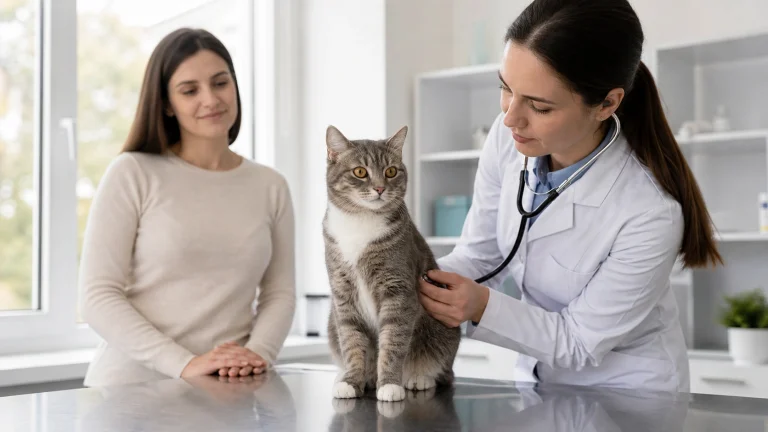
During a thorough wellness visit, your veterinary doctor examines multiple bodily systems using sensory observation, palpation, and auscultation:
- Ophthalmic & Otic Assessment: Inspecting pupils, corneas, and retinas with an ophthalmoscope to detect early nuclear sclerosis, cataracts, or uveitis, while otoscopic evaluation inspects ear canals for deep ceruminous exudate, yeast infections, or eardrum rupture.
- Dental & Oral Cavity Grading: Assessing teeth and gingiva using the AVDC periodontal grading scale (Grades 1 through 4) to identify subgingival tartar, resorptive tooth lesions in cats, loose premolars, or oral neoplasms.
- Cardiopulmonary Auscultation: Listening carefully to heart sounds across all four cardiac valves to detect subtle murmurs, arrhythmias, or gallop rhythms, while auscultating lung fields for crackles or wheezes indicating airway inflammation. Track resting breathing rates at home using our sleeping respiratory rate monitoring guide.
- Abdominal Palpation: Gently feeling kidneys, spleen, liver boundaries, intestines, and urinary bladder to check for organomegaly, fluid accumulation, pain, or abnormal masses.
- Orthopedic & Musculoskeletal Evaluation: Assessing joint range of motion, spine flexibility, and muscle mass symmetry across limbs to spot early degenerative joint disease. Learn subtle pain signs in our senior pet mobility and arthritis care guide.
Essential Diagnostic Screening: Bloodwork, Urine & Fecal Panels

Physical examinations identify external abnormalities, but internal metabolic function requires laboratory diagnostic screening:
| Diagnostic Panel | Target Biomarkers Evaluated | Clinical Significance & Early Detection |
|---|---|---|
| Complete Blood Count (CBC) | Erythrocytes (RBC), Leukocytes (WBC), Platelets, Hematocrit | Uncovers subclinical regenerative/non-regenerative anemia, occult systemic infections, leukemias, and clotting disorders. |
| Serum Biochemistry Profile | SDMA, BUN, Creatinine, ALT, ALP, Total Bilirubin, Glucose, Electrolytes | Detects early renal decline (SDMA catches kidney loss at 25–40% vs Creatinine at 75%), hepatic enzyme leakage, and diabetes mellitus. |
| Urinalysis (UA) | Specific Gravity (USG), Urine Protein:Creatinine ratio, Sediment, pH | Confirms kidney concentrating ability; detects microscopic hematuria, proteinuria, struvite crystals, and silent urinary infections. |
| Centrifugal Fecal Flotation | Ova and parasites (hookworms, roundworms, whipworms, Giardia) | Identifies shedding zoonotic intestinal parasites that pose serious transmission risks to family members and children. |
Life-Stage Visit Frequency: Puppies to Super-Seniors
The American Animal Hospital Association (AAHA) and American Association of Feline Practitioners (AAFP) establish life-stage visit cadence:
- Puppies & Kittens (0 to 12 Months): Visits every 3 to 4 weeks between 8 and 16 weeks of age for core vaccination series, microchipping, parasite control, fecal checks, and spay/neuter consultations. Review our first vet visit preparation checklist.
- Young & Mature Adults (1 to 6 Years): Annual wellness exams paired with annual vector-borne disease screening and core vaccine boosters according to 3-year immunization guidelines.
- Senior Pets (7 to 10 Years): Biannual (every 6 months) wellness examinations with comprehensive annual blood panels and blood pressure Doppler screening.
- Geriatric / Super-Seniors (11+ Years): Semi-annual exams with targeted osteoarthritis scoring, cognitive dysfunction evaluations, and renal-cardiac monitoring. Download our printable Vet Visit Prep Sheet to keep notes organized.
What to Bring to Your Annual Wellness Exam
To maximize the clinical value of your pet’s twenty-to-thirty-minute exam appointment, prepare these essential records and samples in advance:
- Fresh Stool Sample: Collect a fresh fecal specimen (less than 2 to 4 hours old) in a clean plastic bag. If collecting earlier in the day, keep it chilled in an airtight container to preserve parasite egg morphology.
- Dietary and Supplement Inventory: Note the exact commercial brand, protein source, and measured daily cups of your pet’s food, along with all joint supplements, dental treats, and vitamins.
- Medication and Preventative History: Bring original packaging or smartphone photos of current flea, tick, and heartworm preventatives, noting the date of the last administered dose.
- Behavioral Change Timeline: Document any subtle shifts in thirst, urination frequency, sleep patterns, or hesitance when navigating stairs or jumping onto furniture. Download our printable Vet Visit Prep Sheet to ensure no vital details are overlooked.
When to Contact a Veterinarian Immediately
Annual wellness checkups are designed for stable, afebrile companion animals. If your dog or cat develops sudden severe illness—such as respiratory distress, collapse, pale or bluish gums, profuse non-productive retching, active seizures, or complete inability to urinate—do not wait for an annual checkup; transport your pet immediately to an emergency veterinary clinic for life-saving emergency care.
Clinical Practice Tool: Veterinary Visit Preparation Sheet
Organize diagnostic bloodwork questions and routine wellness milestones with our Veterinary Visit Preparation Sheet. Download and print your copy of the Veterinary Visit Preparation Sheet, or explore all practical pet care guides in the NewsPet Resource Center.
Sources
- American Animal Hospital Association (AAHA): Canine Life Stage Guidelines
- Journal of the American Veterinary Medical Association (JAVMA): Canine and Feline Preventive Healthcare
- VCA Animal Hospitals: Comprehensive Preventive Healthcare Guidelines for Pets
- American Association of Feline Practitioners (AAFP): Feline Life Stage Standards
Source transparency
Reference mix for this guide
Source labels describe the type of organization behind each reference; they are not a claim that any outside organization reviewed this article.
- American Animal Hospital Association (AAHA): Canine Life Stage Guidelines Veterinary organization · aaha.org
- Journal of the American Veterinary Medical Association (JAVMA): Canine and Feline Preventive Healthcare Veterinary organization · avmajournals.avma.org
- VCA Animal Hospitals: Comprehensive Preventive Healthcare Guidelines for Pets Reference source · vcahospitals.com
- American Association of Feline Practitioners (AAFP): Feline Life Stage Standards Veterinary organization · catvets.com