
This guide is general education for pet owners. If your pet has urgent symptoms, possible poisoning, injury, breathing trouble, collapse, severe pain, or sudden decline, contact a licensed veterinarian or local emergency service.
Dosages must be calculated by a licensed veterinarian based on species, weight, and bloodwork. Never administer human medications or self-adjust prescription doses for pets.
Editorial standard
How this guide was prepared
Canine aging is not a medical diagnosis; it is a gradual biological transition that varies substantially depending on breed, body mass, genetics, and cumulative health history. Giant-breed dogs may reach their senior years as early as age six, whereas small-breed companions often thrive well past twelve before showing clinical signs of senescence. Rather than focusing solely on chronological age, compassionate geriatric care centers on preserving daily comfort, mobility, cognitive clarity, and dignity.

Clinical Quick Answer & Immediate Actions
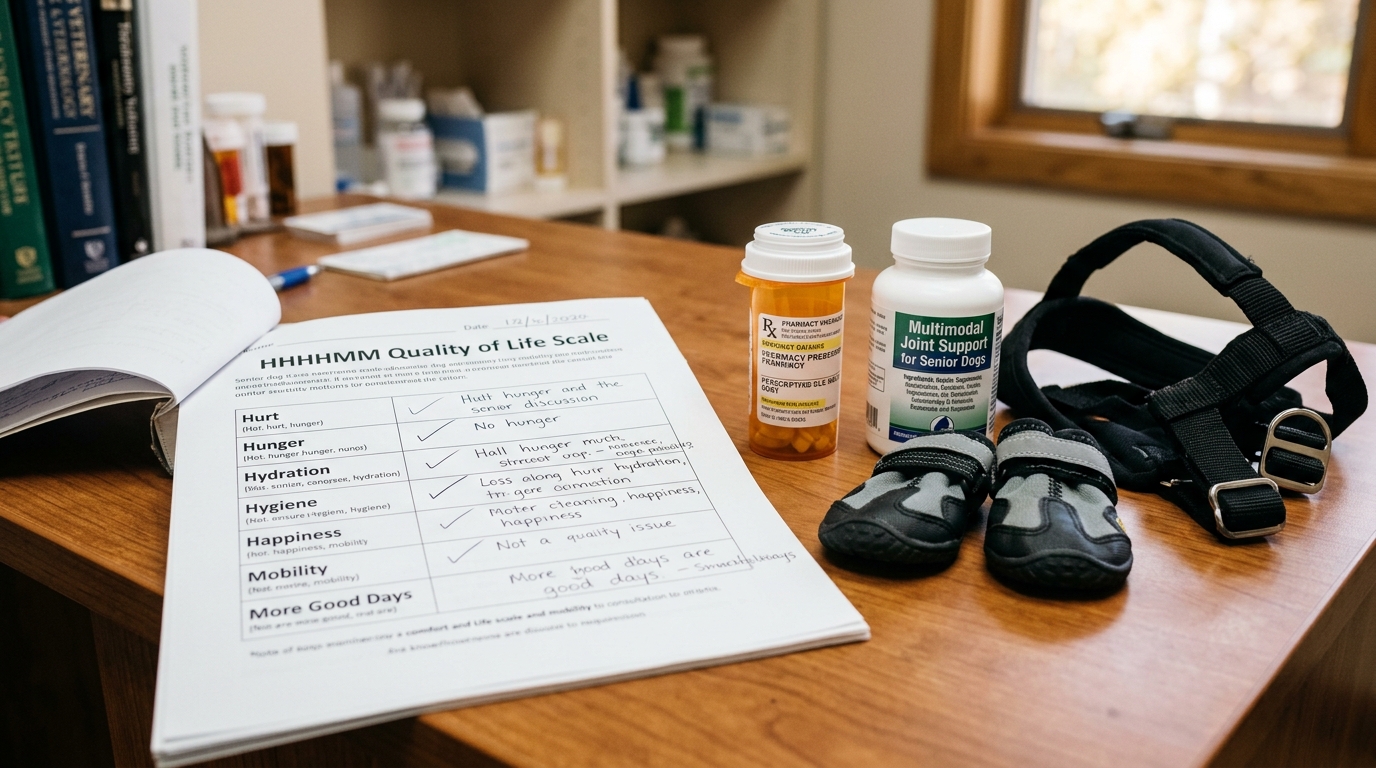
Canine aging is a biological continuum rather than a sudden medical diagnosis; senior dogs require proactive geriatric veterinary care and structured quality-of-life tracking. The veterinary standard HHHHHMM Scale evaluates seven vital clinical domains: Hurt (pain control), Hunger (nutrition), Hydration, Hygiene (mobility to eliminate cleanly), Happiness (mental stimulation and family interaction), Mobility (getting up and moving without severe struggle), and More Good Days Than Bad. Implementing non-slip floor runners, orthopedic bedding, and multimodal pain therapy preserves comfort and dignity throughout golden years.
By implementing objective quality-of-life assessment metrics, adapting the physical home environment to prevent painful falls, and partnering with your veterinary team for bi-annual geriatric health screenings, you can ensure your dog’s golden years remain comfortable, engaged, and pain-free.
1. The HHHHHMM Quality-of-Life Scale: Objective Tracking
Developed by veterinary oncologist Dr. Alice Villalobos, the HHHHHMM scale provides a structured, objective framework to evaluate an aging pet’s daily well-being across seven clinical domains, scored from 0 (poor) to 10 (excellent):
| Quality Domain | Clinical Assessment Parameters | Target Threshold & Interventions |
|---|---|---|
| 1. Hurt (Pain Control) | Is pain effectively controlled? Does the dog pant at rest, tremble, guard joints, vocalize, or struggle to find a restful sleeping posture? | Score ≥ 5. Adequate pain control is mandatory. Utilize multimodal analgesia, prescription NSAIDs, gabapentin, or anti-NGF monoclonal antibodies. |
| 2. Hunger (Nutrition) | Is the dog eating voluntarily? Are they maintaining lean muscle mass without nausea, lip-smacking, or vomiting? | Score ≥ 5. If appetite flags, warm wet food to enhance aroma, offer gentle hand-feeding, or discuss veterinary appetite stimulants (capromorelin). |
| 3. Hydration (Fluids) | Is fluid intake adequate? Check skin turgor elasticity, moist pink mucous membranes, and capillary refill time. | Score ≥ 5. Senior kidneys lose urine-concentrating capacity. Provide multiple water stations or veterinarian-prescribed subcutaneous fluids. |
| 4. Hygiene (Cleanliness) | Can the dog posture to urinate and defecate cleanly without soiling their coat? Is there evidence of urine scald or decubital pressure sores? | Score ≥ 5. Assist toileting with support slings. Keep perineal fur clipped, clean, and dry; apply protective veterinary barrier creams. |
| 5. Happiness (Joy & Engagement) | Does the dog wag, greet family members, interact with toys, sniff outdoors, and show curious engagement with their environment? | Score ≥ 5. Modify favorite activities: replace long hikes with leisurely “sniffaris,” gentle puzzle toys, and quiet companion resting. |
| 6. Mobility (Functional Movement) | Can the dog rise unassisted, manage hallways without slipping, walk comfortably, and lie down without collapsing? | Score ≥ 5. Implement non-skid flooring, orthopedic ramps, support harnesses, and physical rehabilitation exercises. |
| 7. More Good Days Than Bad | On a monthly calendar, do comfortable, happy days clearly outnumber days characterized by pain, nausea, disorientation, or distress? | When bad days consistently outnumber good days, request a dedicated quality-of-life and palliative care consultation with your veterinarian. |
2. Home Environmental Modifications for Aging Dogs
Osteoarthritis affects up to 80% of dogs over eight years old. Physical modifications to domestic living spaces dramatically reduce musculoskeletal strain, prevent catastrophic pelvic slips, and restore independence:
Traction Architecture: Eliminating Slick Surfaces
Slick hardwood, laminate, and tile flooring are severe hazards for senior dogs with diminished proprioception and muscle weakness. When paws splay outward on slippery floors, dogs suffer agonizing groin strains or pelvic fractures.
- Runner Rugs with Rubber Backing: Create interconnected “traction highways” connecting the dog’s bed directly to food stations, water bowls, and outdoor exit doors.
- Interlocking Foam Mats: Inexpensive, water-resistant EVA foam tiles provide excellent joint cushioning and grip in high-traffic kitchen areas.
- Paw Traction Aids: Apply natural rubber paw grips (such as Dr. Buzby’s ToeGrips) or non-slip canine booties to provide mechanical grip on slick surfaces.
Bedding & Elevation Ergonomics
- True Orthopedic Memory Foam: Standard polyester fiber-fill beds compress flat under a dog’s weight, forcing bony joints against the hard floor. High-density medical-grade orthopedic memory foam cushions pressure points, preventing elbow hygromas and decubitus ulcers.
- Low Entry Rims: Choose bolster beds with an open cutout or low threshold so arthritic dogs do not have to lift stiff limbs over high walls to lie down.
- Moderate Bowl Elevation: For dogs with chronic neck, spine, or elbow arthritis, raising food and water bowls slightly to mid-chest height reduces painful cervical extension during meals.
3. Canine Cognitive Dysfunction Syndrome (CCDS): Canine Dementia
Similar to Alzheimer’s disease in humans, senior dogs can develop Canine Cognitive Dysfunction Syndrome (CCDS) characterized by neurodegenerative amyloid-beta plaque deposition and cerebral oxidative damage. Veterinarians screen for cognitive decline using the DISHA diagnostic acronym:
| DISHA Domain | Common Behavioral Symptoms at Home | Clinical Management Options |
|---|---|---|
| D – Disorientation | Staring blankly at walls; getting stuck in corners or behind open doors; failing to recognize familiar people. | Maintain strict furniture layouts; install night lights along hallways; avoid sudden routine disruptions. |
| I – Interactions | Becoming unusually clingy, aloof, or displaying uncharacteristic irritability when touched. | Gentle predictability; offer quiet companionship without forcing physical restraint. |
| S – Sleep-Wake Cycles | Nighttime pacing, restlessness, whining, or barking at 2 AM, combined with sleeping deeply all day. | Daytime mental stimulation, morning sunlight exposure, melatonin, and veterinary-prescribed sedatives. |
| H – House-Soiling | Losing house-training; urinating or defecating indoors shortly after returning from an outdoor walk. | Frequent scheduled outdoor breaks; washable waterproof bedding covers; puppy pads near exit doors. |
| A – Activity Changes | Aimless wandering, repetitive pacing in circles, or total disinterest in environmental stimuli. | Neuroprotective diets enriched with Medium Chain Triglycerides (MCTs), SAMe, and veterinary pharmaceuticals (selegiline). |
4. Chronic Pain Management & Bi-Annual Geriatric Exams
Senior dogs age roughly four to five biological years for every single human year. Consequently, the American Animal Hospital Association (AAHA) strongly recommends transitioning from annual to bi-annual (twice-yearly) veterinary wellness checkups once a dog reaches senior status.
Essential Geriatric Diagnostic Panels
- Complete Blood Count (CBC) & Serum Chemistry: Evaluates liver enzymes (ALT, ALKP), blood glucose, and electrolytes.
- Renal Biomarkers (BUN, Creatinine, SDMA): Symmetric dimethylarginine (SDMA) detects chronic kidney disease when only 25% to 40% of renal function is lost, months earlier than traditional creatinine tests.
- Urinalysis & Urine Protein-to-Creatinine (UPC) Ratio: Identifies early renal proteinuria, subclinical bacterial infections, and diabetes mellitus.
- Total T4 Thyroid Screening: Detects canine hypothyroidism, a widespread cause of senior lethargy, weight gain, and muscle weakness.
- Blood Pressure Measurement: Screens for systemic hypertension secondary to renal disease or hyperadrenocorticism.
Modern Multimodal Pain Management
Chronic arthritic pain is managed most effectively by targeting multiple pain pathways simultaneously:
- Prescription Veterinary NSAIDs: Carprofen, meloxicam, or grapiprant to target joint inflammation (always monitored with routine liver and kidney bloodwork).
- Neuropathic Pain Medications: Gabapentin or amantadine to control chronic central sensitization (“wind-up” pain).
- Anti-NGF Monoclonal Antibodies: Bedinvetmab (Librela), a monthly subcutaneous injection that neutralizes Nerve Growth Factor, providing dramatic mobility improvement with zero liver or kidney metabolism.
- Joint Supplements & Omega-3 Fatty Acids: High-dose EPA/DHA marine fish oils and therapeutic polysulfated glycosaminoglycans (Adequan).
Veterinary Escalation Boundary: When to Seek Emergency Care
If your senior dog exhibits acute respiratory distress, sudden collapse, inability to stand, unyielding breakthrough pain, or inability to urinate, contact an emergency veterinarian immediately. Acute deterioration in an older animal can reflect life-threatening events—such as splenic hemangiosarcoma rupture, congestive heart failure, or severe disc herniation—that require urgent medical stabilization.
Clinical Practice Tool: Daily Pet Care Routine Tracker
Track senior pet mobility changes, pain signs, and daily medication administration with our free printable Daily Pet Care Routine Tracker. Download and print your copy of the Daily Pet Care Routine Tracker, or explore all practical pet care guides in the NewsPet Resource Center.
Frequently Asked Questions
How do I know when my senior dog’s quality of life is declining?
Veterinarians recommend using the objective HHHHHMM Scale, which evaluates seven key parameters: Hurt (pain control), Hunger (appetite), Hydration, Hygiene (grooming and elimination control), Happiness (wagging, interaction), Mobility, and More Good Days Than Bad Days. A total score below 35 indicates compromised welfare.
How often should a senior dog visit the veterinarian?
Dogs entering their senior years (typically age 7+ for large breeds, age 9+ for small breeds) should receive detailed wellness examinations every 6 months. Bi-annual exams allow early detection of chronic kidney disease, cardiac murmurs, osteoarthritis, and endocrine disorders before clinical crises emerge.
Can canine cognitive dysfunction (dog dementia) be treated?
While canine dementia cannot be cured, early medical intervention significantly slows progression. Prescription therapies like selegiline, antioxidant-rich neuroprotective diets (fortified with DHA and medium-chain triglycerides), environmental consistency, and daytime puzzle enrichment preserve cognitive function.
Sources
Sources checked: September 8, 2026.
- AAHA: Senior Care Guidelines for Dogs and Cats
- WSAVA Global Pain Council: Guidelines for the Recognition, Assessment, and Treatment of Pain
- International Association for Animal Hospice and Palliative Care (IAAHPC): Quality of Life Guidelines
- Ohio State University Veterinary Medical Center: Honoring the Bond – Assessing Quality of Life
- Cornell University Riney Canine Health Center: Senior Dog Care and Cognitive Dysfunction
Emergency Triage Matrix: Clinical Presentation & Required Response
| Triage Level | Clinical Signs & Presentation | Immediate Action Protocol |
|---|---|---|
| Tier 1: Immediate Emergency (0–2 Hours) | Acute complete hindlimb collapse or paralysis (knuckling paws, dragging rear legs), intractable crying from severe spinal/joint pain, continuous labored breathing at rest, or acute pale gums with abdominal distension. | Immediate emergency hospital transport; emergency neurological/orthopedic stabilization, spinal radiography, opioid analgesia, and abdominal ultrasound to rule out hemoabdomen. |
| Tier 2: Urgent Veterinary Care (Same-Day) | Significant deterioration in mobility: unable to rise without physical lifting, persistent anorexia >24 hours, new-onset urinary incontinence, or sudden pacing and disorientation at night. | Urgent veterinary clinical examination; complete geriatric blood profile (CBC, chemistry, urinalysis), blood pressure screening, and adjustment of pain management protocols. |
| Tier 3: Home Monitoring & Scheduled Care | Senior dog showing mild morning stiffness that improves after a few minutes of walking, slightly slower gait on stairs, normal appetite, and cheerful interaction with family. | Conduct monthly HHHHHMM score tracking, install non-slip rug runners on smooth floors, provide orthopedic memory foam beds, and schedule bi-annual geriatric wellness exams. |
Rule S1 Boundaries & Senior Dog Care Protocols
Geriatric canine care requires strict adherence to pharmacological and safety limits:
- NEVER administer human pain relievers (ibuprofen, naproxen, acetaminophen, aspirin) to dogs: Human NSAIDs cause severe gastric ulceration, life-threatening stomach perforation, and acute renal failure within standard human doses; only veterinarian-prescribed canine analgesics are safe.
- NEVER assume urinary incontinence or cognitive confusion is ‘just old age’: Incontinence frequently stems from treatable bacterial cystitis or hormone-responsive sphincter mechanism incompetence; confusion may indicate systemic hypertension, renal dysfunction, or treatable canine cognitive dysfunction.
- NEVER force a reluctant senior dog into prolonged or high-impact exercise: Forcing exercise across damaged arthritic joints causes severe micro-fractures, ligament sprains, and acute inflammatory flare-ups; maintain short, frequent, low-impact strolls.
- NEVER alter prescription heart, kidney, or pain medications without veterinary authorization: Abrupt cessation of cardiac inotropes or NSAIDs can trigger acute congestive heart failure, rebound pain crises, or fatal electrolyte imbalances.
Caregiver Senior Dog Quality-of-Life Home Checklist
- Track quality-of-life monthly using the validated HHHHHMM scoring sheet (target score > 35 out of 70).
- Lay non-slip yoga mats, rug runners, or carpet runners along high-traffic hardwood, laminate, or tile pathways.
- Provide multi-layer orthopedic memory foam beds located in draft-free, warm areas of the house.
- Schedule veterinary geriatric bloodwork and blood pressure screenings every 6 months to detect organ decline early.
- Keep a daily calendar marking ‘Good Days’ versus ‘Bad Days’ to make objective, compassionate palliative care decisions.
Related Clinical Guides & Tools
Peer-Reviewed Clinical References & Evidence Grounding
- PMID: 38625530: Nutrition and Aging in Dogs and Cats (Adv Exp Med Biol, 2024) (opens in new tab)
- PMID: 36584321: 2023 AAHA Senior Care Guidelines for Dogs and Cats (J Am Anim Hosp Assoc, 2023) (opens in new tab)
- PMID: 33653535: Senior Pet Nutrition and Management (Vet Clin North Am Small Anim Pract, 2021) (opens in new tab)
- aaha.org (opens in new tab)
Printable tools
Download the matching worksheet
Source transparency
Reference mix for this guide
Source labels describe the type of organization behind each reference; they are not a claim that any outside organization reviewed this article.
- AAHA: Senior Care Guidelines for Dogs and Cats Veterinary organization · aaha.org
- WSAVA Global Pain Council: Guidelines for the Recognition, Assessment, and Treatment of Pain Veterinary organization · wsava.org
- International Association for Animal Hospice and Palliative Care (IAAHPC): Quality of Life Guidelines Reference source · iaahpc.org
- Ohio State University Veterinary Medical Center: Honoring the Bond – Assessing Quality of Life Academic or extension · vmc.vet.osu.edu
- Cornell University Riney Canine Health Center: Senior Dog Care and Cognitive Dysfunction Academic or extension · vet.cornell.edu
- Puppy Socialization Without Overwhelm: A Vet-Safe Reference source · newspet.net
- Dog Body Language Chart: 9 Stress Signs Before a B Reference source · newspet.net
- Reward-Based Dog Training: Force-Free Steps & Reference source · newspet.net