
This guide is general education for pet owners. If your pet has urgent symptoms, possible poisoning, injury, breathing trouble, collapse, severe pain, or sudden decline, contact a licensed veterinarian or local emergency service.
Dosages must be calculated by a licensed veterinarian based on species, weight, and bloodwork. Never administer human medications or self-adjust prescription doses for pets.
Editorial standard
How this guide was prepared
When welcoming a newly adopted pet into your home, fluctuations in appetite and water intake are among the most common early concerns. However, the clinical significance of a missed meal or reduced drinking depends profoundly on life stage. A 4-year-old adult dog who skips dinner due to transition anxiety operates under a completely different metabolic reality than an 8-week-old puppy or kitten. Recognizing these life-stage trade-offs protects young animals from rapid metabolic collapse while preventing unnecessary panic in adult transitions.
- Reliable Hydration Biomarkers: Mucous membrane moistness and capillary refill time (< 2 seconds) provide more accurate hydration indicators than skin tenting, particularly in pediatric, senior, or emaciated rescue animals.
- The Feline Hepatic Lipidosis Alert: While healthy dogs can tolerate short fasts, a cat that refuses food for more than 48 hours is at immediate risk for life-threatening acute hepatic lipidosis (fatty liver syndrome) and requires prompt veterinary care.
- Transitioning Caloric & Fluid Intake: Encourage voluntary appetite and hydration during shelter-to-home transitions by warming wet food to body temperature (38°C), adding sodium-free bone broth, and utilizing circulating water fountains.
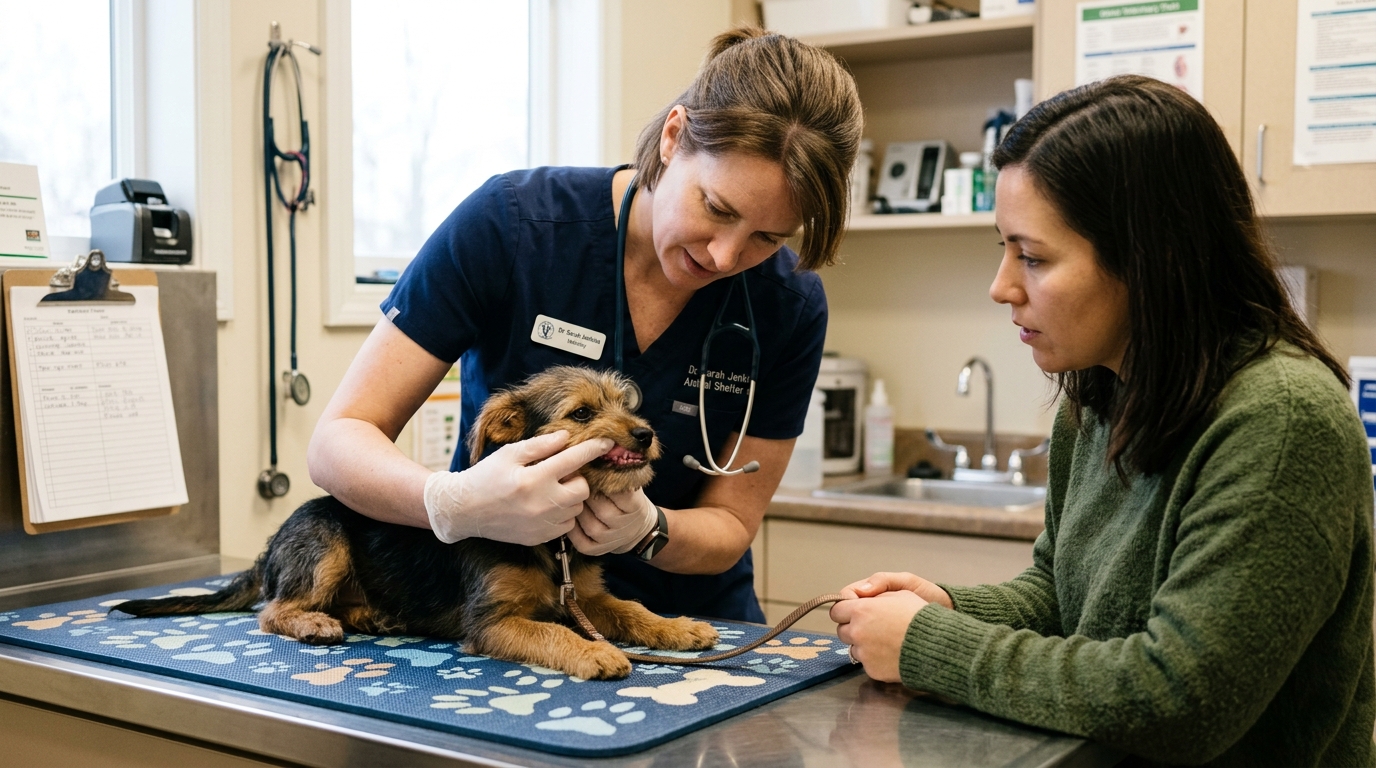
The Pediatric Physiology Trap: Why Young Pets Decompensate Fast
Puppies and kittens under six months of age have unique physiological constraints that eliminate the margin of safety enjoyed by adult animals:
- Total Body Water & Turnover: Neonatal and juvenile bodies consist of up to 80 percent water (compared to 60 percent in adults), with water turnover rates that are two to three times faster.
- Immature Renal Function: Renal tubules in pediatric pets have not developed full urine-concentrating capability, meaning fluid losses through mild diarrhea or vomiting deplete intravascular volume with alarming speed.
- Minimal Glycogen Reserves: The juvenile liver stores negligible glycogen. If a young puppy or kitten ceases eating for even 8 to 12 hours, blood glucose plummets precipitously, leading to hypothermia, neurological depression, and seizures.
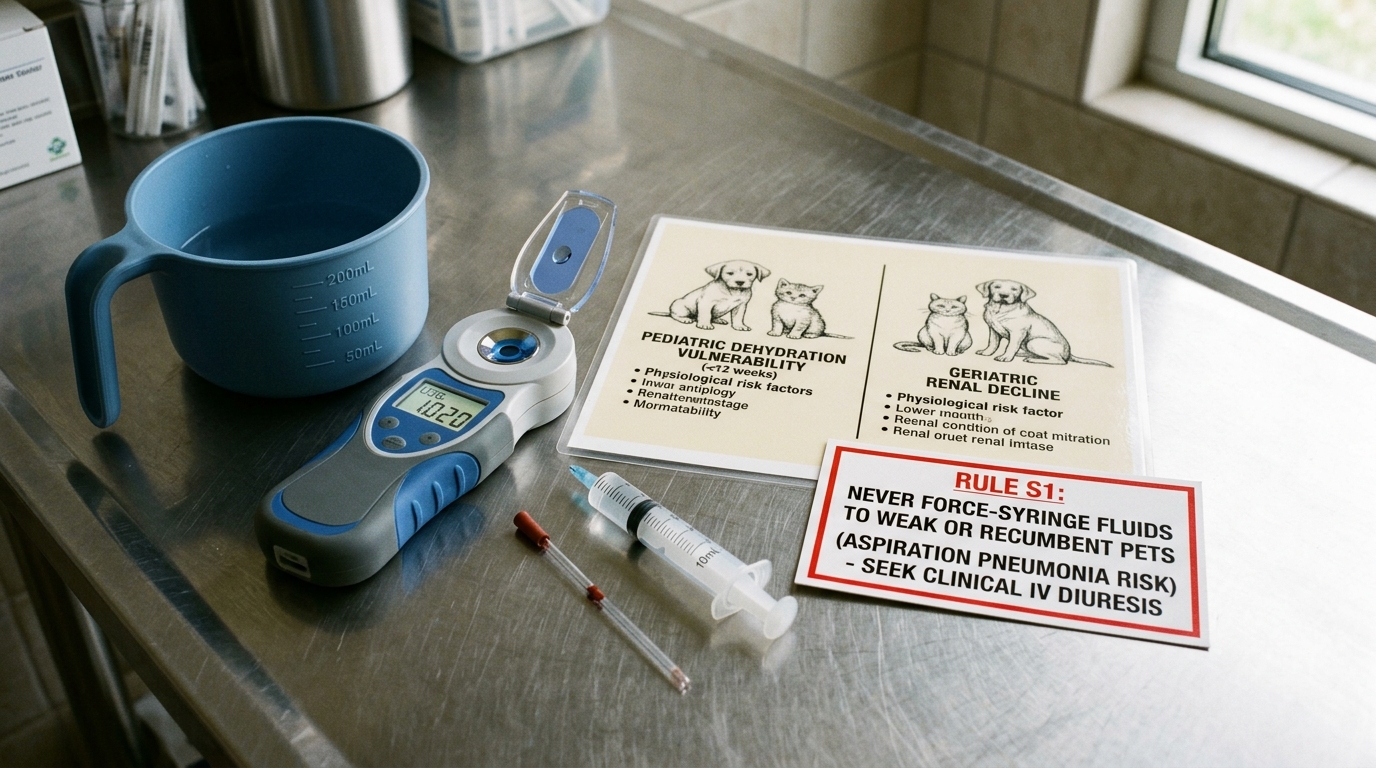
Objective Hydration Checks: Moving Beyond the Skin Tent
Many pet owners rely on the traditional “skin tent” test—lifting skin along the scruff and timing its return. In puppies and kittens, however, this test is clinically unreliable because juvenile animals possess less subcutaneous fat and higher tissue water content, often resulting in normal skin elasticity even during significant dehydration. Instead, use these objective clinical markers:
- Mucous Membrane Moisture: Gently lift the upper lip. The gums should feel smooth, slippery, and wet. If they feel tacky, sticky, or dry like dry leather, the pet has lost at least 5 to 7 percent of body water.
- Capillary Refill Time (CRT): Press your fingertip firmly against the pink gum for one second until it blanches white, then release. The pink color should return in under 1.5 to 2 seconds. A delayed refill time (>2.5 seconds) indicates reduced peripheral perfusion and developing shock.
- Eye Position & Mental Acuity: Sunken eyes with visible third eyelids protruding indicate severe, advanced dehydration (>8–10 percent). Healthy young pets remain inquisitive and responsive between naps.
Red-Flag Triage Matrix: Life-Stage Action Paths
Use this clinical triage framework to determine when home monitoring is appropriate and when emergency transport is non-negotiable:
| Triage Level | Clinical Presentation | Required Action |
|---|---|---|
| Immediate Emergency (0–2 Hours) | Pediatric puppy/kitten refusing food/fluids >8–12 hours; hypothermia (<37.2°C / 99°F); pale/gray gums with CRT >2.5s; continuous uncontainable vomiting; profuse bloody diarrhea (parvovirus/panleukopenia warning); weakness or collapse. | Transport immediately to the nearest 24/7 emergency veterinary hospital. Provide passive warmth (wrap in a warm, dry blanket); do NOT attempt to force liquids. |
| Same-Day Visit (Within 12–24 Hours) | Adult pet refusing all food for >24 hours; puppy/kitten missing 2 consecutive meals while still drinking; dry tacky gums with dark, concentrated urine; repeated vomiting (>2 episodes in 12 hours). | Contact your local veterinary clinic for an urgent same-day triage slot. Collect a fresh fecal sample in a sealed container if diarrhea is present. |
| Home Monitoring & Structured Care | Newly adopted adult pet eating 50–75% of ration during the first 48 hours; bright, alert, and curious; wet pink gums; normal urination frequency and normal stool. | Keep feeding area calm and secluded away from noisy appliances; warm wet food slightly to enhance aroma; measure water intake in milliliters; do not abruptly change dietary brands. |
Dangerous Home Mistakes and Rule S1 Boundaries
When an adopted pet refuses to eat, panicked caregivers often attempt home remedies that dramatically escalate mortality risks:
- Strictly avoid syringe force-feeding: Never squirt puree or liquids into the mouth of a weak, nauseated, or resisting animal. When swallowing reflexes are impaired or overwhelmed, food enters the trachea, causing fatal aspiration pneumonia.
- Never administer human anti-diarrheal medications: Loperamide (Imodium) causes acute central nervous system depression and neurotoxicity in dogs with the ABCB1 (MDR1) genetic mutation. Bismuth subsalicylate (Pepto-Bismol) metabolizes into salicylates, causing severe, often fatal toxicosis in cats.
- Never administer human sports drinks: Electrolyte solutions formulated for human athletes frequently contain artificial sweeteners (especially Xylitol, which triggers lethal liver necrosis in dogs) and excessive sodium levels inappropriate for feline or canine kidneys.
- Never mask symptoms with prescription anti-emetics: Administering leftover veterinary medications (such as Maropitant/Cerenia) without veterinary diagnosis is dangerous. If vomiting is caused by an intestinal foreign body (such as swallowed shelter toys or bedding), suppressing vomiting can delay life-saving emergency surgery until intestinal perforation occurs.
Frequently Asked Questions
How can pet owners accurately assess hydration levels at home?
Check skin elasticity by lifting the skin over the shoulders (it should spring back instantly), touch the gums to ensure they feel slick and moist rather than tacky or dry, and press a finger on the gum to confirm capillary refill time is under 2 seconds.
How long can a dog or cat safely refuse food before serious medical danger occurs?
Healthy dogs can tolerate 24 to 48 hours of reduced intake if hydrated, but cats risk developing life-threatening hepatic lipidosis (fatty liver syndrome) if they stop eating for more than 48 hours. Any animal refusing food with vomiting or lethargy needs prompt veterinary attention.
What are safe, vet-approved ways to encourage water intake without causing stomach upset?
Add warm water or sodium-free unseasoned bone broth to canned food, provide multiple water stations with ceramic or stainless steel bowls, and use clean pet water fountains. Never syringe-feed liquids into a lethargic pet due to the danger of aspiration.
Caregiver Hydration and Nutrition Tracking Checklist
- Check gum moisture twice daily: gums should feel wet and slippery, not dry or tacky like adhesive tape.
- Perform a gentle skin pinch over the shoulder blades; delayed snapback indicates dehydration exceeding 5 percent.
- Measure daily water consumption in bowls; healthy baseline is approximately 50 to 60 mL per kilogram per day.
- Incorporate wet canned food to increase moisture intake if urine is dark yellow, highly concentrated, or reduced.
- Seek emergency veterinary fluid therapy if an anorexic pet vomits liquids or displays sunken eyes and dull mentation.
Sources
- . American Animal Hospital Association & AAFP. Checked September 11, 2026.
- WSAVA Nutritional Assessment Guidelines. World Small Animal Veterinary Association. Checked September 11, 2026.
- Pathophysiology and Triage of Pediatric Dehydration in Small Animals. Journal of Veterinary Internal Medicine / Wiley. Checked September 11, 2026.
WSAVA 10% Treat Calorie Allowance Calculator
Calculate your pet's daily Resting Energy Requirement (RER) and maximum recommended 10% treat calorie budget based on WSAVA clinical nutrition consensus.
Printable tools
Download the matching worksheet
Source transparency
Reference mix for this guide
Source labels describe the type of organization behind each reference; they are not a claim that any outside organization reviewed this article.
- . American Animal Hospital Association & AAFP. Checked September 11, 2026.WSAVA Nutritional Assessment Guidelines Veterinary organization · aaha.org
- Pathophysiology and Triage of Pediatric Dehydration in Small Animals Reference source · onlinelibrary.wiley.com

