This guide is general education for pet owners. If your pet has urgent symptoms, possible poisoning, injury, breathing trouble, collapse, severe pain, or sudden decline, contact a licensed veterinarian or local emergency service.
Quick Answer
To check if your dog or cat is dehydrated at home, perform three physical evaluations: the skin turgor pinch test, the gum moisture check, and the Capillary Refill Time (CRT) assessment. For skin turgor, gently lift the loose skin over the shoulder blades into a tent and release; in a well-hydrated pet, the skin snaps back into place instantly (under 1 second). If the skin tent remains standing or slides back slowly, or if the gums feel dry, tacky, and pale with a CRT over 2 seconds, your pet has clinically significant dehydration (at least 6% to 8% fluid deficit) and requires immediate veterinary fluid therapy.
Editorial standard
How this guide was prepared
Water is the single most vital nutrient for canine and feline physiology, comprising sixty to seventy percent of a healthy adult companion animal’s total body weight. When fluid loss exceeds fluid intake—whether due to persistent vomiting, watery diarrhea, heat exhaustion, fever, or chronic conditions like feline renal disease and diabetes mellitus—cellular dehydration develops rapidly. Because pets cannot verbally communicate thirst and often mask early signs of physiological exhaustion, caregivers must know how to assess hydration status objectively using simple at-home clinical examination techniques.
Dehydration is never just about being thirsty; it impairs microvascular blood flow, compromises vital oxygen delivery to organs, reduces glomerular filtration in the kidneys, and can precipitate acute hypovolemic shock. Learning how to check skin turgor, examine mucous membranes, and evaluate capillary refill time allows pet parents to identify early fluid loss and seek timely veterinary medical support before acute organ shutdown occurs.
The 3-Step Physical Hydration Assessment Protocol
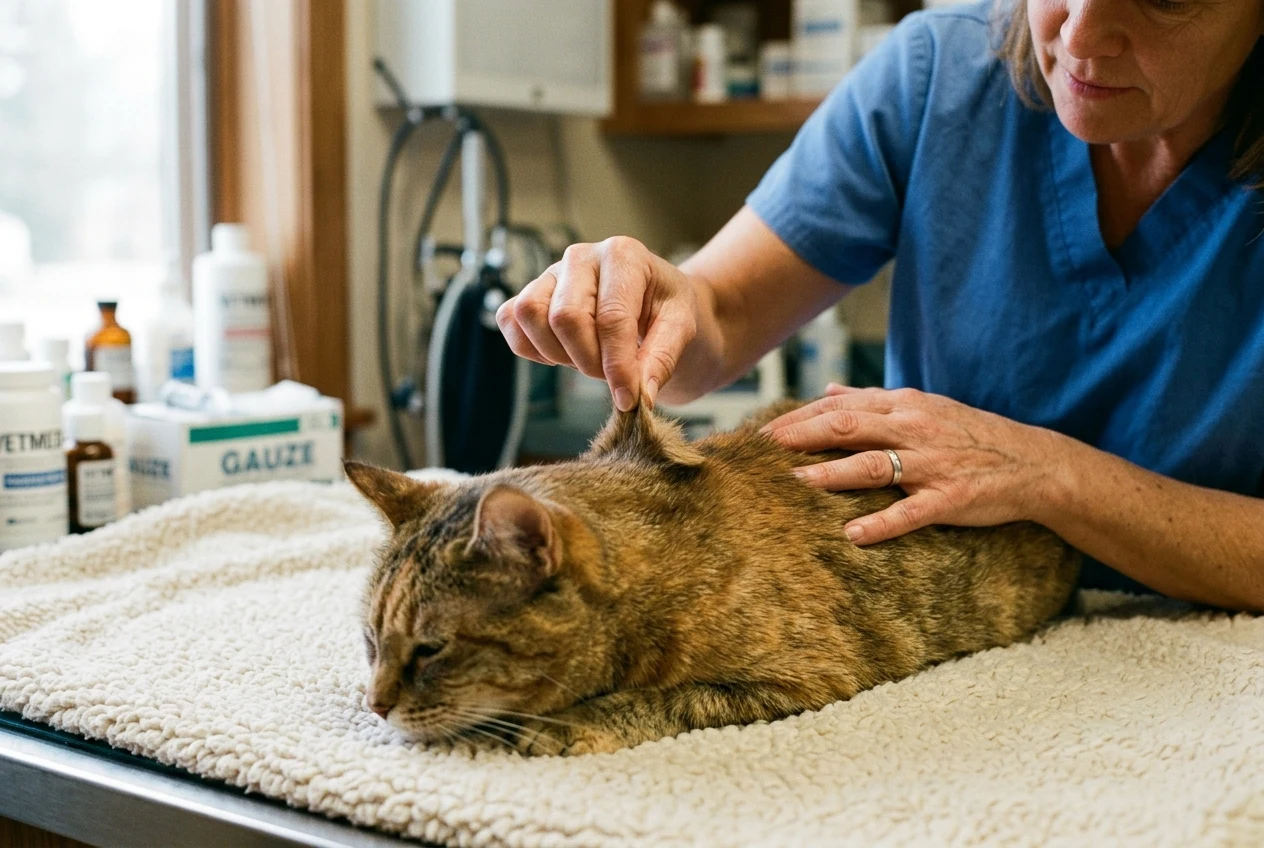
Perform these non-invasive clinical checks in a quiet, well-lit room when your pet is calm:
- 1. The Skin Turgor (Skin Pinch) Test: Gently pinch and pull up a fold of loose skin over the shoulder blades (cervical scruff) or mid-back, lifting it into a “tent,” then immediately let go. In a healthy, well-hydrated animal with normal skin elasticity, the fold snaps flat instantly. In dehydrated pets, the skin returns slowly (taking 2 to 4 seconds), or remains elevated like a rigid tent in severe dehydration (>10% fluid loss). Clinical Note: Skin turgor can be naturally less elastic in lean senior pets or cachectic animals; always cross-check with gum moisture.
- 2. The Mucous Membrane (Gum Moisture) Check: Gently lift your pet’s upper lip and slide your bare index finger along the gingiva (gums) above the canine tooth. In a well-hydrated pet, the gums feel slick, slippery, and wet like healthy saliva. In dehydrated animals, the gums feel sticky, dry, or tacky to the touch.
- 3. Capillary Refill Time (CRT): While checking the gums, press your thumb or index finger firmly against the pink gum tissue for 2 seconds to blanch the area white, then release. Count the exact seconds it takes for the white spot to return to its original healthy pink color. A normal CRT is under 1.5 to 2 seconds. A CRT exceeding 2 to 3 seconds indicates poor peripheral perfusion and compromised cardiovascular circulation.
Clinical Dehydration Scoring Scale: Estimating Fluid Deficit
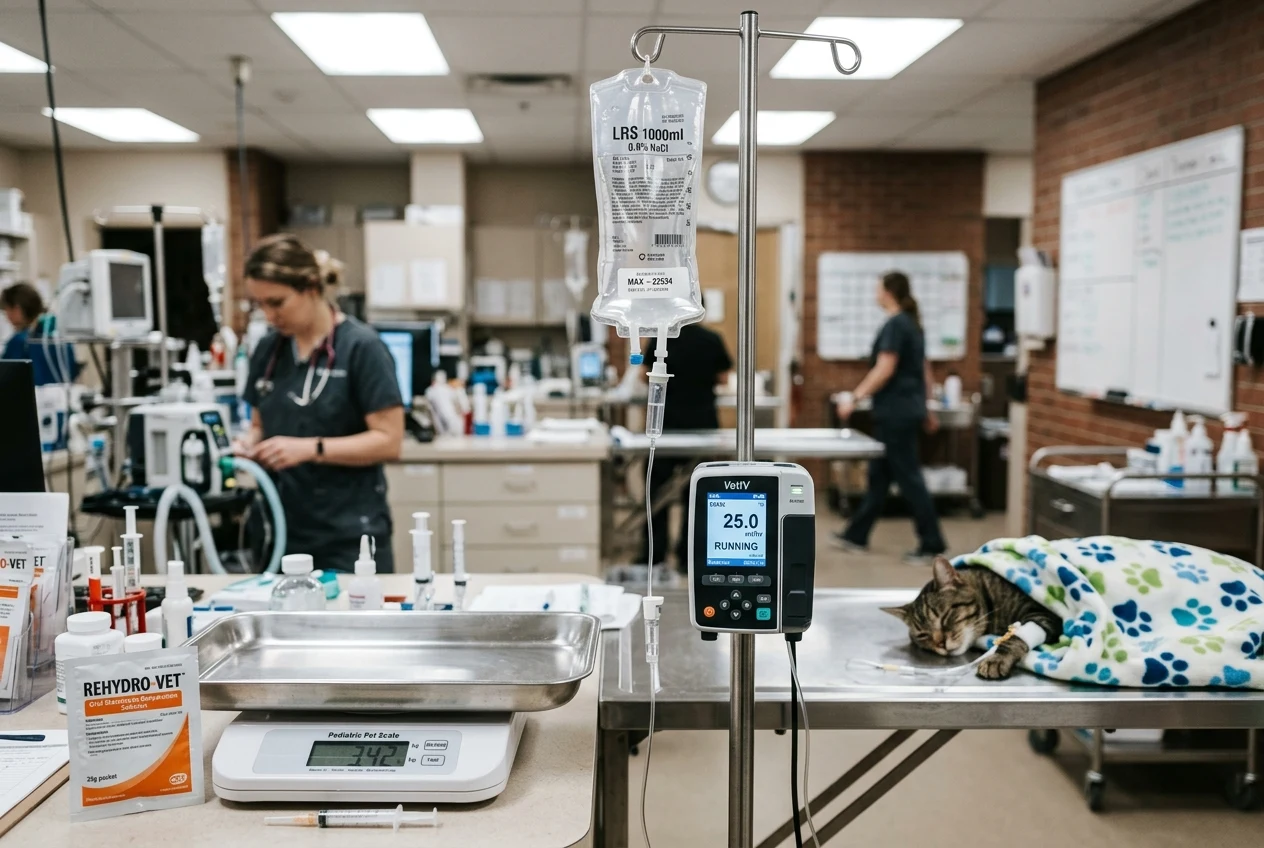
Veterinary emergency clinicians quantify dehydration based on objective clinical milestones:
| Estimated Fluid Loss | Clinical Presentation & Examination Findings | Clinical Severity & Action Protocol |
|---|---|---|
| < 5% (Subclinical) | No detectable physical abnormalities; pet may have skipped a single water visit. | Mild/undetectable. Offer fresh cool water; monitor appetite and bowl visits. |
| 6% to 8% (Mild to Moderate) | Slight delay in skin snap-back (2–3 seconds); dry, tacky mucous membranes; CRT ~2 seconds. | Clinically significant. Veterinary subcutaneous or intravenous fluid therapy needed. |
| 8% to 10% (Moderate to Severe) | Definite skin tenting; gums dry and pale; CRT > 2–3 seconds; sunken eyes (enophthalmos); lethargy. | Serious medical crisis. Immediate hospital admission for intravenous balanced electrolyte fluids. |
| 10% to 12%+ (Critical Shock) | Skin tent remains standing indefinitely; dull/sunken eyes; cold extremities; weak thready pulses; stupor. | Life-threatening hypovolemic emergency. Risk of acute renal failure and vascular collapse. |
Safe Home Rehydration vs. Dangerous Mistakes
Understanding what to do—and what NEVER to do—when managing a dehydrated companion animal:
- NEVER Force Large Volumes of Water: Gulping large amounts of water in a dehydrated animal distends the stomach, triggers immediate vomiting, and accelerates electrolyte loss. Offer small sips (a few tablespoons) every 15 to 20 minutes.
- NEVER Use Human Sports Drinks (Gatorade/Powerade): Human electrolyte drinks contain high sodium and excessive refined sugars that irritate canine and feline intestines, worsening osmotic diarrhea. If advised by your vet, use veterinary-formulated oral electrolyte solutions (such as Oralade).
- Offer High-Moisture Broths: Unsalted, garlic-free and onion-free bone broth, or adding warm water to canned wet food, stimulates natural drinking interest while providing gentle hydration. Track symptom timelines using our pet symptom tracking timeline guide.
When to Contact a Veterinarian Immediately
Severe dehydration cannot be corrected through oral drinking alone. Seek immediate emergency veterinary clinic care if your pet’s skin tent remains standing, if their gums are dry, pale, or bluish, if their eyes appear noticeably sunken into the eye sockets, if they are too weak to stand, or if dehydration is accompanied by persistent vomiting or profuse watery diarrhea. Immediate intravenous catheterization and balanced isotonic fluid administration are essential to restore arterial perfusion and prevent acute kidney injury.
Clinical Practice Tool: Veterinary Visit Preparation Sheet
Document clinical dehydration checks, gum color, and skin turgor observations on our printable Veterinary Visit Preparation Sheet. Download and print your copy of the Veterinary Visit Preparation Sheet, or explore all practical pet care guides in the NewsPet Resource Center.
Sources
- Merck Veterinary Manual: Physical Assessment of Hydration and Fluid Therapy in Animals
- VCA Animal Hospitals: Recognizing Signs of Dehydration in Companion Animals
- American Animal Hospital Association (AAHA): Fluid Therapy Guidelines for Dogs and Cats
- Today’s Veterinary Practice: Clinical Differentiation Between Dehydration and Hypovolemia
Pet Toxic Food & Hazard Fast-Checker
Rapidly verify toxicity risks, toxic mechanisms, and immediate clinical steps for common household foods, plants, and human medications before calling poison control or your veterinarian.
Source transparency
Reference mix for this guide
Source labels describe the type of organization behind each reference; they are not a claim that any outside organization reviewed this article.
- Merck Veterinary Manual: Physical Assessment of Hydration and Fluid Therapy in Animals Veterinary organization · merckvetmanual.com
- VCA Animal Hospitals: Recognizing Signs of Dehydration in Companion Animals Reference source · vcahospitals.com
- American Animal Hospital Association (AAHA): Fluid Therapy Guidelines for Dogs and Cats Veterinary organization · aaha.org
- Today's Veterinary Practice: Clinical Differentiation Between Dehydration and Hypovolemia Veterinary organization · todaysveterinarypractice.com