This guide is general education for pet owners. If your pet has urgent symptoms, possible poisoning, injury, breathing trouble, collapse, severe pain, or sudden decline, contact a licensed veterinarian or local emergency service.
Dosages must be calculated by a licensed veterinarian based on species, weight, and bloodwork. Never administer human medications or self-adjust prescription doses for pets.
Quick Answer
A single vomiting episode in an alert adult dog with bright pink gums and a soft abdomen can be observed at home with brief food restriction. Seek emergency care immediately if your dog displays unproductive retching, a bloated painful abdomen, pale or grayish gums, black tarry stool, or collapse.
Vomiting ranks among the most frequent clinical presentations in small animal practice. For caregivers, witnessing a dog vomit creates instant anxiety. The diagnostic challenge stems from the vast spectrum of underlying causes, ranging from benign dietary indiscretion—such as eating grass or scarfing a meal too quickly—to life-threatening surgical conditions like mechanical foreign body obstruction or gastric dilatation-volvulus (GDV). Making the correct decision requires distinguishing physiological regurgitation from active vomiting, checking vital perfusion parameters, and identifying clinical red flags without delay.
Editorial standard
How this guide was prepared
Vomiting versus Regurgitation: The Critical Physical Distinction
Before assessing urgency, verify whether your dog is experiencing active vomiting or passive esophageal regurgitation. Conflating these two distinct bodily processes leads to misdirected home care:
- Active Vomiting: Involves forceful, coordinated neurohumoral contractions of the abdominal wall and diaphragm. The dog displays prodromal signs including lip-smacking, excessive salivation (ptyalism), restless pacing, and repeated audible abdominal heaving before ejecting partially digested gastric contents, yellow bile, or foam.
- Passive Regurgitation: Occurs suddenly without prior warning, nausea, or abdominal effort. Undigested food, often cylindrical and coated with thick clear mucus, spills passively out of the mouth shortly after swallowing. Regurgitation indicates esophageal dysfunction, megaesophagus, or vascular ring anomalies rather than gastric enteritis.
Evaluating Vomit Color and Consistency
The visual characteristics of the vomitus offer valuable clinical clues regarding the anatomical source and chronicity of the disturbance:
- Yellow or Greenish Foam (Bile): Indicates fluid reflux from the duodenum into an empty stomach. Common in bilious vomiting syndrome during early morning hours, but also observed in prolonged anorexia and upper intestinal obstructions.
- White Frothy Mucus: Frequently produced during acute gastric irritation, tracheobronchitis (kennel cough) spasms where mucosal coughing triggers retching, or early-stage mechanical obstruction.
- Dark Brown or ‘Coffee-Ground’ Granules (Hematemesis): Represents digested blood altered by gastric hydrochloric acid. Strongly indicates gastric mucosal ulceration, severe hemorrhagic gastroenteritis (HGE/AHDS), or toxic coagulopathy.
- Frank Red Blood: Fresh blood clots or streaks indicate active hemorrhage in the esophagus, pharynx, or stomach lining. Requires urgent veterinary evaluation.
- Feculent Odor: Vomitus possessing a distinct fecal aroma suggests long-standing distal small intestinal obstruction or severe bacterial overgrowth.
Red-Flag Triage Matrix: When to Monitor versus When to Rush to Emergency
Use the following three-tier clinical matrix to determine your dog’s immediate care level:
| Triage Tier | Clinical Presentation | Mandatory Care Action |
|---|---|---|
| Tier 1: Immediate Emergency (0–2 Hours) | Unproductive retching with abdominal enlargement; pale, white, or blue-tinged mucous membranes; capillary refill time >2 seconds; visible collapse or extreme weakness; ingestion of foreign bodies, human pharmaceuticals, or known toxins (xylitol, grapes, lilies, rodenticides). | Transport immediately to the nearest 24/7 veterinary emergency hospital. Phone the clinic while en route so trauma or surgical teams prepare. Do not offer food, water, or home remedies. |
| Tier 2: Same-Day Urgent Care (12–24 Hours) | Repeated vomiting (>3 times within a 24-hour span); complete inability to retain ingested water; progressive lethargy and disinterest in surroundings; concurrent watery diarrhea or dark tarry stool (melena); any puppy under 16 weeks of age. | Contact your family veterinarian for an urgent same-day appointment. Puppies require immediate point-of-care parvovirus and fecal diagnostic testing to prevent rapid hypovolemic shock. |
| Tier 3: Structured Home Monitoring (24–48 Hours) | Single, isolated vomiting event in a fully vaccinated adult dog; gum tissue remains moist, slick, and bright pink; dog remains energetic, responsive, and demonstrates a relaxed, non-tender abdominal posture. | Withhold solid meals for 4 to 6 hours while keeping fresh water available in modest quantities. Reintroduce a bland diet in small, measured portions if no subsequent vomiting occurs. |
Assessing Perfusion and Hydration at Home
You can rapidly assess your dog’s physiological stability through two non-invasive home examinations:
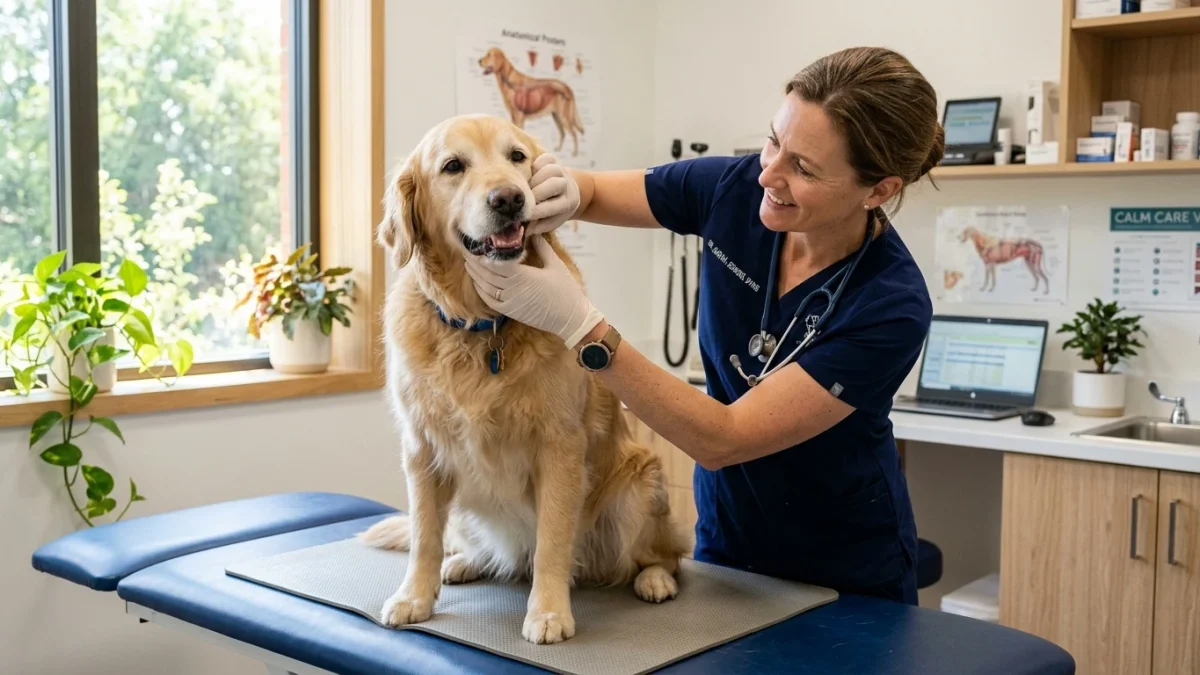
- Capillary Refill Time (CRT) and Mucous Membrane Color: Gently lift the upper lip and observe the gum tissue above the canine teeth. Healthy gums are glistening pink. Press firmly on the gum with your thumb for two seconds, then release. The blanched white spot should return to bright pink in under two seconds. If the gums are chalky white, gray, muddy purple, or tacky to the touch, circulatory perfusion is compromised.
- Skin Turgor Test: Gently pinch the skin over the shoulders or lumbar spine into a small tent, then let go. In a well-hydrated dog, the skin snaps back flush against the body instantaneously. If the skin tent remains elevated or settles slowly over several seconds, systemic dehydration exceeds 6 to 8 percent of body weight.
Dangerous Pitfalls and Prohibited Interventions (Rule S1)
Well-meaning caregivers frequently cause severe medical complications by implementing unverified advice found online:
- Never administer human medications: Over-the-counter bismuth subsalicylate (Pepto-Bismol) contains salicylates that cause acute toxicosis and gastric bleeding. Non-steroidal anti-inflammatory drugs (NSAIDs) such as ibuprofen, naproxen, and acetaminophen trigger severe renal tubular necrosis, liver failure, and acute perforating peptic ulcers in canines.
- Do not force hydrogen peroxide without veterinary authorization: Giving 3 percent hydrogen peroxide orally to induce vomiting is dangerous if the dog has swallowed sharp bones, batteries, caustic household cleaners, or petroleum distillates, which cause fatal esophageal perforation or chemical aspiration pneumonia. Induction of emesis must only occur under direct instructions from a licensed veterinarian or animal poison control toxicologist.
- Avoid rapid fluid boluses: Allowing a nauseated dog to gulp an entire bowl of ice water immediately after vomiting distends the sensitive gastric mechanoreceptors, triggering another violent cycle of emesis. Offer clean water in small increments of two to three tablespoons every 30 minutes.
Step-by-Step Home Management for Mild Cases
If your dog meets all Tier 3 criteria (bright, alert, normal gums, single isolated episode):
- Rest the stomach: Withhold food for 4 to 6 hours to allow gastric mucosal inflammation to subside. Do not restrict water entirely unless repeated drinking instantly provokes emesis.
- Prepare a bland meal: Combine boiled, skinless, boneless chicken breast (or lean 90/10 ground beef with fat drained) with plain boiled white rice in a 1:2 ratio. Never add cooking oils, salt, garlic, or onions.
- Feed mini-meals: Offer two tablespoons of the warm bland mixture. If the dog holds it down comfortably for two hours, provide another small portion. Continue this bland protocol for 24 to 48 hours before transitioning gradually back to standard balanced canine kibble over three days.
- Maintain clinical documentation: Record the exact time of each episode, vomit volume, consistency, and whether bowel movements occur normally. If vomiting recurs despite the bland diet, terminate home care and seek professional veterinary evaluation.
Sources
- ACVIM Consensus Statement: Support of the Canine and Feline Gastrointestinal Tract. American College of Veterinary Internal Medicine / Journal of Veterinary Internal Medicine. Checked September 21, 2026.
- 2023 AAHA Selected Canine Infectious Diseases and Triage Guidelines. American Animal Hospital Association. Checked September 21, 2026.
- ASPCA Animal Poison Control Center: Ingestion Response Protocols. American Society for the Prevention of Cruelty to Animals. Checked September 21, 2026.
Caregiver Safety Checklist
- Never give human gastrointestinal medications or pain relievers to a vomiting dog without explicit veterinary direction.
- Check gum color and capillary refill time first; pale or sticky gray gums require immediate emergency clinic transport.
- Unproductive retching accompanied by pacing and a distended belly is a surgical emergency (GDV) that cannot wait until morning.
- Puppies under 16 weeks with vomiting and diarrhea deteriorate rapidly and must be evaluated for parvovirus within hours.
Pet Toxic Food & Hazard Fast-Checker
Rapidly verify toxicity risks, toxic mechanisms, and immediate clinical steps for common household foods, plants, and human medications before calling poison control or your veterinarian.
Source transparency
Reference mix for this guide
Source labels describe the type of organization behind each reference; they are not a claim that any outside organization reviewed this article.
- ACVIM Consensus Statement: Support of the Canine and Feline Gastrointestinal Tract Government or public agency · pubmed.ncbi.nlm.nih.gov
- 2023 AAHA Selected Canine Infectious Diseases and Triage Guidelines Veterinary organization · aaha.org
- ASPCA Animal Poison Control Center: Ingestion Response Protocols Animal welfare nonprofit · aspca.org