
Editorial standard
How this guide was prepared
When bringing home an adult dog or cat, dental health is frequently one of the most overlooked medical baselines. More than 80 percent of dogs and cats over three years of age have some degree of periodontal disease, ranging from mild gingival inflammation to advanced alveolar bone destruction. For new adopters—particularly those in rural areas or regions with constrained emergency veterinary coverage—the safest first step is understanding objective warning signs, avoiding dangerous home interventions, and knowing exactly when to escalate.
- High Periodontal Prevalence: Over 80% of companion pets over age three exhibit active periodontal disease; establishing early home oral hygiene prevents painful tooth resorption, gingivitis, and bacteremia.
- Gradual Cooperative Desensitization: Introduce brushing via progressive micro-steps: gentle muzzle handling → lip lifting → enzymatic poultry toothpaste licking → finger brush → soft-bristled brush over 2–4 weeks.
- VOHC-Approved Adjunctive Defenses: Supplement mechanical brushing with Veterinary Oral Health Council (VOHC)-accepted dental chews and water additives, understanding that chemical agents complement but cannot replace physical plaque removal.
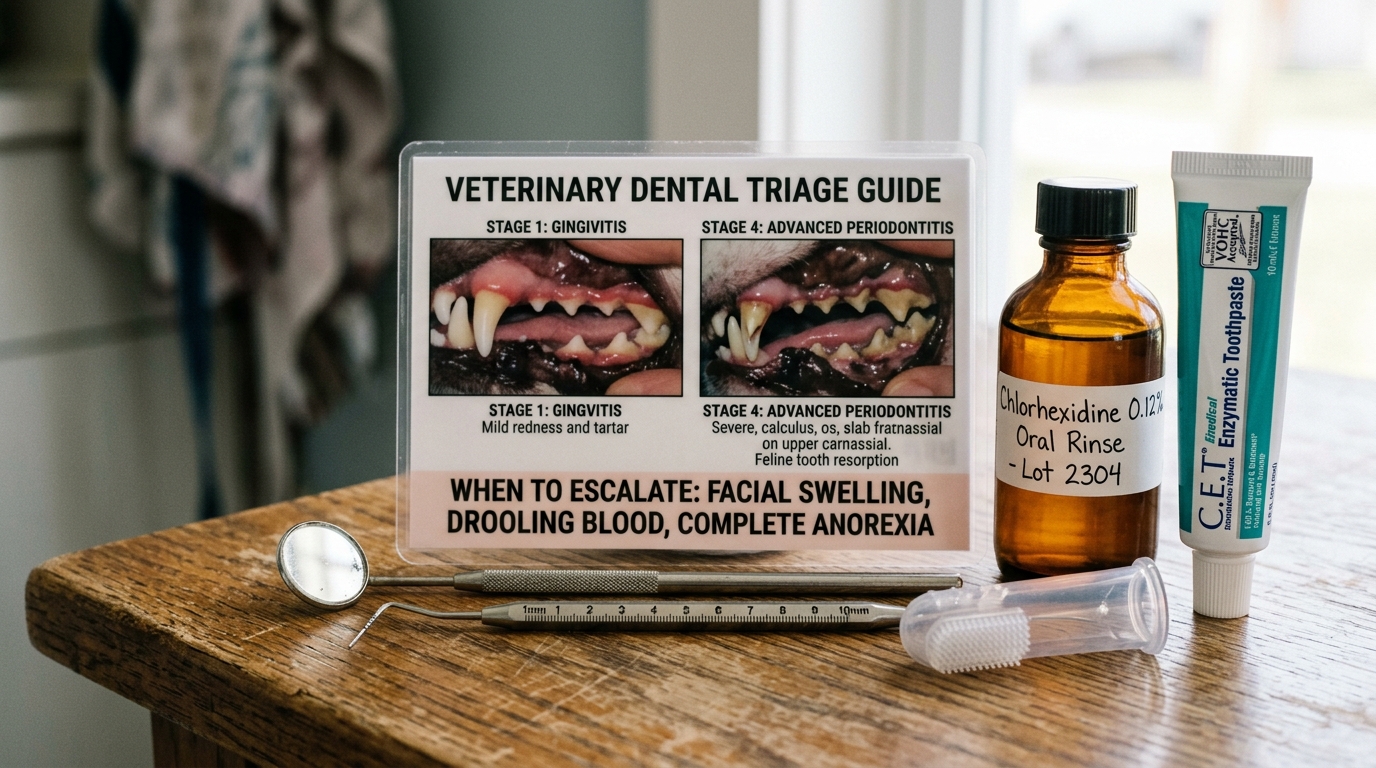
The Baseline Exam: Establish What You Know
During the first two weeks in a new home, observe your newly adopted companion during feeding and resting:
- Chewing behavior: Notice whether your pet chews exclusively on one side, drops kibble repeatedly, or vocalizes when eating.
- Oral aroma: Normal breath in healthy pets is relatively mild. A foul, necrotic, or sweet-fetid odor typically indicates bacterial breakdown beneath the gumline or deep tissue infection.
- Salivation and face-pawing: Excessive drooling, blood-tinged saliva, or pawing vigorously at the muzzle are cardinal signs of oral distress.
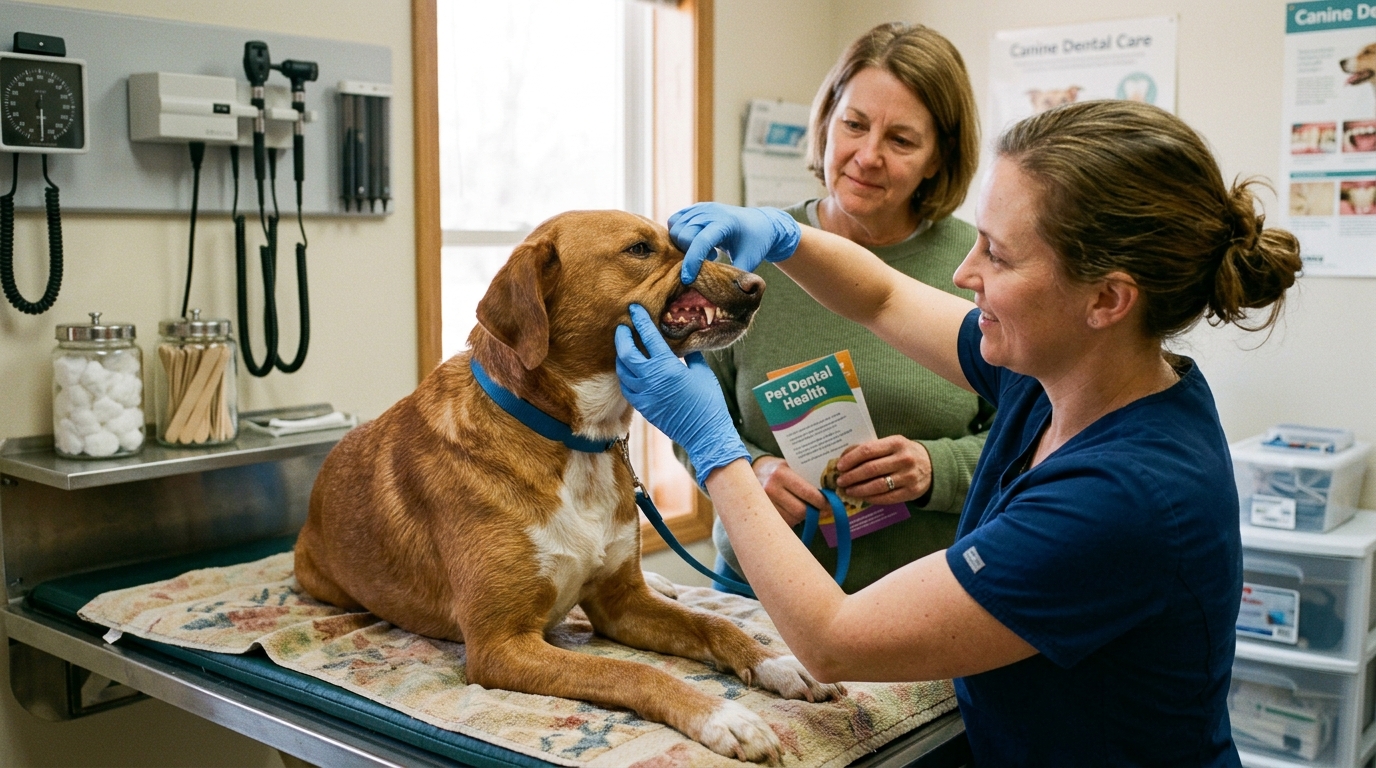
Never attempt to force open the jaws of an anxious or defensive newly adopted pet. Gentle lip lifting while offering a favored treat provides sufficient visibility of the outer canine and premolar margins without triggering fear or bites.
Red-Flag Triage Matrix: When Every Minute Matters
Oral emergencies can escalate rapidly from localized dental infections into life-threatening deep fascial phlegmons or sepsis. Use this clinical triage matrix to guide your response:
| Triage Level | Clinical Signs | Required Action |
|---|---|---|
| Immediate Emergency (0–2 Hours) | Acute facial swelling below the eye or along the jaw; active oral hemorrhage; traumatic jaw deformity; inability to close the mouth; fever with profound lethargy. | Transport immediately to the nearest 24/7 emergency veterinary hospital. Do not apply pressure or warm compresses to facial swellings. |
| Same-Day Visit (Within 12–24 Hours) | Fractured tooth with visible pink or black pulp cavity; complete refusal to eat for >24 hours (dogs) or >12 hours (cats); mobile permanent tooth; purulent discharge along the gingival margin. | Contact your local veterinary clinic for an urgent same-day evaluation. Transition temporarily to warm, moist puree to minimize mechanical pain. |
| Home Monitoring & Scheduled Care | Mild red line along the gumline (Stage 1 gingivitis) without tooth looseness; mild yellow tartar accumulation; calm behavior during eating. | Schedule a comprehensive oral health assessment (COHAT) at your next routine wellness checkup; begin gentle desensitization to veterinary enzymatic toothpaste. |
Dangerous Home Pitfalls and Medication Boundaries
Well-intentioned adopters facing high veterinary costs or long travel distances often turn to online remedies that introduce catastrophic harm:
- Never scrape teeth with metal tools: Cosmetic scraping (anesthesia-free dentistry) only removes visible calculus above the gumline while gouging the microscopic enamel surface. Worse, it leaves the subgingival pocket untouched, allowing anaerobic pathogens to erode tooth roots undisturbed.
- Never perform home extractions: Carnassial teeth and canine roots in carnivores are deeply anchored in alveolar bone. Attempting to pull a loose tooth at home frequently fractures the root tip, shatters the thin mandibular bone, or forces infected debris into the bloodstream.
- Never administer human pain relievers: Acetaminophen (Tylenol/Paracetamol) causes fatal methemoglobinemia and liver failure in cats with even a fraction of a human tablet. Ibuprofen and Naproxen induce acute gastric perforation and oliguric renal failure in dogs.
- Strictly avoid human toothpaste: Toothpaste formulated for humans contains foaming detergents, fluoride (which pets swallow, causing stomach toxicity), and frequently Xylitol. In dogs, Xylitol induces rapid, massive insulin release followed by fatal hypoglycemia and acute hepatic necrosis.
Clinical Strategies for Low-Access and Remote Care
If you live several hours from an emergency clinic and notice emerging dental discomfort:
- Protect nutritional intake: Blend the pet’s regular kibble with warm water or sodium-free, onion-free broth into a soft slurry so the animal does not need to apply mechanical chewing pressure.
- Document high-resolution visual evidence: Take clear photographs or video of the affected jaw or gumline in natural light to share with a veterinary telehealth service for triage guidance.
- Prepare safe travel bedding: Line the travel crate or carrier with clean, soft absorbent towels to manage drooling or oral oozing comfortably during transit. Never use tight muzzles or fabric straps that press directly against an inflamed jaw or restrict panting.
- Arrange coordinated transport: If a facial swelling begins, contact regional clinics along your route to ensure an operating team is prepared upon arrival.
Frequently Asked Questions
Why is general anesthesia required for thorough veterinary dental cleanings?
Over 60 percent of periodontal pathology resides beneath the gumline. General anesthesia with an endotracheal tube protects the airway from bacteria-laden water spray, allows full-mouth dental radiographs to uncover hidden tooth root abscesses, and permits pain-free subgingival curettage.
What are the most effective home care strategies for slowing dental tartar accumulation?
Daily brushing with a soft-bristled brush and pet-safe enzymatic toothpaste remains the gold standard. Additionally, Veterinary Oral Health Council (VOHC) accepted dental diets and chews provide proven mechanical plaque reduction.
What clinical symptoms indicate advanced, painful dental disease?
Drooling saliva tinged with blood, dropping kibble while chewing, chewing on only one side of the mouth, facial swelling, severe halitosis, and pawing at the muzzle indicate significant periodontal infection or tooth resorption.
Sources
- . American Animal Hospital Association. Checked September 11, 2026.
- WSAVA Global Dental Guidelines: Standards of Care. World Small Animal Veterinary Association. Checked September 11, 2026.
- Pulp Pathophysiology and Endodontic Emergencies in Small Animals. Journal of Veterinary Dentistry / PubMed. Checked September 11, 2026.
Caregiver Safety Checklist
- Never use human toothpaste (fluoride) on pets — even small amounts ingested during brushing cause GI toxicity; use only enzymatic veterinary-formulated toothpaste.
- Anesthetic-free dental cleanings do not clean below the gum line where periodontal disease originates — they are cosmetic procedures, not medical treatment.
- Broken carnassial teeth (upper fourth premolars) in dogs are painful but rarely show obvious external bleeding; reluctance to chew hard food is the primary behavioral indicator.
Source transparency
Reference mix for this guide
Source labels classify the institutional category of the references cited above.


