This guide is general education for pet owners. If your pet has urgent symptoms, possible poisoning, injury, breathing trouble, collapse, severe pain, or sudden decline, contact a licensed veterinarian or local emergency service.
Dosages must be calculated by a licensed veterinarian based on species, weight, and bloodwork. Never administer human medications or self-adjust prescription doses for pets.
Quick Answer
A cat drinking excessive water and producing oversized urine clumps usually indicates chronic kidney disease, diabetes mellitus, or hyperthyroidism. Chronic renal failure causes dilute urination with progressive muscle wasting; diabetes produces intense hunger and hind-limb weakness; hyperthyroidism manifests as hyperactive vocalization. Never restrict water access; seek prompt veterinary bloodwork and urinalysis.
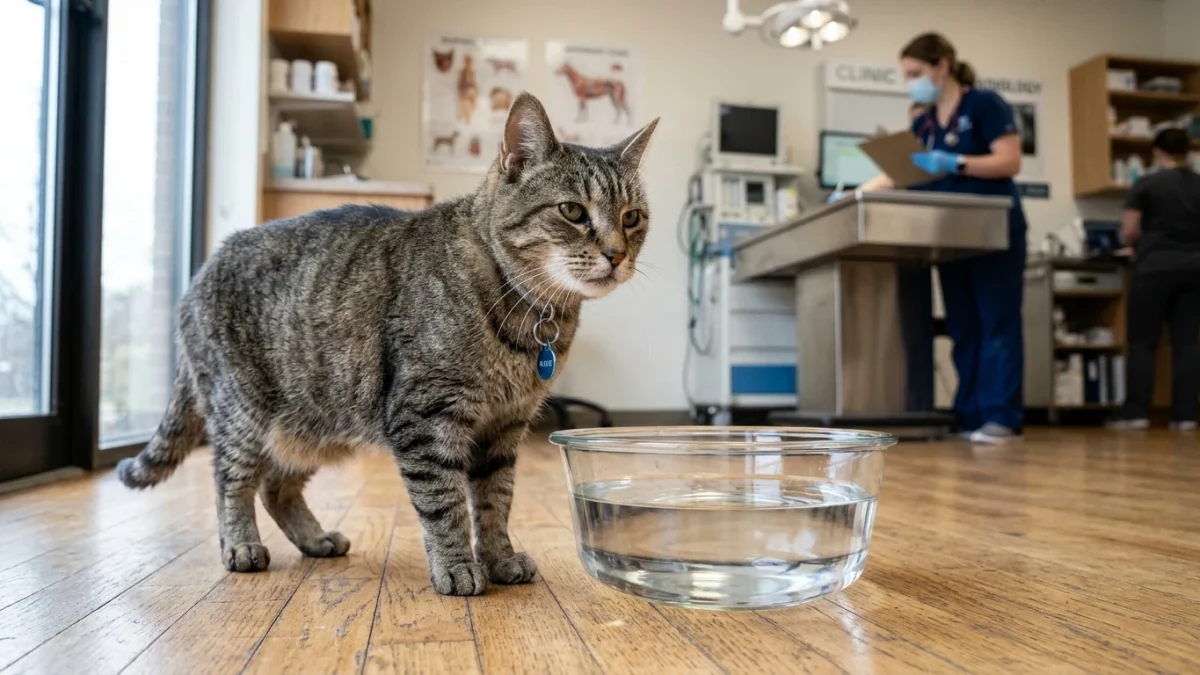
Felines evolved as desert-adapted carnivores with highly efficient kidneys designed to concentrate urine and extract almost all necessary hydration directly from fresh prey. Because of this physiological adaptation, healthy cats consuming canned food drink very little standing water, and even cats fed dry kibble drink modest amounts. When a mature or senior cat suddenly begins frequenting the water bowl, licking bathroom sinks, lingering by dripping faucets, or leaving massive, heavy urine clumps in the litter box, caregivers are witnessing polyuria and polydipsia (PU/PD). In feline clinical medicine, PU/PD is never benign; it is the hallmark warning sign of the ‘geriatric triad’: Chronic Kidney Disease (CKD), Diabetes Mellitus, or Hyperthyroidism.
Editorial standard
How this guide was prepared
The Core Clinical Triad: Differentiating the Diagnoses
While all three conditions provoke compensatory thirst, their underlying pathophysiological mechanisms and companion symptoms diverge markedly:
- Feline Chronic Kidney Disease (CKD): Affecting more than 30% of cats over 10 years of age, CKD involves the progressive, irreversible loss of functional nephrons. As nephrons fail, the kidneys lose the ability to concentrate urine, leading to obligate water loss. The cat drinks copiously simply to compensate for dehydration and flush accumulated nitrogenous toxins (urea and creatinine). Companion signs include gradual weight loss, unkempt coat, episodic morning vomiting of clear liquid or white foam, bad breath (uremic halitosis), and dull, sunken eyes. Urinalysis reveals low urine specific gravity (isosthenuria, typically between 1.008 and 1.020).
- Feline Diabetes Mellitus: Occurs when the pancreas fails to produce adequate insulin (similar to human Type 2 diabetes) or peripheral tissues develop severe insulin resistance (frequently linked to feline obesity). Blood glucose surges above the feline renal threshold (approximately 250 to 300 mg/dL), spilling into the urine (glucosuria). Glucose draws water into the urine through osmotic diuresis, producing massive urine clumps and intense secondary thirst. Despite consuming huge volumes of food (polyphagia), the cat steadily loses weight because their cells cannot utilize glucose for energy. Over time, advanced diabetics may develop diabetic neuropathy, characterized by a ‘plantigrade stance’ where the cat walks flat on their hocks rather than their toes.
- Feline Hyperthyroidism: Driven by functional adenomas of the thyroid gland producing excessive thyroxine (T4). Elevated thyroid hormones accelerate basal metabolic rate, cardiac output, and renal blood flow, causing increased glomerular filtration and medullary washout that leads to secondary polyuria and polydipsia. Classic indicators include ravenous appetite accompanied by noticeable weight loss, restlessness, nocturnal yowling, elevated resting heart rate (tachycardia over 220 bpm), poor heat tolerance, and a greasy, unkempt haircoat.
Clinical Triage Matrix: Evaluating Feline Thirst and Urgency
Use this clinical matrix to establish the appropriate level of veterinary intervention based on systemic physical findings:
| Triage Tier | Clinical Signs & Physical Presentation | Mandatory Action |
|---|---|---|
| Tier 1: Immediate Emergency (0–2 Hours) | Obsessive drinking accompanied by complete anorexia, persistent vomiting, sweet/chemical (acetone) breath odor, profound weakness or inability to stand, rapid shallow breathing, or subnormal body temperature (hypothermia below 99°F / 37.2°C). | Transport immediately to an emergency veterinary hospital. These signs indicate acute decompensated diabetic ketoacidosis (DKA) or end-stage uremic decompensation requiring intravenous fluid resuscitation, electrolyte stabilization, and intensive insulin therapy. |
| Tier 2: Same-Day Veterinary Evaluation (12–24 Hours) | Sudden, dramatic escalation in water intake over 24–48 hours; plantigrade stance (walking flat on back hocks); newly vocalizing restlessly throughout the night; vomiting multiple times over 24 hours; noticeable muscle wasting along the spine despite eating voraciously. | Schedule a comprehensive veterinary clinical workup within 24 hours. The veterinarian will run a complete blood count (CBC), serum chemistry panel (BUN, creatinine, SDMA, glucose, electrolytes), total T4, and urinalysis with urine protein-to-creatinine (UPC) ratio. |
| Tier 3: Structured Home Monitoring (24–48 Hours) | Mild, gradual increase in water intake over several weeks; cat remains alert, grooming normally, and eating their standard ration; normal pink, moist mucous membranes; skin turgor snap remains under 2 seconds; zero vomiting or litter box straining. | Begin objective 24-hour water measurement using a graduated measuring cup. Do not restrict water. Book the next available routine veterinary appointment within 3 to 5 business days for senior diagnostic screening. |
How to Quantitatively Measure Your Cat’s Water Consumption
Vague impressions like ‘my cat seems to drink more’ make clinical assessment difficult. Providing your veterinarian with an exact 24-hour volume in milliliters accelerates accurate diagnosis:
Step 1: Isolate the Water Source: In a single-cat household, empty and clean all accessible water bowls. Measure exactly 500 ml of fresh water using a kitchen measuring cup and pour it into your cat’s primary bowl. If using multiple bowls, measure the total volume distributed across all bowls.
Step 2: Account for Evaporation: Place an identical bowl with 200 ml of water in an area inaccessible to the cat (such as a high countertop) to calculate ambient room evaporation over the 24-hour test period.
Step 3: Calculate the 24-Hour Intake: Exactly 24 hours later, pour the remaining water from the cat’s bowl into the measuring cup. Subtract the remaining amount and the evaporation volume from the starting amount.
Clinical Threshold: Normal canine and feline water intake ranges between 40 and 60 milliliters for each kilogram of body weight daily. If a 4.5 kg (10 lb) cat consumes more than 100 milliliters for each kilogram daily (over 450 ml total in 24 hours), pathological polydipsia is definitively confirmed.
Dangerous Home Pitfalls: What NOT to Do (Rule S1)
Caring for a thirsty cat requires strict adherence to veterinary safety boundaries to prevent fatal medical missteps:
- Never restrict water access: This is the single most catastrophic error a caregiver can make. A polydipsic cat is not drinking out of habit; they are drinking because their kidneys or osmotic diuresis are stripping water from their bloodstream. Restricting water causes rapid, fatal hypovolemic shock and acute-on-chronic renal shutdown within 24 hours.
- Never administer human pain relievers, diabetes pills, or thyroid medications: Human diabetes pills (metformin, glipizide) and human pain relievers (acetaminophen, ibuprofen, aspirin) cause fatal acute liver necrosis, methemoglobinemia, and irreversible renal tubular necrosis in cats. Feline physiology lacks essential glucuronyl transferase enzymes required to metabolize these compounds safely.
- Do not abruptly change to a low-protein diet without confirmed renal diagnosis: While Stage 3 and 4 CKD cats benefit from phosphorus-restricted, renal-specific diets, feeding a low-protein diet to an undiagnosed diabetic cat can accelerate muscle wasting (sarcopenia) and worsen glycemic dysregulation. Diabetic cats typically require high-protein, ultra-low-carbohydrate nutritional profiles.
- Never ignore litter box clumping changes: Increased clump size is the earliest observable physical sign of PU/PD, often appearing months before obvious changes at the water bowl. Conversely, if your cat visits the box repeatedly but produces only tiny drops or cries out, review our emergency triage on Cat Straining in the Litter Box: Constipation vs. FLUTD Blockage to rule out fatal urethral obstruction.
Sources
- IRIS Staging of CKD (Chronic Kidney Disease) in Cats. International Renal Interest Society / Journal of Feline Medicine and Surgery. Checked September 21, 2026.
- 2022 ISFM Consensus Guidelines on Feline Diabetes Mellitus. Journal of Feline Medicine and Surgery / PubMed. Checked September 21, 2026.
- 2016 AAFP Guidelines for the Management of Feline Hyperthyroidism. Journal of Feline Medicine and Surgery / American Association of Feline Practitioners. Checked September 21, 2026.
Caregiver Safety Checklist
- Excessive thirst and oversized urine clumps are early warning signs of feline kidney disease, diabetes, or hyperthyroidism.
- Never restrict water access from a thirsty cat; limiting water causes rapid, life-threatening kidney failure and dehydration.
- Measure 24-hour water intake using a measuring cup; daily consumption exceeding 100 milliliters for each kilogram indicates pathological polydipsia.
- Never administer human medications or switch to unverified diets without a comprehensive veterinary diagnostic workup.
Source transparency
Reference mix for this guide
Source labels describe the type of organization behind each reference; they are not a claim that any outside organization reviewed this article.
- IRIS Staging of CKD (Chronic Kidney Disease) in Cats Government or public agency · pubmed.ncbi.nlm.nih.gov
- 2022 ISFM Consensus Guidelines on Feline Diabetes Mellitus Government or public agency · pubmed.ncbi.nlm.nih.gov
- 2016 AAFP Guidelines for the Management of Feline Hyperthyroidism Government or public agency · pubmed.ncbi.nlm.nih.gov