This guide is general education for pet owners. If your pet has urgent symptoms, possible poisoning, injury, breathing trouble, collapse, severe pain, or sudden decline, contact a licensed veterinarian or local emergency service.
Dosages must be calculated by a licensed veterinarian based on species, weight, and bloodwork. Never administer human medications or self-adjust prescription doses for pets.
Editorial standard
How this guide was prepared
Living on the twentieth floor of a metropolitan high-rise presents lifestyle advantages, but for companion animals, vertical residential architecture introduces distinctive physical and psychological stresses on the urinary tract. For apartment dogs, taking a bathroom break is never as simple as stepping through a suburban dog door; it involves leashing up, waiting for elevators, navigating crowded lobbies, and walking through inclement weather. For domestic cats, high-density apartment acoustics—including vibrating elevators, slamming fire doors, and unfamiliar neighbor noises—serve as potent environmental triggers for feline lower urinary tract disease (FLUTD) and sterile stress cystitis.
Clinical Quick Answer & Immediate Actions
High-rise urban living creates unique biomechanical and neuroendocrine challenges for canine and feline urinary tracts. In dogs, elevator wait times, inclement weather, and extended caregiver work schedules frequently enforce prolonged voluntary urine retention (often exceeding 8 to 10 hours). Chronic over-distension of the detrusor muscle compromises bladder mucosal blood flow, increases bacterial colonization risk, and facilitates struvite and calcium oxalate crystal aggregation. In high-rise cats, environmental stressors (unpredictable hallway acoustic noise, elevator motor hums, confined space constraints, and insufficient litter box distribution) trigger neuroendocrine sympathetic activation, resulting in Feline Idiopathic Cystitis (FIC)—a sterile neurogenic bladder inflammation that can rapidly progress to life-threatening urethral obstruction in male cats. Safeguarding urinary wellness in high-rise environments requires establishing reliable evacuation schedules (indoor grass pads or elevator relief routines) and adhering to the N+1 feline litter box distribution rule combined with proactive moisture enrichment.
When bathroom routines are irregular or when animals feel insecure during elimination, urinary stasis and behavioral holding patterns develop. Understanding the physiological consequences of chronic urine retention and structuring a predictable bathroom schedule prevents painful bacterial infections, bladder stone formation, and life-threatening urinary blockages in both dogs and cats.
The Physiology of Urinary Stasis in Apartment Pets
The urinary bladder is designed as an elastic muscular reservoir, but prolonged holding creates significant physiological complications:
- Loss of Detrusor Muscle Tone: Chronic bladder over-distension stretches the detrusor muscle fibers beyond their physiological elastic threshold. Over time, the bladder becomes atonic, preventing complete emptying and leaving residual urine volume after urination.
- Bacterial Proliferation & Ascending UTI: Healthy urine flow mechanically flushes transient bacteria from the urethra. When urine stagnates for 10 to 12 hours, bacteria migrate upward, adhere to the urothelium, and establish painful bacterial cystitis that can ascend to the kidneys (pyelonephritis). Review our guide on dog urinary incontinence and leaking causes.
- Crystalluria and Urolithiasis: Highly concentrated, stagnant urine allows microscopic mineral ions (magnesium, ammonium, phosphate, or calcium oxalate) to crystallize and aggregate into abrasive bladder stones that can physically obstruct the urethra.
Feline Idiopathic Cystitis (FIC) in High-Rise Environments
In cats, urinary emergencies are rarely caused by bacterial infections; instead, over 60% of feline urinary cases stem from Feline Idiopathic Cystitis (FIC)—a sterile, stress-induced neurogenic inflammatory condition:
- The Brain-Bladder Connection: Chronic environmental stress (such as hallway elevator noises, construction, unfamiliar odors, or multi-pet tension) activates the feline sympathetic nervous system. This causes the release of substance P and neuropeptides that inflame the bladder lining, causing severe mucosal ulceration and hematuria (blood in urine).
- The Risk of Urethral Plugs in Male Cats: In male cats, inflammatory mucus, sloughed bladder lining cells, and struvite crystals combine to form a thick, paste-like plug that lodges in the narrow penile urethra. This produces total urethral blockage—a medical emergency that results in fatal cardiac arrest from hyperkalemia within 24 to 48 hours without relief. Review our cat urinary health and FLUTD blockage warning signs guide.
High-Rise Bathroom Management: Structured Protocols
Optimize your apartment pet’s urinary wellness with these daily practical strategies:
| Pet Species | High-Rise Bathroom Strategy | Implementation & Clinical Safeguards |
|---|---|---|
| Apartment Dogs | Predictable 4-Walk Schedule | Morning (immediately upon waking), Midday (dog walker or lunch visit), Evening (post-dinner), Night (final short relief walk before bedtime). |
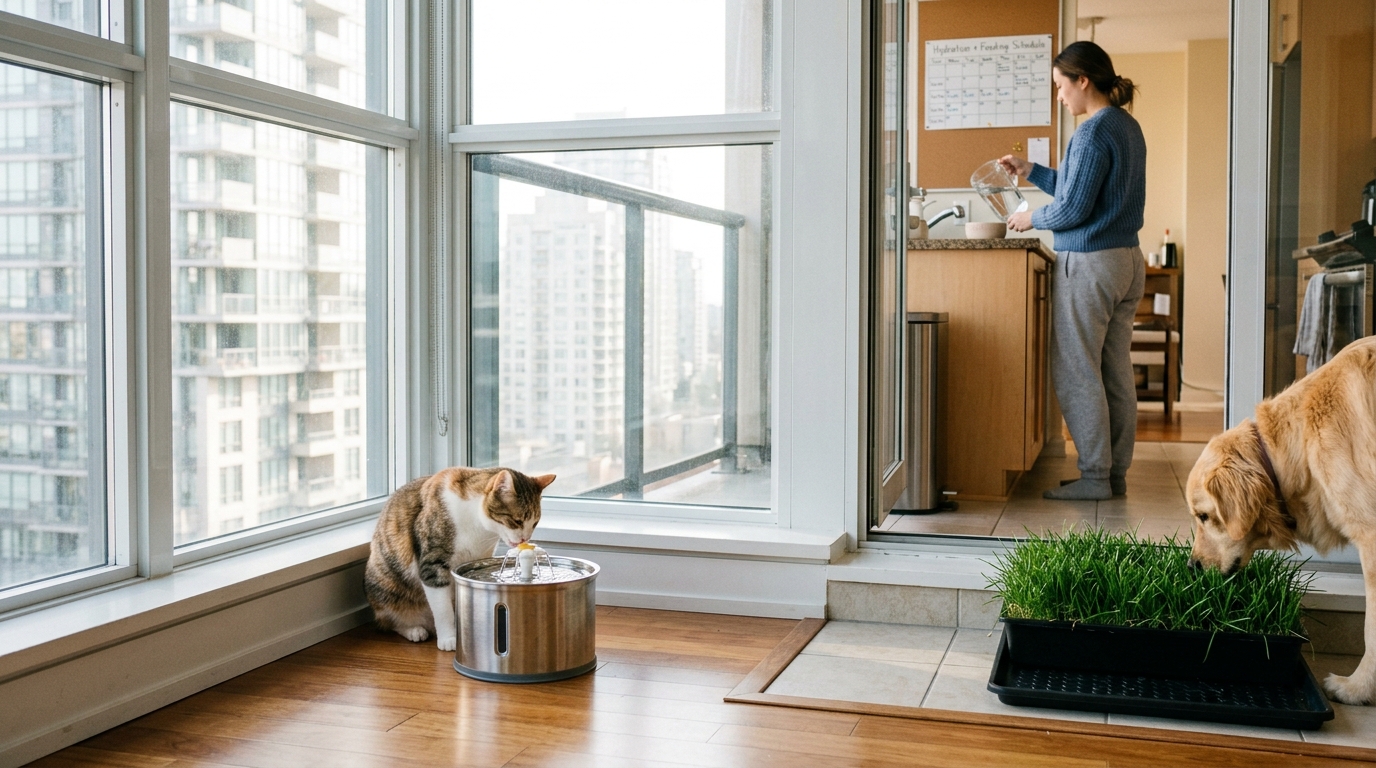
| Balcony Potty Setups | Real Grass Hydroponic Patches | Avoid smelly plastic pee pads that encourage indoor confusion. Use fresh real sod patches on sheltered balconies with safety netting. |
| Apartment Cats | The N+1 Litter Box Rule | Provide one more litter box than the number of cats in the home. In a single-cat apartment, provide TWO large, open-top boxes in separate rooms. |
| Feline Hydration | Circulating Water Fountains & Wet Food | Promote dilute urine (specific gravity <1.035) by feeding high-moisture canned diets and placing filtered stainless steel pet fountains throughout the home. |
Clinical Diagnostic Protocols: Complete Urinalysis & Culture
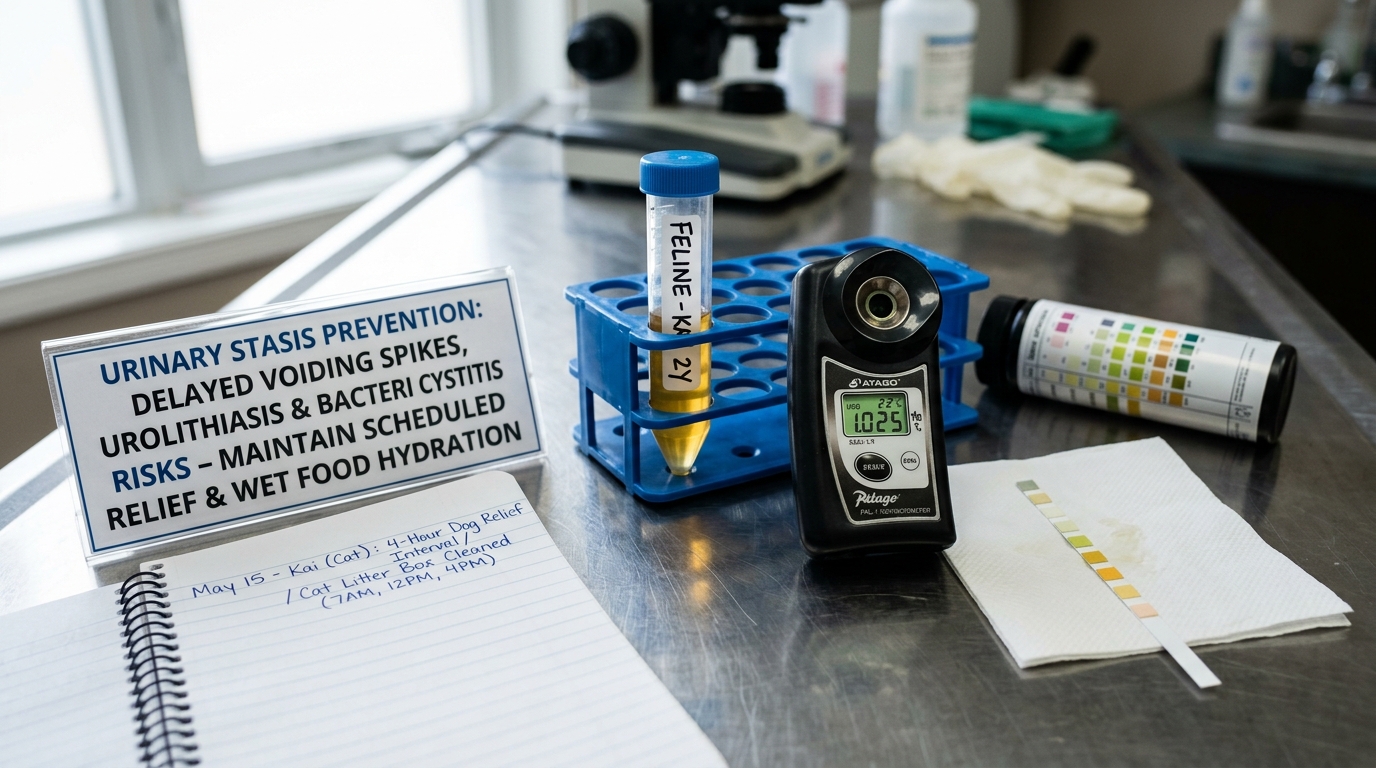
When an urban pet displays changes in elimination habits, veterinarians conduct a systematic diagnostic workup to differentiate behavioral house-soiling from organic pathology. The gold standard diagnostic evaluation includes cystocentesis (sterile needle collection of urine directly from the bladder guided by ultrasound) to avoid contamination from lower genital tract flora. Clinicians evaluate urine specific gravity (USG) using a veterinary refractometer to gauge renal concentrating capacity (ideally >1.035 in cats and >1.025 in dogs), dipstick chemical analysis for protein and occult blood, and microscopic sediment analysis to identify struvite crystals, calcium oxalate dihydrate prisms, red blood cells, and white blood cells.
In recurrent canine cystitis or older feline patients, a quantitative aerobic bacterial culture and antimicrobial susceptibility test is mandatory before initiating antibiotic therapy. Inappropriate empirical antibiotic use without culture confirmation breeds resistant strains and fails to treat sterile idiopathic cystitis, which requires environmental enrichment, wet dietary therapy, and analgesic support rather than antimicrobials.
When to Contact a Veterinarian Immediately
Caregivers must distinguish between mild urinary discomfort and life-threatening urethral obstruction. Seek immediate emergency veterinary hospital intervention if a male cat or dog repeatedly visits the litter box or squat posture, strains forcefully without producing urine, yowls in agony, licks the genital area compulsively, vomits, or exhibits extreme lethargy. An obstructed bladder can rupture, and potassium retention causes fatal cardiac arrhythmias within hours.
Clinical Practice Tool: Daily Pet Care Routine Tracker
Track high-rise pet bathroom rhythms and stress reduction routines with our Daily Pet Care Routine Tracker. Download and print your copy of the Daily Pet Care Routine Tracker, or explore all practical pet care guides in the NewsPet Resource Center.
Frequently Asked Questions
How can high-rise dog and cat owners maintain reliable bathroom routines to prevent urinary disease?
Establish strict, scheduled elevator trips every 4 to 6 hours for dogs, and maintain accessible indoor relief pads or synthetic grass boxes on balconies for emergencies, preventing chronic bladder distension.
What urinary consequences occur when apartment pets hold their urine for prolonged intervals?
Chronic urine retention promotes bacterial proliferation, increasing risks of acute bacterial cystitis, urinary tract infections, and mineral crystallization that can precipitate bladder stones.
How can caregivers monitor high-rise cat hydration and litter box frequency effectively?
Scoop boxes twice daily to track clump size and count, use multiple clean water fountains, and incorporate moisture-rich canned meals to ensure adequate urinary dilution.
Sources
- American Association of Feline Practitioners (AAFP): Guidelines for the Diagnosis and Management of FLUTD
- Cornell Feline Health Center: Feline Idiopathic Cystitis: Clinical Management and Stress Reduction
- American Animal Hospital Association (AAHA): Canine Urinary Tract Infection and Stone Protocols
- VCA Animal Hospitals: Urinary Tract Disorders and Bladder Stone Prevention in Dogs
Emergency Triage Matrix: Clinical Presentation & Required Response
| Triage Level | Clinical Signs & Presentation | Immediate Action Protocol |
|---|---|---|
| Tier 1: Immediate Emergency (0–2 Hours) | Male cat straining repeatedly in the litter box with zero urine production, howling in pain, hard distended painful bladder, vomiting, or collapse (complete urethral obstruction); or dog unable to void with an agonizingly distended, rock-hard abdomen. | Immediate emergency veterinary transport; complete urethral obstruction causes life-threatening hyperkalemia, cardiac arrest, and bladder rupture within 24 to 48 hours; initiate emergency de-obstruction under anesthesia and IV fluid diuresis. |
| Tier 2: Urgent Veterinary Care (Same-Day) | Frequent urination producing small blood-tinged drops (hematuria), excessive genital licking, vocalization during voiding (stranguria), or sudden house-soiling / periuria on rugs or bathtub porcelain. | Same-day veterinary evaluation; sterile cystocentesis urinalysis (specific gravity, pH, sediment, culture & sensitivity), point-of-care bladder ultrasound to detect calculi or mucosal thickening, and prescription analgesia. |
| Tier 3: Home Monitoring & Scheduled Care | Pet displays normal, unobstructed stream when voiding outdoors or in the litter box, clear pale yellow urine, pink mucous membranes, and bright playful demeanor, but faces extended elevator delays. | Optimize indoor bathroom routines: deploy a balcony fresh grass patch or indoor dog pad, add an extra feline litter box in a quiet room, and increase moisture intake with wet food and circulating water fountains. |
Rule S1 Boundaries & Urban Urological Rules
Managing companion animal urology requires strict physical and clinical boundaries:
- NEVER assume a straining male cat is ‘just constipated’: Feline urethral obstruction mimics defecation straining perfectly; assuming constipation while a urethral plug causes potassium retention leads to fatal cardiac arrhythmia within 24 hours.
- NEVER restrict drinking water to prevent indoor accidents in apartment pets: Water restriction causes concentrated, acidic urine that accelerates crystalluria, severe bacterial cystitis, and life-threatening acute kidney injury.
- NEVER scold or physically punish a pet for indoor urinary accidents: Punishment escalates central sympathetic tone and cortisol release, drastically worsening Feline Idiopathic Cystitis (FIC) and triggering stress-induced urinary retention in dogs.
- NEVER administer human urinary tract medications or analgesics (e.g., phenazopyridine / Azo): Phenazopyridine induces acute severe hemolytic anemia and fatal methemoglobinemia in cats and causes irreversible keratoconjunctivitis sicca (dry eye) in dogs.
Caregiver High-Rise Urinary Wellness Protocol Checklist
- Establish a predictable 4-to-5 hour maximum interval for canine outdoor relief; utilize a midday professional dog walker or train to an indoor real-grass balcony patch.
- Adhere to the ‘N+1 Rule’ for feline litter boxes: provide one more litter box than the total number of cats, situated in low-traffic, acoustically quiet zones.
- Increase daily dietary moisture: transition at least 50% of the daily caloric intake to wet canned food with added warm water or low-sodium bone broth.
- Provide multiple recirculating feline water fountains away from feeding bowls and litter boxes to stimulate natural drinking behavior.
- Clean canine bathroom zones and litter boxes daily; scoop clumps twice daily and replace non-scented clay litter completely every two weeks.
- Monitor daily urination volume and posture: take immediate clinical action if urination frequency doubles, urine turns pink, or voiding effort yields zero drops.
Related Clinical Guides & Tools
Peer-Reviewed Clinical References & Evidence Grounding
- PMID: 33769611: International veterinary canine dyskinesia task force ECVN consensus statement: Terminology and classification (J Vet Intern Med, 2021) (opens in new tab)
- PMID: 38351524: Defining sepsis in small animals (J Vet Emerg Crit Care (San Antonio), 2024) (opens in new tab)
- PMID: 38474142: Canine Mammary Tumors: Classification, Biomarkers, Traditional and Personalized Therapies (Int J Mol Sci, 2024) (opens in new tab)
- Cornell Feline Health Center — Veterinary Clinical & Diagnostic Resources (opens in new tab)
Printable tools
Download the matching worksheet
Source transparency
Reference mix for this guide
Source labels describe the type of organization behind each reference; they are not a claim that any outside organization reviewed this article.
- American Association of Feline Practitioners (AAFP): Guidelines for the Diagnosis and Management of FLUTD Veterinary organization · catvets.com
- Cornell Feline Health Center: Feline Idiopathic Cystitis: Clinical Management and Stress Reduction Academic or extension · vet.cornell.edu
- American Animal Hospital Association (AAHA): Canine Urinary Tract Infection and Stone Protocols Veterinary organization · aaha.org
- VCA Animal Hospitals: Urinary Tract Disorders and Bladder Stone Prevention in Dogs Reference source · vcahospitals.com
- Puppy Socialization Without Overwhelm: A Vet-Safe Reference source · newspet.net
- Dog Body Language Chart: 9 Stress Signs Before a B Reference source · newspet.net
- Reward-Based Dog Training: Force-Free Steps & Reference source · newspet.net
- Separation Anxiety in Dogs: What to Do First (Calm Reference source · newspet.net

