This guide is general education for pet owners. If your pet has urgent symptoms, possible poisoning, injury, breathing trouble, collapse, severe pain, or sudden decline, contact a licensed veterinarian or local emergency service.
Dosages must be calculated by a licensed veterinarian based on species, weight, and bloodwork. Never administer human medications or self-adjust prescription doses for pets.
Quick Answer
A cat repeatedly straining in the litter box without passing urine is experiencing a life-threatening urethral obstruction, not simple constipation. This is a critical medical emergency requiring immediate 24/7 veterinary hospitalization. Untreated urinary blockage causes toxic potassium buildup and fatal cardiac arrest within 24 to 48 hours.
Finding your cat squatting repeatedly in the litter box, vocalizing, or licking the genital region triggers understandable alarm. Caregivers frequently assume the animal is constipated and struggling to defecate. In small animal medicine, this diagnostic error is among the most catastrophic mistakes a pet owner can make. Feline urethral obstruction (commonly part of Feline Lower Urinary Tract Disease, or FLUTD) mimics gastrointestinal constipation clinically, but its biological consequences are rapidly fatal. Knowing how to distinguish stranguria (painful urination) from tenesmus (painful defecation) saves feline lives.
Editorial standard
How this guide was prepared
Anatomical Vulnerability: Why Male Cats Face High Obstruction Risk
While female cats develop severe urinary inflammation, complete physical blockage occurs overwhelmingly in male cats due to anatomical structure:
- Narrow Penile Urethra: The male feline urethra is long, narrow, and tapers sharply near the penile tip. Any combination of crystalline sediment (struvite or calcium oxalate), proteinaceous inflammatory matrix (mucous plugs), cellular debris, and reactive smooth muscle spasms creates an impenetrable mechanical plug.
- Post-Renal Azotemia Cascade: Once the urethra is occluded, urine cannot leave the bladder. Hydrostatic pressure surges backward into the ureters and renal pelvis. Within hours, glomerular filtration ceases entirely, trapping metabolic wastes, creatinine, blood urea nitrogen (BUN), and potassium in the bloodstream.
- Hyperkalemic Cardiotoxicity: Elevated blood potassium (hyperkalemia) disrupts myocardial electrical conductivity. Without intervention, hyperkalemia causes progressive bradycardia (dangerously slow heart rate), sine-wave electrocardiogram patterns, ventricular fibrillation, and fatal cardiac arrest within 24 to 48 hours.
Stranguria versus Tenesmus: How to Tell Urine from Feces
Differentiating urinary distress from gastrointestinal constipation requires focused observation of posture and litter pan output:
- Urinary Stranguria (Blockage / FLUTD): The cat visits the litter pan every few minutes, squats low with a hunched back, strains intensely with abdominal trembling, and leaves the box without producing a wet clump. Cats frequently cry or growl during posturing. Between visits, they obsessively groom the penis or vulva, display extreme lower abdominal sensitivity, and may urinate small droplets outside the box on cool tiles or bathtub porcelain (periuria).
- Gastrointestinal Tenesmus (Constipation): The cat approaches the box less frequently (several hours apart), postures with hind limbs positioned wider, and exerts prolonged downward bearing-down effort. If successful, small, dry, stone-hard fecal pellets are found. The cat rarely vocalizes sharply unless megacolon or anal sac abscesses are present, and the cat remains alert and willing to drink water between episodes.
Red-Flag Triage Matrix: Emergency versus Urgent Care
Use this clinical triage matrix to categorize your cat’s status immediately:
| Triage Tier | Clinical Presentation | Required Immediate Action |
|---|---|---|
| Tier 1: Immediate Emergency (0–2 Hours) | Male cat straining with zero urine output; vocalizing in the litter pan; vomiting; extreme weakness or wobbly hind limbs; profound lethargy; hypothermia (cold ears and paws); hard, painful, grapefruit-sized bladder on light touch. | Transport immediately to the nearest 24/7 veterinary emergency hospital. Phone the clinic while driving so the team readies intravenous catheterization, anesthesia, and urethral unblocking equipment. Do not wait for regular morning clinic hours. |
| Tier 2: Same-Day Urgent Care (12–24 Hours) | Female cat or male cat still producing nickel- or quarter-sized wet litter clumps; visible pink or red-tinged urine (hematuria); frequent urination in small amounts (pollakiuria); urinating on rugs or laundry; cat remains active and alert. | Contact your veterinarian for an urgent same-day appointment. Indicates non-obstructive Feline Idiopathic Cystitis (FIC), bacterial infection, or urolithiasis requiring prescription diagnostics, urinalysis, and analgesia. |
| Tier 3: Structured Home Monitoring (24–48 Hours) | Normal large golf-ball-sized urine clumps produced daily; slight hesitation during bowel movements with small, firm stool produced; completely normal appetite, grooming, and social engagement. | Increase dietary moisture by transitioning to wet canned food, adding clean water fountains, and ensuring litter boxes match the N+1 rule (one box per cat plus one extra). Schedule a routine veterinary checkup if stool remains dry. |
The Lethal Danger of Home Bladder Squeezing
One of the most dangerous home intervention attempts is trying to squeeze or express a blocked cat’s bladder:
- Catastrophic Bladder Rupture: A fully obstructed bladder stretches to maximum physiological capacity. Its muscular wall becomes severely thinned, ischemic, and necrotic from compromised blood flow. Applying external finger pressure directly over the lower abdomen frequently causes catastrophic bladder wall rupture, spilling infected urine into the peritoneal cavity and causing rapid peritonitis and septic shock.
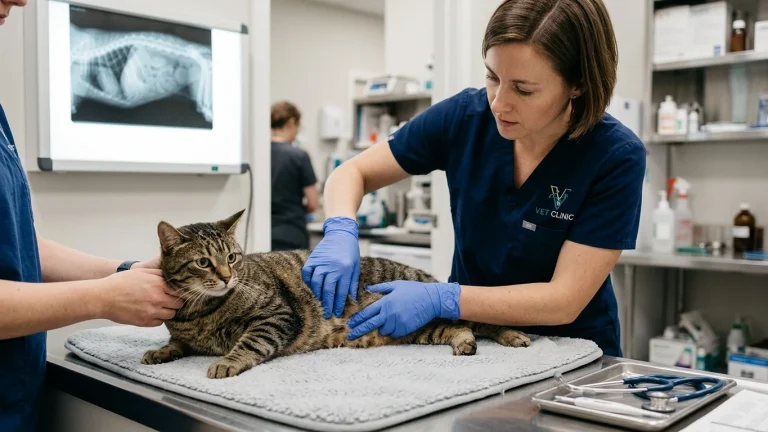
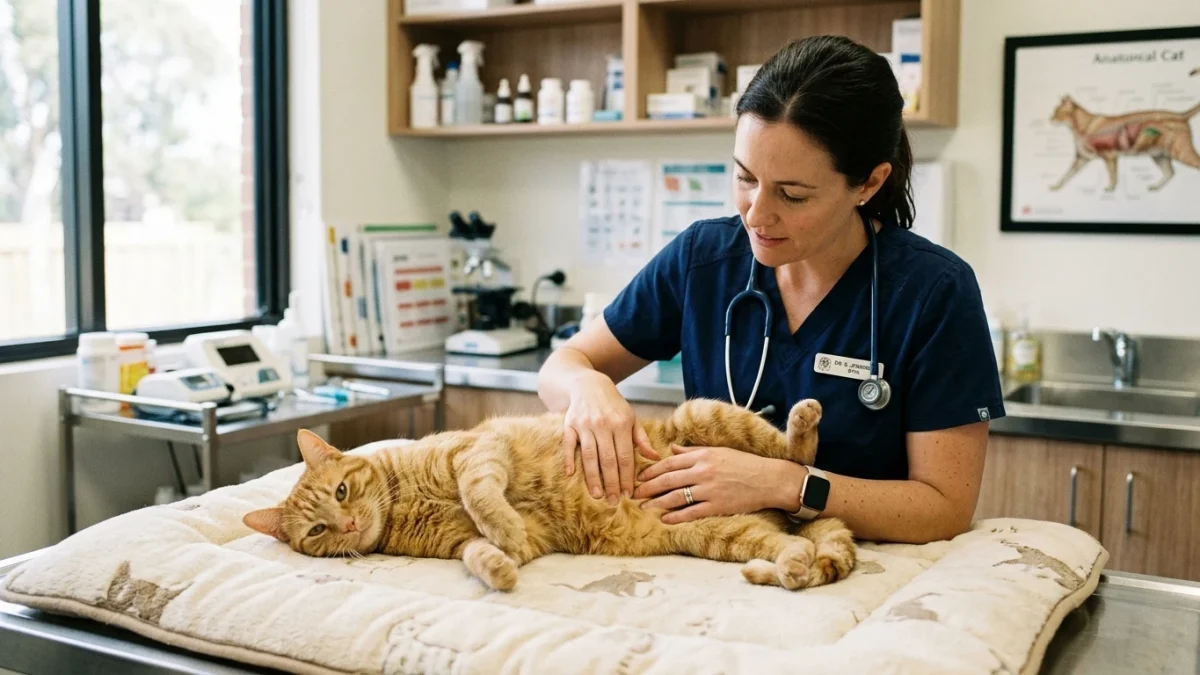
- Gentle Touch Only: You may gently feel the cat’s lower belly between the rear legs with a flat palm. A soft, empty abdomen feels like relaxed dough. An obstructed bladder feels like an unyielding, firm, turgid orange or tennis ball. If you feel this firm sphere, stop touching immediately and proceed to emergency care.
Prohibited Home Remedies and Rule S1 Boundaries
Never administer the following human or unregulated remedies to a straining cat:
- Never give human urinary analgesics: Phenazopyridine (Azo, Pyridium) is lethal to felines. Even tiny fractions of a human dose cause massive Heinz body hemolytic anemia, methemoglobinemia (inability of red blood cells to carry oxygen), and acute death in cats within hours.
- Never give human pain relievers: Acetaminophen (Tylenol) destroys feline liver cells and triggers fatal suffocating methemoglobinemia. Ibuprofen, naproxen, and aspirin induce acute hemorrhagic gastric perforation and irreversible renal failure.
- Do not give over-the-counter laxatives or enemas: Human phosphate enemas (Fleet enemas) cause fatal hyperphosphatemia and severe hypocalcemia in cats within minutes. Mineral oil administration carries high aspiration risk leading to fatal lipid pneumonia.
Emergency Preparation and Transport Protocol
When transporting a blocked or distressed cat to an emergency clinic:
- Minimize handling stress: Remove the top of a hard-sided plastic cat carrier rather than shoving the cat through the front door. Place a clean, warm towel on the bottom.
- Maintain warmth: Obstructed cats in later stages experience progressive hypothermia due to circulatory shock. Cover the carrier loosely with a fleece blanket to retain body heat and block visual stress during travel.
- Call ahead: Alert the emergency facility that you are arriving with a suspected male urethral blockage. This allows technicians to prepare an oxygen cage, point-of-care ultrasound, electrocardiogram monitoring, and urinary catheter sets before your vehicle arrives.
Sources
- 2021 AAFP Feline Lower Urinary Tract Disease Management Guidelines. American Association of Feline Practitioners. Checked September 21, 2026.
- Pathophysiology and Emergency Management of Feline Urethral Obstruction. Journal of Veterinary Emergency and Critical Care / PubMed. Checked September 21, 2026.
- ISFM Consensus Guidelines on the Diagnosis and Management of Feline Constipation. International Society of Feline Medicine / Journal of Feline Medicine and Surgery. Checked September 21, 2026.
Caregiver Safety Checklist
- Any male cat straining in the litter box must be assumed to have a urethral blockage until proven otherwise by a veterinarian.
- Never squeeze or press firmly on a bloated, firm feline abdomen — an ischemic obstructed bladder will rupture.
- Never administer human urinary painkillers (Azo / Pyridium) or human NSAIDs to a cat; they cause fatal blood toxicity.
- Urinary blockage causes fatal cardiac arrest from hyperkalemia within 24 to 48 hours; do not wait overnight.
Source transparency
Reference mix for this guide
Source labels describe the type of organization behind each reference; they are not a claim that any outside organization reviewed this article.
- 2021 AAFP Feline Lower Urinary Tract Disease Management Guidelines Veterinary organization · catvets.com
- Pathophysiology and Emergency Management of Feline Urethral Obstruction Government or public agency · pubmed.ncbi.nlm.nih.gov
- ISFM Consensus Guidelines on the Diagnosis and Management of Feline Constipation Government or public agency · pubmed.ncbi.nlm.nih.gov