
This guide is general education for pet owners. If your pet has urgent symptoms, possible poisoning, injury, breathing trouble, collapse, severe pain, or sudden decline, contact a licensed veterinarian or local emergency service.
Dosages must be calculated by a licensed veterinarian based on species, weight, and bloodwork. Never administer human medications or self-adjust prescription doses for pets.
Editorial standard
How this guide was prepared
Establishing an evidence-based vaccination plan is one of the most critical healthcare decisions you will make for your newly adopted dog or cat. Adopted companion animals arrive from diverse backgrounds: some have received partial shelter immunization series, others carry unknown historical backgrounds, and many require booster vaccines to maintain continuous protective immunity. Immunization stimulates adaptive humoral and cell-mediated immune responses, building circulating antibodies that defend against lethal viral and bacterial pathogens. Understanding the clinical difference between mandatory core vaccines and risk-stratified lifestyle vaccines empowers new pet parents to make confident, informed healthcare decisions in partnership with their primary veterinarian.
- Core vs. Risk-Based Lifestyle Vaccines: Differentiate non-negotiable core vaccines (Rabies, DAP/DHPP for dogs; FVRCP and Rabies for cats) from lifestyle vaccines (Leptospirosis, Lyme, Bordetella, FeLV) tailored to regional vector exposure.
- The 24- to 48-Hour Monitoring Window: Provide quiet home supervision following vaccination: mild lethargy and slight localized injection-site tenderness are normal; facial swelling, hives, vomiting, or collapse require immediate emergency intervention.
- Staggering Multi-Antigen Protocols: In toy breeds, geriatric pets, or animals with prior vaccine sensitivities, consult with the veterinarian to separate vaccine administrations by 2 to 3 weeks to prevent immune system overload.
This vaccination guidance conforms to global immunization standards established by the World Small Animal Veterinary Association (WSAVA) and the American Animal Hospital Association (AAHA). If an animal manifests acute post-vaccinal anaphylaxis—such as facial edema, widespread hives, acute vomiting, collapse, or severe respiratory distress—seek immediate emergency veterinary intervention.

Decoding Shelter Vaccination Records
Interpreting adoption medical paperwork requires understanding shelter immunization practices:
- Intake Vaccines vs Completed Series: Animal shelters administer modified-live core vaccines immediately upon entry to prevent population outbreaks. However, receiving a single shelter vaccine dose does not constitute a completed series. Puppies and kittens require successive boosters every 2 to 4 weeks until 16 to 20 weeks of age to overcome maternal antibody interference.
- Adult Unknown Vaccination History: For adult rescue pets with unverified medical histories, veterinary guidelines recommend administering a full core vaccine dose followed by a booster one year later, establishing durable long-term immunity that transitions into standard 3-year revaccination cycles.
- Rabies Legal Documentation: Verify that you receive an official, veterinarian-signed Rabies Certificate displaying the vaccine manufacturer, lot number, serial number, and exact expiration date, as required by municipal animal licensing authorities.
Core vs Non-Core Immunizations: The New Adopter Matrix
Review the essential vaccination categories for newly adopted companion animals:
| Vaccine Classification | Target Infectious Pathogens | New Adopter Clinical Guidance |
|---|---|---|
| Canine Core (DAP/DHPP) | Canine Distemper, Adenovirus-2, Parvovirus. | Mandatory core protection; completed series provides long-lived immune memory against lethal viral enteritis. |
| Feline Core (FVRCP) | Feline Panleukopenia, Rhinotracheitis, Calicivirus. | Mandatory core protection; shields cats against virulent panleukopenia and chronic upper respiratory herpesvirus. |
| Rabies (Canine & Feline) | Rabies Lyssavirus. | Non-negotiable legal public health requirement; protects animals and human family members from fatal zoonotic infection. |
| Canine Leptospirosis | Leptospira serovars (canicola, grippotyphosa, icterohaemorrhagiae, pomona). | Strongly recommended for dogs walking in urban areas, parks, or near standing water frequented by wildlife and rodents. |
| Canine Respiratory Complex | Bordetella bronchiseptica, Canine Parainfluenza, Canine Influenza. | Recommended for dogs frequenting public dog parks, commercial boarding, training classes, or grooming salons. |
| Feline Leukemia Virus (FeLV) | Feline Leukemia Retrovirus. | Core for all kittens up to 1 year of age; continued in adult cats with outdoor access or cohabitating with FeLV-positive cats. |
Questions to Ask During Your First Vaccination Consultation
Structure your veterinary consultation to clarify vaccine scheduling and lifestyle needs:
- Series Completion: “Based on the shelter’s recorded vaccination dates, how many remaining booster visits does my newly adopted pet require to achieve full immunity?”
- Lifestyle Risk Assessment: “Given our planned activities and geographical region, which non-core lifestyle vaccines do you recommend, and which can we safely decline?”
- Adverse Event Preparation: “What mild post-vaccination symptoms are expected, and what specific emergency signs warrant an immediate hospital visit?”
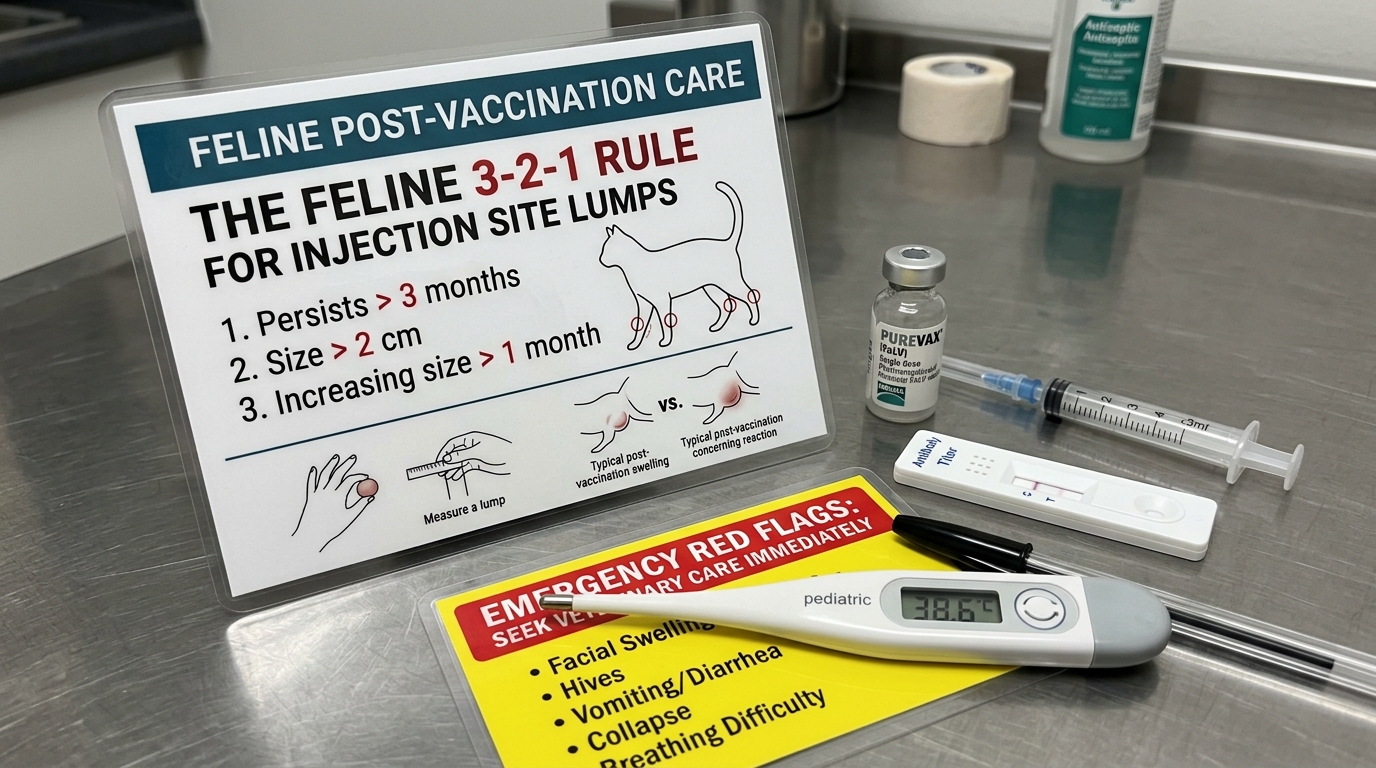
Red-Flag Triage Matrix: Post-Vaccination Observation in New Adoptions
Monitor your companion animal closely for 48 hours following clinical vaccination:
| Triage Tier | Clinical Presentation | Required Action Protocol |
|---|---|---|
| Immediate Emergency (0–2 Hours) | Acute facial edema (swollen muzzle, puffy eyelids), widespread cutaneous hives, sudden collapse, repeated violent vomiting, profound lethargy with gray mucous membranes. | Transport immediately to the nearest veterinary hospital. Anaphylactic shock requires immediate epinephrine, intravenous fluid therapy, and injectable corticosteroids. |
| Urgent Assessment (12–24 Hours) | Persistent vomiting or diarrhea beyond 12 hours post-injection, marked soreness preventing walking, refusal to drink water, or high fever (>103.5°F). | Contact your attending veterinary clinic. Clinicians will prescribe veterinary-specific antipyretics or analgesics; do not administer human OTC medications. |
| Routine Home Monitoring | Mild localized tenderness at the subcutaneous injection site, slight sluggishness lasting 12 to 24 hours, followed by full appetite return. | Provide a quiet, warm resting area with easy access to water. Avoid vigorous play or grooming over the injection site for 48 hours. |
Never administer human pain medications such as acetaminophen, ibuprofen, or aspirin to treat post-vaccine fever or injection soreness in pets. Human NSAIDs and analgesics induce acute renal necrosis, severe gastric ulceration, and fatal hepatic toxicity in companion animals.
Caregiver Decision Tree: New Adopter Immunization Dilemmas
New adopters verify vaccine records from a rescue or previous owner
Examine the physical adoption paperwork for official veterinary clinic stamps, vaccine brand stickers, lot numbers, and licensed veterinary signatures. If records only show handwritten notes without veterinary verification or originate from over-the-counter feed-store vaccines administered by laypersons, primary care veterinarians often recommend re-administering core vaccines to ensure verifiable, regulated immunity. Schedule a preliminary wellness examination within 7 days of adoption so your veterinarian can review historical paperwork and formulate a definitive booster calendar.
Injection-Site Lumps After Vaccination: Response Timeline and Red Flags
A small, firm, non-painful subcutaneous nodule occasionally forms at the injection site several days post-vaccination as an expected localized immune response to vaccine adjuvants. Follow the established veterinary “3-2-1 Rule”: contact your veterinarian if the lump persists past 3 months, grows larger than 2 centimeters in diameter, or continues expanding in size 1 month after the injection. Most benign post-vaccinal granulomas gradually regress and resolve spontaneously over several weeks without medical intervention.
Frequently Asked Questions
What is the difference between core and non-core lifestyle vaccinations?
Core vaccinations (such as Rabies and DHPP for dogs, or Rabies and FVRCP for cats) protect against highly contagious, fatal diseases universal to all companion animals. Non-core vaccinations (such as Leptospirosis, Bordetella, Lyme, or FeLV) are recommended based on specific regional prevalence, boarding frequency, or outdoor wildlife exposure.
What post-vaccination symptoms are normal versus life-threatening emergencies?
Mild fatigue, temporary decreased appetite, and localized soreness at the injection site lasting 12 to 24 hours are normal physiological immune responses. Facial swelling, persistent hives, acute vomiting, collapse, or labored breathing indicate severe anaphylaxis requiring immediate emergency veterinary care.
Can vaccinations be safely administered if a pet has an unknown immunization history?
Yes. Veterinarians treat animals with unknown or unverifiable vaccination histories as naive, initiating core series or using antibody titer blood tests to confirm immunity before establishing standard booster intervals.
Caregiver Vaccination Safety and Post-Care Checklist
- Verify documented vaccination dates and lot numbers with your veterinarian before administering repeat doses.
- Observe your pet closely for 2 hours post-vaccination for facial puffiness, hives, or breathing changes.
- Provide a quiet, comfortable recovery area free from rough play, dog parks, or strenuous exercise for 24 hours.
- Monitor the injection site for minor swelling; alert your clinic if a firm nodule persists past 3 weeks.
- Never administer human over-the-counter pain relievers for post-vaccine soreness; human NSAIDs are toxic to pets.
Sources
- WSAVA Guidelines for the Vaccination of Dogs and Cats. World Small Animal Veterinary Association.
- AAHA Canine Vaccination Guidelines. American Animal Hospital Association.
- AAFP Feline Vaccination Advisory Panel Report. American Association of Feline Practitioners.
Printable tools
Download the matching worksheet
Source transparency
Reference mix for this guide
Source labels describe the type of organization behind each reference; they are not a claim that any outside organization reviewed this article.
- WSAVA Guidelines for the Vaccination of Dogs and Cats Veterinary organization · wsava.org
- AAHA Canine Vaccination Guidelines Veterinary organization · aaha.org
- AAFP Feline Vaccination Advisory Panel Report Veterinary organization · catvets.com

