This guide is general education for pet owners. If your pet has urgent symptoms, possible poisoning, injury, breathing trouble, collapse, severe pain, or sudden decline, contact a licensed veterinarian or local emergency service.
Editorial standard
How this guide was prepared
Managing the medical schedules of multiple companion animals living under one roof presents complex logistical and immunological challenges. In homes with two, three, or more dogs and cats, vaccination is rarely just an individual clinical choice—it is a collective household epidemiological defense. Pathogens do not recognize interior bedroom doors or separate feeding bowls; an infectious virus or bacterial vector introduced by a highly social, dog-park-loving canine can effortlessly jump to an unvaccinated senior pet or a fragile young kitten sharing the same living quarters.
Clinical Quick Answer & Immediate Actions
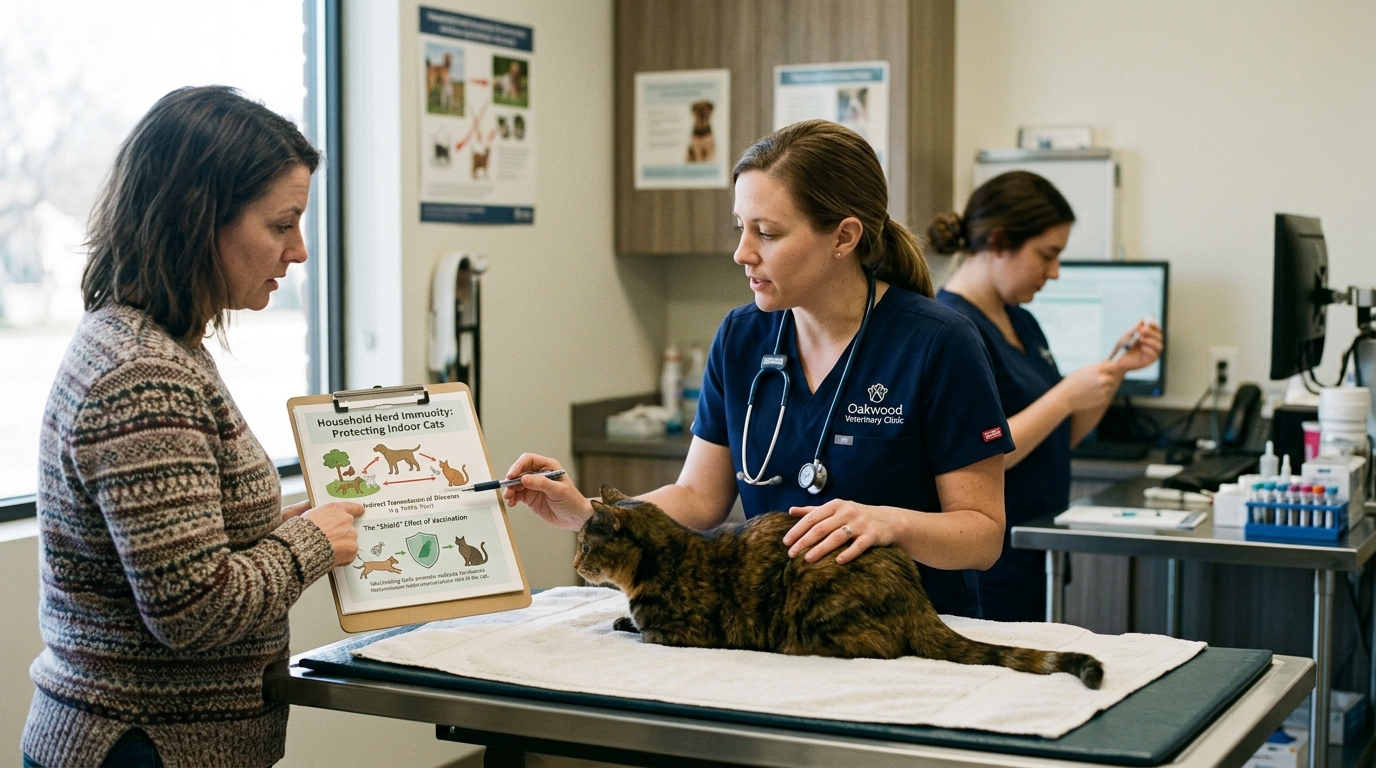
Managing vaccination protocols in multi-pet households requires evaluating household herd immunity rather than viewing each animal as an isolated epidemiological island. A major clinical vulnerability arises from the ‘indoor-outdoor exposure gap’: an indoor-only feline may have minimal direct outdoor exposure, but if a cohabiting canine visits dog parks or a companion feline explores outdoors, they act as active biological vectors carrying respiratory viruses (feline calicivirus, herpesvirus, Bordetella bronchiseptica) and enteric pathogens back into the home. Establishing effective household protection requires synchronizing core immunizations, closing viral gaps (such as vaccinating indoor felines against FeLV if an outdoor housemate exists), appropriately spacing multi-antigen vaccines by 3–4 weeks to prevent immunological interference, and utilizing serum antibody titers for medically fragile or geriatric housemates.
Achieving reliable household herd immunity while avoiding vaccine over-administration, cross-species exposure risks, and overwhelming veterinary bills requires strategic scheduling, risk-based stratification, and strict post-vaccination segregation protocols. Understanding how to align vaccine dates across species safeguards every pet in your multi-animal family.
The Dynamics of Household Herd Immunity
Household herd immunity functions on the principle that when the overwhelming majority of cohabiting animals possess neutralizing antibodies against a pathogen, the chain of viral transmission is broken, shielding individuals who cannot be safely immunized (such as immunocompromised pets, cancer patients undergoing chemotherapy, or neonates prior to maternal antibody waning):
- Asymptomatic Viral Shedding: An adult dog with reliable natural immunity may encounter canine adenovirus or parainfluenza on a sidewalk walk and shed viral particles for several days without exhibiting severe clinical signs, easily infecting an incompletely vaccinated new puppy.
- The Feline Leukemia (FeLV) Threat: FeLV is transmitted primarily through intimate social contact, including mutual grooming, shared food bowls, and bite wounds. An outdoor cat that contracts FeLV can transmit the fatal retrovirus to indoor housemates within weeks. Review our multi-cat environmental stress guide.
- Zoonotic Vector Cross-Contamination: Leptospirosis bacteria shed in the urine of an infected dog can contaminate kitchen floors or bathroom tiles, posing severe acute renal and hepatic failure hazards to both other pets and human family members.
Risk-Based Household Vaccine Alignment Matrix
Structure your multi-pet vaccine calendar based on the activity profile of each resident animal:
| Pet Profile in Household | Primary Environmental Exposure | Essential Household Vaccine Protocol |
|---|---|---|
| Social Active Dog | Dog parks, grooming salons, boarding kennels, hiking trails. | Core (DHPP, Rabies) PLUS Lifestyle: Bordetella, Bivalent Influenza (H3N2/H3N8), Leptospirosis 4-serovar, Lyme if tick-endemic. |
| Homebody Companion Dog | Private fenced yard, minimal direct dog-to-dog social encounters. | Core (DHPP, Rabies) PLUS Leptospirosis (wildlife vectors like raccoons, rodents, and urban rats enter private yards). |
| Indoor/Outdoor Cat | Outdoor exploration, hunting rodents, territorial neighborhood interactions. | Core (FVRCP, Rabies) PLUS annual Feline Leukemia Virus (FeLV) vaccination and year-round parasiticide coverage. |
| Strictly Indoor Cat | Confined inside apartment or house; zero direct outdoor contact. | Core (FVRCP, Rabies). If cohabiting with an outdoor cat, administer baseline FeLV series after confirming negative blood test. |
| Fragile Senior / Renal Patient | Advanced age, chronic medical conditions, low immune reserve. | Maintain Rabies legal requirements; utilize serum antibody titer testing (FPV/CDV) to substantiate modified-live core booster deferral. |
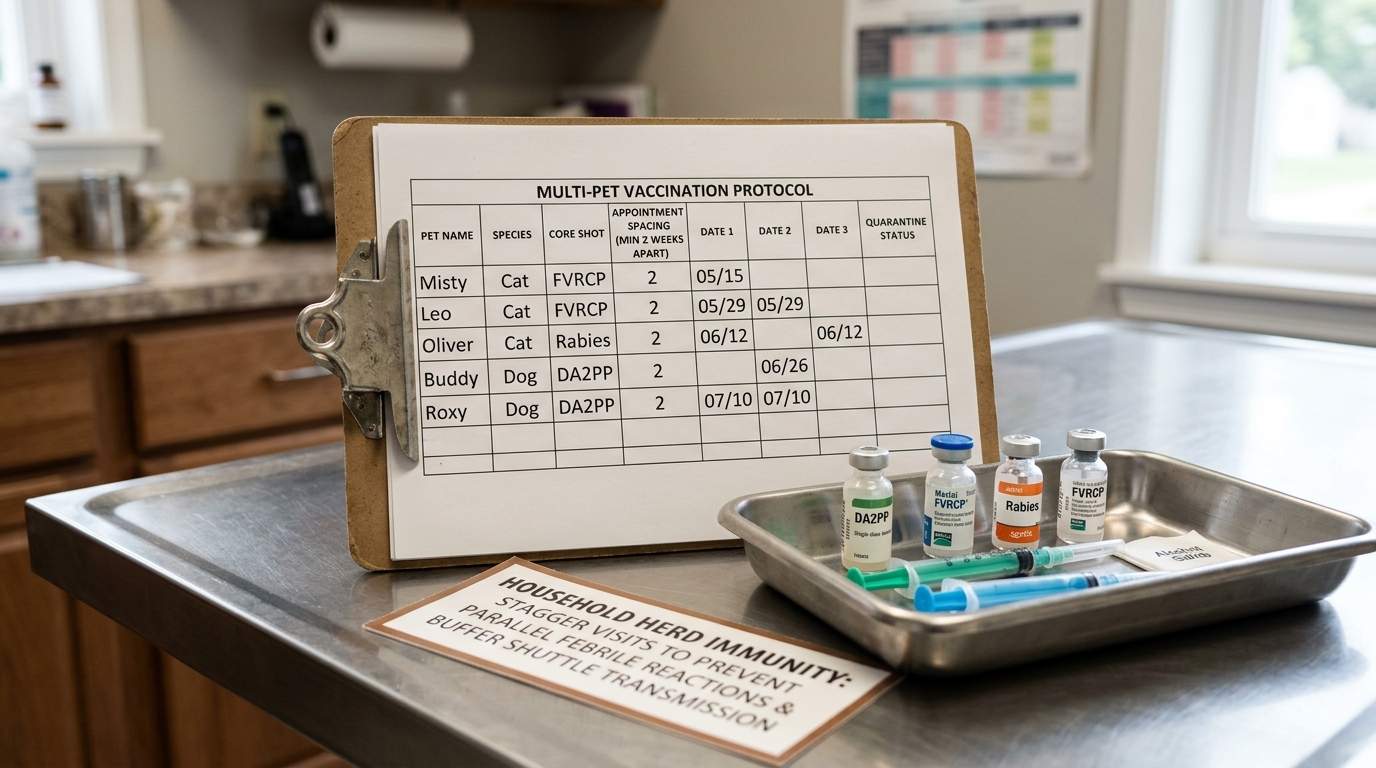
Appointment Spacing: Why You Should Never Vaccinate 5 Pets Simultaneously
While loading five carrier crates and dogs into a minivan for a single marathon veterinary clinic visit may seem efficient, veterinary behaviorists and immunologists strongly discourage bulk household vaccination:
- Adverse Reaction Attribution: If three dogs receive multiple injections simultaneously and one dog begins vomiting or develops facial hives four hours later, identifying which animal is reacting—and which specific antigen caused the hypersensitivity—becomes diagnostically chaotic.
- Elevated Household Behavioral Tension: Pets returning from the veterinary hospital carry unfamiliar antiseptic, alcohol, and stress-pheromone scents, frequently triggering “non-recognition aggression” and violent fighting among cohabiting cats or territorial dogs. Review our how to isolate a sick pet guide.
- Financial Predictability: Staggering multi-pet wellness visits across alternating months or quarters distributes routine preventive health expenditures smoothly throughout the fiscal year.
When to Contact a Veterinarian Immediately
Post-vaccination complications require prompt triage. Contact your veterinary clinic or an emergency animal hospital immediately if any pet in the household exhibits severe adverse signs within 24 hours of vaccination, including facial swelling, persistent vomiting, diarrhea, acute breathing difficulty, collapse, or if unvaccinated household cohabitants suddenly develop fever, nasal discharge, ocular crusting, or refusal to eat.
Clinical Practice Tool: Pet Medication Log
Coordinate multi-pet herd immunity and staggered vaccination intervals with our printable Pet Medication Log. Download and print your copy of the Pet Medication Log, or explore all practical pet care guides in the NewsPet Resource Center.
Frequently Asked Questions
How does herd immunity protect multiple companion animals living in the same home?
Maintaining up-to-date vaccinations across all household animals creates a protective immunological shield that prevents pathogens from establishing and circulating, shielding vulnerable pets like geriatric or immunosuppressed animals.
What quarantine protocol should be enforced before introducing a newly vaccinated pet to resident animals?
Keep the newly adopted pet isolated in a separate room for 10 to 14 days. This window allows vaccine-induced antibody titers to rise and ensures subclinical shelter pathogens declare themselves before cross-exposure.
Can indoor cats contract viral diseases from vaccinated dogs that go outdoors?
Dogs cannot transmit canine distemper to cats, but dogs can physically transport feline viral particles on their fur or paws after walking near outdoor feral cat colonies, making core FVRCP vaccines vital for indoor cats.
Emergency Triage Matrix: Clinical Presentation & Required Response
| Triage Level | Clinical Signs & Presentation | Immediate Action Protocol |
|---|---|---|
| Tier 1: Immediate Emergency (0–2 Hours) | Acute anaphylactic collapse, facial angioedema, cyanosis, or acute severe vomiting within 60 minutes of vaccination in any pet; or sudden outbreak of fulminant bloody diarrhea and vomiting across multiple unvaccinated household animals. | Immediate emergency veterinary transport; shock fluid resuscitation, injectable epinephrine, dexamethasone, and strict isolation barrier triage at the receiving hospital. |
| Tier 2: Urgent Veterinary Care (Same-Day) | An outdoor-going household animal returns exhibiting active infectious respiratory signs (coughing, purulent oculonasal discharge) while cohabiting with unvaccinated puppies, kittens, or immunosuppressed seniors. | Immediate veterinary consultation; institute strict physical barrier quarantine within a separate room, schedule diagnostic PCR respiratory panels, and arrange prophylactic immunization for exposed housemates. |
| Tier 3: Home Monitoring & Scheduled Care | All household pets are energetic, eating normally, and clinically stable, but exhibit asynchronous vaccination due dates scattered across multiple months. | Consolidate household records with your primary veterinarian; establish a synchronized master vaccination calendar and request antibody titers for seniors before routine boosters. |
Rule S1 Boundaries & Multi-Pet Immunization Rules
Multi-pet immunization protocols require adherence to strict biosecurity rules:
- NEVER assume indoor-only pets are exempt from core vaccines in multi-pet homes: Dogs and outdoor cats actively transport airborne pathogens (feline calicivirus, Bordetella) and non-enveloped parvoviral particles into the home on coats and paws, exposing unvaccinated indoor pets.
- NEVER vaccinate an animal currently showing signs of acute systemic fever or illness: Immune responses are compromised during active viral or bacterial infection; vaccinating a sick pet causes therapeutic failure and risks severe post-vaccinal decompensation.
- NEVER administer all multi-valent vaccines simultaneously in pets with prior allergic reactions: Administering concurrent vaccines to hypersensitive animals compounds antigen loads and masks the specific offending agent; separate individual antigens by 3 to 4 weeks.
- NEVER allow newly acquired pets into general household circulation without a 14-day quarantine: Shelter and rescue animals frequently shed subclinical incubating pathogens during the initial two-week transition, exposing resident animals despite past vaccination histories.
Caregiver Multi-Pet Vaccine Coordination Checklist
- Audit all household vaccination records: verify expiration dates for Rabies, DA2PP/DHPP (dogs), and FVRCP (cats) in a single master spreadsheet.
- Identify exposure differentials: classify each pet as strict indoor, indoor-outdoor, or high-social (dog parks, boarding, daycare, grooming).
- Evaluate feline leukemia (FeLV) risk: ensure all indoor felines living with an outdoor cat are fully vaccinated against FeLV regardless of direct outdoor access.
- Space multi-pet vaccination appointments across coordinated clinic visits to prevent overwhelming caregiver observation capacity during post-vaccine recovery.
- Request serum antibody titer testing (vaccine titer) for geriatric pets or animals with documented chronic kidney disease before routine revaccination.
- Maintain dedicated isolation supplies (food bowls, litter box, bedding) ready in a spare room for immediate quarantine if an animal returns from boarding ill.
Related Clinical Guides & Tools
Peer-Reviewed Clinical References & Evidence Grounding
- PMID: 33769611: International veterinary canine dyskinesia task force ECVN consensus statement: Terminology and classification (J Vet Intern Med, 2021) (opens in new tab)
- PMID: 38351524: Defining sepsis in small animals (J Vet Emerg Crit Care (San Antonio), 2024) (opens in new tab)
- PMID: 38474142: Canine Mammary Tumors: Classification, Biomarkers, Traditional and Personalized Therapies (Int J Mol Sci, 2024) (opens in new tab)
- UC Davis School of Veterinary Medicine — Companion Animal Health Center (opens in new tab)
Source transparency
Reference mix for this guide
Source labels classify the institutional category of the references cited above.