This guide is general education for pet owners. If your pet has urgent symptoms, possible poisoning, injury, breathing trouble, collapse, severe pain, or sudden decline, contact a licensed veterinarian or local emergency service.
Dosages must be calculated by a licensed veterinarian based on species, weight, and bloodwork. Never administer human medications or self-adjust prescription doses for pets.
Editorial standard
How this guide was prepared
Canine immunization protocols in modern veterinary medicine have moved decisively away from a rigid “one-size-fits-all” model toward personalized, risk-based immunological profiling. While core vaccines (such as Rabies and the combined DAP/DHPP shot for distemper, adenovirus, and parvovirus) are universally required for every canine regardless of geography, non-core lifestyle vaccines protect against environmental and social pathogens that vary dramatically based on where a dog lives, plays, and travels. Developing an accurate vaccination plan requires evaluating your dog’s genuine exposure risks alongside a licensed veterinarian.
Clinical Quick Answer & Immediate Actions
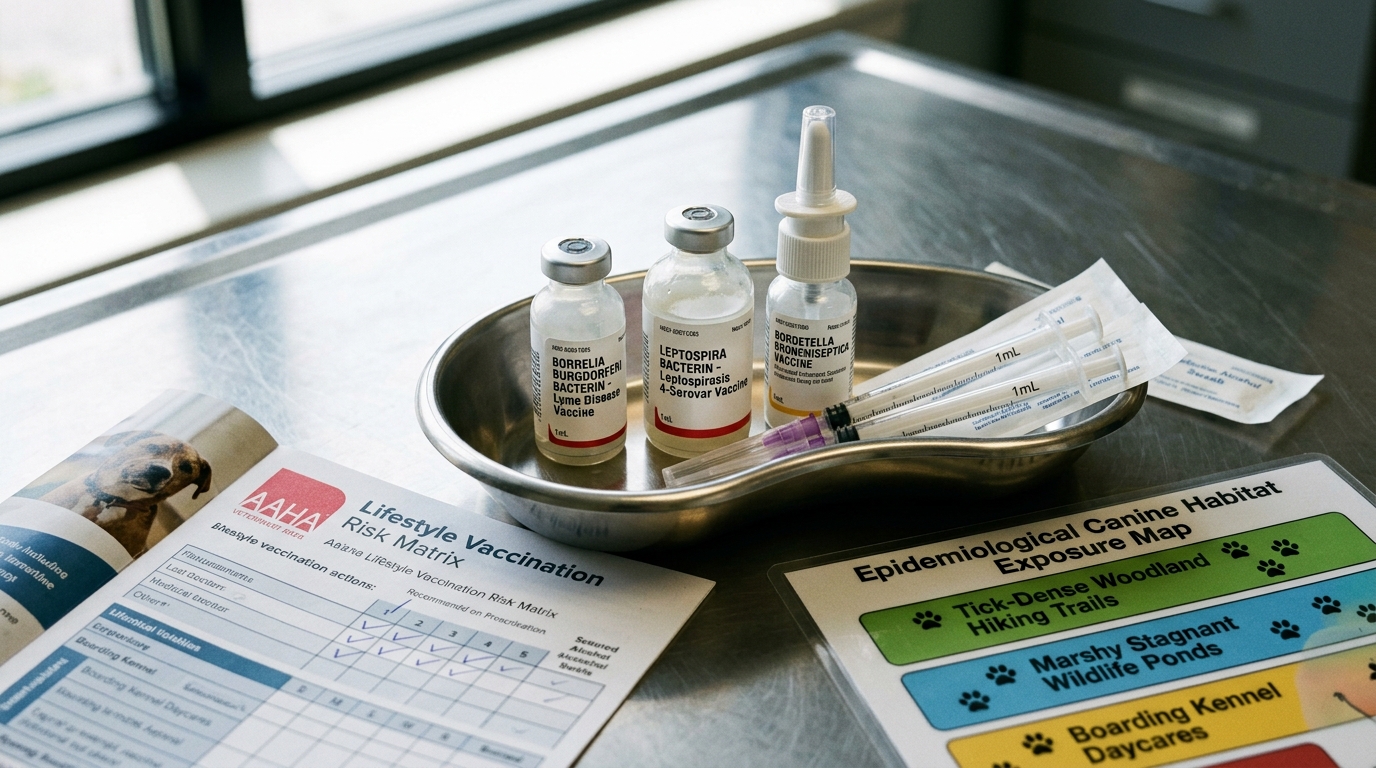
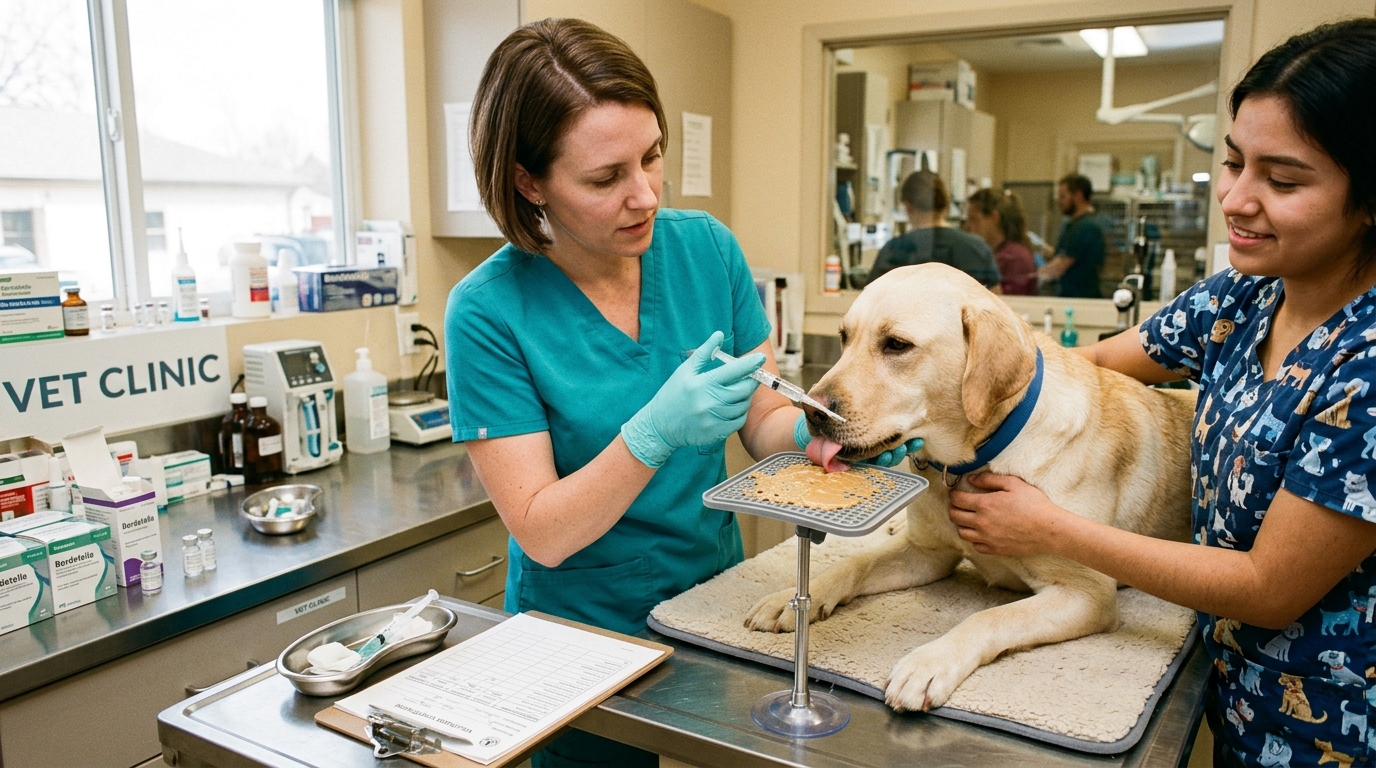
Non-core or lifestyle vaccines for dogs—specifically Bordetella bronchiseptica, Leptospira interrogans, and Borrelia burgdorferi (Lyme disease)—are selected based on an individual patient’s environmental risk profile. Bordetella protects against canine infectious respiratory disease complex for dogs frequenting boarding, grooming, or dog parks. Leptospirosis protects against lethal bacterial organ damage transmitted via wildlife urine in puddles, soil, and suburban yards, and is critically zoonotic to humans. Lyme vaccination is recommended in endemic tick habitats as an adjunct to strict tick control.
Administering vaccines indiscriminately can result in unnecessary medical costs and post-vaccination soreness, yet failing to vaccinate against high-risk environmental pathogens leaves companion animals vulnerable to life-threatening infectious diseases. Evaluating lifestyle factors such as boarding frequency, grooming visits, hiking habits, and standing water exposure ensures your dog receives reliable, tailored immunological protection.
The Core Non-Core Lifestyle Vaccine Matrix
The American Animal Hospital Association (AAHA) Canine Vaccination Task Force categorizes non-core vaccines based on environmental transmission mechanisms:
| Vaccine Target | Transmission Mode & High-Risk Environments | Disease Severity & Clinical Impact | Recommended Administration Route & Frequency |
|---|---|---|---|
| Bordetella bronchiseptica | Airborne aerosol droplets in boarding kennels, dog parks, grooming facilities, training classes | Tracheobronchitis, persistent honking cough, retching, potential secondary bacterial pneumonia | Intranasal or oral (rapid mucosal IgA immunity in 48–72h) or subcutaneous; boosted every 6–12 months |
| Leptospirosis (4-Serovar) | Contact with urine from infected wildlife/rodents; standing water, puddles, ponds, urban rainwater | Severe acute renal failure, hepatic necrosis, pulmonary hemorrhage; zoonotic hazard to human owners | Subcutaneous 2-dose initial series (2–4 weeks apart), followed by annual single revaccination |
| Borrelia burgdorferi (Lyme) | Bites from infected Ixodes ticks (blacklegged/deer ticks) in brush, tall grasses, and woods | Shifting-leg lameness, painful swollen joints, fever, lethargy, fatal Lyme nephritis (proteinuria) | Subcutaneous initial 2-dose series, followed by annual booster prior to peak spring/fall tick activity |
| Canine Influenza (Bivalent H3N2/H3N8) | Direct dog-to-dog contact, respiratory secretions, contaminated surfaces at shows and boarding kennels | High fever, severe purulent nasal discharge, lethargy, rapid-onset hemorrhagic pneumonia | Subcutaneous 2-dose series (2–4 weeks apart), followed by annual booster for high-density social dogs |
Why the Leptospirosis Vaccine Is More Important Than Ever
Historically considered a rural farm disease, leptospirosis has become increasingly prevalent across suburban neighborhoods and dense urban centers due to urban wildlife expansion. Rats, raccoons, opossums, and skunks shed leptospires in their urine, contaminating puddles, communal water bowls, and wet soil. When a dog drinks from a contaminated puddle or licks wet paws after a walk, the bacteria penetrate mucous membranes and invade the bloodstream within hours.
Modern 4-serovar leptospirosis vaccines provide broad coverage against the four most common pathogenic serovars (Canicola, Icterohaemorrhagiae, Grippotyphosa, and Pomona). Because leptospirosis is a serious zoonotic pathogen capable of causing acute renal failure in human caregivers, vaccinating high-risk dogs protects both animal and human family members.
Evaluating Your Dog’s Lifestyle Risk Profile
To determine which non-core immunizations are medically appropriate for your companion, review this practical exposure checklist before your appointment:
- Social Canine Activities: Does your dog visit boarding kennels, doggy daycares, communal dog parks, grooming salons, or agility competitions? If yes, prioritize Bordetella and Canine Influenza vaccines.
- Outdoor & Wilderness Hiking: Do you take your dog camping, hiking through tall grass, or hunting in tick-endemic regions? If yes, pair the Lyme vaccine with monthly isoxazoline preventatives. Review our dog parasite prevention guide.
- Wet Environments & Wildlife Access: Does your yard see visits from urban rodents, or does your dog drink from puddles, ponds, or irrigation runoff? If yes, Leptospirosis vaccination is medically indicated. For organized vaccination record tracking, download our printable Daily Pet Care Routine Tracker.
Vaccine Titers: What They Can and Cannot Test
Many pet owners ask whether blood antibody titers can replace annual booster vaccinations for lifestyle pathogens:
- Core Viral Diseases (Distemper, Parvovirus, Adenovirus): Serum antibody titer testing (such as VacciCheck or TiterCHEK) reliably measures long-lived circulating IgG antibodies against core viral diseases, confirming whether protective immunity remains reliable without requiring unnecessary revaccination.
- Non-Core Bacterial Diseases (Leptospirosis, Lyme, Bordetella): Titer testing is clinically ineffective for non-core bacterial lifestyle vaccines. Bacterial protection depends on short-lived mucosal IgA antibodies (for Bordetella) or localized cell-mediated immune responses (for Leptospira and Borrelia). Circulating antibody levels decline within 12 months, making annual boosters necessary for dogs with ongoing exposure risks.
- Rescue Dogs with Incomplete Records: For adopted adult dogs with unknown vaccination history, veterinarians recommend administering an initial 2-dose Leptospirosis series (spaced 2 to 4 weeks apart) and an intranasal Bordetella dose rather than assuming prior protection. Review our vaccine quarantine and shelter history guide for comparative protocols.
When to Contact a Veterinarian Immediately
Modern lifestyle vaccines are safe and rigorously tested, but owners must monitor for rare acute hypersensitivity reactions within forty-eight hours of injection. Seek immediate emergency veterinary clinic care if your dog develops sudden facial swelling around the muzzle or eyes, hives, persistent vomiting, diarrhea, sudden collapse, or pale gums. These symptoms indicate an acute anaphylactic response requiring immediate veterinary epinephrine and antihistamine intervention.
Clinical Practice Tool: Veterinary Visit Preparation Sheet
Plan canine lifestyle vaccine discussions (Leptospirosis, Bordetella, Lyme) using our Veterinary Visit Preparation Sheet. Download and print your copy of the Veterinary Visit Preparation Sheet, or explore all practical pet care guides in the NewsPet Resource Center.
Frequently Asked Questions
Does my dog really need the leptospirosis vaccine?
Yes, leptospirosis vaccination is strongly recommended by veterinary authorities for any dog with outdoor access. Leptospira bacteria thrive in standing water, damp soil, puddles, and gardens frequented by wildlife or rodents, causing acute kidney and liver failure. additionally, leptospirosis is a serious zoonotic disease that can spread to humans.
How often does a dog need a kennel cough (Bordetella) vaccine?
The Bordetella vaccine is typically administered annually, but boarding kennels, dog daycares, and training facilities often require booster revaccination every 6 months for dogs in high-density communal environments.
When is the Lyme disease vaccine recommended for dogs?
The canine Lyme vaccine is recommended for dogs living in or traveling to endemic tick regions (especially the Northeast, Mid-Atlantic, and Upper Midwest) that spend time in brush, tall grasses, or wooded trails, always combined with consistent year-round acaricide tick preventatives.
Emergency Triage Matrix: Clinical Presentation & Required Response
| Triage Level | Clinical Signs & Presentation | Immediate Action Protocol |
|---|---|---|
| Tier 1: Immediate Emergency (0–2 Hours) | Acute collapse, jaundice (yellow sclera/gums), severe vomiting, oliguria (absent urine output), or petechiae in an unvaccinated dog exposed to wildlife puddles (acute leptospirosis crisis). | Immediate emergency veterinary transport with strict zoonotic barrier isolation; aggressive intravenous fluid diuresis, systemic penicillin/doxycycline, and intensive renal monitoring. |
| Tier 2: Urgent Veterinary Care (Same-Day) | Acute persistent honking cough, retching white foam, and exercise intolerance following recent boarding exposure (kennel cough); or shifting-leg lameness with swollen joints and fever (Lyme). | Urgent veterinary clinical evaluation; thoracic radiography to rule out secondary bronchopneumonia, 4Dx serological screening for Borrelia antibodies, and targeted medical therapy. |
| Tier 3: Home Monitoring & Scheduled Care | Healthy adult dog scheduled for boarding, agility competition, or hiking season requiring routine annual non-core vaccine updates. | Schedule veterinary wellness consultation, administer appropriate lifestyle boosters 2 to 4 weeks prior to boarding exposure, and practice rigorous tick prevention. |
Rule S1 Boundaries & Lifestyle Vaccine Rules
Lifestyle immunization requires strict adherence to clinical standards:
- NEVER skip the mandatory 2-to-4 week booster for initial Leptospirosis or Lyme vaccines: Bacterial bacterins do not stimulate long-term memory cells after a single dose; without the second booster within 4 weeks, the animal develops zero protective immunity and the series must restart.
- NEVER assume a Bordetella vaccine prevents all causes of coughing: Canine Infectious Respiratory Disease Complex (CIRDC) involves multiple viral and bacterial pathogens (parainfluenza, coronavirus, mycoplasma); vaccination reduces severity but does not provide complete immunity.
- NEVER handle urine from a suspected leptospirosis dog with bare hands: Leptospira bacteria penetrate intact mucous membranes and broken human skin; caregivers risk acute zoonotic leptospirosis (Weil’s disease) resulting in human renal and liver failure.
- NEVER rely on Lyme vaccines as a substitute for active tick prevention: The Lyme vaccine prevents Borrelia infection but offers zero protection against co-transmitted tick-borne pathogens including Anaplasma, Ehrlichia, and Babesia.
Caregiver Lifestyle Vaccine Decision Checklist
- Audit your dog’s annual exposure risks: boarding facilities, doggy daycare, grooming salons, dog training classes, urban dog parks, and rural hiking trails.
- Administer Bordetella intranasal or oral vaccines at least 7 to 10 days before scheduled boarding dates to allow mucosal IgA antibody development.
- Ensure your dog receives the 4-serovar Leptospira bacterin annually if you live near standing water, suburban wildlife (raccoons, rodents, deer), or wet rainy climates.
- Combine Lyme vaccination with rigorous daily tick checks and monthly isoxazoline preventatives in tick-endemic geographic areas.
- Keep verified veterinary vaccination certificates stored on your smartphone for rapid access during emergency boarding or veterinary visits.
Related Clinical Guides & Tools
Peer-Reviewed Clinical References & Evidence Grounding
- PMID: 36336419: Ehrlichiosis and Anaplasmosis: An Update (Vet Clin North Am Small Anim Pract, 2022) (opens in new tab)
- PMID: 31622127: 2019 AAHA Canine Life Stage Guidelines (J Am Anim Hosp Assoc, 2019) (opens in new tab)
- PMID: 36006301: Canine Leishmaniasis: Update on Epidemiology, Diagnosis, Treatment, and Prevention (Vet Sci, 2022) (opens in new tab)
- Merck Veterinary Manual — Small Animal Clinical Medicine & Emergency Reference (opens in new tab)
Source transparency
Reference mix for this guide
Source labels classify the institutional category of the references cited above.