
This guide is general education for pet owners. If your pet has urgent symptoms, possible poisoning, injury, breathing trouble, collapse, severe pain, or sudden decline, contact a licensed veterinarian or local emergency service.
Dosages must be calculated by a licensed veterinarian based on species, weight, and bloodwork. Never administer human medications or self-adjust prescription doses for pets.
Editorial standard
How this guide was prepared
This clinical guide outlines urinary tract observation and diagnostic standards. If your dog exhibits repeated unproductive straining to urinate, passes blood-tinged urine accompanied by severe vocalization, or appears bloated and lethargic, transport them immediately to an emergency veterinary hospital.
- The Male Urethral Obstruction Red Flag: Recognize life-threatening feline urinary blockage: repeated unproductive straining in the litter box, crying in pain, and genital licking require immediate emergency veterinary catheterization within 24 hours.
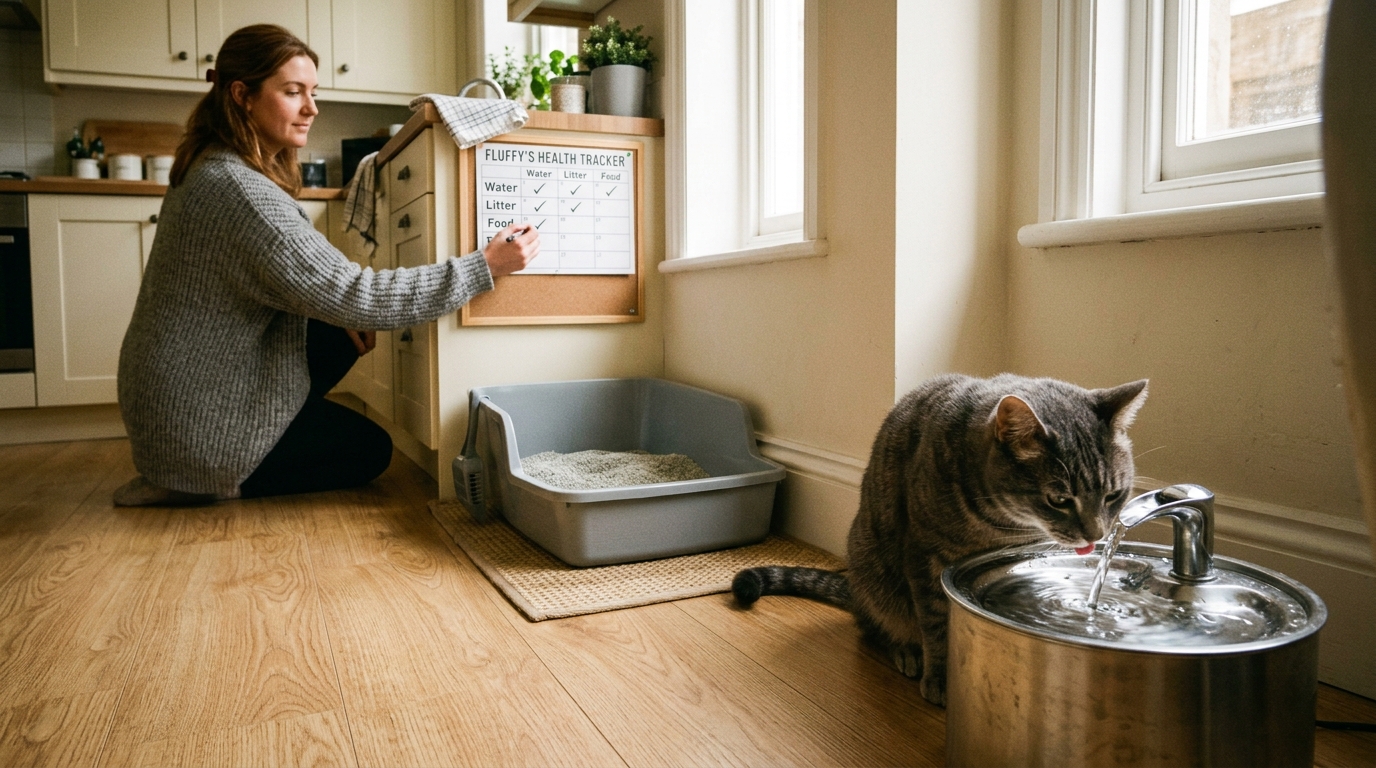
- Proactive Hydration Management: Feed high-moisture canned wet diets and provide circulating pet drinking fountains to maintain a low urine specific gravity, effectively preventing crystal precipitation and urolithiasis.
- Stress Mitigation & Resource Placement: Prevent feline idiopathic cystitis (FIC) during shelter-to-home transitions by keeping litter boxes in quiet, low-traffic areas following the standard N+1 equation (one box per cat plus one extra).
Adopting a dog with an unknown or poorly documented medical history frequently exposes pet parents to urinary irregularities. Caregivers often misclassify involuntary leakage or frequent voiding as a behavioral house-training lapse or an environmental stress reaction. In canine medicine, however, urinary departures are primary clinical manifestations of anatomical abnormalities, endocrine dysfunctions, or lower urinary tract infections that require structured diagnostic investigation.
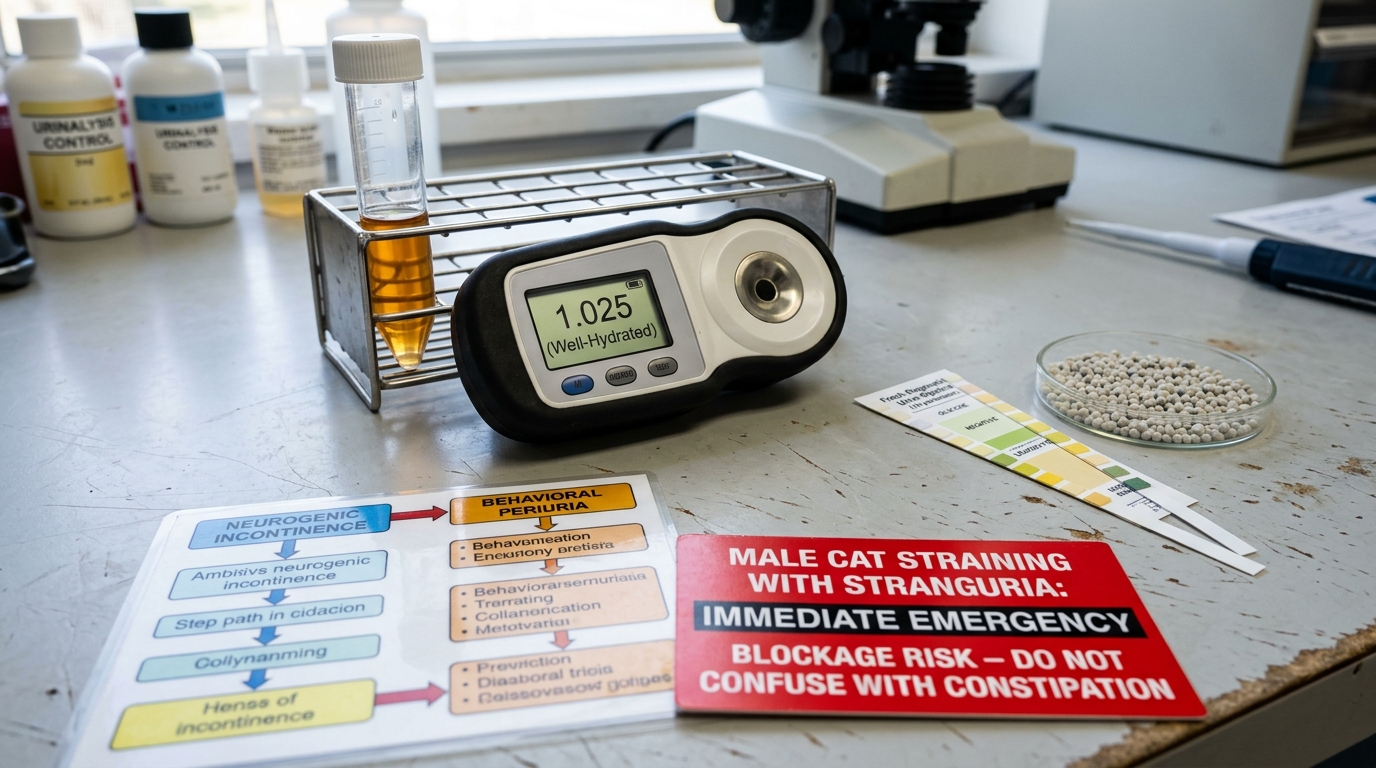
Distinguish Incontinence from Inappropriate Elimination
Before implementing behavioral training modifications, clinicians must differentiate true urinary incontinence from deliberate, conscious voiding. Distinguish between these clinical presentations:
- Urinary Incontinence (Passive, Involuntary Leakage): Urine leakage occurs without conscious awareness or posturing, typically when the dog is resting, deeply asleep, or rising from a recumbent position. Owners frequently discover wet bedding, damp fur around the perineum, or passive urine dribbling along flooring. The classic etiology in adult female dogs is Urethral Sphincter Mechanism Incompetence (USMI), often related to post-gonadectomy estrogen decline.
- Pollakiuria and Stranguria (Frequent, Painful Urination): The dog consciously assumes an elimination posture repeatedly, producing only tiny volumes, droplets, or nothing at all, frequently accompanied by whining or genital licking. This pattern points directly to acute mucosal irritation of the bladder wall or urethra, characteristic of bacterial cystitis, urolithiasis (bladder stones), or prostatic disease in intact males.
- Polyuria and Polydipsia (PU/PD): The dog produces massive, high-volume urine puddles and demonstrates compensatory excessive water intake (> 100 milliliters per kilogram daily). This systemic triad typically indicates endocrine or metabolic disorders such as chronic kidney disease, diabetes mellitus, hyperadrenocorticism (Cushing’s disease), or pyometra in unspayed females.
- Congenital Anatomical Defects: In young puppies or newly adopted juvenile dogs with persistent, lifelong leakage since weaning, clinicians must investigate anatomical anomalies such as ectopic ureters—where one or both ureters bypass the bladder trigone and empty directly into the urethra or vagina.
Clinical Diagnostics: Urinalysis and Specific Gravity Metrics
A definitive veterinary workup begins with a complete urinalysis collected via free-catch (mid-stream void) or cystocentesis (sterile needle aspiration directly from the bladder). Understanding urinalysis metrics empowers caregivers to interpret laboratory findings alongside their veterinarian:
| Diagnostic Parameter | Clinical Normal Reference Range | Pathological Significance & Differentials |
|---|---|---|
| Urine Specific Gravity (USG) | 1.030–1.045 (Canine concentrated urine measured via optical refractometer) | USG < 1.020 indicates impaired renal concentrating ability. A fixed USG between 1.008–1.012 (isosthenuria) indicates that the kidneys can neither concentrate nor dilute glomerular filtrate, signaling renal tubular compromise. |
| Urine Chemical Dipstick | Negative for Glucose, Ketones, Bilirubin; negative to trace for Protein; pH 6.0–7.5. | Persistent proteinuria indicates glomerular leakage. Glucosuria indicates blood glucose exceeding the renal threshold (diabetes mellitus or Fanconi syndrome). |
| Sediment Microscopy | < 5 RBCs/HPF, < 5 WBCs/HPF; absent bacteria; occasional hyaline casts. | Pyuria (> 5 WBCs/HPF) and bacteriuria confirm active bacterial urinary tract infection, warranting quantitative urine culture and susceptibility testing. |
| Crystalluria Analysis | Occasional struvite crystals in alkaline urine. | Abundant calcium oxalate monohydrate or dihydrate crystals indicate urolith risk or ethylene glycol (antifreeze) toxicity. |
Environmental Management and Routine Consistency
While weather and seasonal shifts do not cause urinary tract infections directly, seasonal disruptions to household routines and hydration access can trigger subclinical decompensation:
- Guaranteed Outdoor Voiding Intervals: Newly adopted dogs require frequent, predictable elimination opportunities every 4 to 6 hours during waking hours to prevent prolonged urine retention, which encourages bacterial proliferation within the bladder lumen.
- Hydration Temperature Control: In winter conditions, ensure outdoor water sources do not freeze. In hot summer weather, provide multiple shaded water stations to prevent mild dehydration that concentrates urine solutes and promotes crystalluria.
- Never Restrict Water Access: If your dog is leaking urine or urinating frequently, never withhold water in an attempt to reduce indoor accidents. If the underlying etiology is kidney disease, diabetes, or an active infection, water restriction can precipitate acute prerenal azotemia and life-threatening hypovolemic shock.
- Avoid Leftover Antibiotics: Never administer human antibiotics, leftover amoxicillin, or cranberry supplements. Inappropriate antimicrobial therapy breeds resistant bacterial strains and masks accurate quantitative culture results.
Red-Flag Triage Matrix: Canine Urinary Health
Use this objective triage matrix to determine when urinary symptoms require immediate veterinary emergency intervention:
| Triage Level | Clinical Manifestations | Required Action Protocol |
|---|---|---|
| Immediate Emergency (0–2 Hours) | Complete inability to pass urine despite repeated intense straining, rigid painful abdomen, vocalizing in agony, vomiting accompanied by lethargy, severe urethral prolapse. | Transport immediately to the nearest veterinary emergency critical care facility. Complete urethral obstruction (from uroliths, mucus plugs, or strictures) causes fatal hyperkalemia and bladder rupture within 24 to 48 hours. |
| Urgent Assessment (12–24 Hours) | Frank gross hematuria (visible blood or blood clots in urine), frequent voiding of small droplets every 15–30 minutes, strong foul or ammoniacal urine odor, fever exceeding 103.0°F (39.4°C), intense genital licking. | Schedule a same-day urgent clinical appointment with your primary veterinarian for cystocentesis urinalysis and quantitative aerobic urine culture. |
| Routine Home Monitoring | Occasional passive urine leaking solely during deep sleep in an otherwise energetic, healthy adult female dog; gradual improvement in voluntary voiding cadence following an established walk schedule. | Collect a fresh mid-stream free-catch urine sample in a clean container, keep it refrigerated, and schedule an elective veterinary examination within 3 to 5 business days. |
Urinary tract complaints must be diagnostically evaluated by a licensed veterinarian using urinalysis, urine culture, and diagnostic imaging (radiography or ultrasonography). Never administer prescription urinary medications such as phenylpropanolamine (Proin) or estriol (Incurin) without a confirmed clinical diagnosis and blood pressure evaluation.
Frequently Asked Questions
How do caregivers differentiate feline constipation from a life-threatening urethral blockage?
Both issues involve straining in the litter box, but a male cat with a urethral obstruction passes little or no urine, cries out in pain, frequently licks the genital area, and may vomit. A completely blocked urethra is a fatal emergency within 24 to 48 hours requiring immediate hospital unblocking.
What environmental modifications help reduce feline idiopathic cystitis (FIC)?
Provide one litter box per cat plus one additional box, scoop daily, use unscented litter, place boxes in low-traffic areas, increase water intake through wet food and fountains, and minimize household stress with climbing shelves and synthetic pheromones.
What diagnostic tests are standard when evaluating blood in a pet’s urine (hematuria)?
A complete urinalysis with microscopic sediment examination (checking for red cells, bacteria, and crystals), urine specific gravity, a sterile bacterial culture, and abdominal X-rays or ultrasound to check for bladder stones or masses.
Caregiver Urinary Health Action Checklist
- Inspect litter box clumps or outdoor urination habits daily for changes in volume, frequency, or discoloration.
- Follow the 1-plus-1 litter box rule (one box per cat plus one extra) in quiet, accessible home locations.
- Provide fresh water in clean ceramic or stainless steel bowls and consider water fountains to promote drinking.
- Take any male cat that strains with little or no urine output to an emergency veterinary clinic immediately.
- Never give human urinary tract medications or pain relievers to pets; human drugs cause fatal organ damage.
Sources
- Diagnosing and Managing Urinary Incontinence in Canine Patients. Today’s Veterinary Practice.
- Canine Urinary Incontinence: Diagnosis and Treatment Modalities. dvm360.
- Urinary Incontinence in Small Animals Overview. Merck Veterinary Manual.
Printable tools
Download the matching worksheet
Source transparency
Reference mix for this guide
Source labels describe the type of organization behind each reference; they are not a claim that any outside organization reviewed this article.
- Diagnosing and Managing Urinary Incontinence in Canine Patients Reference source · todaysveterinarypractice.com
- Canine Urinary Incontinence: Diagnosis and Treatment Modalities Reference source · dvm360.com
- Urinary Incontinence in Small Animals Overview Reference source · merckvetmanual.com

