
This guide is general education for pet owners. If your pet has urgent symptoms, possible poisoning, injury, breathing trouble, collapse, severe pain, or sudden decline, contact a licensed veterinarian or local emergency service.
Dosages must be calculated by a licensed veterinarian based on species, weight, and bloodwork. Never administer human medications or self-adjust prescription doses for pets.
Editorial standard
How this guide was prepared
Adopting a companion animal marks the beginning of a lifelong journey of mutual companionship and care. While the adoption process involves immense excitement, bringing a new pet into your home also initiates a vital transition period requiring thorough medical and behavioral evaluation. Newly adopted dogs and cats arrive with medical records from rescue shelters, humane societies, or foster networks that require clinical interpretation and integration into a private veterinary relationship. Establishing an organized initial preventive care routine ensures that previously undiagnosed conditions are identified early, setting a solid foundation for long-term health and wellbeing.
- Medical Records Consolidation: Collect all prior adoption agency, shelter, or foster paperwork (vaccination dates, deworming products, microchip certificates) into a single folder prior to the clinical appointment.
- Low-Stress Carrier Conditioning: Acclimate cats and small dogs to carriers days in advance using synthetic facial pheromones (Feliway/Adaptil) and high-value treats to prevent stress-induced exam hypertension.
- Prioritized Health Agenda: Prepare 3 to 5 specific questions focusing on life-stage preventive schedules, breed-specific health screening, baseline diagnostic bloodwork, and customized parasite prophylaxis.
This new adopter clinical orientation protocol adheres to guidelines established by the American Animal Hospital Association (AAHA) and the American Veterinary Medical Association (AVMA). Establishing a primary veterinary partnership supports lifelong wellness and must never delay urgent emergency intervention. If your newly adopted pet displays acute collapse, severe pale or blue gums, repeated unproductive vomiting, severe respiratory distress, or sudden traumatic injury, transport the animal immediately to an emergency veterinary hospital.

The First 14 Days: Establishing Your Primary Veterinary Relationship
Veterinary wellness experts recommend scheduling an initial baseline examination within 7 to 14 days of adoption:
- Medical Record Reconciliation: Shelter vaccination and medical charts frequently contain gaps or incomplete documentation. Bring all shelter intake forms, rabies certificates, spay/neuter discharge paperwork, and deworming records so your veterinarian can build a permanent medical history.
- Comprehensive Hands-on Physical Examination: Your primary care veterinarian conducts a head-to-tail physical exam, evaluating cardiac murmurs, dental alignment, lymph node symmetry, abdominal palpation, and orthopedic joint mobility that shelter intake teams may have missed during high-volume processing.
- Diagnostic Baseline Screening: Performing baseline laboratory screening—such as heartworm antigen testing, tick-borne antibody panels, fecal centrifuge flotation, and point-of-care FeLV/FIV testing—establishes clean biological baselines before acute clinical symptoms emerge.
- Microchip Registration Verification: Verify that the pet’s implanted microchip is scanned, active, and updated with your current home address, telephone number, and emergency contact details in the national microchip recovery registry.
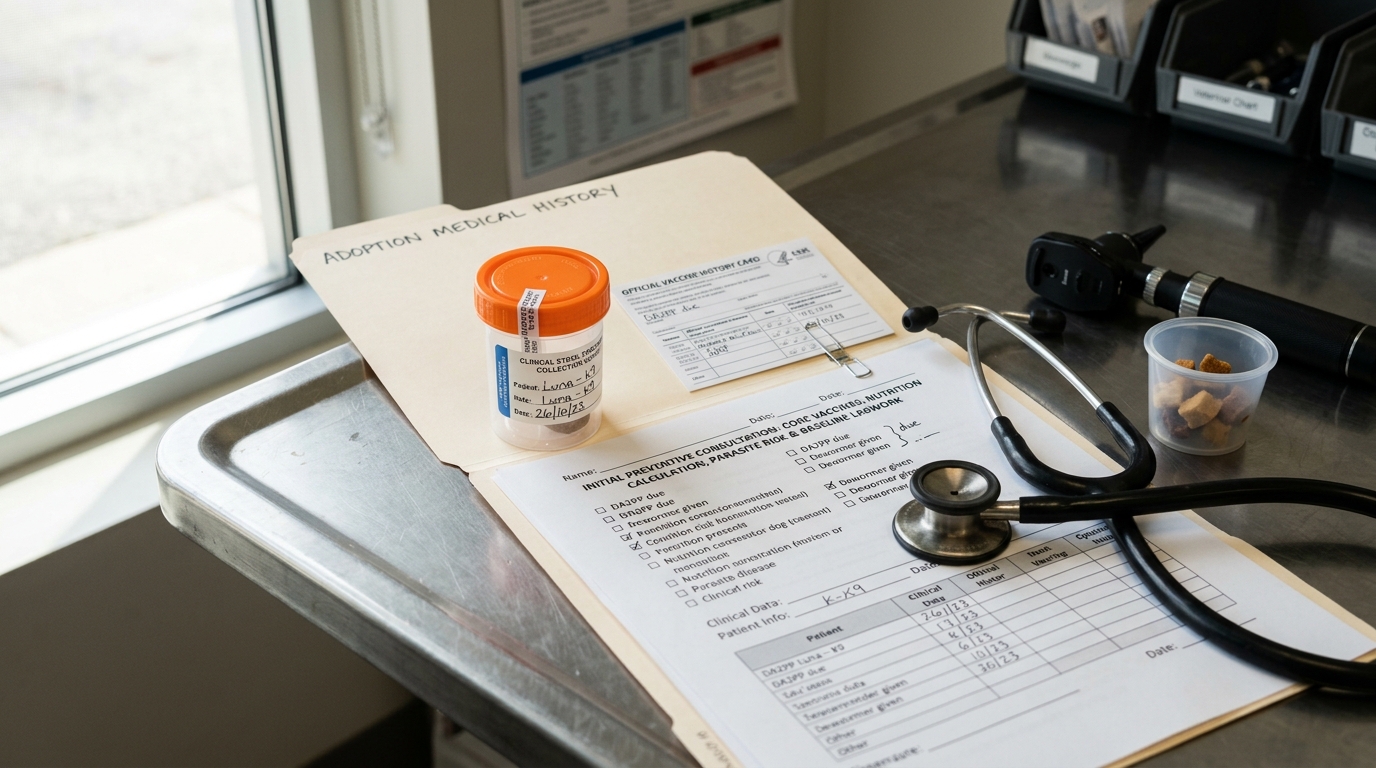
New Adopter Clinical Preparation Workflow
Prepare for your initial veterinary consultation by organizing these core health dimensions:
| Consultation Pillar | Standard Clinical Operating Procedure | New Adopter Lifelong Benefit |
|---|---|---|
| Dietary Transition Planning | Obtain the exact brand and formulation of food fed at the shelter; transition to your chosen diet over 7 to 10 days. | Prevents acute stress-induced osmotic diarrhea and gastrointestinal dysbiosis during the household transition. |
| Lifestyle Exposure Assessment | Discuss planned lifestyle activities (e.g., dog parks, camping, urban dog daycare, outdoor cat enclosure). | Guides customized non-core vaccination selection (such as Leptospirosis, Lyme, or Bordetella) based on verified risk. |
| Behavioral Baseline Review | Report observed fears, crate anxiety, sensitivity to loud noises, or early signs of separation distress. | Enables early behavioral intervention and positive reinforcement training before fear patterns become entrenched. |
| Parasite Prevention Scheduling | Select continuous, year-round prescription flea, tick, heartworm, and intestinal nematode prevention. | Establishes a seamless monthly preventive schedule, shielding your home and pet from vector-borne disease. |
Questions to Ask During Your Initial Veterinary Visit
Maximize the clinical value of your first appointment by reviewing these foundational inquiries:
- Vaccination Completion: “Based on the shelter’s previous vaccination dates, does my new pet require further booster injections to complete their juvenile or adult series?”
- Target Adult Weight & Body Condition: “What is my pet’s ideal target body weight and Body Condition Score (BCS), and what exact daily caloric intake supports healthy growth or weight maintenance?”
- Emergency Care Roadmap: “Which 24-hour veterinary emergency hospitals do you recommend if my pet experiences an acute medical emergency outside normal clinic hours?”
Red-Flag Triage Matrix: New Adopter Transition Escalation
Distinguish between normal transition stress and genuine clinical emergencies:
| Triage Tier | Clinical Presentation | Required Action Protocol |
|---|---|---|
| Immediate Emergency (0–2 Hours) | Acute collapse, severe respiratory distress (open-mouth breathing, cyanotic oral mucosa), active continuous seizures, profuse bleeding, or male cat straining without producing urine. | Transport immediately to the nearest 24-hour emergency hospital. Call the facility en route to ready emergency oxygen and trauma bays. |
| Urgent Assessment (12–24 Hours) | Repeated vomiting across 24 hours, diarrhea containing frank red blood or dark melena, total food refusal exceeding 24 hours in felines, or severe limping. | Schedule a same-day urgent appointment with your primary veterinary clinic. Keep the pet resting quietly indoors. |
| Routine Home Monitoring | Mild soft stool on day one following shelter food change, slight initial nervousness in new living spaces, or minor travel nausea that resolves promptly. | Provide a calm, predictable home routine. Feed small, consistent meals, ensure fresh water, and discuss observations during your scheduled wellness appointment. |
Never administer human pain relievers, aspirin, acetaminophen, or left-over human medications to newly adopted companion animals. Human analgesics induce fatal hepatic necrosis, acute renal failure, and severe gastrointestinal ulceration in pets.
Frequently Asked Questions
How soon after adoption or bringing a pet home should a preventive examination be scheduled?
Schedule the initial comprehensive examination within 48 to 72 hours. This provides prompt detection of shelter-acquired respiratory or parasitic pathogens, confirms immunization history, and establishes a medical baseline before minor subclinical abnormalities escalate.
What records and specimens should caregivers bring to a preventive veterinary consultation?
Bring all shelter or prior veterinary records, vaccine certificates, a complete list of current foods and treats, and a fresh stool sample collected within 4 to 6 hours for intestinal parasite flotation and antigen screening.
How frequently should healthy adult pets attend routine wellness examinations?
Healthy adult dogs and cats require a comprehensive preventive examination at least once annually. Senior pets over 7 years of age benefit from semi-annual visits to detect chronic kidney disease, metabolic changes, and osteoarthritis at early manageable stages.
Sources
- AAHA Canine and Feline Life Stage Guidelines. American Animal Hospital Association.
- AVMA Pet Owners Guide to Preventive Healthcare. American Veterinary Medical Association.
- Merck Veterinary Manual: Preventive Healthcare for Companion Animals. Merck Sharp & Dohme Corp.
Caregiver Safety Checklist
- Bring a written symptom timeline to every preventive visit — veterinarians spend 40% more time on clinical reasoning when owners provide structured timelines vs. verbal recall.
- Ask for a written vaccination record at each appointment; verbal confirmation is not sufficient documentation for boarding facilities or breed registries.
- Request baseline bloodwork (CBC/chemistry) at the first preventive visit for any pet over 7 years — age-related disease caught at baseline is treated months earlier.
Printable tools
Download the matching worksheet
Source transparency
Reference mix for this guide
Source labels describe the type of organization behind each reference; they are not a claim that any outside organization reviewed this article.
- AAHA Canine and Feline Life Stage Guidelines Veterinary organization · aaha.org
- AVMA Pet Owners Guide to Preventive Healthcare Veterinary organization · avma.org
- Merck Veterinary Manual: Preventive Healthcare for Companion Animals Veterinary organization · merckvetmanual.com

