
This guide is general education for pet owners. If your pet has urgent symptoms, possible poisoning, injury, breathing trouble, collapse, severe pain, or sudden decline, contact a licensed veterinarian or local emergency service.
Dosages must be calculated by a licensed veterinarian based on species, weight, and bloodwork. Never administer human medications or self-adjust prescription doses for pets.
Editorial standard
How this guide was prepared
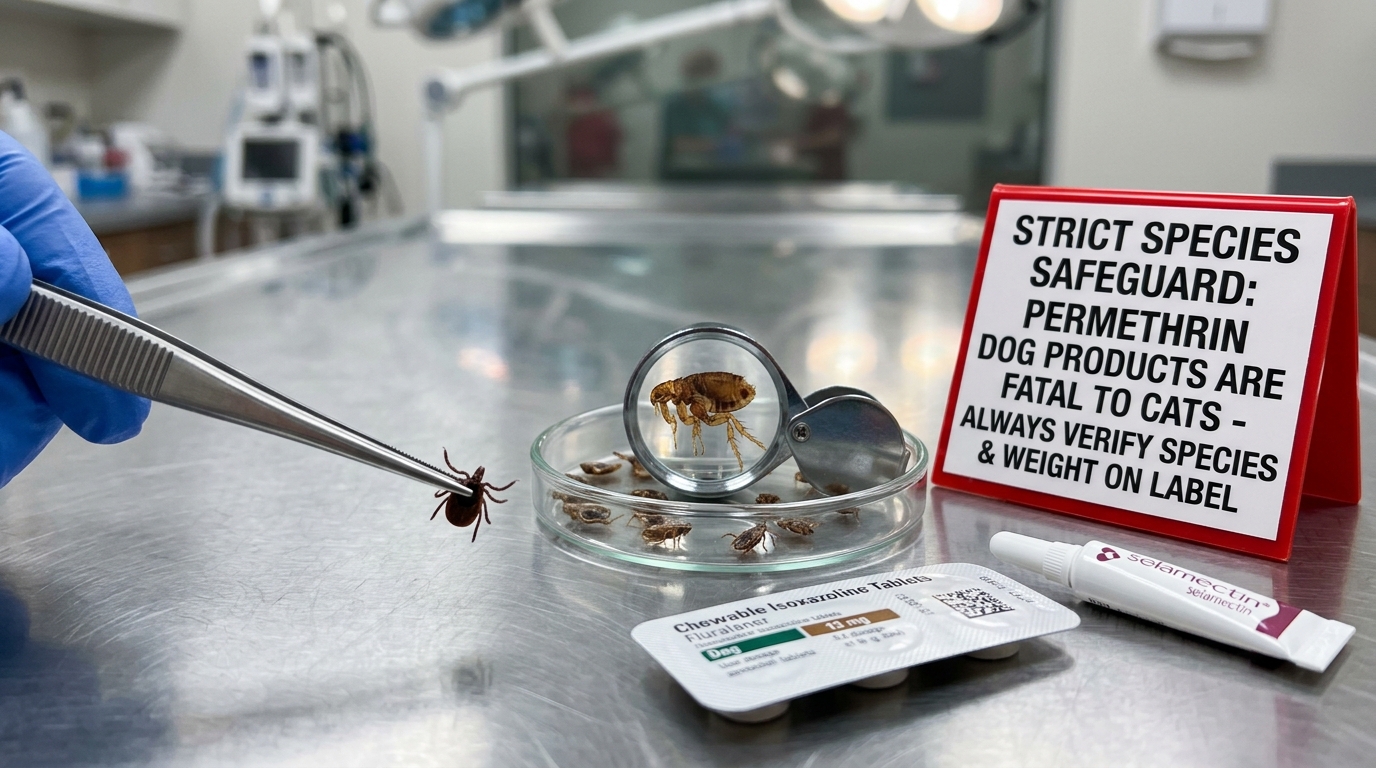
Flea and tick prevention must match the species, weight, age, health, product, and local parasite risk. Never apply a dog product to a cat unless the label and veterinarian explicitly say it is approved for cats. Some dog flea products can be highly toxic to cats, including through close contact before a topical product dries.
Clinical Quick Answer & Immediate Actions
Modern flea and tick prevention requires selecting species-specific, weight-dosed veterinary ectoparasiticides administered consistently year-round. Modern systemic isoxazolines (fluralaner, sarolaner, afoxolaner, lotilaner) and topical multi-modal formulas kill adult fleas before they oviposit and detach ticks before critical pathogen transmission windows occur (typically 24 to 48 hours for Lyme disease and anaplasmosis). Never use dog-specific permethrin products on cats, as feline metabolic deficiencies render concentrated synthetic pyrethroids neurotoxic and fatal.
If a pet develops tremors, seizure, severe drooling, vomiting, weakness, breathing difficulty, collapse, or marked skin reaction after a product, contact an emergency veterinarian or animal poison service immediately and bring the package.
Start with a household parasite-risk map
| Risk question | Details to collect | Why it changes the plan |
|---|---|---|
| Which species live together? | Dogs, cats, rabbits, birds, and other animals; grooming and sleeping contact. | A product safe for one species may expose another. |
| Where does the pet go? | Indoors, garden, woods, grass, daycare, boarding, travel, hunting, or wildlife areas. | Flea and tick species, season, and exposure vary by location and activity. |
| Who is the pet? | Accurate weight, age, pregnancy, seizure history, skin disease, medication, and prior reaction. | Labels and veterinary choices have individual restrictions. |
| What is already used? | Prescription, over-the-counter product, collar, shampoo, environmental spray, and date. | Stacking products or dosing early can cause toxicity. |
| Is there active infestation? | Fleas, flea dirt, itching, hair loss, ticks, bites, anemia concern, and affected pets. | Treatment may need all pets, the environment, and medical assessment. |
Compare routes with species safeguards
| Route | Practical advantage | Questions and safeguards |
|---|---|---|
| Topical spot-on | Applied to the skin at a scheduled interval. | Species, weight band, application site, bathing, drying time, skin condition, and separation from other pets. |
| Oral tablet or chew | No surface residue and convenient for some households. | Prescription status, age, weight, seizure or medical history, food instructions, vomiting, and missed doses. |
| Collar | Longer-duration delivery for selected products. | Correct fit, species, chewing, skin reaction, entanglement, water exposure, replacement date, and child contact. |
| Spray, shampoo, powder, or dip | May have a defined role in treatment. | Exact label, inhalation, eyes, skin, concentration, ventilation, frequency, and whether another product is already active. |
| Environmental product | Targets household stages in an infestation. | Premises label, pets removed, aquariums protected, ventilation, drying, and professional pest-control advice. |
Use only products approved for the species and follow the complete label. More products, a larger dose, or a shorter interval does not create better protection.
Build the household calendar and apply each product correctly
Record product, active ingredient, species, weight band, dose, application date, next due date, lot, prescriber, and any reaction. Set reminders before the due date and confirm weight periodically. A growing puppy or kitten may move into a different band.
Treat all household pets according to veterinary advice. An untreated animal can maintain a flea population, but using the same product across species can be dangerous.
Decide whether prevention is seasonal or continuous locally
Climate, indoor heating, wildlife, travel, boarding, and parasite species can extend risk beyond the obvious warm season. Ask the veterinarian which months and parasites matter in the home region and what happens when traveling to a different region.
Do not stop solely because no fleas or ticks are visible. Preventive products are intended to act before or during exposure, and immature flea stages can remain in the environment.
Check the label at every purchase
Packaging and formulations can change. Confirm species silhouette, exact weight, minimum age, active ingredients, warnings, bathing, drying, storage, disposal, and emergency instructions. Avoid splitting a larger tube or tablet unless the veterinarian and product directions specifically support it; active ingredient may not be evenly distributed.
Buy from a source that preserves packaging, lot, and instructions. Counterfeit or repackaged products can remove critical safety information.
Use a written application check
- Confirm the right pet, species, current weight, product, dose, and date.
- Check skin and coat condition and whether bathing changes timing.
- Remove or separate other pets as required.
- Use gloves and ventilation when directed.
- Apply only to the label location and prevent licking.
- Record the lot and observe for the stated period.
- Store and dispose of the package safely.
Do not apply in the dark, while several pets crowd the area, or when the label cannot be read. A second person can verify the species and weight band before opening.
If a dose is missed, vomited, late, or possibly duplicated, pause rather than guessing. Read every label and record species, weight, product, active ingredient, route, and timing. Never double, stack, or improvise a second ingredient. When labels do not resolve a possible overlap, call the veterinarian or manufacturer before restarting and keep both packages nearby.
Prevent cat exposure to dog products
Keep products in separate labeled storage. Apply dog topical products in a room the cat cannot enter, prevent grooming and close contact, and follow the label for separation until dry. Clean spills using poison-service or product instructions and prevent cats from walking through residue.
If a cat contacts or is given a dog-only product, call a veterinarian or poison service immediately even before signs appear. Do not wait for tremors.
Control ticks on the animal and fleas in the environment
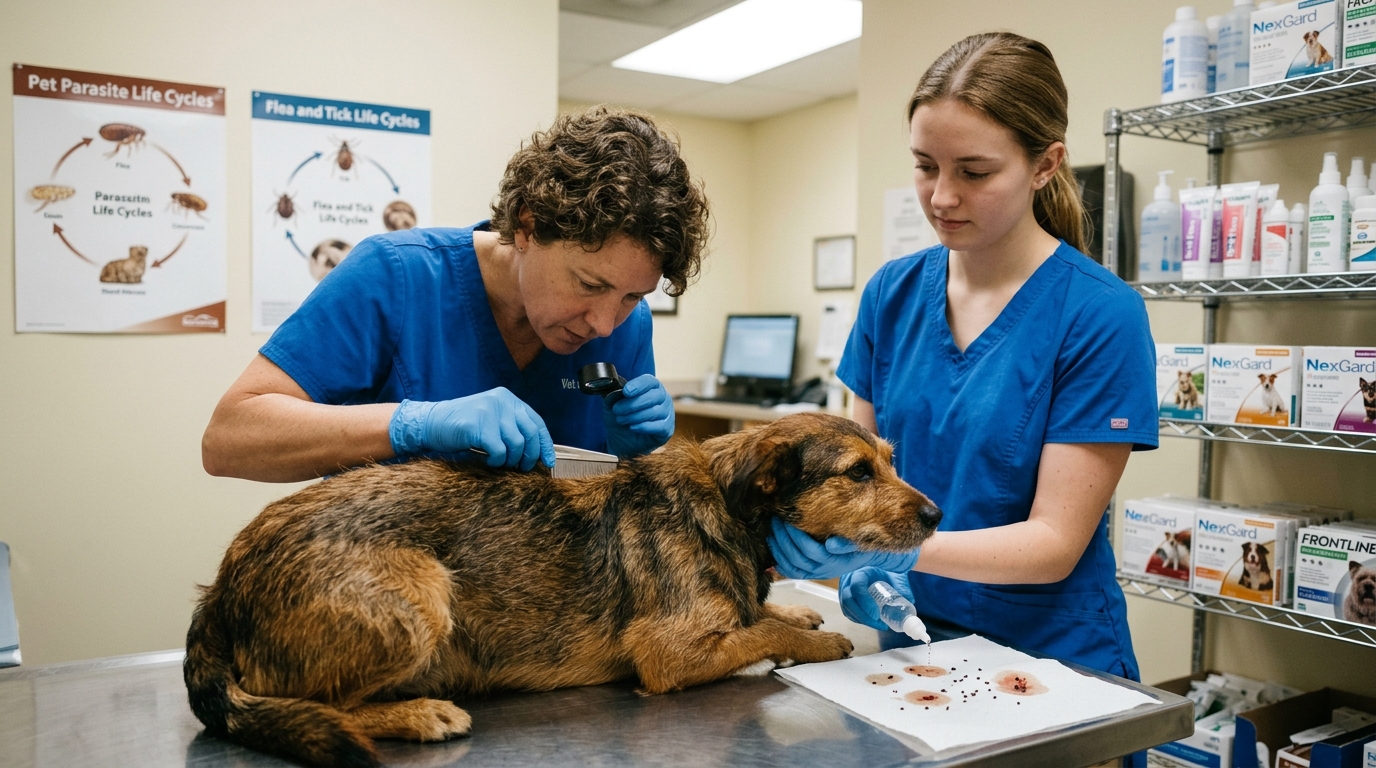
Check the whole animal after exposure, including head, ears, neck, armpits, groin, between toes, and under collars. Use good lighting and feel through the coat. Follow public-health or veterinary guidance for removal with appropriate fine-tipped tools, grasping close to the skin without crushing the body when possible.
Do not burn, paint, smother, or twist a tick with improvised chemicals. Clean the area and hands, record date and location, and ask whether the tick should be identified or saved. Contact the veterinarian for illness, weakness, fever concern, lameness, appetite change, pale gums, neurologic signs, or a difficult embedded tick.
Flea control includes the environment
Adult fleas on the pet are only part of the life cycle. Vacuum floors, furniture edges, and resting areas; wash bedding appropriately; dispose of vacuum contents; and follow veterinary or licensed pest-control advice for environmental products. Infestations can take time to resolve even when the plan is working.
Treat the household timeline separately from the animal: eggs and immature flea stages can remain in bedding, carpets, and resting areas after adult fleas are gone. Mark the areas checked, follow the agreed cleaning or premises-product schedule, and reassess every pet and the environment together. Persistent sightings call for review, not uncoordinated escalation.
Do not spray the pet, bedding, and home with multiple uncoordinated products. Protect children, cats, fish, birds, and other sensitive animals according to the premises label.
Troubleshoot apparent product failure systematically
| Possible reason | Evidence to check |
|---|---|
| Missed or late dose | Calendar, receipt, application log, vomiting after oral dosing, or collar removal. |
| Wrong weight or application | Current clinic weight, full dose used, skin rather than coat placement, and bathing instructions. |
| Untreated animal or environment | All pets, wildlife access, bedding, carpets, resting areas, and infestation timeline. |
| New exposure | Travel, boarding, visitors’ pets, garden, rodents, wildlife, or seasonal change. |
| Not fleas or ticks | Veterinary examination for mites, allergy, infection, pain, or another skin problem. |
Do not redose early or combine products to “break through” without veterinary instruction. Report the exact product and use history.
Use a product selection worksheet
- Parasites and diseases relevant to the home and travel region.
- Dog or cat species, exact weight, age, pregnancy, and health history.
- Topical, oral, collar, or other route the household can administer reliably.
- Bathing, swimming, grooming, skin disease, and household contact.
- Other pets and whether temporary separation is possible.
- Start date, duration, missed-dose rule, and year-round or seasonal plan.
- Adverse-event instructions and emergency contact.
- Total cost for every pet and environmental control if infestation occurs.
Choose the plan with the veterinarian and keep one primary calendar. Switching among discounts or leftover products can create gaps and ingredient overlap.
Review adverse reactions, disease signs, and travel
Check the application site, behavior, appetite, gait, salivation, vomiting, skin, and breathing according to label and veterinary instructions. Keep cats from grooming treated dogs and prevent children from touching wet topical areas.
Report a reaction with timing, product, active ingredient, lot, amount, weight, concurrent medication, and what was done. Do not reuse the product until the veterinarian reviews the event.
Review infestation progress at defined checkpoints
Agree on when to reassess live fleas, flea dirt, itching, skin healing, household sightings, and every pet’s dosing. Continued sightings early in an infestation do not automatically prove failure, but worsening signs, anemia concern, incorrect use, or no improvement by the veterinary checkpoint requires review.
Reduce tick habitat exposure without relying on it alone
Keep garden vegetation and resting areas managed, reduce access to dense tick habitat when practical, and check pets and people after outdoor activity. Environmental changes can reduce encounters but do not replace veterinarian-recommended prevention.
Ask a medical professional about tick-bite guidance for people. Pet products must never be applied to humans.
Watch for flea allergy, anemia, and skin infection
Some animals develop intense itching from relatively few bites. Hair loss, scabs, hot spots, broken skin, and infection need veterinary assessment. Heavy flea burdens can contribute to anemia, especially in small or young animals. Pale gums, weakness, rapid breathing, or collapse is urgent.
Fleas can also be involved in tapeworm transmission. Do not treat visible segments or scooting with flea control alone; ask the veterinarian about diagnosis and coordinated treatment.
Travel can change the prevention plan
Before travel, ask about parasite species, disease risk, season, border requirements, lodging, hiking, wildlife, and how current products perform in water or frequent bathing. Start the plan early enough for veterinary prescriptions and product timing.
For travel or a sitter, leave a written handoff with species, current weight, product and active ingredient, last and next due dates, application route, bathing or swimming limits, storage location, destination dates, and the veterinarian or poison-service contact. Include package photos and state that the caregiver must not substitute a leftover product.
After return, continue checks and report illness with the destination and dates. Do not assume home-region risk maps apply elsewhere.
If an adverse reaction is possible
- Prevent licking and contact with other animals.
- Call a veterinarian or poison service with the package, active ingredient, amount, time, species, weight, and signs.
- Follow instructions about washing, transport, food, and medication.
- Do not apply another product to counteract the first.
- Keep the package and lot for reporting.
When to Contact a Veterinarian or Poison Service
Seek urgent care for tremors, seizure, collapse, breathing difficulty, severe weakness, repeated vomiting, pale gums, or major product exposure. Contact a veterinarian promptly for skin burns, persistent itching, hair loss, wounds, a heavy flea burden, embedded or numerous ticks, illness after a tick bite, uncertain product combination, or cat exposure to a dog product.
A prevention plan should be reviewed whenever species, weight, health, travel, household pets, or local parasite risk changes.
Clinical Practice Tool: Pet Medication Log
Never miss a monthly flea, tick, or heartworm preventive dose across multiple household pets with our printable Pet Medication Log. Download and print your copy of the Pet Medication Log, or explore all practical pet care guides in the NewsPet Resource Center.
Frequently Asked Questions
Can I use a dog flea treatment on my cat?
Never apply dog flea or tick medication to a cat. Many canine topical formulations contain concentrated permethrin or pyrethroids, which are acutely neurotoxic to felines due to deficient glucuronidation pathways, causing violent tremors, seizures, and death within hours.
Why is my pet still scratching after flea medication?
Pets with Flea Allergy Dermatitis (FAD) react hypersensitively to flea saliva, so a single bite causes intense itching for days even if the flea dies shortly after. additionally, over 95% of a flea population lives in carpets, bedding, and baseboards as eggs and pupae, requiring at least 3 consecutive months of treatment to break the life cycle.
How do I safely remove an attached tick from my dog or cat?
Use fine-tipped tweezers or a specialized tick removal hook to grasp the tick as close to the skin surface as possible, pulling straight upward with steady, even pressure. Never twist, burn with matches, or smother with petroleum jelly, as these cause the tick to regurgitate pathogens into the bloodstream.
Sources
Sources checked: September 8, 2026.
- CDC: About Fleas
- CDC: Preventing Ticks on Pets
- EPA: Controlling Fleas and Ticks on Your Pet
- Companion Animal Parasite Council: Fleas
- Companion Animal Parasite Council: Ticks
Emergency Triage Matrix: Clinical Presentation & Required Response
| Triage Level | Clinical Signs & Presentation | Immediate Action Protocol |
|---|---|---|
| Tier 1: Immediate Emergency (0–2 Hours) | Cat exhibiting muscle tremors, twitching, hyperthermia, seizures, or ataxia following accidental exposure to canine permethrin spot-on; or dog exhibiting severe ascending tick paralysis with respiratory distress. | Immediate emergency veterinary transport; IV lipid emulsion therapy, methocarbamol neuroprotection, active sedation, dermal decontamination washing, and respiratory support. |
| Tier 2: Urgent Veterinary Care (Same-Day) | Severe flea allergy dermatitis (FAD) with intense pruritus, self-mutilation, hot spots, bleeding crusts; or tick engorged for >48 hours with subsequent fever, joint lameness, or lethargy. | Urgent veterinary clinical examination; tick-borne disease serology panel (4Dx/SNAP), cytological evaluation of secondary bacterial pyoderma, and prescription ectoparasiticidal therapy. |
| Tier 3: Home Monitoring & Scheduled Care | Single unengorged tick removed cleanly with intact mouthparts; or occasional live flea spotted on an energetic pet with normal pink gums and no systemic distress. | Administer approved monthly veterinary preventative, wash all pet bedding in hot water (minimum 60°C / 140°F), vacuum carpets thoroughly, and monitor for fever or lameness for 30 days. |
Rule S1 Boundaries & Ectoparasiticide Safety Rules
Parasite control requires strict observance of toxicological boundaries:
- NEVER apply canine permethrin or phenothrin products to cats: Cats lack feline hepatic glucuronosyltransferase enzymes needed to metabolize synthetic pyrethroids; exposure causes violent whole-body tremors, uncontrollable seizures, and death within hours.
- NEVER burn, smother, or twist an attached tick with matches, alcohol, or petroleum jelly: Chemical or thermal irritation causes the tick to regurgitate salivary contents and gut pathogens directly into the host bloodstream, drastically accelerating disease transmission.
- NEVER use essential oils or garlic as ‘natural’ flea preventatives: Garlic induces oxidative hemolytic Heinz body anemia; essential oils (tea tree, pennyroyal, eucalyptus) cause acute neurotoxicity and hepatotoxicity in dogs and cats.
- NEVER split large-dog preventative doses between smaller pets: Active pharmaceutical ingredients are unevenly distributed within chewable tablets and pipettes, resulting in either subtherapeutic failure or fatal acute overdose.
Caregiver Parasite Control & Tick Removal Checklist
- Select a veterinarian-prescribed preventative tailored to your pet’s exact weight, species, and lifestyle risk factors.
- Administer oral or topical treatments on a strict 30-day or 90-day calendar schedule without seasonal winter lapses.
- Perform daily manual tick checks by parting the fur, focusing on the ears, neck, armpits, groin, and between digital pads.
- Remove attached ticks using fine-tipped tweezers or a specialized tick hook, pulling steadily straight outward without twisting or crushing the abdomen.
- Disinfect the bite site with chlorhexidine or povidone-iodine and preserve the tick in alcohol for potential veterinary identification if fever develops.
Related Clinical Guides & Tools
Peer-Reviewed Clinical References & Evidence Grounding
- PMID: 14557294: American canine hepatozoonosis (Clin Microbiol Rev, 2003) (opens in new tab)
- PMID: 12885206: American canine hepatozoonosis (Anim Health Res Rev, 2003) (opens in new tab)
- PMID: 32607708: Cercopithifilaria species in dogs and ticks from Greece (Parasitol Res, 2020) (opens in new tab)
- Cornell Feline Health Center — Veterinary Clinical & Diagnostic Resources (opens in new tab)
Printable tools
Download the matching worksheet
Source transparency
Reference mix for this guide
Source labels describe the type of organization behind each reference; they are not a claim that any outside organization reviewed this article.
- CDC: About Fleas Government or public agency · cdc.gov
- CDC: Preventing Ticks on Pets Government or public agency · cdc.gov
- EPA: Controlling Fleas and Ticks on Your Pet Government or public agency · epa.gov
- Companion Animal Parasite Council: Fleas Reference source · capcvet.org
- Companion Animal Parasite Council: Ticks Reference source · capcvet.org
- Puppy Socialization Without Overwhelm: A Vet-Safe Reference source · newspet.net
- Dog Body Language Chart: 9 Stress Signs Before a B Reference source · newspet.net
- Reward-Based Dog Training: Force-Free Steps & Reference source · newspet.net