This guide is general education for pet owners. If your pet has urgent symptoms, possible poisoning, injury, breathing trouble, collapse, severe pain, or sudden decline, contact a licensed veterinarian or local emergency service.
Editorial standard
How this guide was prepared
Pet heatstroke is a fast-moving, catastrophic medical emergency that triggers widespread cellular death and multi-organ failure within minutes. Unlike humans who dissipate heat efficiently through millions of dermal sweat glands, dogs and cats rely almost exclusively on respiratory panting and limited evaporative cooling through their paw pads. When environmental ambient heat and humidity overwhelm these respiratory mechanisms, internal core temperatures skyrocket, initiating systemic vascular collapse.
Clinical Quick Answer & Immediate Actions
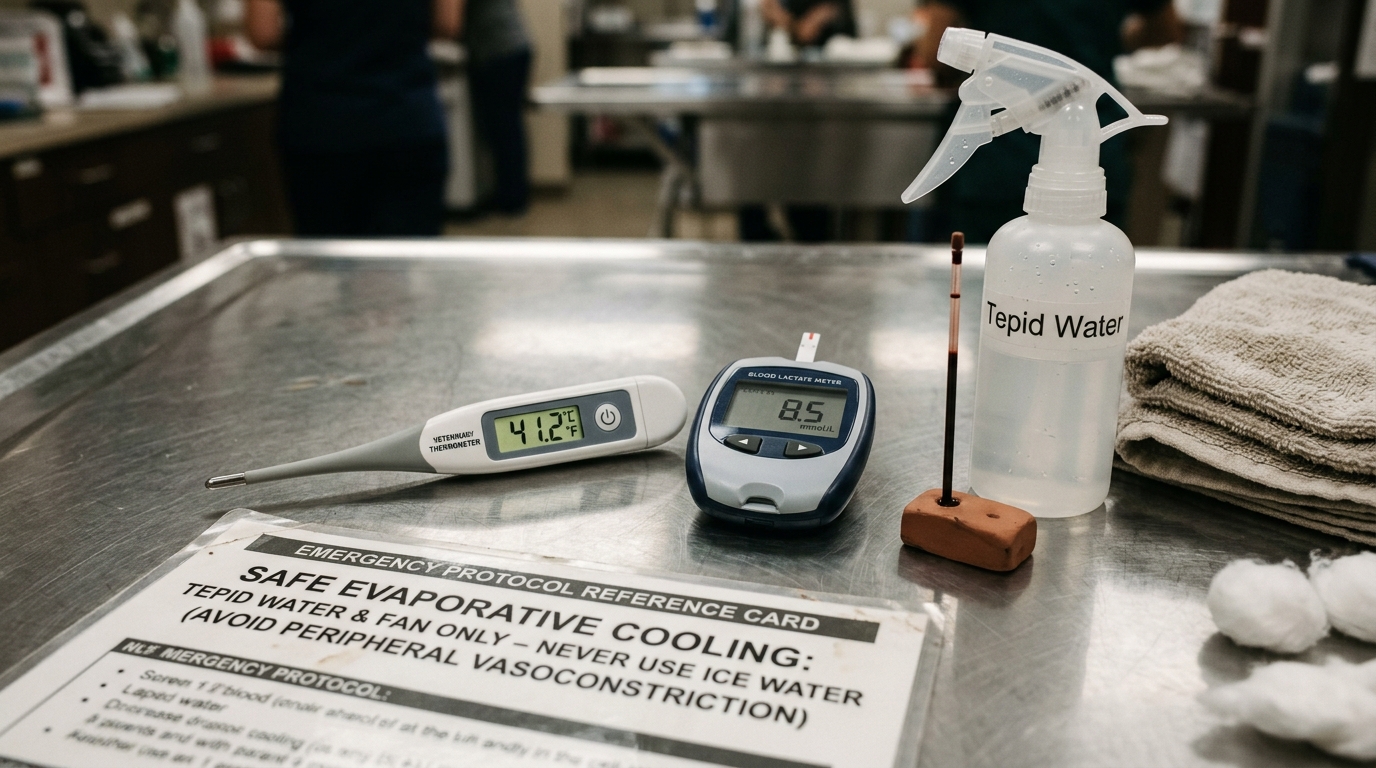
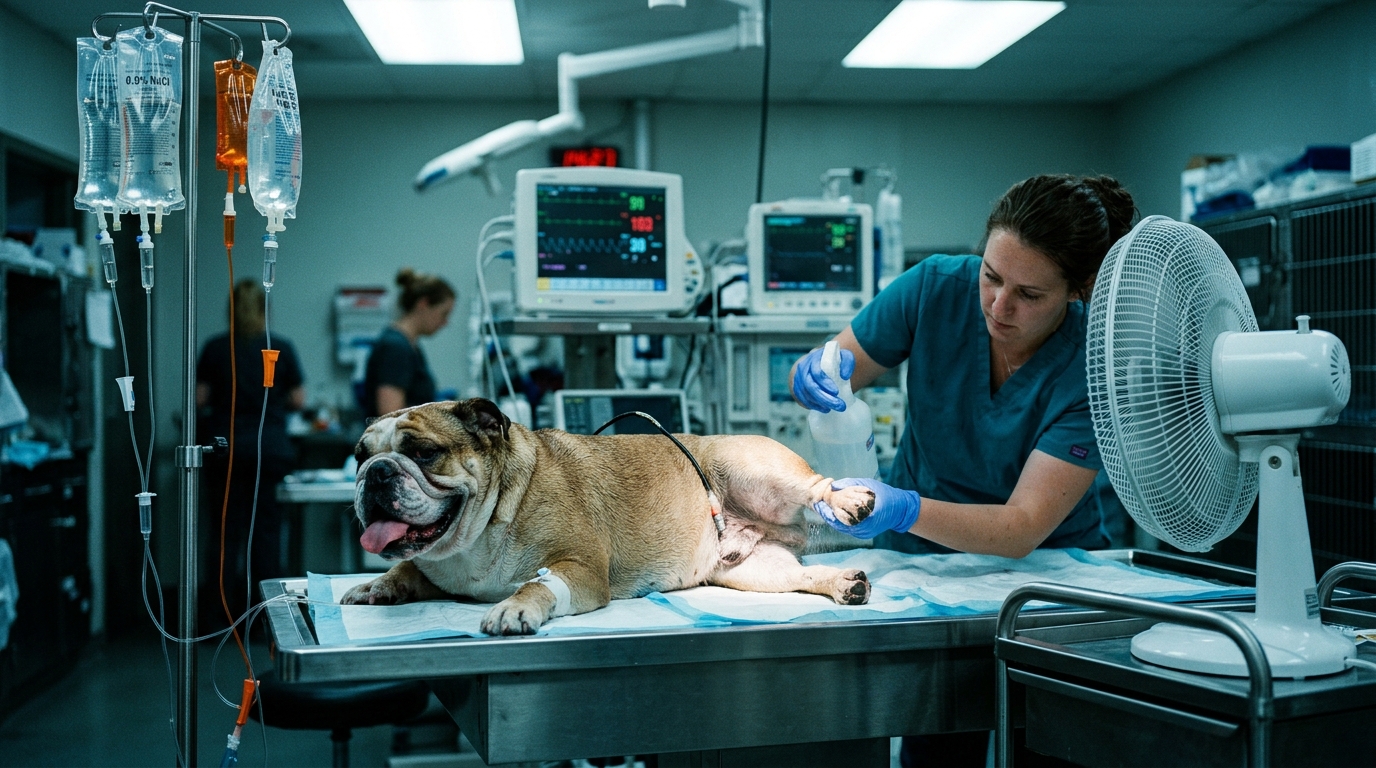
If you suspect pet heatstroke, treat it as a critical life-or-death emergency. Immediately move the pet to shade or air conditioning, initiate active evaporative cooling using tepid (not cold) water with high airflow, and transport directly to an emergency veterinary clinic. Cease cooling when rectal temperature reaches 103.5°F (39.7°C).
Successful resuscitation depends entirely on two immediate actions executed in parallel: initiating scientifically valid evaporative cooling at home while immediately transporting the pet to an emergency veterinary intensive care unit. Every second of delayed treatment drastically lowers clinical survival rates.
The Physiology of Pet Heatstroke: Why Ice Water Kills
Normal core body temperature in dogs and cats ranges tightly between 100.5°F and 102.5°F (38.0°C to 39.2°C). When internal body temperature exceeds 104.0°F (40.0°C), the animal enters heat exhaustion. When temperature breaches 105.8°F (41.0°C), the diagnosis is clinical heatstroke. At this critical threshold, thermal cytotoxicity denatures cellular enzymes, disrupts cell membranes, and triggers acute microvascular thrombosis.
The Lethal Ice-Water Trap
A frequent and tragic layperson mistake is submerging an overheated dog in an ice-water bath or covering them with ice packs. From a veterinary physiological standpoint, applying extreme cold creates two fatal complications:
- Severe Peripheral Vasoconstriction: Intense cold causes immediate, dramatic constriction of cutaneous capillary networks in the skin. This shuts down blood flow to the body surface, effectively forming an insulating thermal barrier that traps burning core heat inside the vital abdominal organs and brain.
- Shivering Thermogenesis: Severe cold stimulates involuntary muscular shivering, which physiologically generates massive amounts of new internal metabolic heat, driving core temperatures even higher.
The Safe Evaporative Cooling Protocol
| Cooling Phase | Clinically Validated Protocol | Dangerous Practices to Avoid |
|---|---|---|
| Water Application | Saturate the groin, inner thighs, axillae (armpits), and foot pads with continuous lukewarm or cool tap water (roughly 60°F–70°F / 15°C–21°C). | Never dump freezing ice water, use ice packs directly against skin, or force alcohol on paw pads (which causes toxic vapor absorption). |
| Airflow Dynamics | Position an electric fan or air-conditioning vent directly in front of the damp animal to accelerate convective and evaporative heat dissipation. | Never drape wet towels over the body and leave them static; wet towels quickly heat up and become miniature thermal greenhouses. |
| Target Temperature Threshold | Cease active cooling procedures as soon as rectal temperature reaches 103.5°F (39.7°C). Core temperature will naturally continue to drift downward. | Do not continue cooling until “normal” (101°F), as this inevitably precipitates lethal hypothermic overshoot, shock, and cardiac arrhythmia. |
| Oral Hydration | Allow conscious pets that can swallow normally to lick small amounts of cool water. | Never force or syringe water down an animal’s throat, which easily leads to fatal pulmonary aspiration. |
Clinical Red Flags & Progression: When Every Second Counts
Heatstroke progresses rapidly across three clinical phases. Recognizing early warning signs before irreversible organ damage occurs is essential:
Phase 1: Early Heat Exhaustion
- Frantic, exaggerated, noisy respiratory panting.
- Copious, thick, ropey hypersalivation and drooling.
- Gums and mucous membranes turn bright “brick-red” due to peripheral vasodilation.
- Seeking cold tile floors, shade, or refusing to walk forward.
Phase 2: Severe Clinical Heatstroke
- Glazed, unblinking, or disoriented eyes.
- Ataxia: Drunken, uncoordinated wobbling, stumbling, and hind-limb weakness.
- Vomiting and diarrhea, frequently containing sloughed intestinal mucosal lining.
- Heart rate spikes above 180 to 220 beats per minute (tachycardia) with bounding pulses.
Phase 3: Multi-Organ Collapse
- Gums turn pale gray, cyanotic blue, or muddy purple, indicating profound circulatory shock.
- Petechiae: Tiny pinpoint red hemorrhages or bruising on the gums, ears, or abdomen, signaling Disseminated Intravascular Coagulation (DIC).
- Neurological collapse: Involuntary muscle tremors, seizures, unresponsiveness, stupor, and coma.
- Complete physical collapse with inability to stand.
Special Emergency Alert: Heatstroke in Cats
Cats are obligate nasal breathers. Any domestic cat displaying open-mouth panting, rapid chest heaving, or drooling during warm weather is in an acute, life-threatening emergency requiring immediate veterinary intervention.
High-Risk Demographics & Environmental Traps
While any animal can succumb to hyperthermia under extreme conditions, specific patient populations and environmental traps carry catastrophic risk:
1. Brachycephalic Breeds (BOAS)
Dogs and cats with shortened facial architecture—including French Bulldogs, English Bulldogs, Pugs, Boston Terriers, and Persian cats—suffer from Brachycephalic Obstructive Airway Syndrome (BOAS). Their stenotic nares (pinched nostrils), elongated soft palates, and hypoplastic tracheas create massive airway resistance. Because they cannot move adequate volumes of air across their lingual mucosa, brachycephalics can develop fatal heatstroke during ordinary 75°F (24°C) weather from simple excitement or mild short walks.
2. The Parked Vehicle Death Trap
Leaving a pet in a parked vehicle is the leading cause of preventable domestic heatstroke. Solar radiation turns an enclosed vehicle into an oven: on a mild 75°F (24°C) day, the interior temperature of a car climbs to 104°F within 10 minutes and exceeds 120°F within 30 minutes, even with windows cracked open. Cracking windows provides negligible airflow and does nothing to halt solar heat gain.
3. The High Humidity Trap
Canine panting relies entirely on the physics of evaporation: moisture evaporating from the tongue cools blood in the lingual venous plexus, which flows back to cool the cerebral circulation. When ambient relative humidity climbs above 75% to 80%, air is already saturated with moisture vapor. Evaporative cooling efficiency plummets by over 90%, leaving dogs unable to cool themselves even at moderate temperatures.
4. The 7-Second Asphalt Test
Dark asphalt, concrete, and artificial turf absorb and store radiant solar heat. On an 85°F (29°C) sunny afternoon, asphalt surface temperatures routinely reach 135°F to 143°F (57°C to 62°C). Walking on surfaces this hot causes deep second- and third-degree thermal burns to canine paw pads in less than 60 seconds. Always press the back of your bare hand firmly against the pavement for 7 full seconds. If it is uncomfortably hot for your skin, it is far too hot for your dog’s paws.
Veterinary ICU Interventions & Secondary Complications
Hospitalization following heatstroke is intensive and prolonged. Even after patient temperature stabilizes, delayed systemic damage frequently emerges 24 to 72 hours later:
- Systemic Inflammatory Response Syndrome (SIRS): Massive release of pro-inflammatory cytokines and gut endotoxins crossing damaged mucosal walls.
- Acute Kidney Injury (AKI): Renal tubular necrosis caused by profound dehydration, hypotension, and filtration of myoglobin released from damaged muscle tissue.
- Disseminated Intravascular Coagulation (DIC): Total disruption of coagulation cascades, causing uncontrolled micro-clotting throughout vital organs followed by catastrophic systemic hemorrhage.
- Cerebral Edema: Thermal brain swelling leading to permanent neurological dysfunction or herniation.
Veterinary Escalation Boundary: When to Seek Emergency Care
If your dog or cat exhibits frantic panting, brick-red gums, vomiting, wobbling gait, or collapse in the heat, contact an emergency veterinarian immediately while beginning safe evaporative cooling. Alert the emergency triage desk that you are in transit with a suspected heatstroke patient so staff can prepare oxygen suites, intravenous fluid lines, and chilled diagnostic equipment prior to your arrival.
Clinical Practice Tool: Pet Emergency Kit Checklist
Protect your pets during extreme summer heatwaves by downloading our printable Pet Emergency Kit Checklist to verify you have rapid evaporative cooling supplies and travel essentials on hand. Download and print your copy of the Pet Emergency Kit Checklist, or explore all practical pet care guides in the NewsPet Resource Center.
Frequently Asked Questions
What rectal temperature indicates life-threatening heatstroke in dogs?
A body temperature exceeding 104°F (40°C) signals dangerous hyperthermia, while temperatures of 106°F (41.1°C) or higher trigger systemic inflammatory response, cellular necrosis, cerebral edema, and organ failure.
Why should ice water never be used to cool a heatstroke patient?
Ice water causes rapid peripheral vasoconstriction, trapping core heat inside internal organs, and induces shivering which paradoxically generates more heat. Cool with cool tap water and airflow instead.
What brachycephalic dog breeds are at highest risk for fatal heatstroke?
Brachycephalic breeds such as Bulldogs, Pugs, and French Bulldogs have anatomically compressed upper airways that severely impair evaporative panting, predisposing them to hyperthermia even in moderate temperatures.
Sources
Sources checked: September 8, 2026.
- AVMA: Warm Weather Pet Safety and Heatstroke Prevention
- Veterinary Emergency and Critical Care Society (VECCS): Consensus on Heat-Induced Illness
- Royal Veterinary College (RVC) VetCompass: Canine Heatstroke Epidemiology and Risk Profiles
- PDSA Pet Health Hub: Recognizing and Treating Heatstroke in Dogs
- FelineVMA: Emergency Feline Triage and Hyperthermia Protocols
Emergency Triage Matrix: Clinical Presentation & Required Response
| Triage Level | Clinical Signs & Presentation | Immediate Action Protocol |
|---|---|---|
| Tier 1: Immediate Emergency (0–2 Hours) | Rectal temperature > 105.0°F (40.5°C), collapse, seizures, brick-red or cyanotic mucous membranes, spontaneous petechiae, bloody vomiting or diarrhea (DIC and MODS). | Immediate ICU transport with active cooling en route; oxygen therapy, intravenous fluid resuscitation, and fresh frozen plasma administration. |
| Tier 2: Urgent Veterinary Care (Same-Day) | Excessive panting with thick ropy saliva, glassy dazed expression, ataxia or unsteady hindlimb gait, vomiting after hot vehicle or midday exercise exposure. | Initiate continuous tepid evaporative cooling at home; transport immediately to veterinary clinic for physical examination and blood gas evaluation. |
| Tier 3: Home Monitoring & Scheduled Care | Warm foot pads and heavy panting resolving completely within 15 minutes of rest in an air-conditioned room with fresh cool drinking water. | Provide quiet rest, unrestricted cool water, monitor rectal temperature every 30 minutes, and restrict strenuous activity for 48 hours. |
Rule S1 Boundaries & Lethal Cooling Mistakes
Rapid cooling must follow strict physiologic protocols to prevent catastrophic vascular collapse:
- NEVER use ice baths or freezing water: Extreme cold triggers severe peripheral vasoconstriction, shunting superheated blood into core internal organs while inducing shivering that drives core temperatures higher.
- NEVER apply rubbing alcohol to paw pads: Alcohol undergoes rapid transdermal absorption and inhalational toxicity, causing neurotoxicity and metabolic acidosis in heat-stressed pets.
- NEVER force oral water into a semi-conscious pet: Compromised pharyngeal reflexes lead directly to laryngeal penetration, severe aspiration pneumonia, and acute asphyxiation.
- NEVER delay veterinary transport to attempt extended home cooling: Systemic cellular death begins within minutes; early cooling must be performed during active transit to an emergency intensive care facility.
Caregiver Heatstroke Emergency Action Checklist
- Evacuate the pet immediately from direct sunlight, asphalt, or unventilated spaces into an air-conditioned room or vehicle.
- Saturate the body with continuous tepid water (15°C–20°C / 60°F–68°F), focusing on the groin, armpits, and neck while directing an electric fan across the coat.
- Measure rectal temperature using a lubricated digital thermometer every 3 to 5 minutes.
- Halt active water application once rectal temperature drops to 103.5°F (39.7°C) to prevent hypothermic rebound shock.
- Alert the receiving emergency veterinary facility of your estimated arrival time and patient status.
Related Clinical Guides & Tools
Peer-Reviewed Clinical References & Evidence Grounding
- PMID: 33769611: International veterinary canine dyskinesia task force ECVN consensus statement: Terminology and classification (J Vet Intern Med, 2021) (opens in new tab)
- PMID: 38351524: Defining sepsis in small animals (J Vet Emerg Crit Care (San Antonio), 2024) (opens in new tab)
- PMID: 38474142: Canine Mammary Tumors: Classification, Biomarkers, Traditional and Personalized Therapies (Int J Mol Sci, 2024) (opens in new tab)
- Cornell Feline Health Center — Veterinary Clinical & Diagnostic Resources (opens in new tab)
Printable tools
Download the matching worksheet
Source transparency
Reference mix for this guide
Source labels describe the type of organization behind each reference; they are not a claim that any outside organization reviewed this article.
- AVMA: Warm Weather Pet Safety and Heatstroke Prevention Veterinary organization · avma.org
- Veterinary Emergency and Critical Care Society (VECCS): Consensus on Heat-Induced Illness Veterinary organization · veccs.org
- Royal Veterinary College (RVC) VetCompass: Canine Heatstroke Epidemiology and Risk Profiles Veterinary organization · rvc.ac.uk
- PDSA Pet Health Hub: Recognizing and Treating Heatstroke in Dogs Reference source · pdsa.org.uk
- FelineVMA: Emergency Feline Triage and Hyperthermia Protocols Veterinary organization · catvets.com
- Separation Anxiety in Dogs: What to Do First (Calm Reference source · newspet.net
- Cat Litter Box Problems: Causes & Solutions (V Reference source · newspet.net
- Foods Dogs & Cats Cannot Eat: Toxic List & Reference source · newspet.net