This guide is general education for pet owners. If your pet has urgent symptoms, possible poisoning, injury, breathing trouble, collapse, severe pain, or sudden decline, contact a licensed veterinarian or local emergency service.
Dosages must be calculated by a licensed veterinarian based on species, weight, and bloodwork. Never administer human medications or self-adjust prescription doses for pets.
Editorial standard
How this guide was prepared
Feline litter box avoidance is one of the most common and distressing challenges encountered by cat guardians, yet it is almost universally misunderstood. Cats do not eliminate outside the box out of spite, anger, or revenge; house soiling is either an overt cry of acute physical pain or an involuntary coping response to severe environmental stress and territorial vulnerability.
Clinical Quick Answer & Immediate Actions
Inappropriate feline elimination outside the litter box is primarily a clinical symptom of physical disease or environmental distress, not spite or defiance. Over 50 percent of cats presenting for house soiling have an underlying medical condition, including feline lower urinary tract disease (FLUTD), idiopathic cystitis, uroliths, chronic kidney disease, or painful osteoarthritis. Always obtain a veterinary urinalysis and physical exam before altering litter setups, and adhere to the gold standard rule of N+1 litter boxes (one box per cat plus one extra).
Because urinary tract disorders can rapidly become life-threatening, every case of inappropriate elimination must begin with a detailed clinical examination rather than behavioral assumptions. Contact a veterinarian immediately if a cat strains repeatedly in the box without producing urine, vocalizes in agony, or licks the genital region obsessively, as urethral obstruction is a rapidly fatal emergency. Seek prompt veterinary advice whenever sudden litter box avoidance, hematuria, or altered urinary frequency occurs to rule out painful systemic disease.
Medical Etiologies: Why Physical Pain Triggers Box Aversion
A feline experiencing urinary or gastrointestinal discomfort rarely understands that the pain originates inside its own body. Instead, through classical conditioning, the cat concludes: “Stepping into that box makes my bladder burn; therefore, the box is a torture chamber.” The cat then seeks out alternative horizontal substrates–such as bathmats, soft duvets, laundry piles, or cool tile floors–hoping for pain-free elimination.
1. Feline Idiopathic Cystitis (FIC)
FIC accounts for approximately 55% to 65% of all feline lower urinary tract cases in cats under 10 years of age. Unlike bacterial infections, FIC is a complex neuroendocrine syndrome characterized by a defective bladder mucosal lining (a depleted protective glycosaminoglycan, or GAG, layer) combined with an over-reactive sympathetic nervous system. When an FIC-prone cat experiences environmental stress, the brain releases excessive norepinephrine and substance P, inducing sterile neurogenic inflammation, bladder wall edema, petechial hemorrhages, and severe spasms.
2. Urolithiasis and Urethral Plugs (The Blocked Cat Crisis)
Microscopic urinary crystals (principally struvite / magnesium ammonium phosphate or calcium oxalate) can coalesce into discrete bladder stones or form gelatinous, proteinaceous urethral plugs mixed with sloughed mucus and red blood cells. In male cats, whose urethras are anatomically narrow, long, and tapered, these plugs frequently cause complete mechanical urethral obstruction. Within 24 to 48 hours of complete blockage, systemic hyperkalemia induces fatal cardiac arrest unless catheterization and decompression are performed immediately.
3. Bacterial Urinary Tract Infections (UTIs)
True bacterial cystitis is remarkably rare in young, healthy cats (occurring in less than 2% of patients under 10 years old due to naturally concentrated feline urine with high urea levels). However, in senior cats over 10 years of age, bacterial UTIs increase to over 30% as concurrent conditions like Chronic Kidney Disease (CKD), diabetes mellitus, or hyperthyroidism reduce urine specific gravity and compromise local immune defenses.
4. Feline Degenerative Joint Disease (Osteoarthritis)
Over 90% of domestic felines over the age of 12 exhibit radiographic evidence of osteoarthritis, predominantly in the lumbosacral spine, coxofemoral (hip) joints, and stifles (knees). An arthritic cat experiencing chronic skeletal ache cannot comfortably step over a 6-inch plastic rim, manage basement stairs, or balance on deep, unstable crystal litter. House soiling right next to the box is the classic hallmark of feline musculoskeletal pain.
Clinical Triage Matrix: Emergency Obstruction vs. Non-Emergency House Soiling
Use this clinical triage framework to assess urgency when elimination abnormalities occur:
| Observed Symptom Profile | Potential Pathological Condition | Clinical Urgency | Immediate Veterinary Protocol |
|---|---|---|---|
| Repeated, frantic straining in box producing zero urine; painful crying; licking penis; vomiting; severe lethargy. | Complete Mechanical Urethral Obstruction (Blocked Cat). | Critical Emergency (Immediate Hospitalization). | Contact a veterinarian immediately. Proceed to 24-hour ER hospital for emergency unblocking, IV fluid resuscitation, and EKG monitoring. |
| Frequent small urinations (pollakiuria); visible pink/red blood in urine (hematuria); licking vulva or prepuce after voiding. | Feline Idiopathic Cystitis (FIC), Urolithiasis, or Bacterial UTI. | Urgent (Same-Day Clinical Visit). | Obtain cystocentesis urinalysis, urine culture and susceptibility, and abdominal radiographs to detect radio-opaque calculi. |
| Urinating large volume puddles right beside the litter box on flat floor; stiff gait; reluctance to jump onto furniture. | Feline Osteoarthritis / Degenerative Joint Disease. | Prompt Appointment (Within 48 Hours). | Orthopedic physical examination. Transition to low-entry shallow storage trays and initiate multimodal feline analgesia (e.g., Solensia, gabapentin). |
| Urinating large, dilute puddles in multiple locations; markedly increased water intake (polydipsia); progressive weight loss. | Chronic Kidney Disease (CKD), Diabetes Mellitus, or Hyperthyroidism. | Scheduled Medical Workup (Within 2-3 Days). | detailed serum chemistry panel, complete blood count (CBC), total T4, and urine specific gravity test. |
| Normal urine volume; standing vertically while twitching tail and spraying backward onto walls, doors, or window blinds. | Territorial Urine Spraying (Marking Behavior). | Behavioral & Environmental Evaluation. | Rule out cystitis first. Evaluate neighborhood outdoor cat sightings, install synthetic pheromone diffusers, and secure window perches. |
The Five Environmental Pillars of Feline Litter Box Architecture
Once medical issues have been rigorously cleared by a veterinarian, environmental optimization must address the five core aspects of feline elimination ecology:
1. Dimensions: The 1.5x Body Length Rule
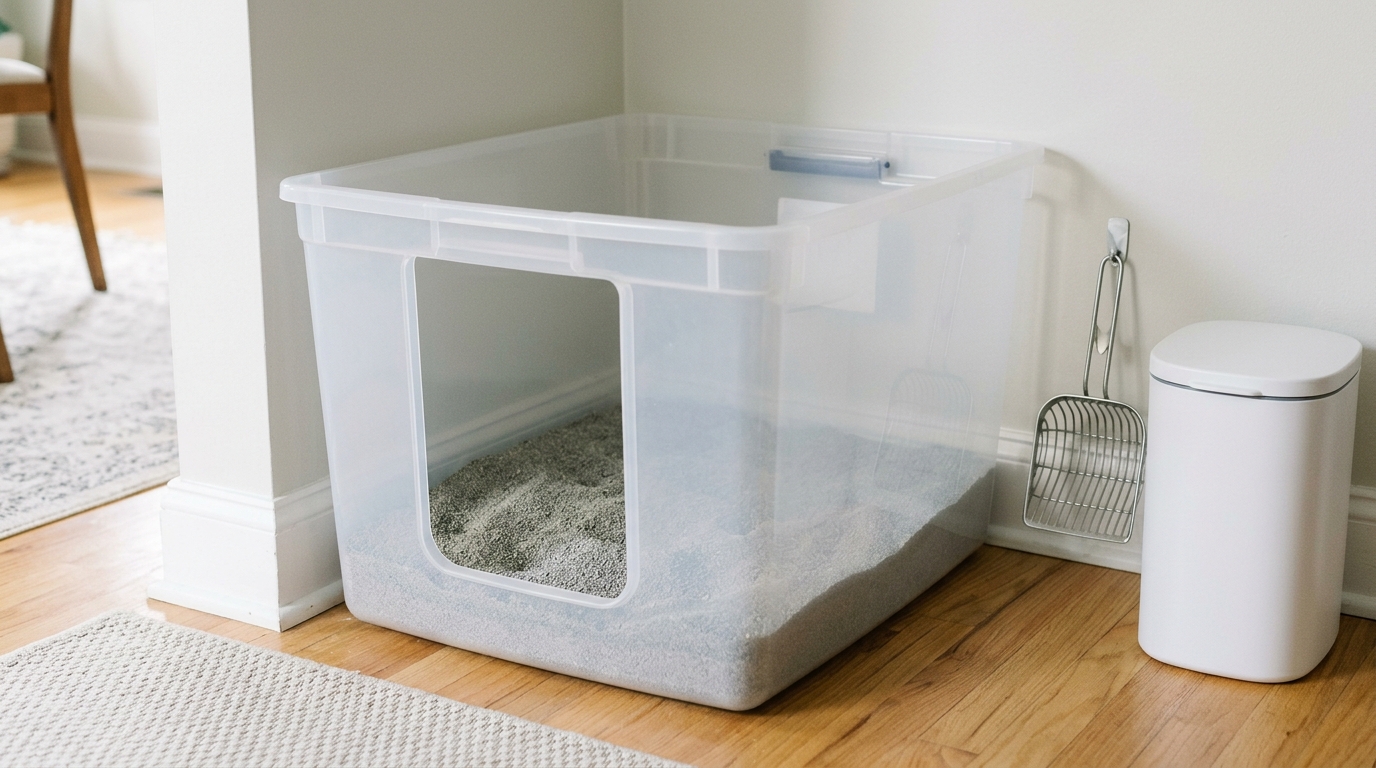
The standard litter boxes sold in commercial pet superstores are drastically undersized for adult domestic felines. A proper box must measure at least 1.5 times the length of the cat from the tip of the nose to the base of the tail (excluding the tail itself). For an average 10-pound cat, this requires a minimum box size of 24 inches long by 18 inches wide; for larger breeds like Maine Coons or Ragdolls, 30 to 36 inches is necessary.
The most cost-effective, clinically superior solution is purchasing a clear 66-to-70-quart plastic storage tote. Guardians can use heavy-duty shears to cut a 3-inch low-entry U-shaped threshold on one end, smoothing the plastic edge with sandpaper. This provides high splash walls while preserving effortless physical entry.
2. Substrate Chemistry: Sand-Like Texture and Unscented Purity
Evolutionary wildcats (Felis lybica) eliminated in soft desert sand that allowed effortless digging and complete scent burial. Peer-reviewed behavioral preference trials consistently demonstrate that over 80% of domestic felines prefer unscented, finely milled clumping sodium bentonite clay. Avoid these common marketing traps:
- Perfumed or Scented Litters: Artificial floral, cedar, or lavender scents are formulated for human noses. Feline olfaction is roughly 14 times more acute than human scent perception; perfumes turn an enclosed box into a noxious gas chamber.
- Wood Pellets, Paper Pellets, and Walnut Shells: Pellets feel hard, lumpy, and unstable beneath delicate paw pads, frequently deterring cats with declaw history or early arthritis.
- Silica Gel Crystals: Crystals can produce an abrasive, crackling acoustic feedback upon stepping and digging that startles sound-sensitive felines.
3. Box Design: Open-Top vs. Hooded / Covered
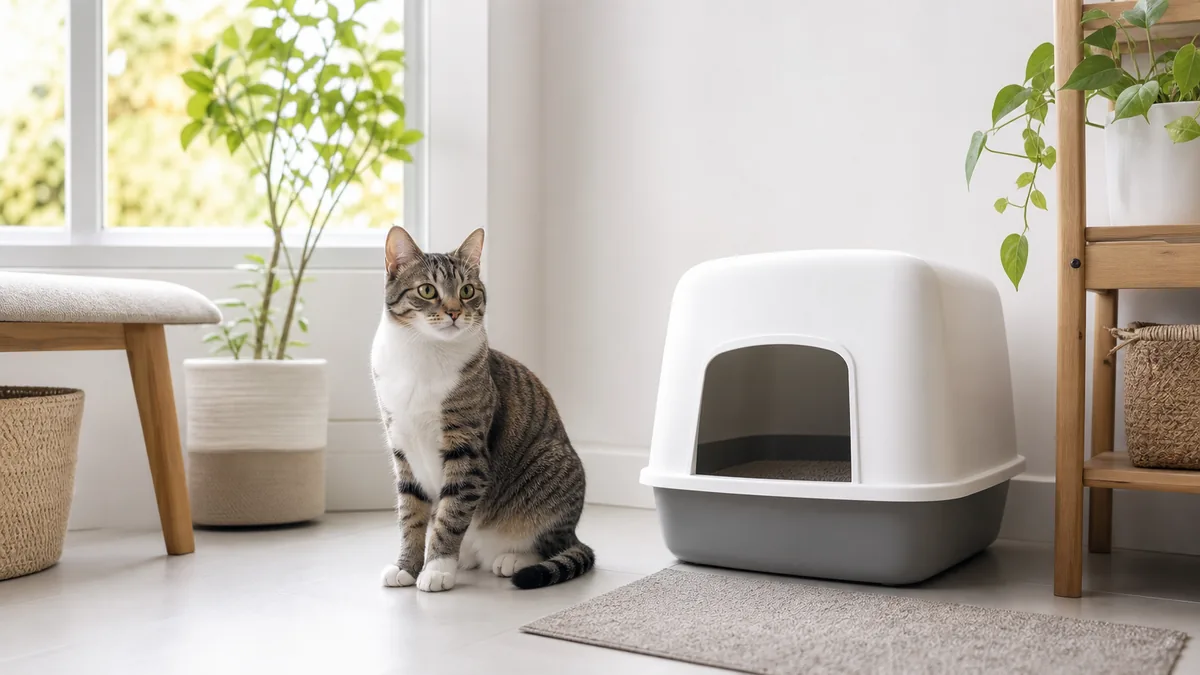
While human caregivers prefer covered, domed, or cabinet-concealed litter boxes to hide unsightly waste, cats universally dislike them. In nature, a defecating or urinating cat is at its most vulnerable to predatory attack. Covered boxes create an inescapable blind trap with zero visual sightlines. If a second cat, a rambunctious dog, or a toddler corners the occupant inside a hooded box, the trapped cat will refuse to enter again.
4. Number and Distribution: The N+1 Golden Formula
The universal veterinary standard is one litter box per cat, plus one extra (N + 1). For a three-cat household, four functional litter boxes are mandatory. Crucially, distribution across distinct physical territories is vital. Placing three litter boxes side-by-side in a basement laundry room counts as exactly one box in feline social geography. If an assertive cat lounges at the top of the basement stairs, the entire cluster is effectively blocked.
5. Maintenance Protocols: Scooping and Complete Deep Cleans
Litter boxes must be scooped at least once daily (ideally twice daily in multi-cat homes). Felines possess immaculate hygiene standards; stepping onto previous waste clusters repulses them. Every 2 to 4 weeks, dump all litter completely, wash the interior with warm water and fragrance-free dish soap, thoroughly dry, and refill with 2 to 3 inches of fresh substrate. Never clean boxes with bleach, pine cleaners, or citrus solutions, which leave persistent chemical residues that cats despise.
Forensic Stain Remediation: The Science of Enzymatic Degradation
Cleaning accidental urine stains improperly is the leading cause of chronic, habitual house soiling. Feline urine is composed of urea, urobilin/urobilinogen (which causes yellow pigmentation), and uric acid crystals. Standard household cleaners, vinegar, and steam cleaners remove the water-soluble urea, eliminating the scent for human noses. However, the insoluble uric acid salts remain bonded to carpet padding, floorboards, and drywall.
Whenever ambient humidity rises, uric acid salts dissolve slightly, releasing volatile feline scent compounds that act as a permanent olfactory signpost: “This is an approved feline bathroom.” Also, ammonia-based cleaners actually attract cats, as ammonia is a primary metabolic byproduct of concentrated feline urine.
The Four-Step Blacklight Decontamination Protocol
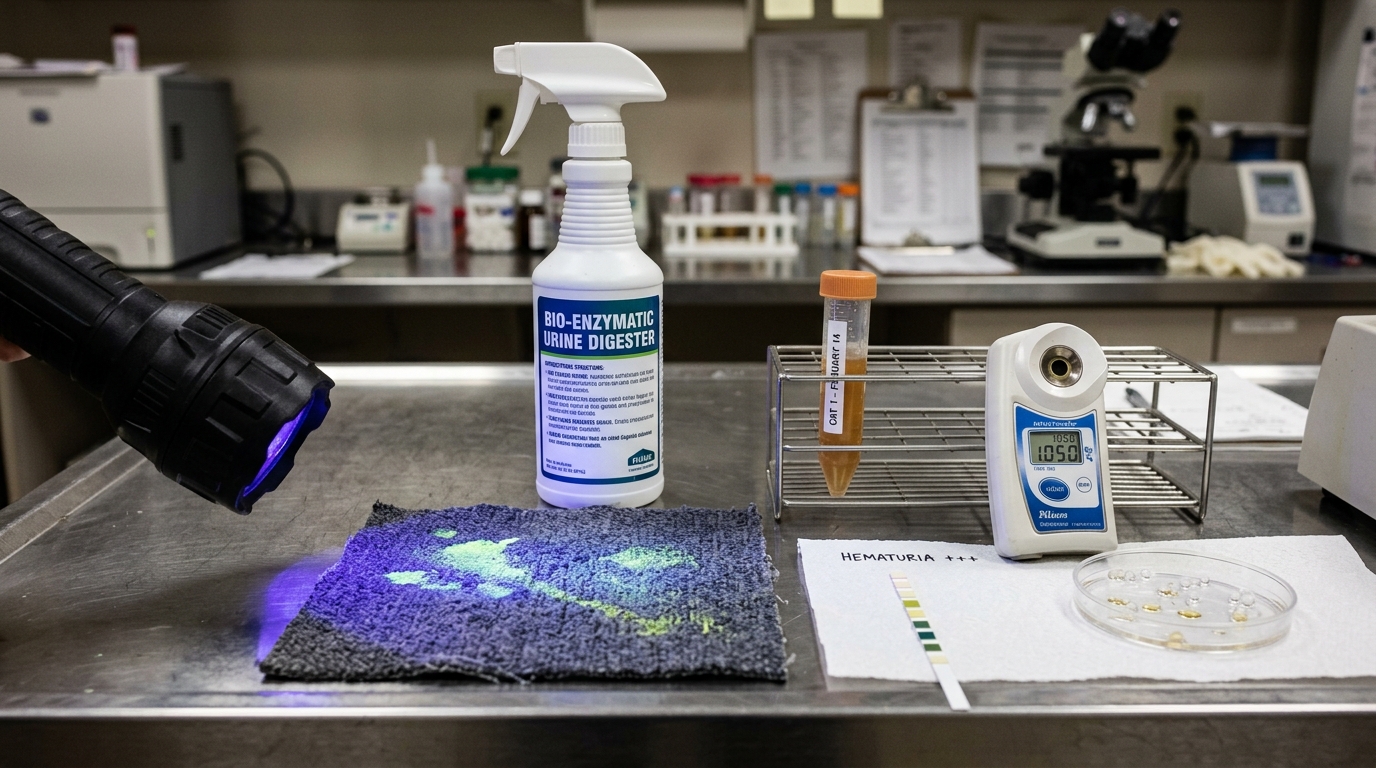
- Locate Hidden Deposits with UV Light: Darken the room and sweep a high-intensity 395nm UV blacklight across floors, furniture legs, and vertical baseboards. Cat urine deposits fluoresce with a distinct dull yellow-green glow.
- Blot and Absorb Excess Moisture: If the stain is fresh, press clean paper towels firmly into the area until dry. Do not scrub or grind the urine deeper into carpet fibers.
- Saturate with Bio-Enzymatic Cleaner: Generously apply a dedicated veterinary bio-enzymatic solution (such as Anti-Icky-Poo, Nature’s Miracle Advanced, or Mister Max). The liquid must penetrate as deeply as the original urine puddle (soaking subflooring or sofa foam). Live enzymes and beneficial bacteria physically digest the uric acid bonds into harmless carbon dioxide and water.
- Cover and Allow Wet Contact Time: Cover the saturated area with plastic wrap or a damp towel for 24 to 48 hours to prevent premature evaporation, allowing the biological enzymes sufficient contact time to complete molecular degradation.
Diagnostic Troubleshooting Matrix: Problem, Cause, and Solution
When investigating persistent elimination outside the box, cross-reference your cat’s specific pattern with this diagnostic guide:
| Observed Elimination Pattern | Underlying Cause / Trigger | Actionable Remediation Strategy |
|---|---|---|
| Urinating and defecating right on the edge of the litter box rim or 6 inches outside. | Box is too small; cat enters with front paws but body hangs over edge; or litter is too dirty. | Upgrade to a 30-inch clear storage tote with low entry. Increase scooping to twice daily. |
| Cat perches all four paws on the narrow plastic rim, balancing without touching litter. | Substrate aversion; cat despises the texture, scent, or depth of the current litter. | Perform a side-by-side “cafeteria trial”: offer two identical boxes with different litters (unscented fine clay vs. soft wheat or corn) to observe preference. |
| Urinating on soft fabrics only: duvets, bathroom rugs, laundry hampers, or sofas. | Pain association from cystitis, or severe tactile preference developed after declawing trauma. | Veterinary urinalysis. Remove bathroom rugs temporarily. Place an extra box directly in bedroom with soft, ultra-fine clumping clay. |
| Cat dashes into the box, eliminates with extreme speed, and bolts out frantically. | Negative experience in the box (e.g., ambushed by another cat, startled by a furnace/dryer buzzer). | Relocate box away from noisy mechanical appliances. Provide dual exit routes so cat cannot be trapped. |
| Defecating in the box normally, but urinating on carpets in a separate room. | Separate elimination preference; many cats require one box for urine and a separate box for stool. | Add a second litter box in the secondary room. Many felines will immediately use one for defecation and the other for urination. |
When to Contact a Vet or Veterinary Behavior Specialist
Contact a veterinarian immediately if a cat strains repeatedly in the box without producing urine, vocalizes in agony, or licks the genital region obsessively, as urethral obstruction is a rapidly fatal emergency. In male cats, urethral blockage can cause bladder rupture, hyperkalemic cardiac arrest, and death in as little as 24 hours.
Seek prompt veterinary advice whenever sudden litter box avoidance, hematuria, or altered urinary frequency occurs to rule out painful systemic disease. If thorough veterinary urinalysis, blood panels, and radiographs reveal no organic pathology, request a formal referral to a clinical specialist veterinary behaviorist (DACVB) or a Certified Cat Behavior Consultant (CCBC) to resolve complex intra-cat social warfare, chronic environmental stressors, or deep-seated conditioned aversion.
For related multi-cat strategies, consult our guide to multi-cat home setup and resource guarding, and read our evidence-based protocol on optimizing indoor cat enrichment to reduce stress.
Clinical Practice Tool: Indoor Cat Home: Territory and Routines
Optimize your home’s vertical territory, core resources, and low-stress litter stations with our complete Indoor Cat Home Environmental Guide. Download and print your copy of the Indoor Cat Home: Territory and Routines, or explore all practical pet care guides in the NewsPet Resource Center.
Frequently Asked Questions
Why must medical conditions be ruled out before treating feline litter box avoidance as behavioral?
Feline lower urinary tract disease (FLUTD), bladder stones, urinary tract infections, and osteoarthritis cause pain during urination. Cats rapidly associate the litter box with pain and seek alternative soft surfaces like beds or rugs.
What is the standard litter box formula for indoor cats?
Follow the n-plus-one rule: provide one litter box for each cat in the home plus one additional box, distributed across distinct locations on separate floors rather than lined up in a single utility room.
What style of litter box and substrate do most cats prefer clinically?
Most cats prefer large, uncovered plastic boxes (at least 1.5 times the cat’s length) filled with 2 to 3 inches of unscented, fine-grained clumping clay litter scooped at least once daily.
Sources
Sources checked: September 8, 2026.
- American Association of Feline Practitioners (AAFP) & ISFM: Feline Environmental Needs Guidelines
- International Society of Feline Medicine (ISFM): Consensus Guidelines on Feline Lower Urinary Tract Disease
- American College of Veterinary Surgeons (ACVS): Urinary Obstruction in Male Felines
- Cornell Feline Health Center: detailed Guide to Feline House Soiling and Litter Box Aversion
- Merck Veterinary Manual: Pathophysiology and Management of Feline Lower Urinary Tract Disease
Emergency Triage Matrix: Clinical Presentation & Required Response
| Triage Level | Clinical Signs & Presentation | Immediate Action Protocol |
|---|---|---|
| Tier 1: Immediate Emergency (0–2 Hours) | Male cat straining repeatedly in or out of the box with zero urine production, crying out in pain, hard painful abdomen, vomiting, or collapse (complete urethral blockage). | Immediate emergency veterinary transport; immediate urethral catheterization, hyperkalemia correction, intravenous fluid therapy, and pain management. |
| Tier 2: Urgent Veterinary Care (Same-Day) | Frequent small urinations, visible hematuria (pink or bloody urine), licking the genital area obsessively, or painful vocalization during urination. | Same-day veterinary consultation; complete urinalysis (sediment, specific gravity, culture), abdominal radiography to rule out calculi, and multimodal analgesia. |
| Tier 3: Home Monitoring & Scheduled Care | Cat urinating outside the box but with normal high-volume stream, clear yellow color, negative medical workup, occurring after a recent change in litter brand or box location. | Implement the N+1 box rule, revert to fine-grained unscented clumping litter, scoop twice daily, and clean soiled areas with enzymatic urine digesters. |
Rule S1 Boundaries & Feline Elimination Safety
House-soiling protocols must respect physiological life-safety priorities:
- NEVER assume a straining male cat is merely ‘constipated’: Urethral obstruction mimics constipation; delayed treatment results in fatal hyperkalemic cardiac arrest within 24 to 48 hours.
- NEVER rub a cat’s nose in waste or use physical reprimands: Punishment escalates feline environmental fear and stress, directly triggering neurogenic bladder inflammation (feline idiopathic cystitis) and worsening elimination outside the box.
- NEVER clean feline urine with ammonia-based household chemicals: Ammonia is a primary chemical breakdown byproduct of urine urea; cleaning with ammonia chemically signals the cat that the location is an established territorial toilet.
- NEVER restrict water intake to decrease elimination volume: Restricting water concentrates urine, accelerating crystallization, mucosal inflammation, and urethral plug formation.
Caregiver Litter Box Environment Audit Checklist
- Schedule a veterinary appointment with a fresh urine sample to exclude infection, crystals, and proteinuria.
- Provide N+1 boxes (e.g., 3 boxes for 2 cats) distributed across different rooms and floor levels, not lined up side-by-side.
- Choose large, uncovered litter boxes at least 1.5 times the length of the cat from nose to base of tail.
- Use 2 to 3 inches of fine-grained, unscented clumping clay litter; avoid heavily fragranced, pellet, or crystal litters.
- Scoop all waste twice daily and completely dump, wash, and refill boxes with fresh litter every 2 to 3 weeks.
Related Clinical Guides & Tools
Peer-Reviewed Clinical References & Evidence Grounding
- PMID: 35422266: Ferret Cardiology (Vet Clin North Am Exot Anim Pract, 2022) (opens in new tab)
- PMID: 26936494: ISFM Consensus Guidelines on the Diagnosis and Management of Feline Chronic Kidney Disease (J Feline Med Surg, 2016) (opens in new tab)
- PMID: 23202500: Clinical aspects of feline retroviruses: a review (Viruses, 2012) (opens in new tab)
- Cornell Feline Health Center — Veterinary Clinical & Diagnostic Resources (opens in new tab)
Printable tools
Download the matching worksheet
Source transparency
Reference mix for this guide
Source labels describe the type of organization behind each reference; they are not a claim that any outside organization reviewed this article.
- American Association of Feline Practitioners (AAFP) & ISFM: Feline Environmental Needs Guidelines Veterinary organization · catvets.com
- International Society of Feline Medicine (ISFM): Consensus Guidelines on Feline Lower Urinary Tract Disease Veterinary organization · catvets.com
- American College of Veterinary Surgeons (ACVS): Urinary Obstruction in Male Felines Veterinary organization · acvs.org
- Cornell Feline Health Center: detailed Guide to Feline House Soiling and Litter Box Aversion Academic or extension · vet.cornell.edu
- Merck Veterinary Manual: Pathophysiology and Management of Feline Lower Urinary Tract Disease Veterinary organization · merckvetmanual.com
- Indoor Cat Enrichment: Build a Home That Meets Nat Reference source · newspet.net
- Why Cats Scratch Furniture and How to Redirect It Reference source · newspet.net
- Multi-Cat Home Setup: How to Reduce Conflict and R Reference source · newspet.net