Editorial standard
How this guide was prepared
A cat carrier has to work in three different settings: open at home as a familiar resting object, closed and lifted as secure transport equipment, and opened at a veterinary clinic without forcing the cat through one narrow door. Choose it as a handling system rather than by color, softness, or a single dimension.
Clinical Quick Answer & Immediate Actions
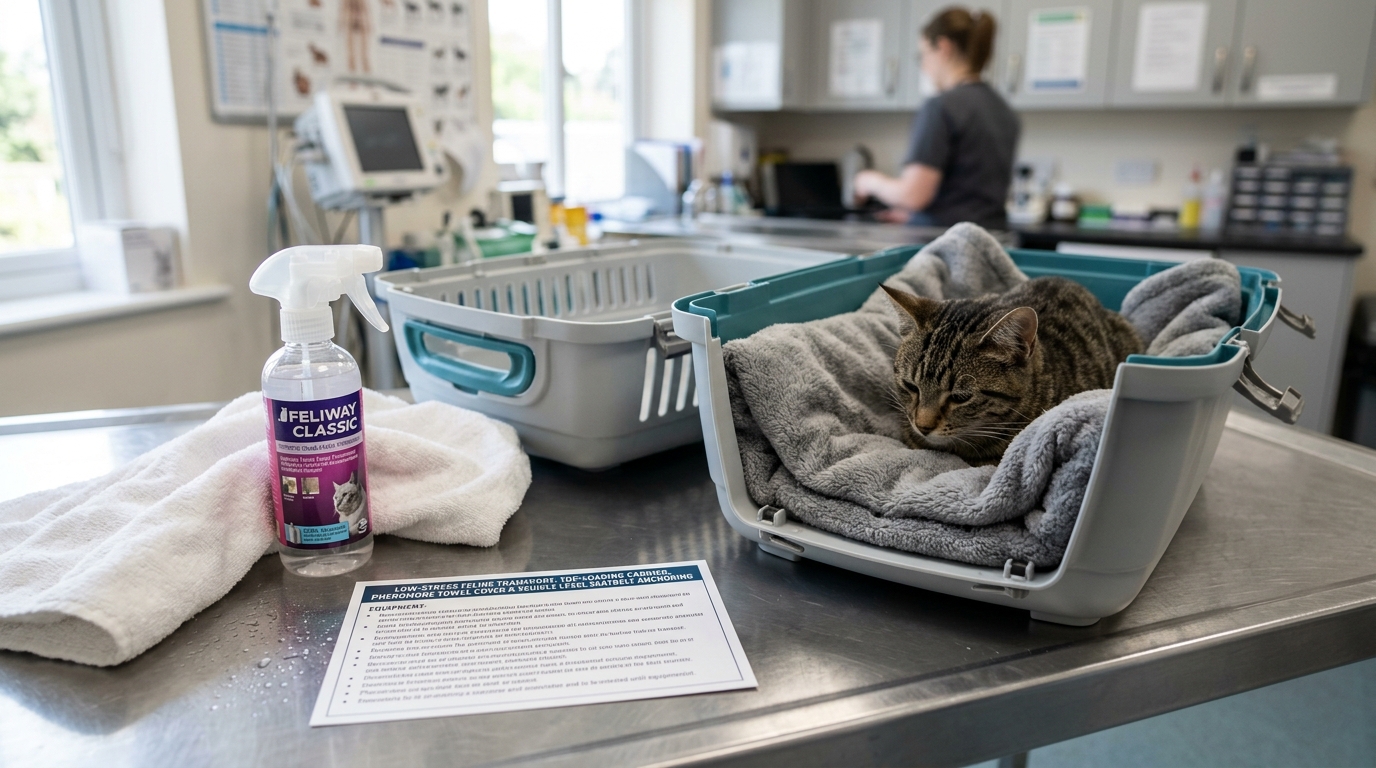
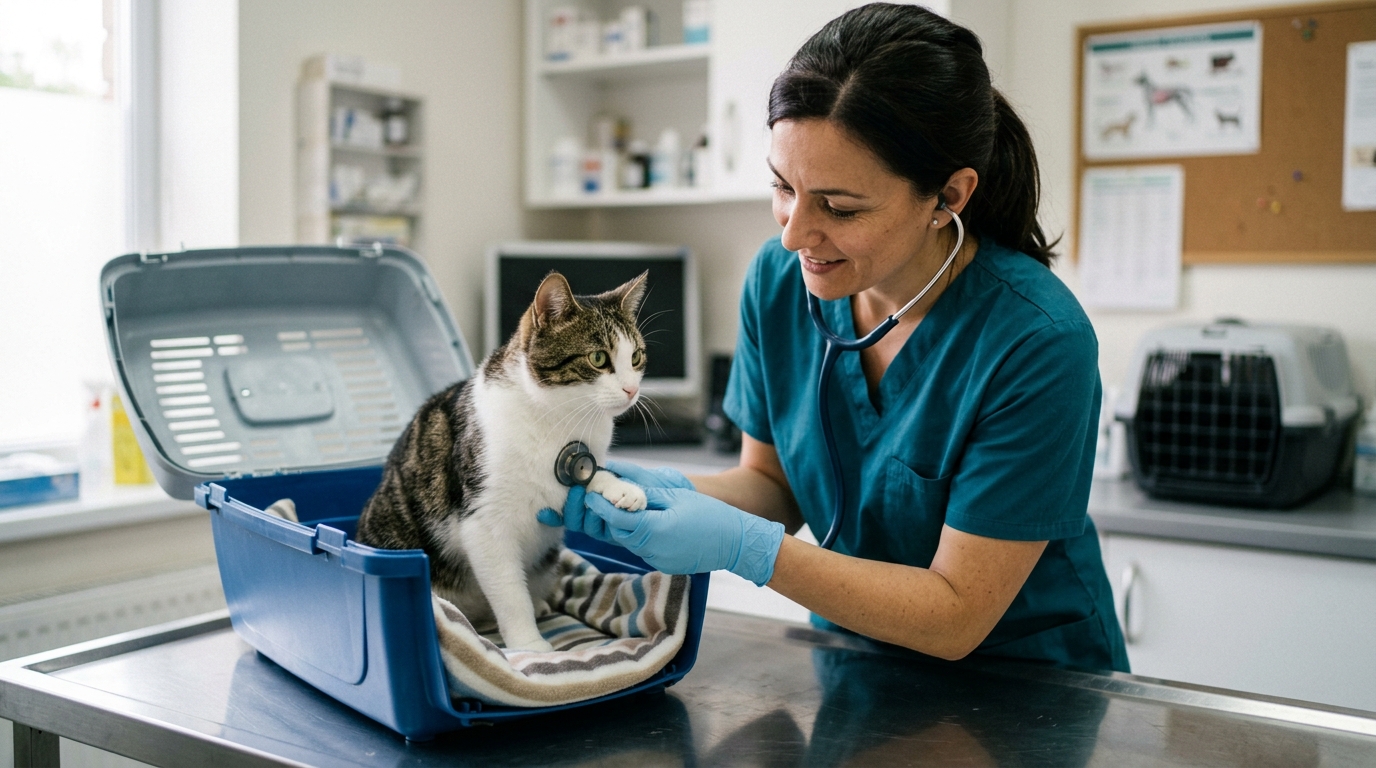
Selecting a feline carrier is a core veterinary safety decision that directly dictates clinical outcomes. The majority of feline veterinary care avoidance stems from the traumatic ordeal of forcing an unwilling cat into an inadequate front-loading carrier. Clinical Fear Free feline guidelines mandate carriers with dual access points—specifically top-loading doors and a completely removable upper shell secured with easy-release latches. A removable shell allows veterinary clinicians to conduct physical examinations, auscultation, and even blood collection while the feline remains comfortably seated in the familiar, pheromone-scented bottom half of their carrier. Furthermore, carriers must transition from ‘instruments of terror’ brought out only before vet visits into everyday furniture sanctuaries left continuously open in living areas, treated with synthetic feline facial pheromones (F3 analogue), and lined with washable fleece bedding.
Inspect access, fastenings, cleaning, airflow, lifting stability, transport fit, and veterinary handling before beginning home training. A calm cat can still escape from a weak latch; a strong carrier can still create stress if it tips, traps heat, or cannot be opened safely.
Use this carrier selection checklist
| Selection check | Usable evidence before choosing |
|---|---|
| Space and turning | Internal floor, height, and door opening let this cat stand naturally, turn, and lie down without excessive sliding room. |
| Front and top access | The openings support voluntary entry and give a workable second route; any removable top realigns securely without loose parts. |
| Closure security | Doors, latches, hinges, zips, seams, and top-to-base fasteners close fully and resist gaps when pressed from inside. |
| Ventilation | Air can move through clear openings without a paw, claw, or head becoming trapped, including when part of the carrier is covered. |
| Cleaning | The floor accepts an absorbent liner, soiled areas are reachable, and every removed part can be washed, dried, and reassembled correctly. |
| Level lifting | With cat-equivalent weight inside, the base stays level and the handle, strap anchors, shell, and top do not distort or separate. |
| Transport stability and restraint | The carrier fits the actual route and can remain level and secured according to the carrier, vehicle, and restraint-system instructions. |
| Veterinary access | A removable top lets the veterinarian examine the cat in the lower half; otherwise, a large top opening and one or preferably two doors provide practical access. |
Compare candidates against the same checks and reject any one that depends on a damaged closure, unstable lift, blocked airflow, impractical cleaning, or forced veterinary access. This is a fit-and-function comparison, not a product ranking.
Start with access and the cat’s usable space
The cat should be able to stand in a natural posture, turn, and lie down without being folded into the carrier, but excess empty space can increase sliding during movement. Measure the cat’s length and standing height, then compare them with the carrier’s internal floor and door opening rather than outside dimensions.
Access changes how the carrier can be used. A front door may support voluntary entry at home. A top opening can help lower a comfortable cat or provide another route at the clinic. A removable top may allow an examination in the lower half when the design is stable and the veterinary team considers it appropriate.
Check how every opening works while the carrier is on the floor. The door should not swing shut on the cat, the top should realign without force, and reassembly should not depend on remembering several loose clips during an urgent departure.
Trace security through every closure and seam
Inspect the door frame, hinges, latch, top-to-base fasteners, zips, mesh seams, handle attachments, and any strap anchors. Close each fastening deliberately and pull in the direction a cat might push. Reject cracked plastic, bent wire, separated stitching, damaged zip stops, missing clips, or flexible panels that create a gap.
Soft carriers can be useful when a transport provider requires them or storage is limited, but the structure must resist collapse around the cat and the mesh must withstand claws. Hard carriers can provide a stable shell, but brittle plastic, poorly aligned doors, and worn fasteners still fail.
Identification should remain attached without dangling into the interior. Do not tie doors closed with a method that prevents rapid access in an emergency; repair or replace a failed closure instead of treating an improvised tie as normal use.
Choose ventilation and cleaning as one system
Ventilation openings should provide airflow without allowing the cat’s head, paw, or claw to become trapped. More exposed mesh is not automatically calmer; some cats settle better when parts of the carrier can be covered while airflow remains clear. The carrier must also stay out of direct sun, heater output, and poorly ventilated storage or vehicles.
Plan for urine, vomit, feces, shed hair, parasites, and disinfectant. The floor should accept an absorbent liner without blocking the door. Surfaces and seams should be reachable, and removable fabric should have realistic washing and drying instructions. If a rigid carrier comes apart for cleaning, practice reassembly and inspect every fastener before the next use.
A persistent odor, contamination that cannot be removed, warped base, torn mesh, or corroded closure is a replacement reason. Scent masking is not cleaning.
Lift the carrier as a level platform
Load the empty carrier with a weight similar to the cat and lift it close to the floor. The base should remain level, the handle or strap should not distort the shell, and the top should not separate. During real use, support the underside with the other hand rather than letting the cat swing from a single handle.
Keep the carrier low and close to the body, move smoothly, and set it on stable surfaces. Do not carry it by a removable top or unsecured strap. In a multi-cat household, prepare a secure carrier for each cat; sharing one in an evacuation or urgent visit creates delay and conflict.
Match the carrier to the transport mode
Measure the route through doors, stairs, lifts, vehicle openings, and clinic entrances. In a car, place the carrier where it remains level and cannot become a projectile under ordinary braking; follow vehicle, carrier, and any restraint-system instructions. A carrier is not crash protection unless the specific system has evidence for that claim and is used exactly as tested.
Airlines, rail operators, buses, taxis, and ferries can set their own dimensions, construction, documentation, and placement rules. Confirm the current provider requirements before purchase; a carrier suitable for a clinic trip may not be accepted for another mode.
For relocation or a complex travel day, the moving-with-pets checklist organizes records, carrier readiness, route preparation, and handoff checks. It is a preparation aid, not species-specific behavior or equipment advice for cats. Confirm each checklist item against the actual operator and destination requirements.
Veterinary access and when to contact a veterinarian before practice
Contact the veterinary team before ordinary loading, lifting, or carrier practice if the cat has pain, limited mobility, breathing difficulty, recent surgery, or cannot be handled safely. Ask which opening to use, how to support and position the cat, and whether the clinic wants a specific transport or handling plan; do not force a rehearsal while waiting for guidance.
Ask the clinic how the carrier may be opened and whether the cat can remain in a removable lower half for part of the examination. Bring a familiar liner if clean, keep fasteners accessible, and tell the team before arrival if the cat has escaped, injured someone, become severely distressed, or cannot be handled safely.
Do not reach into a narrow front door and pull a frightened cat by the limbs or scruff. A design with multiple access points can give the veterinary team options, but necessary care may still require a clinic-specific handling or medication plan.
After the visit, clean only as needed and restore the carrier as a neutral home object rather than returning it immediately to inaccessible storage.
Use home training to test the selection
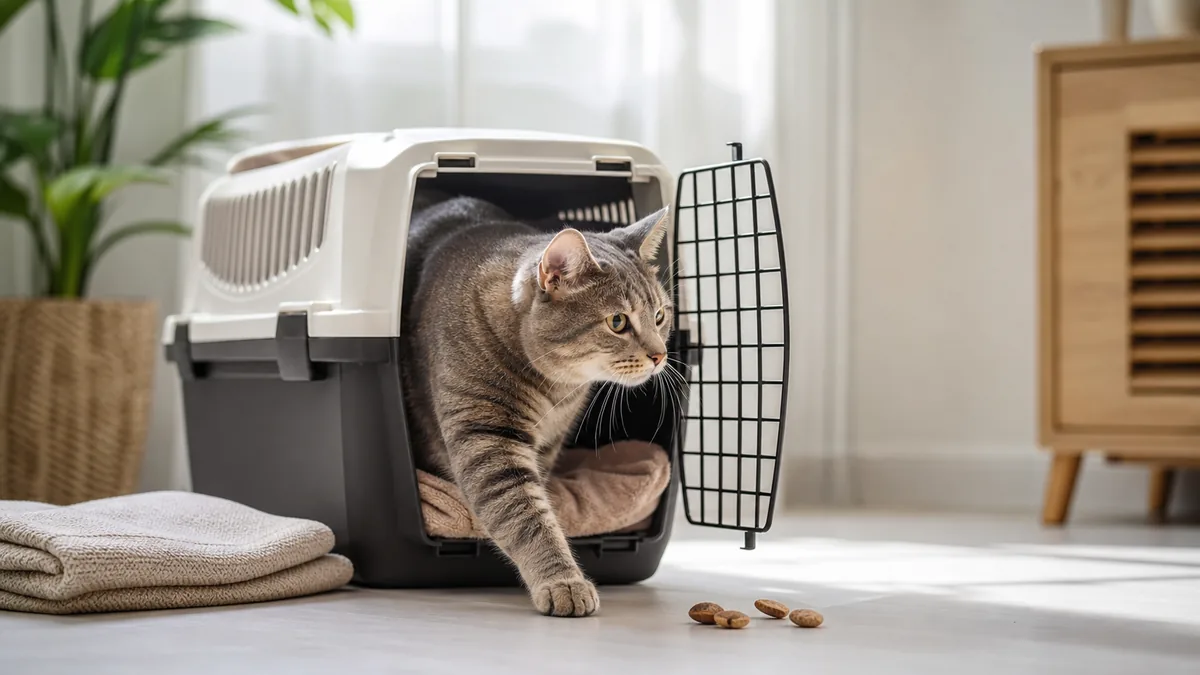
Leave the carrier open in a familiar, quiet place with a stable liner. Secure doors so they cannot swing and start with voluntary investigation. Feed treats or part of a meal near, then inside, the carrier if the cat remains comfortable. Progress separately through entering, brief door closure, lifting a few centimeters, short carries, and the actual route.
Watch whether the structure supports training. A carrier that rocks on entry, snaps loudly, shifts under the cat, or requires the person to loom over one opening may need adjustment or replacement. Stop before panic and return to an easier step; carrier design alone cannot remove fear.
If a practice step exposes an equipment failure, stop and return to the selection checklist. A carrier that will not reassemble as instructed, allows the liner to obstruct an opening, separates at a closure or handle, or no longer keeps a stable base should be repaired according to the manufacturer or replaced before training continues. If the cat escaped or became highly distressed, pause practice and ask the veterinary team how to restart necessary transport safely.
Recheck latches, seams, base, handle, ventilation, liner, and identification before every necessary trip. The final choice is the carrier that remains secure and cleanable while giving both the cat and veterinary team workable access.
Clinical Practice Tool: Moving With Pets Checklist
Make crate and carrier habituation a permanent part of your travel routine with our printable Moving With Pets Checklist. Download and print your copy of the Moving With Pets Checklist, or explore all practical pet care guides in the NewsPet Resource Center.
Frequently Asked Questions
What features make a cat carrier easiest for veterinary visits?
A hard-sided carrier with both top-loading and front-loading doors and a quick-release clamshell top allows veterinarians to examine fearful cats directly inside the carrier base without forceful extraction.
How can caregivers desensitize a cat to the carrier before travel days?
Keep the carrier open in a living space as comfortable bedding with soft towels, feeding meals and offering high-value treats inside so the cat associates the carrier with security rather than stressful car rides.
What safe calming aids help reduce feline travel anxiety?
Spray synthetic feline facial pheromones on carrier bedding 15 minutes before travel, cover the carrier with a light towel to block visual stimuli, and consult your vet regarding pre-visit prescription sedatives if panic is severe.
Sources
Sources checked: September 8, 2026.
- Cats Protection: Travelling With Your Cat
- PubMed Central: 2022 AAFP/ISFM Cat Friendly Veterinary Interaction Guidelines
- FelineVMA: Visiting Your Veterinarian – Getting Your Cat to the Veterinary Practice
- AVMA: Transporting Pets Safely
- International Cat Care: Cat Carriers and Travel
Emergency Triage Matrix: Clinical Presentation & Required Response
| Triage Level | Clinical Signs & Presentation | Immediate Action Protocol |
|---|---|---|
| Tier 1: Immediate Emergency (0–2 Hours) | Cat inside transit carrier exhibits acute respiratory distress (open-mouth panting, extended neck, cyanotic blue/gray tongue), profound hyperthermic struggling (>104.5°F), bleeding claw fractures, or carrier latch structural failure near moving traffic. | Immediate emergency veterinary intervention; direct cool vehicle air conditioning toward carrier, cover with breathable towel, and alert emergency hospital triage team en route. |
| Tier 2: Urgent Veterinary Care (Same-Day) | Cat exhibits profound panic during carrier confinement: autonomic defecation, urination, hypersalivation, or violent defensive aggression that prevents safe medical examination. | Abort traumatic physical forcing; consult veterinarian regarding pre-visit prescription anxiolytics (such as veterinary-prescribed gabapentin) and reschedule exam under low-stress protocol. |
| Tier 3: Home Monitoring & Scheduled Care | Cat vocalizes mildly during vehicle transit or hesitates before entering carrier, but remains physiologically stable with pink mucous membranes and normal resting respiration. | Implement positive reinforcement carrier desensitization: feed meals inside carrier at home, spray synthetic pheromones 15 minutes before travel, and practice brief positive car rides. |
Rule S1 Boundaries & Feline Transport Rules
Transporting companion felines requires strict adherence to safety standards:
- NEVER violently drag or shake a frightened cat out of a front-loading carrier: Forced extraction triggers defensive fight-or-flight aggression, causes claw avulsions, and establishes permanent severe veterinary trauma conditioning; use carriers with removable top shells.
- NEVER transport an unsecured cat loose inside a passenger vehicle: An unrestrained cat can crawl beneath the brake pedals, obstruct the driver’s view, or escape into traffic following a vehicle collision or door opening.
- NEVER spray synthetic pheromones directly onto a cat or into an occupied carrier: Pheromone sprays contain an alcohol carrier base that severely irritates feline respiratory mucosa; sprays must be applied to carrier bedding and allowed to dry for 15 minutes before introducing the cat.
- NEVER administer human sedatives or over-the-counter tranquilizers without prescription: Human psychotropics and antihistamines cause unpredictable paradoxical excitation, severe hypothermia, cardiovascular arrhythmias, and respiratory arrest in cats.
Caregiver Low-Stress Cat Carrier Selection & Prep Checklist
- Select a rigid, hard-sided carrier with both top and front entrances and a middle seam featuring quick-release latches for total top removal.
- Leave the carrier open year-round in your main living area, lined with cozy bedding and sprinkled with catnip or high-value treats to create a familiar sanctuary.
- Apply 4 to 6 sprays of synthetic feline facial pheromone (F3 analogue) to carrier bedding exactly 15 minutes before departure, allowing alcohol to fully evaporate.
- Cover the carrier with a light, breathable towel during transport to block overwhelming visual stimuli and reduce sympathetic nervous system arousal.
- Position the carrier securely on the floorboard behind the front passenger seat (the most motion-stable zone in a vehicle) rather than on a tilted car seat.
- Carry the carrier with two hands held securely against your torso like a fragile box, avoiding swinging the carrier by the single top handle.
Related Clinical Guides & Tools
Peer-Reviewed Clinical References & Evidence Grounding
- NCBI PubMed (PMID: 19481034) — Feline herpesvirus infection. ABCD guidelines on prevention and management (J Feline Med Surg, 2009) (opens in new tab) (Peer-reviewed veterinary clinical study indexed in NCBI PubMed (J Feline Med Surg, 2009).)
- NCBI PubMed (PMID: 19481035) — Feline calicivirus infection. ABCD guidelines on prevention and management (J Feline Med Surg, 2009) (opens in new tab) (Peer-reviewed veterinary clinical study indexed in NCBI PubMed (J Feline Med Surg, 2009).)
- NCBI PubMed (PMID: 19481036) — Feline leukaemia. ABCD guidelines on prevention and management (J Feline Med Surg, 2009) (opens in new tab) (Peer-reviewed veterinary clinical study indexed in NCBI PubMed (J Feline Med Surg, 2009).)
- International Cat Care: Low-Stress Feline Carrier Selection and Cooperative Acclimation (opens in new tab) (Verified clinical reference retrieved via Antigravity Ground-Truth Search (icatcare.org).)
Printable tools
Download the matching worksheet
Source transparency
Reference mix for this guide
Source labels describe the type of organization behind each reference; they are not a claim that any outside organization reviewed this article.
- Cats Protection: Travelling With Your Cat Reference source · cats.org.uk
- PubMed Central: 2022 AAFP/ISFM Cat Friendly Veterinary Interaction Guidelines Government or public agency · pmc.ncbi.nlm.nih.gov
- FelineVMA: Visiting Your Veterinarian - Getting Your Cat to the Veterinary Practice Veterinary organization · catvets.com
- AVMA: Transporting Pets Safely Veterinary organization · avma.org
- International Cat Care: Cat Carriers and Travel Animal welfare nonprofit · icatcare.org
- Indoor Cat Enrichment: Build a Home That Meets Nat Reference source · newspet.net
- Cat Litter Box Problems: Causes & Solutions (V Reference source · newspet.net
- Why Cats Scratch Furniture and How to Redirect It Reference source · newspet.net