This guide is general education for pet owners. If your pet has urgent symptoms, possible poisoning, injury, breathing trouble, collapse, severe pain, or sudden decline, contact a licensed veterinarian or local emergency service.
Dosages must be calculated by a licensed veterinarian based on species, weight, and bloodwork. Never administer human medications or self-adjust prescription doses for pets.
Editorial standard
How this guide was prepared
This clinical guide outlines vaccination planning and adverse reaction monitoring for busy households based on AAHA and AAFP protocols. If your cat displays acute facial swelling, continuous vomiting, collapse, or respiratory distress after vaccination, seek immediate emergency veterinary medical care.
- Adopt 3-Year Core Revaccination Protocols: Follow extended 3-year vaccination intervals for core immunizations (Rabies, canine DA2PP, feline FVRCP) after initial adult booster series, significantly reducing required clinic visits.
- Synchronize Multi-Pet Appointments: Coordinate annual wellness and vaccination visits for all household pets on the same calendar day or utilize mobile veterinary house calls to minimize transportation disruptions.
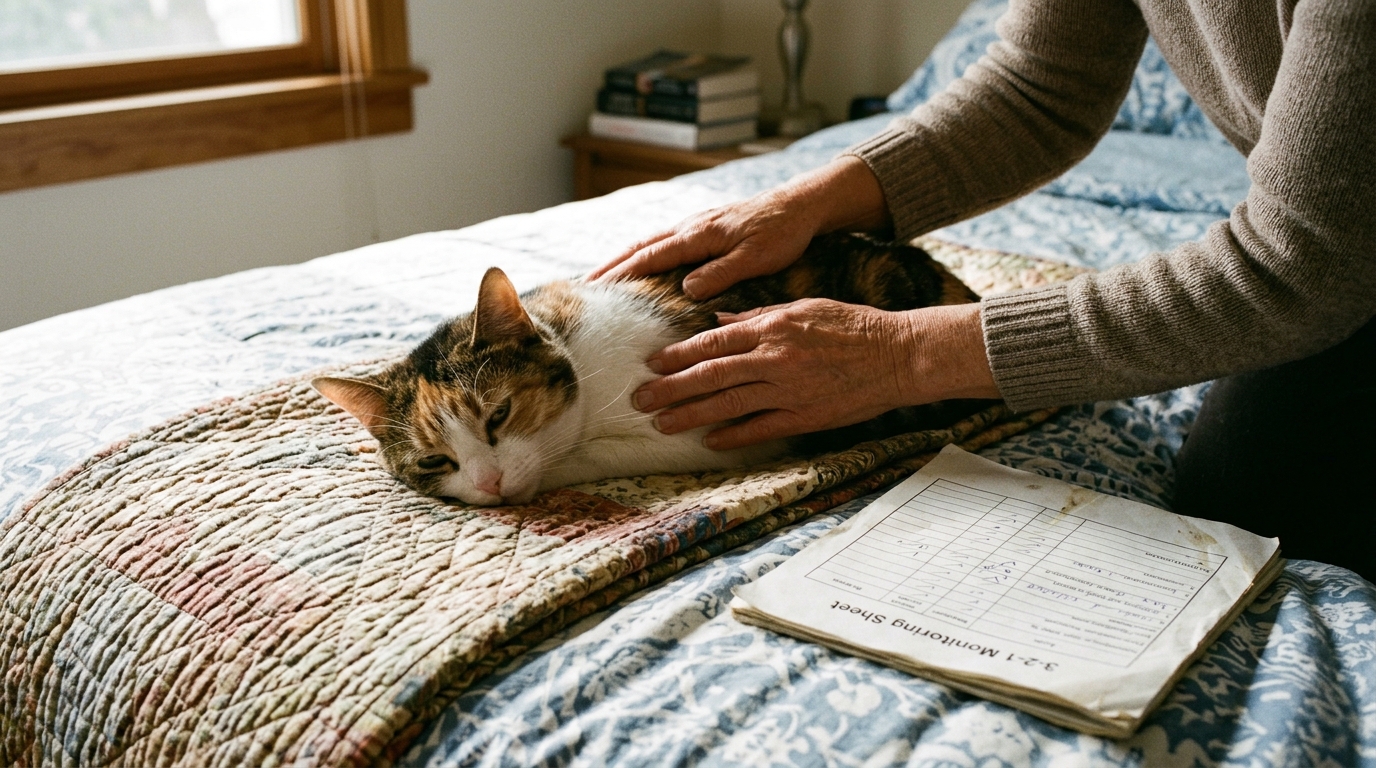
- Designate Post-Vaccine Supervision Roles: Assign one specific family member to monitor the pet for 24 hours following vaccination, checking for expected mild injection soreness while watching for rare acute facial swelling or hives.
In active, multi-caregiver households, companion animal preventive healthcare frequently encounters scheduling friction. When work demands, family routines, and school timetables overlap, feline vaccination intervals can lapse, leaving pet parents uncertain whether a missed appointment necessitates restarting an entire vaccine series. For adult cats, navigating overdue immunizations requires understanding anamnestic immune responses and establishing structured communication with your veterinary healthcare team.
The Immunological Biology of Overdue Vaccines
Pet parents often assume that missing a booster deadline by several months erases all prior immunological protection. In feline veterinary medicine, however, cell-mediated and humoral immune responses behave differently depending on the antigen and initial priming series:
- FVRCP Core Antigens (Herpesvirus, Calicivirus, Panleukopenia): If an adult cat received a complete initial kitten series and their 1-year primary booster, immunological memory persists for years. According to AAHA/AAFP Feline Vaccination Guidelines, an adult cat overdue for FVRCP does not require a repeated booster series; a single booster dose reliably triggers an immediate anamnestic (recall) antibody response.
- Feline Leukemia Virus (FeLV): Because FeLV requires robust initial cell-mediated immunity, kittens and young adult cats receiving an initial two-dose primary series must receive the second dose within a strict 3-to-4-week window. If the second dose is delayed past 6 to 8 weeks, the initial priming effect is compromised, and the two-dose series typically must be restarted.
- Rabies Statutory Mandates: Unlike viral respiratory vaccines, rabies booster intervals are governed strictly by state, county, and municipal public health legislation. If your cat’s rabies certificate expires by even a single day, the legal status of the animal resets to “unvaccinated” in the eyes of public health authorities, necessitating immediate revaccination.
Caregiver Coordination: Eliminating Communication Gaps
In households where multiple family members share pet care responsibilities, preventive healthcare easily fractures. Implement a centralized digital and physical tracking system to eliminate missed appointments and medication errors:
| Household Communication Tool | Implementation Method | Clinical Objective & Risk Mitigation |
|---|---|---|
| Synchronized Cloud Health Calendar | Shared family digital calendar with automated alerts at 30 days, 14 days, and 48 hours prior to vaccination due dates. | Eliminates missed booster deadlines; ensures transport responsibilities are explicitly assigned to a single adult caregiver. |
| Dual-Caregiver Verification Log | Physical sign-off sheet mounted inside the pet medicine cabinet for any post-visit medications (e.g., antihistamines or dewormers). | Prevents accidental double-dosing when two family members unknowingly administer the same medication on the same morning. |
| Standardized Clinic Pre-Visit Questionnaire | Written summary of household exposure changes (new indoor plants, patio access, multi-cat boarding) prepared 24 hours in advance. | Ensures the attending veterinarian receives complete epidemiological exposure data during condensed appointment windows. |
Post-Vaccination Monitoring in Active Environments
Busy home environments can inadvertently overlook early signs of post-vaccination discomfort. When children, guests, and other pets create high sensory stimulation, a recovering cat may retreat into hidden spaces where subtle clinical deterioration goes unnoticed:
- Dedicated Confinement Zone: Confine the vaccinated cat to a quiet master bedroom or guest room for the first 24 hours post-clinic. Provide clean litter, fresh water, and a covered resting den away from active foot traffic.
- Objective Hydration Checks: Check mucous membrane moisture twice daily. Gums should remain slippery and moist. Tacky, dry gums indicate emerging fever or systemic dehydration.
- Strict Rule S1 Analgesic Warning: Never administer human over-the-counter pain medications. Acetaminophen (Tylenol), ibuprofen, and aspirin cause fatal methemoglobinemia, severe facial edema, and acute liver necrosis in felines.
Long-Term Lump Surveillance: The 3-2-1 Rule
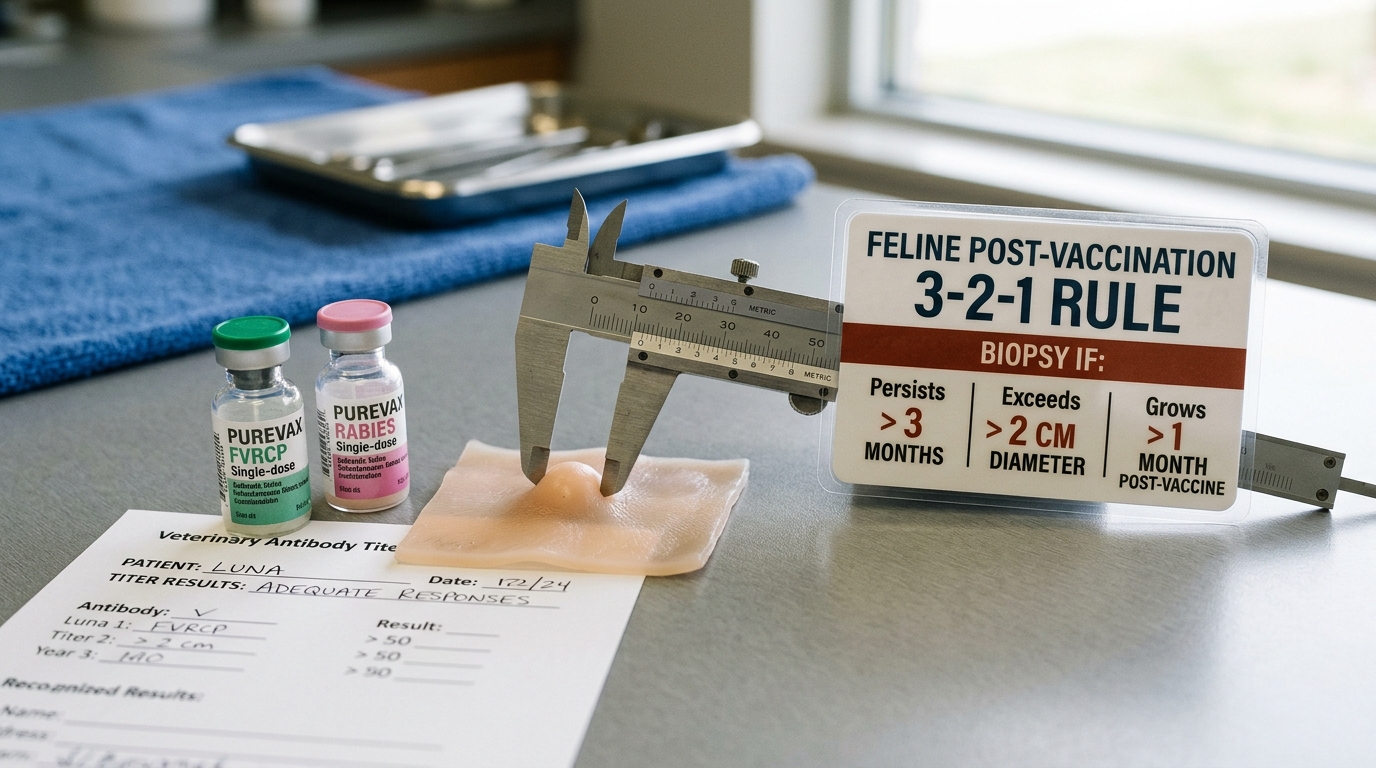
Feline Injection Site Sarcomas (FISS) are invasive tumors linked to localized vaccine-induced inflammation. The Vaccine-Associated Feline Sarcoma Task Force establishes the evidence-based 3-2-1 Rule for long-term monitoring. Schedule a veterinary evaluation if any injection-site lump meets any of the following criteria:
- 3 Months: The palpable lump remains present 3 months or longer following the injection date.
- 2 Centimeters: The palpable swelling measures 2 centimeters or larger (roughly the size of a grape) at any examination.
- 1 Month: The palpable lump continues to actively increase in size 1 month post-vaccination.
Red-Flag Triage Matrix: Post-Vaccine Reactions in Felines
Use this objective triage matrix to distinguish expected mild immune lethargy from critical systemic hypersensitivity:
| Triage Level | Clinical Manifestations | Required Action Protocol |
|---|---|---|
| Immediate Emergency (0–2 Hours) | Facial angioedema (swelling of eyelids, muzzle, or pinnae), acute urticaria (hives), respiratory distress (panting, open-mouth breathing), projectile vomiting within 60 minutes of injection, sudden hindlimb collapse, pale or gray mucous membranes. | Transport immediately to the nearest veterinary emergency critical care hospital. Anaphylaxis requires rapid emergency administration of epinephrine, antihistamines, and intravenous fluid therapy. |
| Urgent Assessment (12–24 Hours) | Complete refusal of all food and water exceeding 24 hours, persistent high fever (> 103.5°F / 39.7°C), severe localized pain with vocalization upon light touch to the injected limb, profound lethargy exceeding 36 hours. | Contact your primary care veterinary clinic for same-day clinical re-evaluation and professional supportive therapy. |
| Routine Home Monitoring | Mild sleepiness for 12–24 hours, slightly decreased interest in toys or interaction, transient single-meal appetite reduction resolving spontaneously within 18 hours. | Ensure a quiet, low-stress environment, maintain clean water access, and record the vaccine lot number and injection site in your permanent pet record. |
Vaccination protocols must be individually determined by a licensed veterinarian based on physical examination findings, infectious disease exposure, and municipal public health statutes. Always consult your veterinarian before adjusting or delaying an established immunization schedule.
Frequently Asked Questions
What is the difference between core and non-core lifestyle vaccinations?
Core vaccinations (such as Rabies and DHPP for dogs, or Rabies and FVRCP for cats) protect against highly contagious, fatal diseases universal to all companion animals. Non-core vaccinations (such as Leptospirosis, Bordetella, Lyme, or FeLV) are recommended based on specific regional prevalence, boarding frequency, or outdoor wildlife exposure.
What post-vaccination symptoms are normal versus life-threatening emergencies?
Mild fatigue, temporary decreased appetite, and localized soreness at the injection site lasting 12 to 24 hours are normal physiological immune responses. Facial swelling, persistent hives, acute vomiting, collapse, or labored breathing indicate severe anaphylaxis requiring immediate emergency veterinary care.
Can vaccinations be safely administered if a pet has an unknown immunization history?
Yes. Veterinarians treat animals with unknown or unverifiable vaccination histories as naive, initiating core series or using antibody titer blood tests to confirm immunity before establishing standard booster intervals.
Caregiver Vaccination Safety and Post-Care Checklist
- Verify documented vaccination dates and lot numbers with your veterinarian before administering repeat doses.
- Observe your pet closely for 2 hours post-vaccination for facial puffiness, hives, or breathing changes.
- Provide a quiet, comfortable recovery area free from rough play, dog parks, or strenuous exercise for 24 hours.
- Monitor the injection site for minor swelling; alert your clinic if a firm nodule persists past 3 weeks.
- Never administer human over-the-counter pain relievers for post-vaccine soreness; human NSAIDs are toxic to pets.
Sources
- . American Animal Hospital Association and American Association of Feline Practitioners.
- Dogs & Cats Overdue for Vaccination: Recommendations for Updating Immunizations. Today’s Veterinary Practice.
- Guideline for Adverse Reactions to Vaccination. Advisory Board on Cat Diseases (ABCD).
Printable tools
Download the matching worksheet
Source transparency
Reference mix for this guide
Source labels describe the type of organization behind each reference; they are not a claim that any outside organization reviewed this article.
- . American Animal Hospital Association and American Association of Feline Practitioners.Dogs & Cats Overdue for Vaccination: Recommendations for Updating Immunizations Veterinary organization · aaha.org
- Guideline for Adverse Reactions to Vaccination Reference source · abcdcatsvets.org