This guide is general education for pet owners. If your pet has urgent symptoms, possible poisoning, injury, breathing trouble, collapse, severe pain, or sudden decline, contact a licensed veterinarian or local emergency service.
Editorial standard
How this guide was prepared
This clinical guide outlines urinary tract monitoring and emergency boundaries under American College of Veterinary Internal Medicine (ACVIM) guidelines. If a male cat strains repeatedly in the litter box without producing urine, cries out, or vomits, treat this as an immediate life-threatening urethral obstruction emergency requiring urgent hospital care.
- Daily Litter Clump Size Audits: Gauge urinary volume during daily litter scooping; a sudden reduction in clump size or an abundance of tiny golf-ball-sized clumps signals early feline cystitis or partial obstruction.
- Observe Outdoor Elimination Posture: Watch for canine stranguria or pollakiuria: repeated squatting or leg-lifting that yields only a few bloody drops indicates active bladder inflammation or urolithiasis.
- Zero-Tolerance Emergency Triage: Unproductive straining without urine passage in male dogs or cats represents a complete urethral obstruction emergency requiring immediate emergency hospitalization.
Urinary tract disorders represent some of the most rapidly escalating medical emergencies in companion animal medicine. In active households where litter boxes or outdoor bathroom breaks receive irregular observation, subtle early warnings like frequent posturing, microscopic hematuria, or excessive genital grooming easily escape detection. For caregivers managing demanding schedules, establishing consistent urinary monitoring habits prevents painful chronic cystitis and guards against fatal urethral blockage.
The Critical Pathophysiological Divide: Blocked vs Unblocked
Understanding the physiological mechanics of lower urinary tract disease is essential for prioritizing clinical escalation. Lower urinary symptoms stem from distinct pathophysiological mechanisms across domestic species:
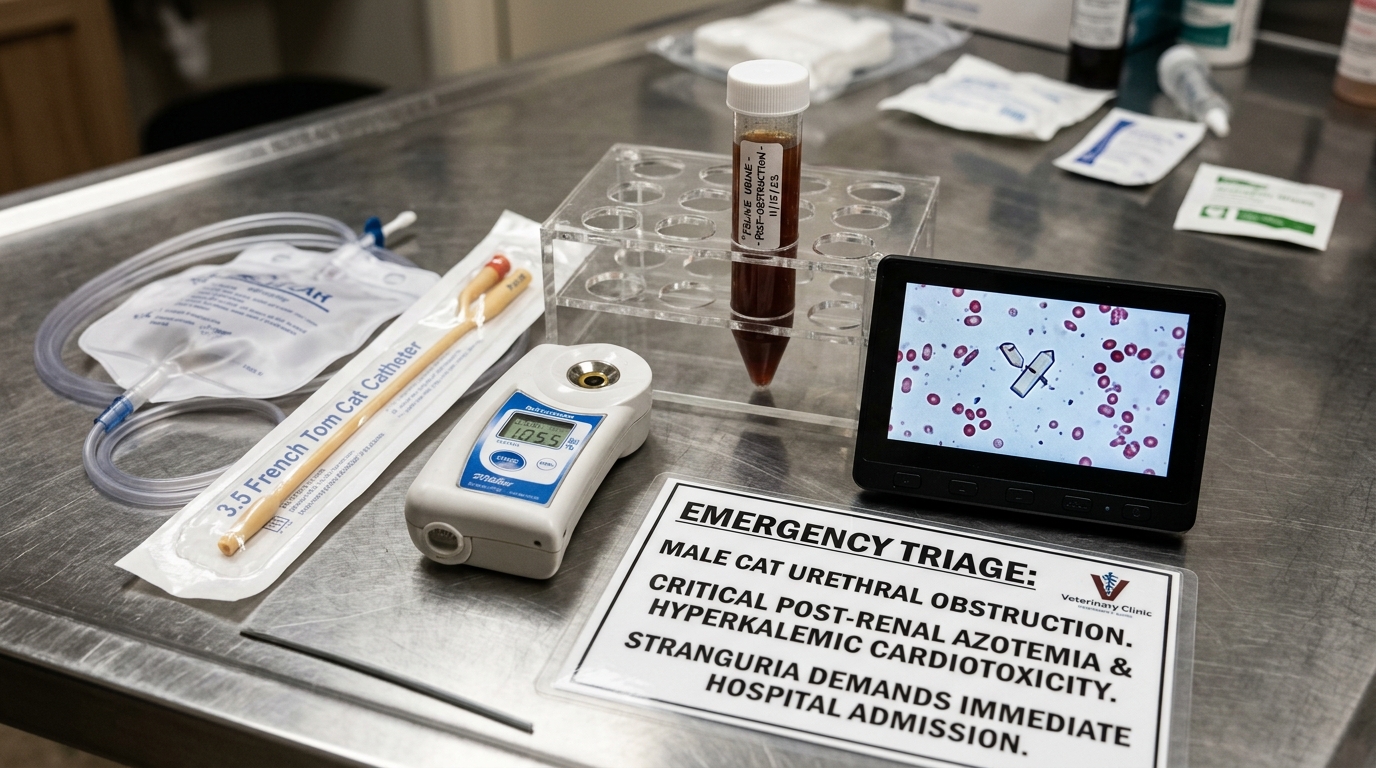
- Complete Urethral Obstruction (Feline Medical Crisis): Male cats possess a narrow, tapering penile urethra highly susceptible to mechanical blockage from mineralized struvite crystals, inflammatory mucous plugs, or urethral spasms. Once obstruction occurs, kidneys cannot clear metabolic waste, precipitating acute post-renal azotemia, hyperkalemia, cardiac arrhythmias, and bladder rupture within 24 to 48 hours.
- Feline Idiopathic Cystitis (FIC): A sterile, stress-induced neuroendocrine inflammatory disorder affecting the bladder urothelium. Environmental changes, household conflicts, or litter box competition trigger severe bladder spasms and painful dysuria without bacterial infection.
- Canine Bacterial Cystitis & Urolithiasis: Unlike felines, dogs frequently suffer ascending bacterial infections (predominantly Escherichia coli) or distinct mineral calculi (calcium oxalate and struvite stones) that irritate mucosal linings and create persistent stranguria.
The Household Environmental & Litter Box Audit
Proactive household management significantly reduces inflammatory urinary episodes and provides daily diagnostic feedback:
| Management Domain | Clinical Standard Protocol | Physiological Health Objective |
|---|---|---|
| Litter Station Formula | Provide one litter box per resident cat plus one additional box (N + 1 rule) distributed across different floors. | Eliminates territorial resource guarding, reduces chronic sympathetic stress, and prevents voluntary urine retention. |
| Hydration Amplification | Incorporate moisture-rich wet food and recirculating filtered water fountains away from feeding zones. | Lowers urine specific gravity (USG < 1.035 in cats), dilutes urinary solutes, and reduces mineral precipitation risk. |
| Clump Dimension Auditing | Inspect daily scooped litter clump volume. Normal adult feline clumps measure roughly the size of a tennis ball. | Detects micro-volume frequent urination (pollakiuria) or abrupt cessation of urinary output immediately. |
Diagnostic Urine Screening: What Clinicians Test
When evaluating urinary symptoms, veterinary clinicians rely on a complete urinalysis. If your pet permits, collecting a clean, fresh voided sample in a sterile plastic container immediately prior to the appointment provides valuable diagnostic data.
The medical team evaluates physical urine specific gravity via refractometer, performs dipstick chemical analysis for occult blood and proteinuria, and examines centrifugal sediment under high-power microscopy to detect red blood cells, white blood cell casts, and diagnostic crystals. If bacterial infection is suspected, a cystocentesis specimen is submitted for quantitative bacterial culture and antimicrobial susceptibility testing.
Red-Flag Triage Matrix: Urinary Tract Escalation Tiers
Use this objective triage matrix to determine when urinary symptoms permit outpatient scheduling versus immediate emergency transport:
| Triage Tier | Clinical Presentation | Required Action Protocol |
|---|---|---|
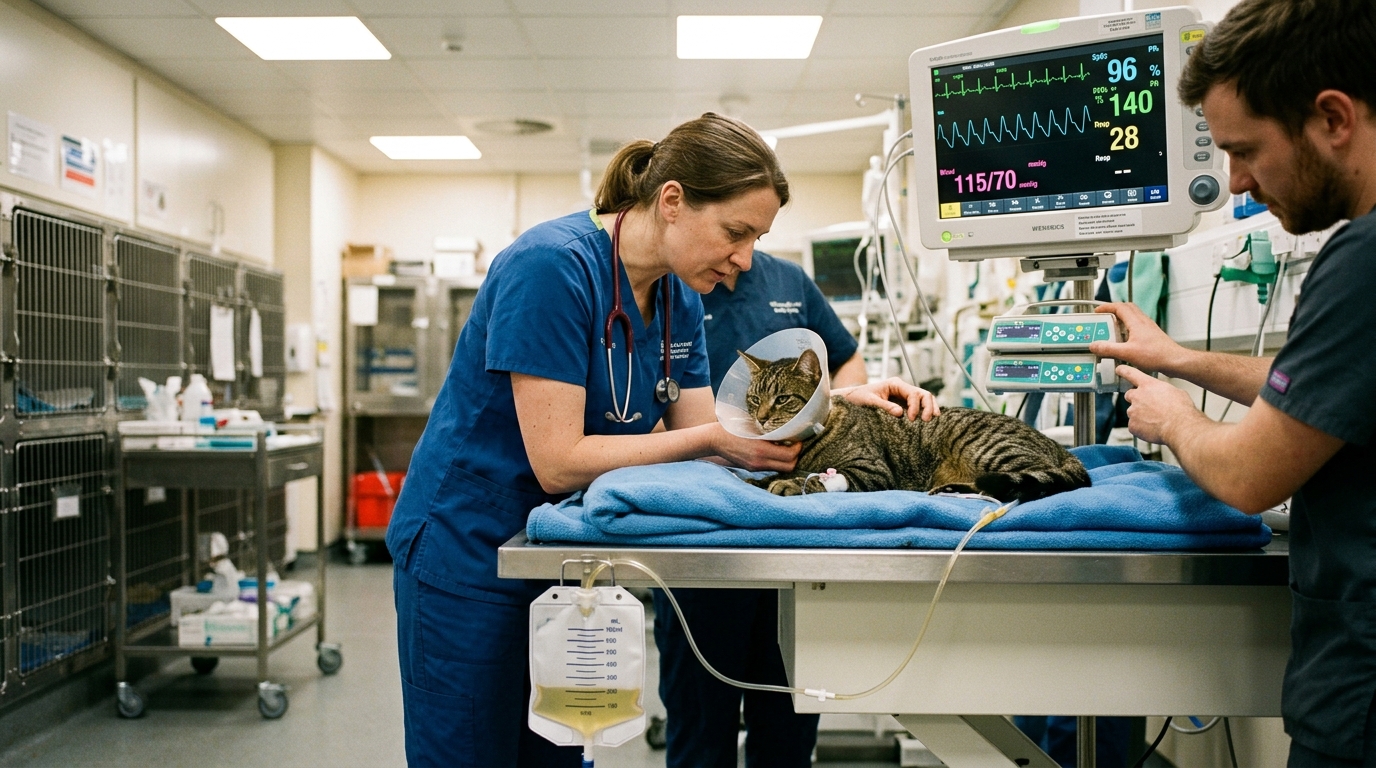
| Immediate Emergency (0–2 Hours) | Male cat or dog straining to urinate with zero urine produced, painful vocalizing in posture, vomiting, extreme lethargy with hypothermia, hard distended bladder. | Transport immediately to the nearest 24-hour veterinary emergency facility. Urethral obstruction leads to fatal cardiac arrest from hyperkalemia without immediate surgical de-obstruction. |
| Urgent Assessment (12–24 Hours) | Frequent urination producing small blood-tinged drops, licking genitals obsessively, urinating outside designated boxes, mild lethargy with preserved appetite. | Schedule a same-day clinical veterinary examination. Avoid administering over-the-counter urinary supplements until diagnostic urinalysis is performed. |
| Routine Home Monitoring | Slight increase in urination frequency after switching to wet food diet, single isolated instance of inappropriate urination following household rearrangement. | Audit litter box cleanliness, increase water stations, and monitor daily clump size closely. Schedule routine wellness consultation if changes persist. |
Never administer human pain relievers, antibiotics, or urinary acidifiers to companion animals. Urinary tract symptoms must be diagnosed by a licensed veterinarian to differentiate life-threatening physical obstruction from sterile neurogenic inflammation or bacterial infection.
Caregiver Decision Tree: Common Urinary Dilemmas
A busy caregiver differentiate between feline constipation and urethral obstruction
Both conditions cause a pet to strain in the litter box, but urethral obstruction is a fatal emergency while constipation is typically manageable over a longer timeframe. A blocked cat posturing in the box will frequently vocalize in intense pain, lick the genital region obsessively, and produce zero liquid urine or only a few blood-tinged drops, accompanied by systemic distress, vomiting, or profound restlessness. A constipated cat, by contrast, may strain and pass hard, dry fecal pellets without signs of acute post-renal collapse or extreme vocalization. When in doubt, veterinary clinicians advise treating all male feline straining as a potential urethral blockage until a physical bladder palpation confirms urine flow.
Can dietary urinary tract supplements dissolve existing bladder stones?
Over-the-counter cranberry extracts or urinary supplements cannot dissolve pre-existing calculi and must never replace diagnostic veterinary intervention. Struvite stones often dissolve with therapeutic prescription diets that carefully modulate urinary pH and reduce magnesium and phosphorus precursors, but calcium oxalate uroliths cannot be dissolved medically and often require surgical cystotomy or voiding urohydropropulsion. Administering urinary acidifiers without diagnostic urinalysis risks inducing systemic metabolic acidosis and promoting oxalate stone formation.
Frequently Asked Questions
How do caregivers differentiate feline constipation from a life-threatening urethral blockage?
Both issues involve straining in the litter box, but a male cat with a urethral obstruction passes little or no urine, cries out in pain, frequently licks the genital area, and may vomit. A completely blocked urethra is a fatal emergency within 24 to 48 hours requiring immediate hospital unblocking.
What environmental modifications help reduce feline idiopathic cystitis (FIC)?
Provide one litter box per cat plus one additional box, scoop daily, use unscented litter, place boxes in low-traffic areas, increase water intake through wet food and fountains, and minimize household stress with climbing shelves and synthetic pheromones.
What diagnostic tests are standard when evaluating blood in a pet’s urine (hematuria)?
A complete urinalysis with microscopic sediment examination (checking for red cells, bacteria, and crystals), urine specific gravity, a sterile bacterial culture, and abdominal X-rays or ultrasound to check for bladder stones or masses.
Caregiver Urinary Health Action Checklist
- Inspect litter box clumps or outdoor urination habits daily for changes in volume, frequency, or discoloration.
- Follow the 1-plus-1 litter box rule (one box per cat plus one extra) in quiet, accessible home locations.
- Provide fresh water in clean ceramic or stainless steel bowls and consider water fountains to promote drinking.
- Take any male cat that strains with little or no urine output to an emergency veterinary clinic immediately.
- Never give human urinary tract medications or pain relievers to pets; human drugs cause fatal organ damage.
Sources
- ACVIM Consensus Statements on Urinary Diseases. American College of Veterinary Internal Medicine.
- AAFP Guidelines for the Management of FLUTD. American Association of Feline Practitioners.
- Merck Veterinary Urinary System Clinical Overview. Merck Veterinary Manual.
Printable tools
Download the matching worksheet
Source transparency
Reference mix for this guide
Source labels describe the type of organization behind each reference; they are not a claim that any outside organization reviewed this article.
- ACVIM Consensus Statements on Urinary Diseases Reference source · acvim.org
- AAFP Guidelines for the Management of FLUTD Veterinary organization · catvets.com
- Merck Veterinary Urinary System Clinical Overview Veterinary organization · merckvetmanual.com

