This guide is general education for pet owners. If your pet has urgent symptoms, possible poisoning, injury, breathing trouble, collapse, severe pain, or sudden decline, contact a licensed veterinarian or local emergency service.
Editorial standard
How this guide was prepared
This clinical guide provides structured wellness preparation protocols for busy households under American Animal Hospital Association standards. If a pet displays signs of acute distress, urethral straining without urine output, sudden cardiopulmonary collapse, or severe trauma, bypass routine appointments and go directly to emergency care.
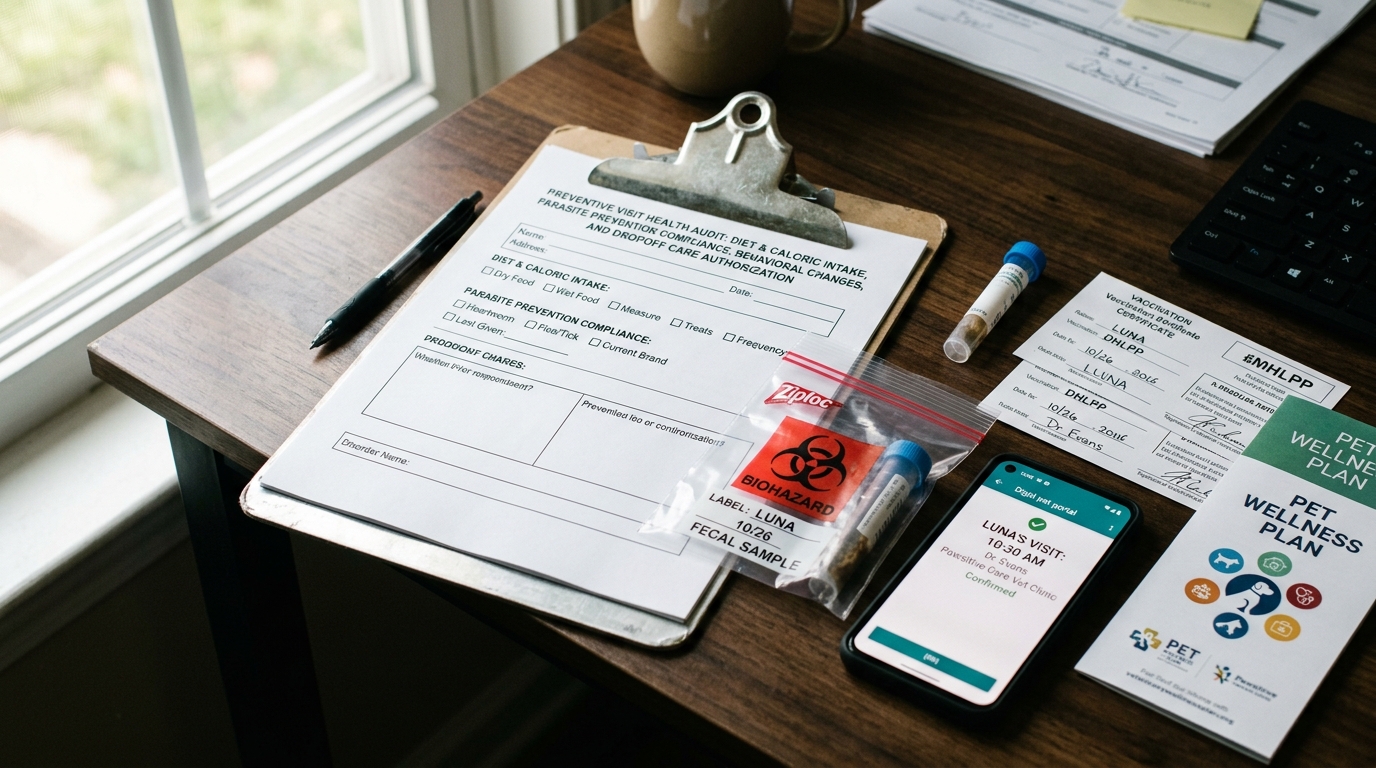
- Consolidate Cloud & Mobile Records: Store digital copies of previous vaccination records, parasite treatment dates, and microchip certificates on your smartphone to ensure instant availability during appointments.
- Pre-Collect Diagnostic Samples at Home: Bring a fresh fecal sample (< 12 hours old, sealed in a clean container) and first-morning urine if requested, eliminating lengthy in-clinic collection delays and pet stress.
- Prioritized 3-Point Consultation Agenda: Write down your top three medical or behavioral observations (appetite changes, mobility shifts, new lumps) beforehand to maximize face-to-face consultation efficiency with the clinician.
For busy households managing rigorous work and family schedules, veterinary appointments can easily become rushed, stressful encounters. Without organized pre-visit preparation, vital clinical observations like subtle appetite shifts, gradual water intake variations, or intermittent lameness go unaddressed. Implementing an efficient preparation system enables working caregivers to maximize clinical consultation time and capture comprehensive preventative baselines without scheduling friction.
The Asynchronous Household Health Audit
In active households where multiple family members participate in pet care, communication gaps frequently lead to fragmented medical reporting. One caregiver may feed morning kibble without realizing another offered evening scraps, obscuring genuine appetite anomalies. Conducting a centralized 3-day health audit prior to the annual visit establishes clear diagnostic clarity:
- Digital Intake Tracking: Maintain a shared digital smartphone note or calendar where all family members log feeding times, exact treat allotments, urination frequency, and stool quality using standard descriptors.
- Hydration Quantification: Measure the daily water volume poured into bowls versus remaining volume after 24 hours. A sustained rise in consumption exceeding 100 milliliters per kilogram daily signals vital metabolic indicators like renal disease or diabetes mellitus.
- Exercise & Mobility Endurance: Document whether your pet exhibits stiffness when rising in the morning, reluctance to climb car steps, or lag during evening neighborhood walks.
Streamlined Clinic Consultation Framework
Maximize your in-clinic consultation efficiency by grouping clinical questions into three diagnostic tiers before arriving at the hospital:
| Priority Category | Essential Consultation Topics | Time-Saving Preparation Strategy |
|---|---|---|
| Core Prevention Review | Regional heartworm, flea, and tick prevalence; core booster timelines; lifestyle vaccine necessity (Leptospirosis, Lyme, Bordetella). | Photograph current preventive packaging and note the exact date of the most recent administration. |
| Nutrition & Weight Targets | Current body condition score (BCS on 1–9 scale), exact kilocalorie targets, healthy treat allotment boundaries. | Bring a clean sample cup containing your exact daily dry kibble measuring cup to verify true caloric volume. |
| Behavior & Stress Assessment | Separation anxiety signs during work hours, crate vocalization, travel stress, situational phobias (storms/fireworks). | Capture short 20-second video recordings of target behaviors at home for the veterinary clinician to review directly. |

Appointment Models for Working Households: Drop-Off vs Live Consults
When conventional daytime appointment slots conflict with professional commitments, busy caregivers frequently benefit from structured clinic workflow options. Many full-service veterinary practices offer morning drop-off appointments, allowing families to admit pets during early commute hours (7:30 to 8:30 AM).
During the day, the veterinary medical team performs blood draws, fecal screenings, and full physical evaluations between surgical procedures. The clinician then schedules a comprehensive 15-minute afternoon telehealth consultation or phone debrief to review diagnostic results, establish therapeutic adjustments, and arrange evening pickup. Providing clear written consent and detailed history forms upon morning drop-off ensures seamless clinical communication.
Transport Logistics & Stress Mitigation
Rushed transit induces acute sympathetic nervous system elevation, driving heart rate, blood pressure, and body temperature to artificial spikes that distort diagnostic vitals. For feline companions, bring carriers into living areas 48 hours prior to transport, spraying interior bedding with synthetic feline facial pheromones.
For canine companions, fast the dog for 3 to 4 hours before the appointment to prevent travel nausea and heighten responsiveness to high-value clinic treats during the physical examination. If your pet exhibits marked clinical travel panic, discuss situational pre-visit pharmaceuticals with your veterinarian well in advance of the scheduled appointment day.
Red-Flag Triage Matrix: Busy Household Escalations
Use this objective triage matrix to determine when clinical symptoms require immediate emergency care rather than waiting for scheduled appointments:
| Triage Tier | Clinical Presentation | Required Action Protocol |
|---|---|---|
| Immediate Emergency (0–2 Hours) | Straining to urinate with vocalization and zero production (urethral obstruction), cyanotic or grey gums, respiratory rate exceeding 40 breaths per minute while resting, sudden abdominal distension. | Cease all other activities and proceed immediately to the nearest veterinary emergency critical care facility. Call the hospital in transit to announce your estimated time of arrival. |
| Urgent Assessment (12–24 Hours) | Complete anorexia extending past 24 hours, repeated unassisted vomiting episodes, persistent lameness preventing full limb weight-bearing, sudden onset of squinting or cloudy ocular discharge. | Contact your primary veterinary hospital to request an urgent same-day drop-off examination or work-in appointment slot. |
| Routine Home Monitoring | Single isolated soft stool without blood, mild hesitation to finish kibble, occasional scratching without visible skin lesions, slight dental tartar accumulation. | Document observations in your family tracking log and address systematically during your planned annual preventive wellness consultation. |
Preventive wellness recommendations and diagnostic screenings must be tailored by a licensed veterinarian based on hands-on physical evaluations, lifestyle risks, and medical history. Never administer human medications to companion animals and never skip veterinary-recommended heartworm screenings before starting preventatives.
Frequently Asked Questions
How soon after adoption or bringing a pet home should a preventive examination be scheduled?
Schedule the initial comprehensive examination within 48 to 72 hours. This provides prompt detection of shelter-acquired respiratory or parasitic pathogens, confirms immunization history, and establishes a medical baseline before minor subclinical abnormalities escalate.
What records and specimens should caregivers bring to a preventive veterinary consultation?
Bring all shelter or prior veterinary records, vaccine certificates, a complete list of current foods and treats, and a fresh stool sample collected within 4 to 6 hours for intestinal parasite flotation and antigen screening.
How frequently should healthy adult pets attend routine wellness examinations?
Healthy adult dogs and cats require a comprehensive preventive examination at least once annually. Senior pets over 7 years of age benefit from semi-annual visits to detect chronic kidney disease, metabolic changes, and osteoarthritis at early manageable stages.
Sources
- AAHA Canine Life Stage Guidelines. American Animal Hospital Association.
- AAFP Feline Life Stage Guidelines. American Association of Feline Practitioners.
- WSAVA Global Nutrition Toolkit. World Small Animal Veterinary Association.
Caregiver Safety Checklist
- Bring a written symptom timeline to every preventive visit — veterinarians spend 40% more time on clinical reasoning when owners provide structured timelines vs. verbal recall.
- Ask for a written vaccination record at each appointment; verbal confirmation is not sufficient documentation for boarding facilities or breed registries.
- Request baseline bloodwork (CBC/chemistry) at the first preventive visit for any pet over 7 years — age-related disease caught at baseline is treated months earlier.
Printable tools
Download the matching worksheet
Source transparency
Reference mix for this guide
Source labels describe the type of organization behind each reference; they are not a claim that any outside organization reviewed this article.
- AAHA Canine Life Stage Guidelines Veterinary organization · aaha.org
- AAFP Feline Life Stage Guidelines Veterinary organization · catvets.com
- WSAVA Global Nutrition Toolkit Veterinary organization · wsava.org