This guide is general education for pet owners. If your pet has urgent symptoms, possible poisoning, injury, breathing trouble, collapse, severe pain, or sudden decline, contact a licensed veterinarian or local emergency service.
Dosages must be calculated by a licensed veterinarian based on species, weight, and bloodwork. Never administer human medications or self-adjust prescription doses for pets.
Editorial standard
How this guide was prepared
This clinical guide outlines medication compliance and safety protocols for busy households based on veterinary clinical pharmacology standards. If a pet receives an accidental double dose of prescription medication or exhibits acute lethargy, vomiting, or seizures, seek immediate emergency veterinary poison intervention.
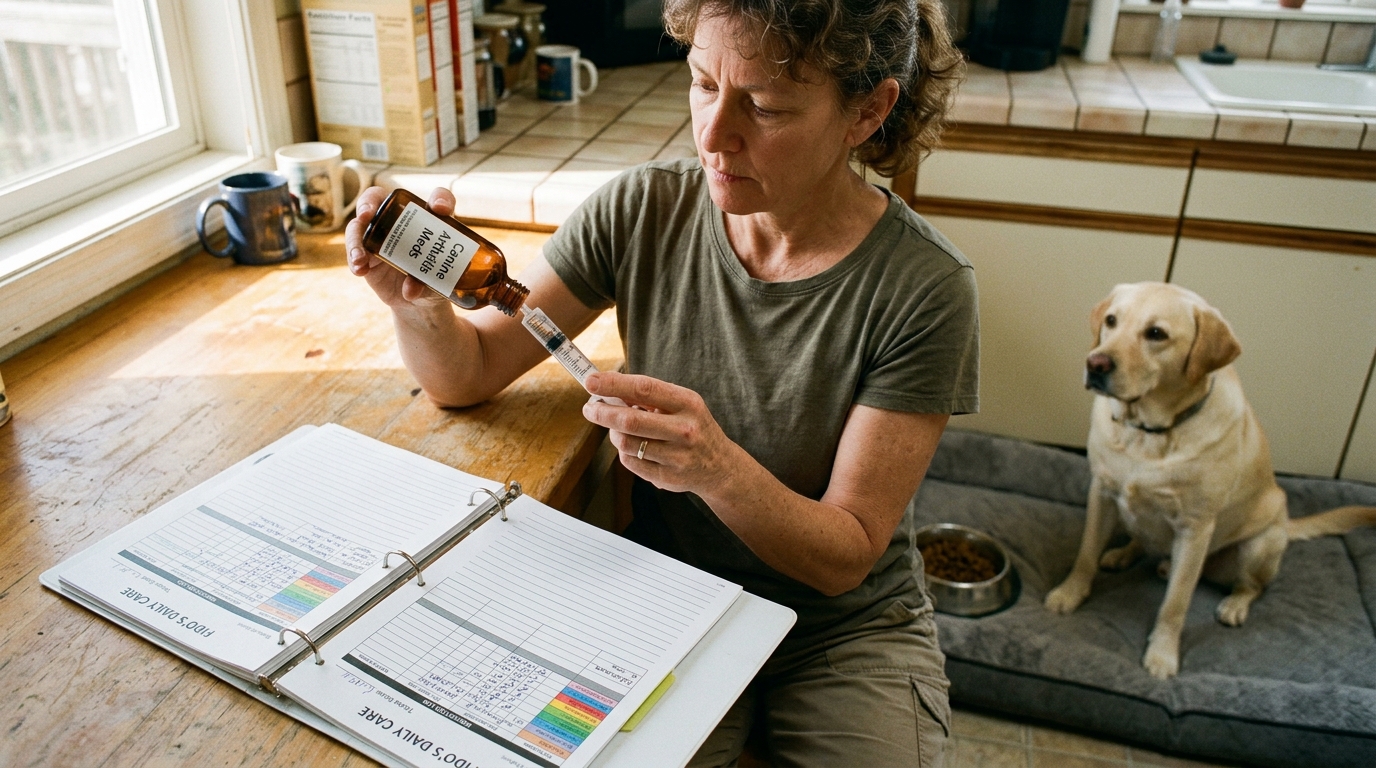
- Single-Caregiver Medication Assignment: Designate exactly one adult family member as the primary pharmaceutical administrator to eliminate dangerous accidental double-dosing in fast-paced households.
- Weekly Pre-Sorted Pill Organizers: Use a labeled 7-day pill organizer box to pre-portion daily morning and evening doses, providing immediate visual verification of whether today’s dose was completed.
- Low-Stress Administration Techniques: Utilize pet-specific moldable pill paste treats, verifying that the entire dose was swallowed rather than covertly dropped or spat behind furniture.
Managing daily prescription medications in a fast-paced, multi-caregiver household presents major pharmacological safety challenges. When schedules overlap and family members juggle morning departures and evening activities, miscommunication frequently results in two dangerous extremes: missed therapeutic doses that allow underlying diseases to rebound, or accidental double-dosing that precipitates acute organ toxicity. Establishing a foolproof household medication protocol ensures consistent therapeutic efficacy while safeguarding companion animals from pharmacological harm.
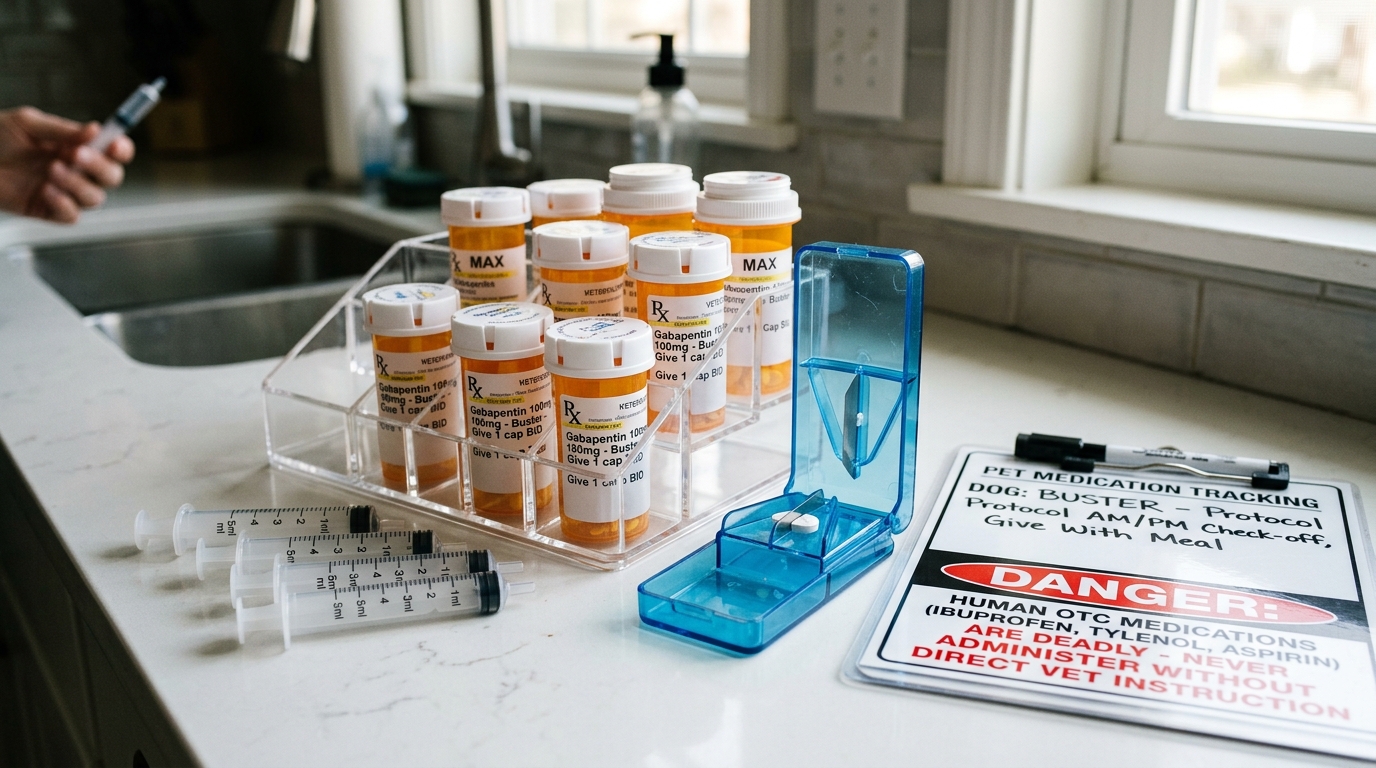
The Centralized Household Medication Station
The most common cause of accidental double-dosing occurs when one family member administers morning medication, and another member repeats the dose thirty minutes later assuming it was forgotten. Eliminating this risk requires centralizing all pet pharmaceuticals at a designated, secure station:
- The Physical Dosing Check-Off Board: Mount a dry-erase dosing board directly above the pet feeding station. The caregiver who administers the medication must immediately initial the morning or evening column upon observing the pet swallow the dose.
- Compartmentalized Pill Organizers: Utilize a day-of-the-week prescription organizer specifically labeled for your pet. If the Tuesday morning compartment is empty, family members know with 100% certainty that the dose was already administered.
- Child- and Pet-Proof Storage: Store all veterinary and human medications in high, latched cabinets. Flavored veterinary chewable tablets contain artificial beef or liver flavorings that entice pets to chew through plastic bottles and ingest lethal quantities.
Core Pharmacological Rules: Timing, Food, and Bioavailability
Pharmaceutical absorption and metabolic clearance depend heavily on strict administration adherence. Review these foundational rules with all family caregivers:
| Dosing Requirement | Clinical Rationale | Household Safety Action |
|---|---|---|
| Rigid Dosing Intervals | Antimicrobials and antiepileptics require consistent serum concentrations above minimum inhibitory thresholds. | Set recurring alarms on family smartphones spaced exactly 12 hours apart (e.g., 7:00 AM and 7:00 PM). |
| Dietary Co-Administration | Certain drugs cause severe gastric ulceration if given on an empty stomach, while others bind to food minerals. | Confirm whether the medication requires a full meal, a small meatball of canned food, or a 1-hour pre-feeding fast. |
| Whole vs Crushed Tablets | Enteric-coated or extended-release tablets lose their pharmacological action and cause stomach burns if crushed. | Never crush tablets, split unscored pills, or dissolve capsules in water without explicit veterinary sign-off. |
Human Over-the-Counter Drugs: Catastrophic Household Toxins
When companion animals show minor discomfort, well-meaning caregivers occasionally consider reaching into the human medicine cabinet. Human over-the-counter medications are lethal to domestic companion animals:
- Acetaminophen (Tylenol): Lethal to felines at any dose, causing severe methemoglobinemia, asphyxiation, and death within hours. Induces acute fatal hepatic necrosis in dogs.
- Ibuprofen & Naproxen (Advil, Aleve): Human non-steroidal anti-inflammatories possess narrow therapeutic margins, rapidly inducing acute renal failure, gastric perforation, and hemorrhagic shock in both cats and dogs.
- Xylitol (Birch Bark Extract / Wood Sugar): Frequently present in human liquid syrups and chewable vitamins. Triggers massive, life-threatening insulin surges in dogs, resulting in severe hypoglycemia and acute liver failure within 30 minutes.
Red-Flag Triage Matrix: Medication Emergencies & Overdoses
Use this objective triage matrix to identify when medication-related symptoms demand emergency clinical action:
| Triage Tier | Clinical Presentation | Required Action Protocol |
|---|---|---|
| Immediate Emergency (0–2 Hours) | Known accidental double-dosing or ingestion of human medications, sudden facial angioedema, tremors, ataxia, unresponsiveness, severe vomiting with blood. | Transport immediately to the nearest veterinary emergency critical care facility. Bring all medication containers and packaging for immediate toxicological dose calculations. |
| Urgent Assessment (12–24 Hours) | Vomiting the dose within 30 minutes of administration, progressive anorexia lasting over 24 hours, persistent black tarry stools (melena), significant behavioral lethargy. | Contact your prescribing veterinary clinic. Do not administer a replacement dose or subsequent scheduled doses until the clinician provides direct instructions. |
| Routine Home Monitoring | Minor brief lip-smacking or drooling following bitter liquid administration, single mild soft stool, minor transient sleepiness after antihistamines. | Offer a teaspoon of veterinary-approved treat to wash down residual bitter taste, verify hydration, and continue logging on your household check-off board. |
Prescription drugs must be administered strictly according to label instructions provided by a licensed veterinarian. Never alter, crush, divide, or discontinue medications without direct veterinary authorization, and never administer companion animal medications to a different species or household cohabitant.
Caregiver Decision Tree: Pharmacotherapy Dilemmas
A caregiver do if two family members accidentally double-dose a prescription medication
Immediately identify the exact medication name, milligram strength, and time of both administrations, then contact your primary veterinary hospital or a dedicated veterinary poison emergency service. Never attempt to induce vomiting with hydrogen peroxide or home remedies unless explicitly instructed by a veterinary toxicologist, as certain compounds cause severe esophageal ulceration or aspiration. Keep the original pharmaceutical container ready so the medical team can rapidly assess organ toxicity thresholds and initiate intravenous fluid therapy or specific counteracting agents if indicated.
Can prescription antibiotic tablets be crushed and mixed into wet food for convenient feeding?
Never crush tablets or open capsules without explicit veterinary approval. Certain medications (such as amoxicillin-clavulanic acid or doxycycline) possess bitter chemical coatings that pets detect immediately, causing food aversion and incomplete dosing; others are formulated with enteric coatings or extended-release matrices that degrade unpredictably when crushed. Furthermore, crushing doxycycline carries an esophageal stricture hazard in felines if not followed by liquid. Always ask the pharmacy team whether a chewable treat formulation or compounded flavored liquid is available.
Frequently Asked Questions
What should pet owners do if a scheduled medication dose is missed or vomited?
Always contact your veterinary clinic before re-administering. If a dose is vomited within 10 to 15 minutes and the intact tablet is visible, a veterinarian may advise re-dosing; if hours have passed, replacing the dose can cause accidental overdose. Never double up on subsequent doses.
Are human over-the-counter pain medications safe for dogs and cats?
No. Human pain relievers like ibuprofen, naproxen, and acetaminophen are highly toxic to companion animals, causing severe stomach ulcers, acute kidney injury, liver necrosis, and fatal blood disorders. Only use analgesics prescribed specifically by your veterinarian.
How should pet medications be stored to maintain their stability and effectiveness?
Store solid tablets in their original child-proof amber containers in a cool, dry area away from bathroom steam. Liquid antibiotic suspensions and biologicals must be kept refrigerated between 2 and 8 degrees Celsius and discarded after the labeled date.
Caregiver Medication Administration Checklist
- Confirm the drug name, exact concentration, and dosing interval with the veterinary technician before departing.
- Keep an updated digital or written list of all active medications, start dates, and intended course durations.
- Store all medications securely in high cabinets to prevent accidental ingestion by curious pets or children.
- Use smartphone timers to keep dosing schedules consistent and maintain stable therapeutic blood concentrations.
- Notify your veterinarian promptly if your pet develops vomiting, diarrhea, or appetite loss after starting a medication.
Sources
- Principles of Veterinary Pharmacology. Merck Veterinary Manual.
- Animal Poison Control Center Guidelines. ASPCA APCC.
- Medication Safety for Companion Animals. US Food and Drug Administration.
Printable tools
Download the matching worksheet
Source transparency
Reference mix for this guide
Source labels describe the type of organization behind each reference; they are not a claim that any outside organization reviewed this article.
- Principles of Veterinary Pharmacology Veterinary organization · merckvetmanual.com
- Animal Poison Control Center Guidelines Animal welfare nonprofit · aspca.org
- Medication Safety for Companion Animals Government or public agency · fda.gov