This guide is general education for pet owners. If your pet has urgent symptoms, possible poisoning, injury, breathing trouble, collapse, severe pain, or sudden decline, contact a licensed veterinarian or local emergency service.
Editorial standard
How this guide was prepared
This timeline charting guide provides structured clinical documentation frameworks to assist veterinary diagnostic evaluations. If your newly adopted pet experiences severe respiratory distress, unresponsiveness, acute collapse, prolonged seizures, or complete urethral blockage, transport them immediately to an emergency veterinary hospital.
- The 3-3-3 Decompression Timeline: Frame health and behavioral observations within the standard adoption recovery framework: 3 days to decompress, 3 weeks to establish routines, and 3 months to develop full confidence.
- Objective Baseline Vital Metrics: Maintain an objective daily symptom log recording sleeping resting respiratory rate (normal: 15–30 breaths/min), daily water consumption (50–60 milliliters per kilogram per day), and fecal consistency scoring.
- Short Video Capture for Episodic Events: Record 10- to 15-second clear smartphone videos of unusual postures, gait lameness, coughing, or reverse sneezing to show the veterinarian, bypassing the difficulty of reproducing episodic signs in-clinic.
When an adopted pet enters a new household, physiological and behavioral stress frequently obscures early signs of underlying disease. Shelters and foster environments carry variable incubation periods for infectious pathogens, while environmental transitions alter drinking, feeding, and elimination baselines. For new caregivers, constructing an objective, timestamped symptom timeline provides clinical teams with actionable diagnostic evidence rather than subjective impressions.

Establish Objective Baseline Parameters
Rather than recording vague descriptions such as “acting lethargic” or “drinking less,” veterinary teams require reproducible physical observations. Train yourself to monitor and quantify three vital physiological baselines:
- Hydration and Skin Turgor Elasticity: Gently lift the skin over your pet’s shoulder blades and release it. In a well-hydrated animal, the skin snaps back immediately in under 1 second. A persistent “tent” taking 2 to 4 seconds to flatten indicates 6% to 8% dehydration. Severe skin tenting exceeding 4 seconds alongside dry, tacky gums signals critical hypovolemia (> 10% dehydration).
- Capillary Refill Time (CRT): Press a clean fingertip firmly against your pet’s pink gingival tissue (gum) above the canine tooth and release. The blanched white spot should return to normal healthy pink in under 2 seconds. A CRT exceeding 2.5 seconds or pale, grayish gums indicates poor peripheral tissue perfusion or shock.
- Sleeping Respiratory Rate (SRR): When your pet is in a state of calm, quiet sleep (not actively dreaming or twitching), count the number of full chest rises (inhalations) and falls (exhalations) over 60 seconds. Normal canine and feline sleeping respiratory rates are consistently below 30 breaths per minute.
- Standardized Fecal Consistency Scoring: Record elimination using the veterinary fecal score scale: Grade 1 (very hard, dry pellets), Grade 2 (firm, segmented, well-formed stool), Grade 3–4 (moist, softer logs), Grade 5–6 (very soft, unformed puddles with mucus), and Grade 7 (watery diarrhea with no solid texture).
The Feline Anorexia Crisis: Hepatic Lipidosis Warning
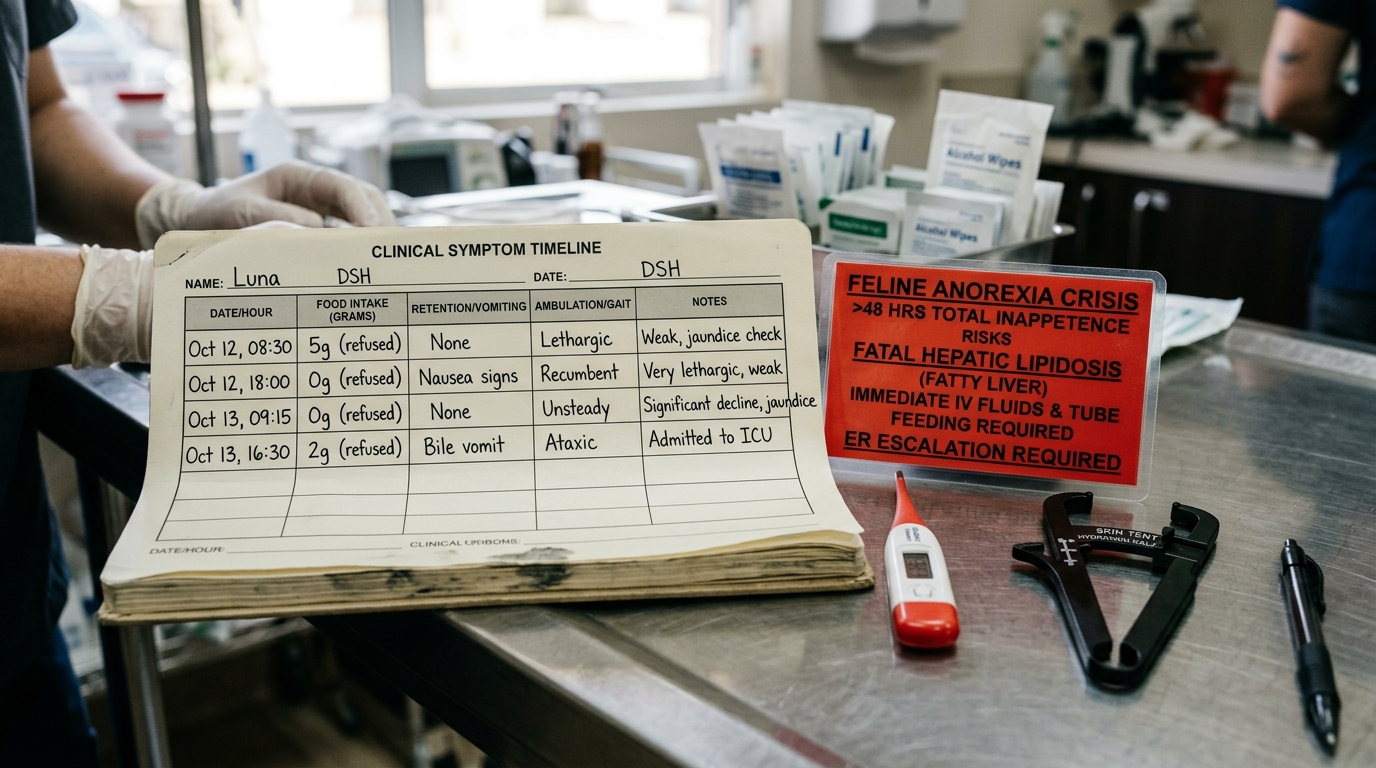
In feline medicine, nutritional timelines carry unique biological urgency due to feline liver metabolism. Unlike humans or canines, domestic felines are obligate carnivores with specialized protein and amino acid processing pathways. When an overweight or stressed adult cat experiences complete anorexia (zero caloric intake) for 48 to 72 hours, their endocrine system triggers rapid mobilization of peripheral adipose stores to the liver.
Because the feline liver is poorly adapted to process massive free fatty acid influxes without adequate dietary protein, excess triglycerides accumulate within hepatocytes. This results in feline hepatic lipidosis (fatty liver syndrome)—a life-threatening condition characterized by jaundice (icterus), acute liver failure, and severe hepatic encephalopathy. A cat that has eaten nothing for 48 hours requires immediate veterinary medical intervention, regardless of whether other symptoms are apparent.
Standardized Clinical Timeline Log Structure
Organize your medical journal into structured chronological columns to present directly to your attending clinician:
| Date & Timestamp | Observed Clinical Sign | Objective Measurement & Context | Progression & Environmental Factors |
|---|---|---|---|
| 08:15 AM (Day 1) | Reduced food intake | Ate 10g dry kibble of 50g offered; refused wet food. Gums moist, CRT < 2s. | First full morning in novel household environment; no vomiting observed. |
| 02:30 PM (Day 1) | Sleeping Respiratory Rate | Measured 22 breaths per minute during deep sleep over a full 60-second count. | Chest excursions symmetrical; no abdominal effort or audible wheezing. |
| 07:00 PM (Day 1) | Gastrointestinal elimination | Passed single Grade 5 stool (soft, unformed, yellow-tinged) with mild straining. | No fresh blood (hematochezia) or black tarry stool (melena) noted. |
| 09:00 AM (Day 2) | Persistent anorexia | Zero intake of dry or wet food for 24 continuous hours. Skin tent snaps in 1s. | Water intake confirmed via measured bowl (drank approximately 80 mL). |
Red-Flag Triage Matrix: Clinical Symptoms in Newly Adopted Pets
Use this objective triage matrix to determine when note-taking must immediately yield to emergency transport:
| Triage Level | Clinical Manifestations | Required Action Protocol |
|---|---|---|
| Immediate Emergency (0–2 Hours) | Respiratory distress (open-mouth breathing in cats, abdominal pumping, SRR > 40 bpm), cyanotic (blue) or white gums, CRT > 3s, male cat straining in litter box without producing urine (urethral obstruction), continuous vomiting exceeding 3 episodes in 6 hours, severe sudden ataxia or collapse. | Transport immediately to the nearest veterinary emergency critical care facility. Do not pause to log notes or attempt home rehydration remedies. |
| Urgent Assessment (12–24 Hours) | Complete food refusal exceeding 24–48 hours (especially in felines), persistent Grade 6–7 diarrhea exceeding 24 hours, fever exceeding 103.5°F (39.7°C), progressive lethargy with reluctant ambulation, persistent coughing, eye swelling with purulent yellow discharge. | Schedule a same-day urgent clinical appointment with your primary veterinarian. Bring your structured timeline and a fresh stool sample collected within 4 hours. |
| Routine Home Monitoring | Single isolated episode of vomiting hair or grass with immediate return to normal energy and appetite, mild hesitation eating initial meal after arrival, transient soft stool (Grade 3–4) during dietary transition. | Maintain a consistent feeding schedule, avoid dietary treats, monitor water intake, and record all entries in your symptom log. |
A symptom timeline provides diagnostic context for a veterinary healthcare team; it is never a substitute for professional physical examination, diagnostic bloodwork, or imaging. Never administer human antidiarrheal medications, antacids, or analgesics to companion animals without explicit veterinary prescription.
Frequently Asked Questions
What specific clinical information should be recorded in a pet symptom log?
Note exact dates, times, duration of episodes, descriptions of vomit or stool, behavioral posture, changes in water and food consumption, and brief smartphone video clips of coughing, limping, or tremors.
When does an observed symptom require immediate emergency veterinary evaluation?
Symptoms such as pale or blue gums, extreme lethargy, continuous unassisted vomiting, respiratory distress, abdominal distension, or inability to urinate require immediate emergency care rather than ongoing home logging.
How does maintaining an objective symptom journal assist the veterinary clinical team?
A detailed chronological timeline removes guesswork, identifies disease progression patterns, correlates signs with environmental triggers, and helps veterinarians select targeted diagnostic tests without unnecessary expense.
Caregiver Symptom Documentation Checklist
- Record exact times, duration, and frequency of every vomiting, coughing, or abnormal episode.
- Capture 15 to 30-second videos of unusual gaits, breathing patterns, or tremors to show the clinician.
- Grade stool consistency using the 1 to 7 fecal chart and note any presence of fresh blood or dark melena.
- Track water bowl intake and percentage of normal meal portions consumed across each 24-hour cycle.
- Bring your written or digital log directly to the veterinary examination to assist clinical diagnosis.
Sources
- . American Animal Hospital Association and American Association of Feline Practitioners.
- Clinically Important Abnormalities in Cats Perceived as Healthy by Owners. Journal of the American Veterinary Medical Association (JAVMA).
- Feline Hepatic Lipidosis Overview. Merck Veterinary Manual.
Printable tools
Download the matching worksheet
Source transparency
Reference mix for this guide
Source labels describe the type of organization behind each reference; they are not a claim that any outside organization reviewed this article.
- . American Animal Hospital Association and American Association of Feline Practitioners.Clinically Important Abnormalities in Cats Perceived as Healthy by Owners Veterinary organization · aaha.org
- Feline Hepatic Lipidosis Overview Reference source · merckvetmanual.com