
This guide is general education for pet owners. If your pet has urgent symptoms, possible poisoning, injury, breathing trouble, collapse, severe pain, or sudden decline, contact a licensed veterinarian or local emergency service.
Dosages must be calculated by a licensed veterinarian based on species, weight, and bloodwork. Never administer human medications or self-adjust prescription doses for pets.
Editorial standard
How this guide was prepared
When a dog or cat demonstrates sudden subtle behavioral shifts, lethargy, or loss of appetite, pet owners frequently struggle to answer a fundamental clinical question: is my pet experiencing an acute physiological crisis, or simply having an off day? While subjective impressions like “she seems unusually tired” provide useful context, veterinary clinicians rely on objective biological metrics known as vital signs to evaluate systemic stability. Learning how to safely measure your pet’s baseline body temperature, resting pulse rate, respiratory frequency, and capillary refill time at home provides actionable clinical data that helps you distinguish harmless variations from urgent medical emergencies.
Clinical Quick Answer & Immediate Actions
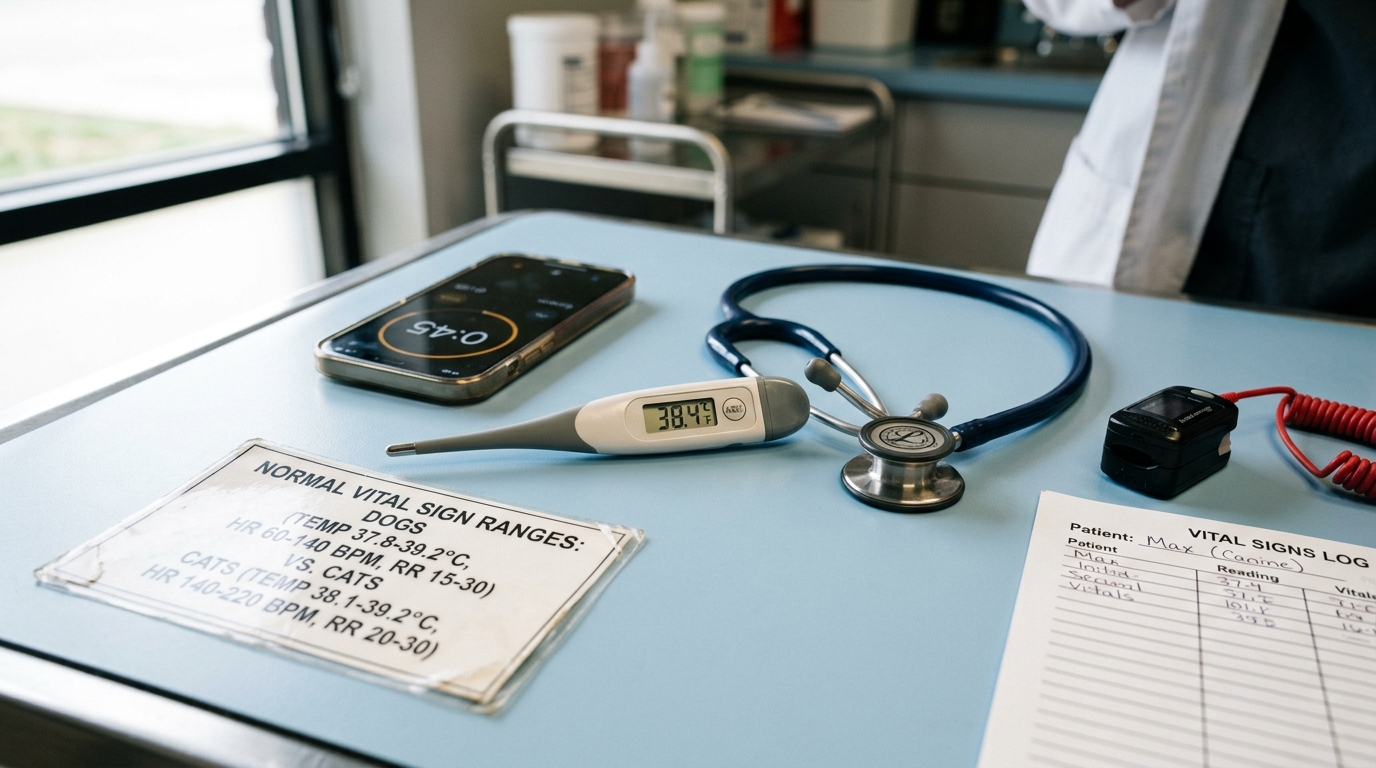
Checking your pet’s core vital signs provides quantitative data during health assessments. Normal adult parameters: rectal temperature 100.0°F–102.5°F (37.8°C–39.2°C); pulse rate 60–140 bpm in dogs and 140–220 bpm in cats; resting breathing 15–30 breaths/min; and capillary refill time under 2 seconds across moist pink gums.
Checking vital signs is not about self-diagnosing complex internal illnesses or replacing professional medical equipment. Rather, it equips caregivers with the objective skills to identify physiological decompensation early, triage symptoms accurately during after-hours telephone consultations, and provide vital baseline numbers to emergency veterinary hospital staff.
Normal Vital Sign Reference Ranges: Dogs vs. Cats
Veterinary emergency clinicians utilize standardized baseline ranges to evaluate systemic stability:
| Vital Sign Metric | Normal Canine Reference Range | Normal Feline Reference Range | Clinical Significance & Warning Markers |
|---|---|---|---|
| Body Temperature | 100.0°F to 102.5°F (37.8°C – 39.2°C) | 100.0°F to 102.5°F (37.8°C – 39.2°C) | >103.5°F = Fever / Heatstroke; >105°F = Brain damage risk; <99°F = Hypothermia / Sepsis shock. |
| Resting Heart / Pulse Rate | 60–100 bpm (Large); 100–140 bpm (Small) | 140–220 beats per minute (bpm) | Tachycardia indicates severe pain, dehydration, or heart failure; Bradycardia in cats (<140) indicates critical shock. |
| Sleeping Respiratory Rate (SRR) | 15–25 breaths per minute (<30 bpm) | 15–25 breaths per minute (<30 bpm) | >35–40 bpm at rest indicates pulmonary edema, congestive heart failure, or feline asthma. |
| Capillary Refill Time (CRT) | Under 1.5 to 2.0 seconds | Under 1.5 to 2.0 seconds | >2 seconds indicates hypovolemia, peripheral vasoconstriction, or cardiovascular decompensation. |
Step-by-Step Guide to Measuring Pet Vital Signs
Perform these measurements when your pet is relaxed in a quiet room:
- 1. Taking Body Temperature: Use a fast-reading digital thermometer with a flexible tip labeled for pet use. Apply a generous dab of water-soluble lubricant (K-Y jelly or petroleum jelly). Have a helper gently hold your pet’s head and torso. Gently insert the thermometer 1 inch (2.5 cm) into the rectum, keeping it parallel to the spine. Wait for the digital beep, withdraw gently, and wipe clean with alcohol. Clinical Note: Never force the thermometer; if your pet struggles or resists, stop immediately to prevent rectal tears. Ear thermometers are clinically unreliable in animals due to angled ear canals.
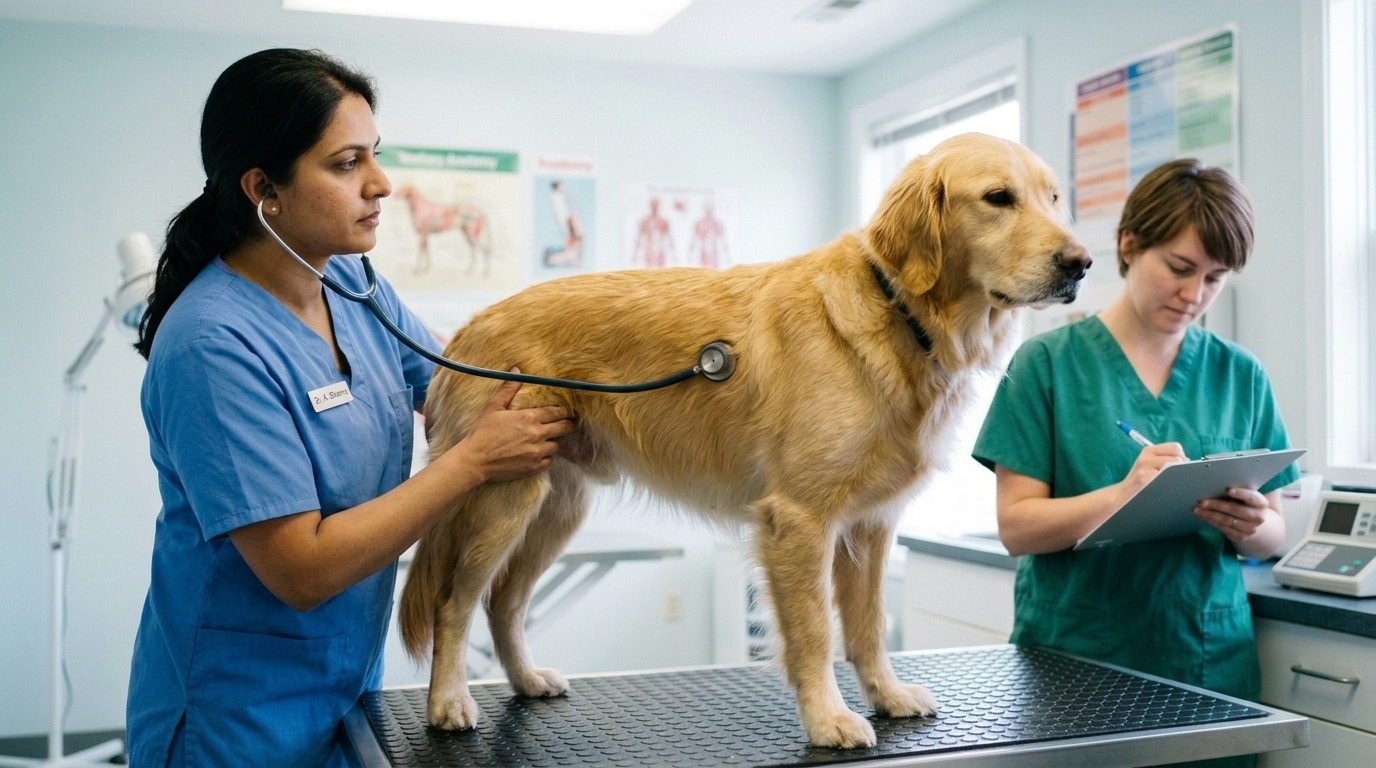
- 2. Feeling the Femoral Pulse: Place your index and middle fingers on the inside of your pet’s rear thigh, high up in the groin crease where the hind leg meets the body. Feel for the pulsating femoral artery against the femur bone. Count the beats for 15 seconds and multiply by 4 to calculate beats per minute (bpm).
- 3. Counting Sleeping Respiratory Rate: When your pet is in a deep, peaceful sleep, count the rise and fall of the chest wall as one single breath over 30 seconds, then multiply by 2. Review our full guide on measuring sleeping respiratory rate.
- 4. Inspecting Gums & Capillary Refill: Lift the upper lip to confirm healthy bubblegum pink mucous membranes. Press your finger against the gum for two seconds to blanch it white, release, and confirm the pink color returns in under two seconds. Review our home dehydration check guide.
Documenting Baseline Vitals for Veterinary Records
Healthy pets demonstrate individual physiological baselines. Measure your dog or cat’s resting vital signs twice when they are completely healthy and relaxed at home:
- Log the resting heart rate and temperature in your pet’s medical record notebook. Having an individual baseline (e.g. knowing your Labrador normally runs 68 bpm) makes it instantly obvious when an illness causes an elevated pulse of 120 bpm.
- Combine vital sign tracking with our printable Daily Pet Care Routine Tracker and our Vet Visit Prep Sheet before scheduling clinical exams.
When to Contact a Veterinarian Immediately
Vital signs provide clear, objective red flags that demand immediate emergency intervention. Seek immediate emergency veterinary clinic care if your pet’s body temperature rises above 104°F (40°C) or drops below 99°F (37.2°C), if a cat’s resting heart rate drops below 140 bpm, if gums appear white, bluish, or jaundiced yellow, if your pet exhibits open-mouth breathing or laboured abdominal pumping, or if your pet collapses and cannot stand. Call the emergency hospital while en route so the veterinary trauma team can prepare oxygen support and intravenous catheters.
Clinical Practice Tool: Veterinary Visit Preparation Sheet
Log temperature, pulse, and respiration vital trends systematically with our clinical Veterinary Visit Preparation Sheet. Download and print your copy of the Veterinary Visit Preparation Sheet, or explore all practical pet care guides in the NewsPet Resource Center.
Frequently Asked Questions
What are the normal baseline vital sign ranges for healthy adult dogs and cats?
Normal body temperature is 100.0°F to 102.5°F (37.8°C to 39.2°C). Heart rates range from 60 to 140 bpm for dogs (size dependent) and 140 to 220 bpm for cats. Sleeping respiratory rates should remain under 30 breaths per minute.
How can caregivers take an accurate resting pulse on a dog or cat?
Place two fingers gently along the inner thigh in the femoral crease (femoral artery). Count the pulses for 15 seconds and multiply by 4 to calculate beats per minute.
What visual changes in gum color indicate an acute circulatory emergency?
Pale or porcelain-white gums indicate severe blood loss, anemia, or circulatory shock. Blue or purple gums indicate hypoxia (lack of oxygen). Bright brick-red gums indicate severe sepsis or heatstroke.
Emergency Triage Matrix: Clinical Presentation & Required Response
| Triage Level | Clinical Signs & Presentation | Immediate Action Protocol |
|---|---|---|
| Tier 1: Immediate Emergency (0–2 Hours) | Rectal temp < 99.0°F (37.2°C) or > 104.5°F (40.3°C); heart rate < 50 or > 180 bpm in dogs (< 100 or > 240 bpm in cats); capillary refill time > 3 seconds with pale white, muddy, or brick-red gums. | Immediate emergency room transport; patient is in severe shock, hypothermia, sepsis, or decompensated circulatory failure. |
| Tier 2: Urgent Veterinary Care (Same-Day) | Temperature 103.0°F–104.0°F accompanied by lethargy, weak or bounding femoral pulse quality, CRT between 2 and 3 seconds with tacky gums. | Schedule same-day veterinary physical examination and diagnostic blood panel; do not administer antipyretic medications at home. |
| Tier 3: Normal Physiological Baseline | Rectal temperature 100.0°F–102.5°F, resting heart and respiration rates within breed-normal ranges, gums bubblegum pink, CRT < 2 seconds. | Log baseline values in your pet’s health records; re-check quarterly or during routine calm home grooming sessions. |
Rule S1 Boundaries & Vital Sign Contraindications
Inaccurate technique and human medication use during vital sign checks present significant clinical hazards:
- NEVER use glass mercury thermometers: Sudden animal movement can fracture rigid glass within the rectum, causing severe internal lacerations and toxic elemental mercury exposure.
- NEVER administer human fever reducers: Acetaminophen causes fatal acute liver failure and cyanosis in cats; ibuprofen, aspirin, and naproxen cause acute renal shutdown and bleeding gastric ulcers in dogs.
- NEVER compress both femoral arteries simultaneously: Palpating bilateral femoral pulses at the same time restricts arterial blood flow to both pelvic limbs, inducing discomfort and inaccurate readings.
- NEVER rely on nose wetness as a measure of body temperature: Nasal moisture reflects ambient humidity and grooming behavior; a warm or dry nose has zero statistical correlation with internal body temperature.
Caregiver Vital Signs Clinical Tool Checklist
- Digital Rectal Thermometer: dedicated flexible-tip thermometer labeled for animal use with petroleum jelly or water-soluble lubricant.
- Pulse Check: palpate the inner groin crease (femoral triangle); count beats for 15 seconds and multiply by 4 to calculate beats per minute.
- Mucous Membrane Inspection: lift upper lip to observe gum color (healthy gums are bubblegum pink, not white, blue, yellow, or deep red).
- Capillary Refill Time (CRT): press thumb firmly against the upper gum for 1 second; blanching must disappear and pink color must return in under 2 seconds.
- Breathing Count: observe chest expansion during calm rest; record breaths per minute and note any abdominal effort.
Related Clinical Guides & Tools
Peer-Reviewed Clinical References & Evidence Grounding
- PMID: 33769611: International veterinary canine dyskinesia task force ECVN consensus statement: Terminology and classification (J Vet Intern Med, 2021) (opens in new tab)
- PMID: 38351524: Defining sepsis in small animals (J Vet Emerg Crit Care (San Antonio), 2024) (opens in new tab)
- PMID: 38474142: Canine Mammary Tumors: Classification, Biomarkers, Traditional and Personalized Therapies (Int J Mol Sci, 2024) (opens in new tab)
- Merck Veterinary Manual — Exotic, Aquatic, and Companion Animal Clinical Reference (opens in new tab)
Source transparency
Reference mix for this guide
Source labels classify the institutional category of the references cited above.