
This guide is general education for pet owners. If your pet has urgent symptoms, possible poisoning, injury, breathing trouble, collapse, severe pain, or sudden decline, contact a licensed veterinarian or local emergency service.
Dosages must be calculated by a licensed veterinarian based on species, weight, and bloodwork. Never administer human medications or self-adjust prescription doses for pets.
Editorial standard
How this guide was prepared
This clinical guide outlines vaccination coordination, immunology, and biosecurity protocols for multi-pet households under World Small Animal Veterinary Association (WSAVA) vaccination guidelines. If an animal exhibits facial swelling, hives, collapse, or violent vomiting following vaccination, proceed immediately to an emergency veterinary clinic.
- Mandatory 10- to 14-Day Quarantine: Isolate newly adopted or foster animals in a separate room for 10–14 days before introducing them to resident pets, ensuring potential shelter respiratory pathogens or parvovirus clear incubation.
- Synchronized Core Herd Immunity: Ensure all cohabitating dogs and cats maintain current Rabies and core panleukopenia/distemper/parvovirus vaccinations to prevent household viral amplification.
- Risk-Based Non-Core Protection: If one household dog visits dog daycares, boarding kennels, or training classes, immunize all cohabitating canine housemates against kennel cough (Bordetella) and canine influenza.
Coordinating vaccination protocols across a multi-pet household presents complex immunological and biosecurity challenges for caregivers. When dogs and cats of varying ages, immune competencies, and lifestyle exposure profiles share communal water bowls, bedding, and indoor territory, vaccine decisions cannot occur in isolation. An unvaccinated puppy or an immunosuppressed senior cat alters the epidemiological balance of the entire home. Implementing a structured multi-pet vaccination framework safeguards individual companions while preserving robust herd immunity under one roof.
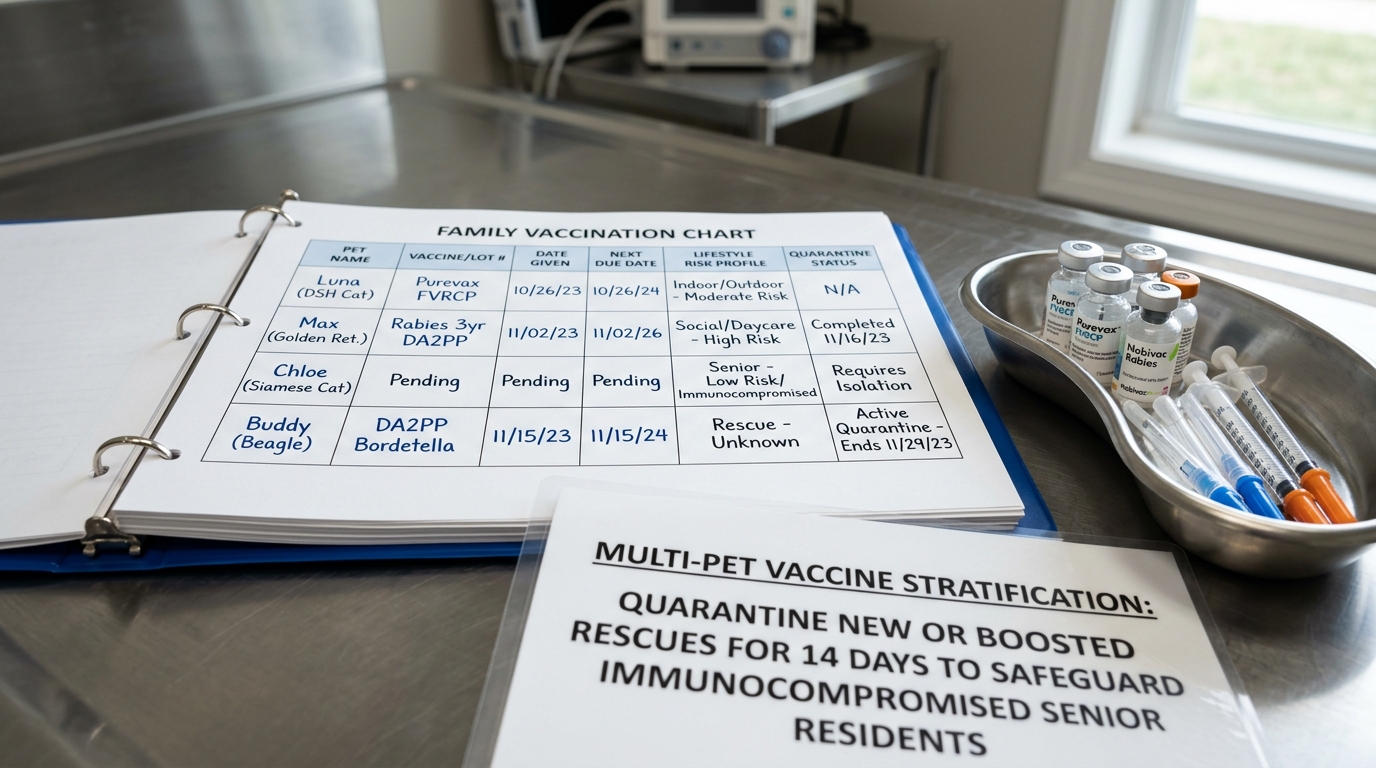
Multi-Pet Risk Stratification: Core vs Lifestyle Boosters
Veterinary immunology divides immunizations into core vaccines (essential for all animals regardless of lifestyle) and non-core or lifestyle vaccines (selected based on specific geographic and cohabitation exposure vectors):
- Canine Core Regimens: Rabies, Canine Parvovirus (CPV-2), Canine Distemper Virus (CDV), and Canine Adenovirus (CAV-1/CAV-2). In multi-dog homes, high transmission density demands strict adherence to triennial core booster intervals following complete puppy series.
- Feline Core Regimens: Rabies, Feline Panleukopenia (FPV), Feline Viral Rhinotracheitis (FHV-1), and Feline Calicivirus (FCV). Even indoor-only cats in multi-pet homes require core immunity, as cohabitating canine siblings can mechanically track viral fomites indoors on coats and paws.
- Cross-Species Lifestyle Antigens: Dogs exposed to outdoor wooded trails, boarding kennels, or training facilities require non-core protection against Bordetella bronchiseptica, Canine Influenza (H3N2/H3N8), and Leptospira interrogans. Leptospirosis represents a critical zoonotic bacterial threat capable of infecting dogs, wild rodents, and human family members alike.
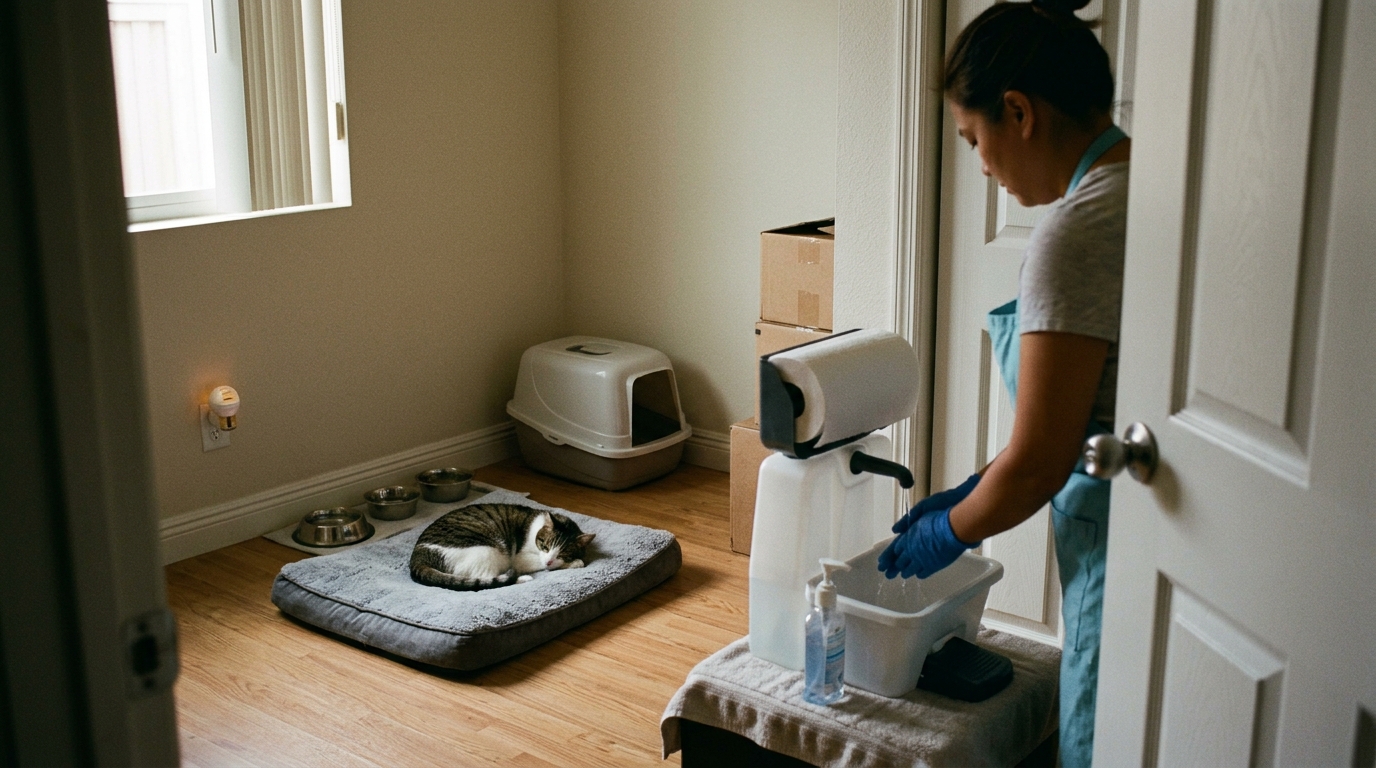
Biosecurity Protocols: Integrating New or Boosted Pets
Introducing a newly adopted pet or managing an animal following modified-live vaccine administration demands clear household biosecurity boundaries:
| Immunological Phase | Multi-Pet Biological Risk | Mandatory Household Protocol |
|---|---|---|
| New Adopter Quarantine | Occult shedding of upper respiratory pathogens (canine infectious respiratory complex, feline herpesvirus) or parvovirus. | Enforce strict physical isolation in a separate room for 10 to 14 days; wash hands and change clothes before tending resident pets. |
| Puppy / Kitten Series | Maternal antibody interference creates vulnerable windows between booster intervals (weeks 6 through 16). | Prohibit access to communal outdoor soil or unvaccinated neighborhood animals until 2 weeks after the final 16-week booster. |
| Modified Live Shedding | Intranasal vaccines may shed vaccine-strain organisms in nasal secretions for several days post-inoculation. | Temporarily separate inoculated animals from severely immunocompromised or geriatric housemates receiving immunosuppressive therapy. |
Coordinated Record Keeping for Multi-Animal Families
Tracking disparate booster due dates across multiple animals frequently leads to missed revaccinations or scramble appointments. Create a centralized multi-pet medical portfolio:
Consolidate physical rabies certificates, microchip registration documents, and serum antibody titer test results into color-coded family folders or synchronized digital health profiles. Inquire whether your veterinary hospital offers bundled multi-pet examination slots, enabling simultaneous physical exams that streamline travel logistics and minimize household scheduling disruption.
Red-Flag Triage Matrix: Adverse Post-Vaccine Reactions
Use this objective triage matrix to distinguish expected mild vaccine lethargy from acute immunological emergencies:
| Triage Tier | Clinical Presentation | Required Action Protocol |
|---|---|---|
| Immediate Emergency (0–2 Hours) | Acute facial angioedema (swollen muzzle or eyes), generalized hives (urticaria), sudden collapse or pale gums within 60 minutes, persistent vomiting, severe dyspnea. | Transport immediately to the nearest veterinary emergency critical care facility for emergency antihistamine and epinephrine therapy. Call ahead in transit. |
| Urgent Assessment (12–24 Hours) | Focal painful swelling at injection site enlarging after 24 hours, persistent high fever above 103.5°F (39.7°C), marked anorexia extending past day one. | Contact your primary veterinarian for evaluation. Document the specific anatomical injection location and vaccine manufacturer batch lot. |
| Routine Home Monitoring | Mild localized tenderness when touched at injection site, slight low-energy drowsiness on post-vaccination evening, minor temporary decrease in appetite. | Provide quiet bedding, ensure clean water is accessible, and monitor temperature. Symptoms should resolve spontaneously within 24 to 36 hours. |
Vaccination schedules and antigen selections must be customized by a licensed veterinarian based on individual immune status, regional disease prevalence, and household lifestyle exposure. Never administer companion animal vaccines at home without professional oversight, and never give human medications to alleviate post-vaccine soreness.
Caregiver Decision Tree: Multi-Pet Immunization Dilemmas
How long should a newly vaccinated puppy or kitten remain separated from adult resident pets?
Newly vaccinated juvenile animals should maintain physical separation from resident pets for at least 7 to 14 days following their initial core booster, particularly if resident animals have outdoor access or unverified antibody titers. Vaccines stimulate active humoral and cell-mediated immunity gradually over two weeks; immediate exposure to high household pathogen loads overwhelms developing immune reserves. Furthermore, juvenile immune systems under active vaccine challenge benefit from calm, stress-free environments that prevent immunosuppressive cortisol spikes.
Can household pets transmit vaccine-strain pathogens to one another after modified-live vaccination?
Core modified-live viral vaccines (such as canine DAP/DHPP and feline FVRCP) are attenuated so they stimulate protective immune memory without causing clinical disease or significant shed risk. However, certain mucosal vaccines (such as intranasal or oral Bordetella bronchiseptica) can shed attenuated bacteria in nasal secretions for several days post-administration. While harmless to healthy immunocompetent animals, keeping vaccinated pets from sharing communal water bowls for 48 hours protects severely immunocompromised, elderly, or chemotherapy-receiving housemates.
Frequently Asked Questions
What is the difference between core and non-core lifestyle vaccinations?
Core vaccinations (such as Rabies and DHPP for dogs, or Rabies and FVRCP for cats) protect against highly contagious, fatal diseases universal to all companion animals. Non-core vaccinations (such as Leptospirosis, Bordetella, Lyme, or FeLV) are recommended based on specific regional prevalence, boarding frequency, or outdoor wildlife exposure.
What post-vaccination symptoms are normal versus life-threatening emergencies?
Mild fatigue, temporary decreased appetite, and localized soreness at the injection site lasting 12 to 24 hours are normal physiological immune responses. Facial swelling, persistent hives, acute vomiting, collapse, or labored breathing indicate severe anaphylaxis requiring immediate emergency veterinary care.
Can vaccinations be safely administered if a pet has an unknown immunization history?
Yes. Veterinarians treat animals with unknown or unverifiable vaccination histories as naive, initiating core series or using antibody titer blood tests to confirm immunity before establishing standard booster intervals.
Caregiver Vaccination Safety and Post-Care Checklist
- Verify documented vaccination dates and lot numbers with your veterinarian before administering repeat doses.
- Observe your pet closely for 2 hours post-vaccination for facial puffiness, hives, or breathing changes.
- Provide a quiet, comfortable recovery area free from rough play, dog parks, or strenuous exercise for 24 hours.
- Monitor the injection site for minor swelling; alert your clinic if a firm nodule persists past 3 weeks.
- Never administer human over-the-counter pain relievers for post-vaccine soreness; human NSAIDs are toxic to pets.
Sources
- WSAVA Vaccination Guidelines for Dogs and Cats. World Small Animal Veterinary Association.
- AAHA Canine Vaccination Guidelines. American Animal Hospital Association.
- AAFP Feline Vaccination Advisory Guidelines. American Association of Feline Practitioners.
Printable tools
Download the matching worksheet
Source transparency
Reference mix for this guide
Source labels describe the type of organization behind each reference; they are not a claim that any outside organization reviewed this article.
- WSAVA Vaccination Guidelines for Dogs and Cats Veterinary organization · wsava.org
- AAHA Canine Vaccination Guidelines Veterinary organization · aaha.org
- AAFP Feline Vaccination Advisory Guidelines Veterinary organization · catvets.com

