This guide is general education for pet owners. If your pet has urgent symptoms, possible poisoning, injury, breathing trouble, collapse, severe pain, or sudden decline, contact a licensed veterinarian or local emergency service.
Editorial standard
How this guide was prepared
Maintaining lower urinary tract health in a multi-pet home demands active surveillance and environmental engineering. When multiple companion animals share indoor territory, social dynamics, subtle resource guarding, and territorial stress heavily influence urinary physiology. In domestic cats, stress-induced feline idiopathic cystitis (FIC) and acute urethral obstruction represent life-threatening clinical crises. For households managing multiple dogs and cats, establishing proactive bathroom routines and systematic monitoring safeguards animals against painful inflammation and fatal urinary blockages.
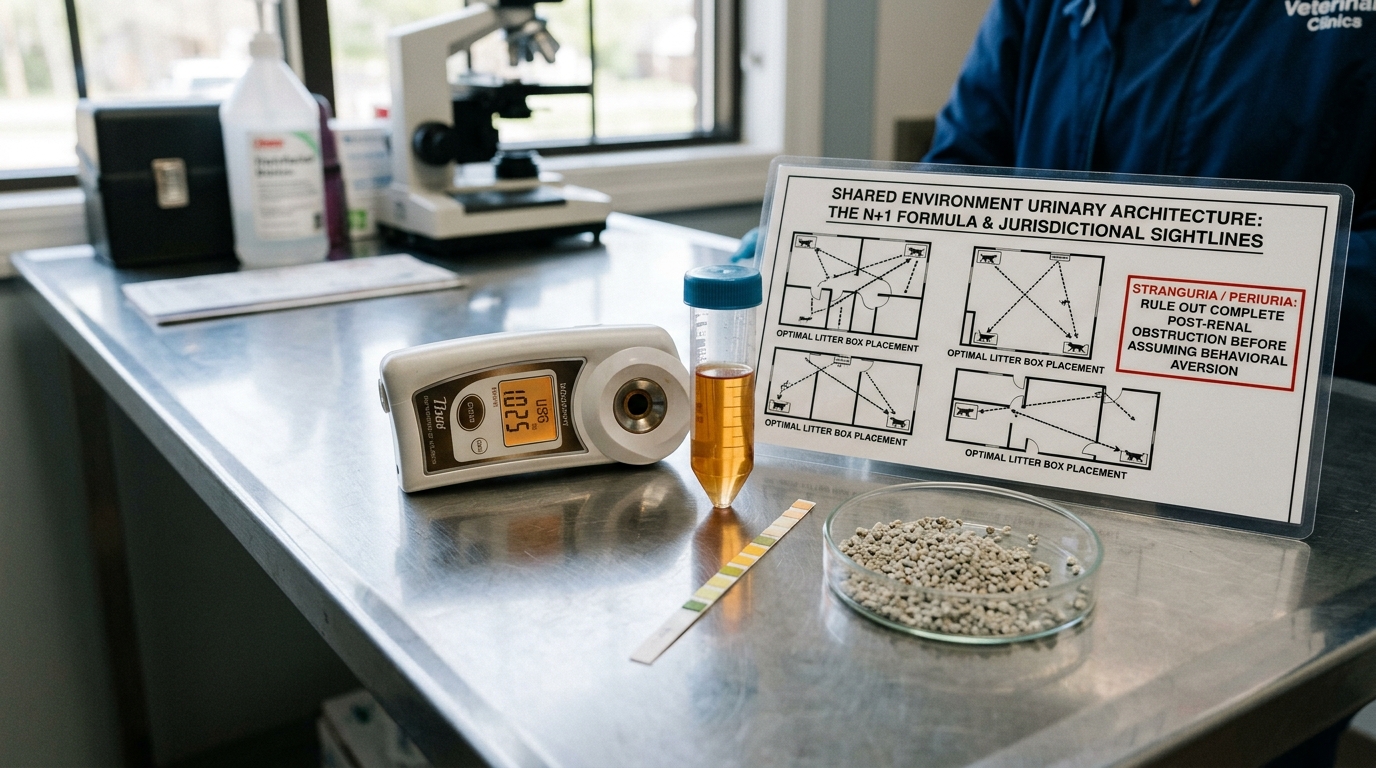
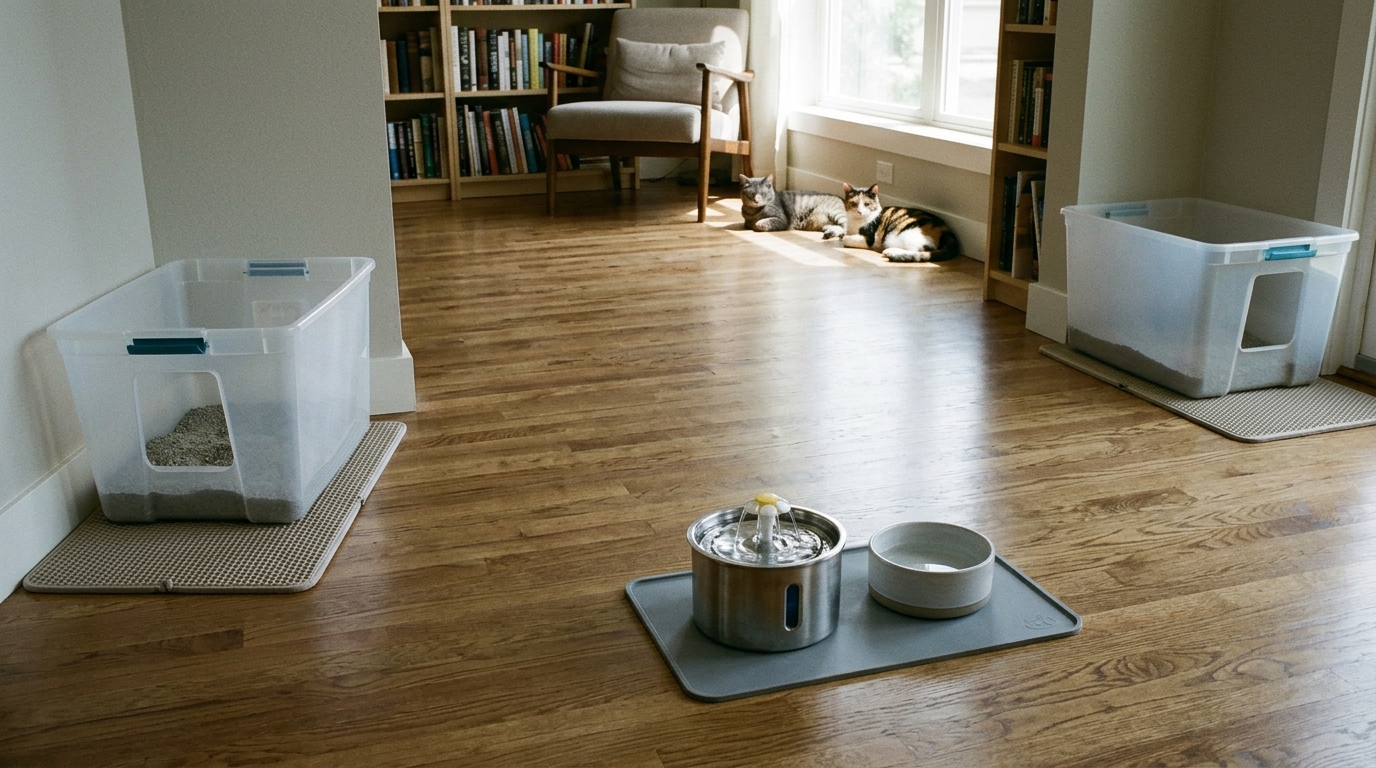
- Enforce the N+1 Litter Box Standard: Maintain one litter box per cat plus one additional box, distributed across distinct rooms and floors to eliminate territorial ambushing and eliminate stress-induced cystitis.
- Choose Open-Top Uncovered Litter Boxes: Covered boxes trap ammonia odors and create single-entrance ambush choke points where submissive felines fear being cornered by dominant housemates.
- Differentiate Marking from Incontinence: Differentiate behavioral urine spraying (small vertical deposits on walls with upright tail) from medical cystitis or incontinence (large horizontal floor puddles or involuntary dribbling).
This clinical urinary guide adheres to guidelines established by the American College of Veterinary Internal Medicine (ACVIM) and the American Association of Feline Practitioners (AAFP). A male cat straining in the litter box without producing urine, vocalizing in severe distress, or displaying abdominal rigidity represents an immediate life-threatening urethral obstruction. Transport the animal to an emergency hospital without delay.
Pathophysiology of Urinary Disease in Shared Environments
Multi-animal dynamics exert a direct influence on the autonomic nervous system, triggering cascade effects in the lower urinary tract:
- Neurogenic Bladder Inflammation (FIC): Social tension between resident animals stimulates sustained sympathetic nervous system activation. This chronic neuroendocrine stress compromises the protective glycosaminoglycan (GAG) layer lining the feline bladder urothelium, exposing sensory nerves to irritating urinary solutes and causing sterile neurogenic inflammation, painful hematuria, and severe urethral spasms.
- Mechanical Urethral Blockage: Male cats possess a narrow, conical penile urethra. Inflammatory mucus plugs combined with crystalline struvite or calcium oxalate precipitate can cause complete luminal obstruction. Post-renal azotemia and life-threatening hyperkalemia develop within 24 to 48 hours, precipitating fatal cardiac arrest if untreated.
- Canine Bacterial Cystitis: Ascending bacterial infections occur frequently in multi-dog households where outdoor elimination schedules become irregular or where elderly pets suffer from urinary incontinence or anatomical weakness.
Environmental Engineering: The N + 1 Resource Formula
Preventing urinary crises in multi-cat and multi-dog homes requires removing territorial friction around elimination and hydration stations:
| Resource Station | Clinical Gold Standard Protocol | Territorial & Physiological Benefit |
|---|---|---|
| Litter Box Allocation | Provide one box per resident cat plus one extra (N + 1 rule), distributed across different rooms and floors. | Eliminates hallway ambush points, prevents resource monopolization, and encourages normal voiding frequency. |
| Hydration Infrastructure | Install multiple recirculating water fountains and wide ceramic bowls away from food dishes and litter areas. | Encourages spontaneous drinking, dilutes urine concentration (maintaining feline USG < 1.035), and prevents crystal formation. |
| Daily Clump Volumetrics | Inspect scooped litter volume daily. Normal adult feline urine clumps measure roughly 2 to 3 inches in diameter (tennis-ball size). | Identifies pollakiuria (frequent microscopic drops) or total anuria before severe metabolic decompensation occurs. |
| Separate Canine Elimination Zones | Provide individual outdoor relief opportunities for older dogs with mobility deficits or spinal spondylosis. | Prevents faster, energetic dogs from rushing elderly companions, ensuring complete voluntary bladder voiding. |
Diagnostic Urinalysis: What the Veterinary Team Investigates
When urinary irregularities appear, veterinary clinicians require fresh biological specimens to pinpoint underlying pathology. If feasible, capturing a clean, free-catch urine sample in a sterile vessel immediately prior to the clinical appointment facilitates rapid diagnostic screening.
The laboratory evaluation measures urine specific gravity via optical refractometer to assess renal concentrating ability, tests biochemical dipstick parameters for protein and occult blood, and centrifuges the specimen to examine sediment under high-dry magnification. Microscopic analysis confirms or rules out erythrocytes, leukocyte casts, transitional epithelial cells, and crystalluria. When bacterial infection is suspected, a sterile cystocentesis specimen is submitted for quantitative aerobic bacterial culture and minimum inhibitory concentration (MIC) susceptibility testing.
Red-Flag Triage Matrix: Urinary Tract Escalation Tiers
Consult this objective triage matrix to determine appropriate clinical escalation for urinary symptoms:
| Triage Tier | Clinical Presentation | Required Action Protocol |
|---|---|---|
| Immediate Emergency (0–2 Hours) | Male cat or dog straining to urinate with zero urine output, painful crying in the box, vomiting, extreme lethargy, hypothermia, or a rock-hard, painful caudal abdomen. | Transport immediately to the nearest 24-hour veterinary emergency facility. Urethral blockage is rapidly fatal due to severe hyperkalemic cardiac arrhythmias without emergency urethral catheterization. |
| Urgent Assessment (12–24 Hours) | Frequent small drops of bloody urine (hematuria), excessive genital licking, urinating outside designated boxes on cool tile surfaces, or mild dysuria with normal appetite. | Schedule a same-day clinical veterinary examination. Avoid administering over-the-counter cranberry extracts or urinary acidifiers until diagnostic urinalysis is completed. |
| Routine Home Monitoring | Slight increase in urination volume following successful transition to moisture-rich canned food, or a single isolated elimination accident after rearranging living room furniture. | Audit litter box hygiene, verify clean drinking fountains, and track daily clump dimensions. Schedule a routine wellness consultation if irregularities persist beyond 48 hours. |
Never administer human pain relievers, antibiotics, or urinary acidifiers to companion animals. Urinary tract symptoms must be diagnosed by a licensed veterinarian to differentiate life-threatening physical obstruction from sterile neurogenic inflammation or bacterial infection.
Frequently Asked Questions
How do caregivers differentiate feline constipation from a life-threatening urethral blockage?
Both issues involve straining in the litter box, but a male cat with a urethral obstruction passes little or no urine, cries out in pain, frequently licks the genital area, and may vomit. A completely blocked urethra is a fatal emergency within 24 to 48 hours requiring immediate hospital unblocking.
What environmental modifications help reduce feline idiopathic cystitis (FIC)?
Provide one litter box per cat plus one additional box, scoop daily, use unscented litter, place boxes in low-traffic areas, increase water intake through wet food and fountains, and minimize household stress with climbing shelves and synthetic pheromones.
What diagnostic tests are standard when evaluating blood in a pet’s urine (hematuria)?
A complete urinalysis with microscopic sediment examination (checking for red cells, bacteria, and crystals), urine specific gravity, a sterile bacterial culture, and abdominal X-rays or ultrasound to check for bladder stones or masses.
Sources
- ACVIM Consensus Statement on Feline Lower Urinary Tract Disease. American College of Veterinary Internal Medicine.
- AAFP Guidelines for the Management of FLUTD. American Association of Feline Practitioners.
- Merck Veterinary Manual: Lower Urinary Tract Disorders in Dogs and Cats. Merck Sharp & Dohme Corp.
Caregiver Safety Checklist
- Monitor urine output: fewer than two urinations per day in a cat is an emergency — contact your veterinarian within two hours, not the next morning.
- Inspect litter boxes daily for straining, blood-tinged urine (pink or red tinge), or complete absence of clumping — photograph and timestamp any abnormality.
- Ensure fresh water is available in at least two separate locations; cats with a history of urinary events benefit from multiple water sources placed away from food bowls.
Printable tools
Download the matching worksheet
Source transparency
Reference mix for this guide
Source labels describe the type of organization behind each reference; they are not a claim that any outside organization reviewed this article.
- ACVIM Consensus Statement on Feline Lower Urinary Tract Disease Reference source · acvim.org
- AAFP Guidelines for the Management of FLUTD Veterinary organization · catvets.com
- Merck Veterinary Manual: Lower Urinary Tract Disorders in Dogs and Cats Veterinary organization · merckvetmanual.com

