This guide is general education for pet owners. If your pet has urgent symptoms, possible poisoning, injury, breathing trouble, collapse, severe pain, or sudden decline, contact a licensed veterinarian or local emergency service.
Editorial standard
How this guide was prepared
Adopting a senior dog or cat is an extraordinarily rewarding act of compassion, but aging companion animals present distinct biological realities. When skin and coat issues emerge in an older animal (dogs over seven years, cats over ten years), pet parents frequently assume the animal has developed a simple food allergy or environmental flea sensitivity. In geriatric veterinary dermatology, however, cutaneous manifestations are often outward markers of internal endocrinopathies, metabolic strain, or occult neoplasia. Navigating these warning signs safely within budget requires focused clinical discernment rather than costly trial-and-error home remedies.
- Distinguish Dryness from Active Disease: Separate cosmetic shelter coat dullness from active dermatological pathology; focal circular hair loss (alopecia), crusted papules, ‘flea dirt’ debris, or relentless pruritus indicate parasitic or fungal infections requiring medical diagnosis.
- Cost-Effective Nutritional & Topical Support: Deploy veterinary-grade marine omega-3 fatty acids (EPA/DHA) and soothing colloidal oatmeal baths as affordable, high-impact therapies that restore epidermal moisture barriers without boutique pricing.
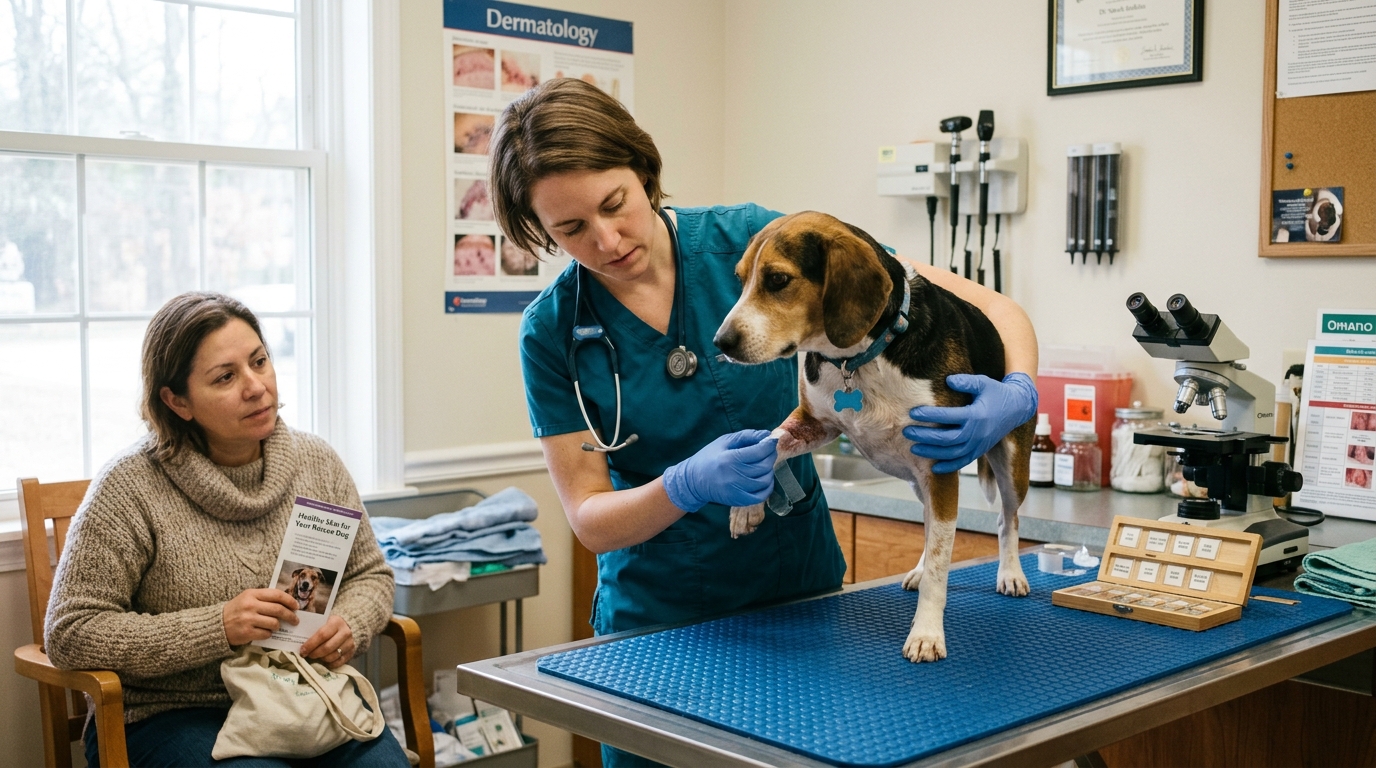
- Prioritize In-Clinic Cytology Early: Invest in an affordable baseline tape-strip or skin scrape at your initial vet visit; diagnosing underlying Demodex, Malassezia yeast, or pyoderma early prevents severe secondary infections that require costly systemic antibiotics.
The Senior Dermatological Baseline: Why Older Skin is Different
As dogs and cats enter their senior years, their dermal architecture undergoes fundamental changes:
- Epithelial Thinning & Fragility: Dermal collagen density diminishes, leaving the skin less elastic and far more vulnerable to mechanical tearing and secondary bacterial pyoderma.
- Sebaceous Gland Atrophy: Reduced natural lipid secretion leads to brittle hair shafts and dry, flaky coat conditions (seborrhea sicca).
- Systemic Mimics: Symmetrical non-itchy hair loss, hyperpigmentation, or paper-thin skin frequently indicate hyperadrenocorticism (Cushing’s disease), hypothyroidism, or renal dysfunction rather than superficial ectoparasites.
Budget-Conscious Clinical Triage: The Power of In-Clinic Cytology
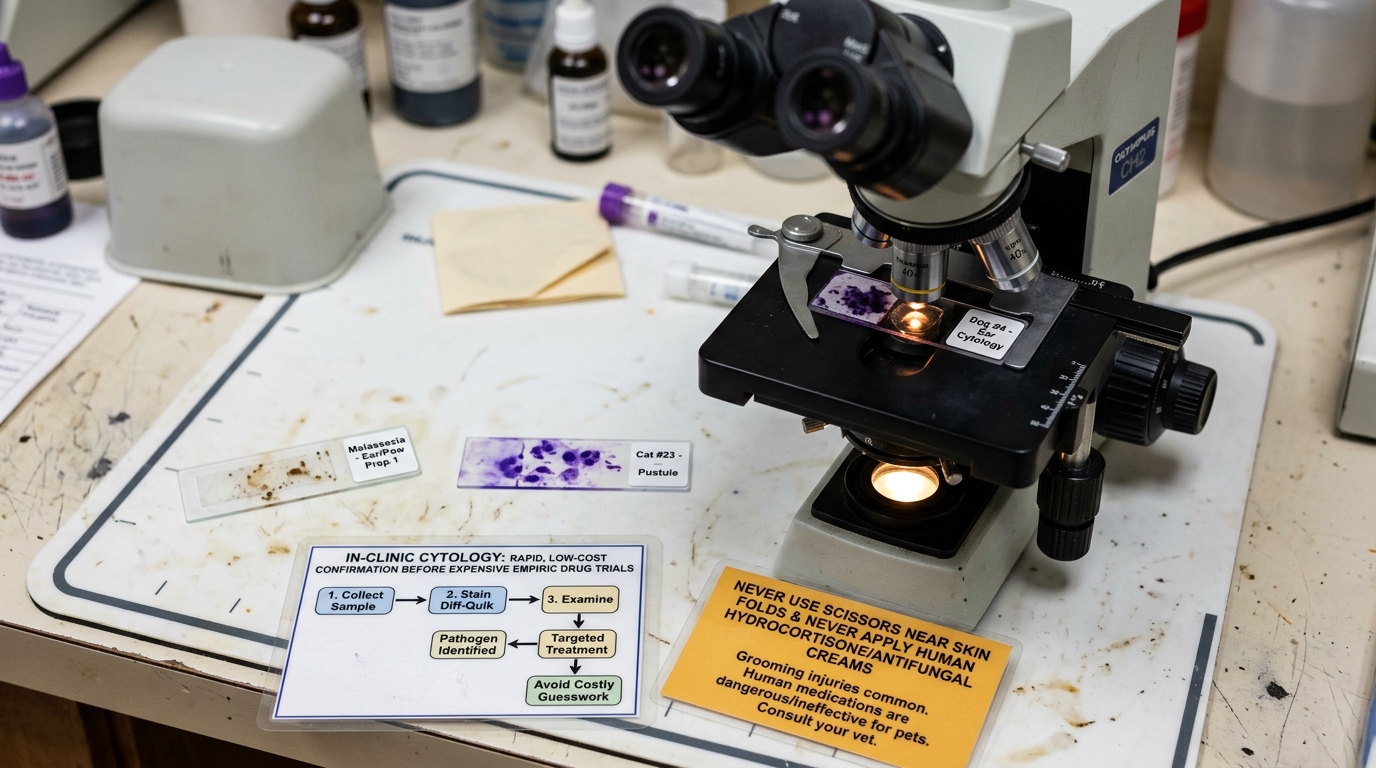
Adopters managing limited veterinary budgets often waste hundreds of dollars purchasing over-the-counter medicated shampoos, hypoallergenic specialty treats, and herbal salves that fail to address the root cause. A far more cost-effective first step is scheduling a focused veterinary visit prioritizing immediate, low-cost diagnostic sampling:
- Tape Strip & Impression Smear Cytology: For a fraction of the cost of extensive blood panels or allergy tests, in-clinic microscopic cytology reveals within minutes whether the inflammation is driven by Malassezia yeast, cocci bacteria, or neoplastic round cells.
- Skin Scraping & Wood’s Lamp Exam: Rapidly differentiates demodectic/sarcoptic mange mites and dermatophytosis (ringworm), allowing pinpointed antimicrobial treatment instead of broad, ineffective empirical therapies.
- Fine-Needle Aspirate (FNA): Any new cutaneous or subcutaneous nodule in a senior pet should be aspirated. FNA is a safe, minimally invasive, low-cost procedure that distinguishes benign lipomas from mast cell tumors or cutaneous lymphoma.
Red-Flag Triage Matrix: Dermatological Escalation Paths
Use this clinical triage matrix to distinguish manageable age-related dryness from acute cutaneous emergencies:
| Triage Level | Clinical Presentation | Required Action |
|---|---|---|
| Immediate Emergency (0–2 Hours) | Rapidly spreading skin sloughing, blistering, or black necrotic margins (Toxic Epidermal Necrolysis suspicion); acute facial swelling with wheezing or respiratory stridor (anaphylaxis); extensive subcutaneous crackling (crepitus from penetrating wound); continuous bleeding from ulcerated mass. | Transport immediately to the nearest 24/7 emergency veterinary hospital. Cover weeping areas loosely with a clean, dry cloth; do not apply topical ointments or bandages. |
| Same-Day Visit (Within 12–24 Hours) | Rapidly expanding, oozing, intensely hot moist dermatitis (“hot spot”); deep discharging sinus tracts with purulent or bloody exudate; frantic, uncontrollable self-mutilation (chewing feet/tail to open flesh); rapidly growing skin mass (>1 cm). | Contact your veterinary clinic for an urgent same-day evaluation. Fit an Elizabethan collar (e-collar) immediately to halt ongoing self-trauma; do not attempt to scrub the raw area. |
| Home Monitoring & Scheduled Care | Mild generalized dry dandruff without redness, odor, or pruritus; gradual age-related coat thinning along flanks; mild superficial coat tangles that separate easily with fingers. | Implement daily gentle brushing using a soft bristle brush; maintain ambient indoor humidity; discuss targeted omega-3 fatty acid supplementation at your next scheduled wellness visit. |
Dangerous Home Grooming Pitfalls and Rule S1 Boundaries
Home management of senior pet coats requires strict adherence to safety boundaries to avoid devastating iatrogenic trauma:
- Never cut matted fur with scissors: In senior animals with paper-thin skin, tight fur mats draw the underlying epidermis directly into the mat core. Attempting to split or snip mats with household scissors is one of the leading causes of severe full-thickness lacerations requiring emergency surgical closure under anesthesia. Always use professional, guarded electric clippers with a #10 blade, or seek professional veterinary grooming assistance.
- Strictly avoid human topical medications: Never apply human hydrocortisone or eczema ointments to pet skin. Pets groom topically applied creams off their fur, leading to rapid systemic absorption that triggers iatrogenic Cushing’s syndrome, liver stress, or suppressed immunity.
- Never use zinc oxide creams: Diaper rash creams containing zinc oxide or calamine cause acute toxic intravascular hemolysis and kidney damage when licked and ingested by dogs and cats.
- Strictly prohibit essential oils: Concentrated essential oils—especially tea tree oil (Melaleuca), eucalyptus, clove, and wintergreen—are transdermally absorbed and metabolized through feline and canine hepatic pathways. In cats, who lack essential glucuronidation enzymes, tea tree oil causes acute hypothermia, tremors, central nervous system depression, and fatal hepatic failure.
Frequently Asked Questions
What symptoms differentiate environmental allergies from secondary skin infections?
Allergies usually present with generalized itching, face rubbing, and paw chewing. Secondary bacterial or Malassezia yeast infections introduce crusty circular lesions, musty odors, moist red hot spots, pustules, and localized hair loss.
Why is microscopic skin cytology necessary before applying medicated topicals?
Cytology allows the veterinarian to identify whether the infection is caused by bacteria or yeast. Applying antifungal treatments to bacterial pyoderma or antibiotics to yeast overgrowth fails to resolve the condition and promotes resistant organisms.
When does pet scratching or licking require immediate veterinary evaluation?
Sudden moist hot spots that spread rapidly, raw bleeding lesions, extreme discomfort that prevents resting, or vigorous head shaking with swollen ear flaps require urgent veterinary care to relieve distress and prevent aural hematomas.
Sources
- ICADA Consensus: Cutaneous Pathologies in Aging Pets. International Committee on Allergic Diseases of Animals. Checked September 11, 2026.
- Chronic Pruritus and Cutaneous Ulceration in Older Pets. Veterinary Dermatology Journal / PubMed. Checked September 11, 2026.
- BSAVA Formulary and Toxic Alert: Topical Hazards in Small Animals. British Small Animal Veterinary Association. Checked September 11, 2026.
Caregiver Safety Checklist
- Hot spots expand fastest in humid conditions and under matted fur — clip the surrounding hair before applying any topical treatment, or the moisture is sealed in.
- Avoid over-the-counter antifungal shampoos for ringworm without a veterinary fungal culture; misidentified ringworm treated with steroids can spread systemically.
- Never use scissors to remove matted fur near skin folds — the skin in these areas is loose and easily lacerated; use clippers with a guard or see a professional groomer.
Pet Toxic Food & Hazard Fast-Checker
Rapidly verify toxicity risks, toxic mechanisms, and immediate clinical steps for common household foods, plants, and human medications before calling poison control or your veterinarian.
Printable tools
Download the matching worksheet
Source transparency
Reference mix for this guide
Source labels describe the type of organization behind each reference; they are not a claim that any outside organization reviewed this article.
- ICADA Consensus: Cutaneous Pathologies in Aging Pets Reference source · vetderm.org
- Chronic Pruritus and Cutaneous Ulceration in Older Pets Government or public agency · pubmed.ncbi.nlm.nih.gov
- BSAVA Formulary and Toxic Alert: Topical Hazards in Small Animals Reference source · bsavalibrary.com