This guide is general education for pet owners. If your pet has urgent symptoms, possible poisoning, injury, breathing trouble, collapse, severe pain, or sudden decline, contact a licensed veterinarian or local emergency service.
Dosages must be calculated by a licensed veterinarian based on species, weight, and bloodwork. Never administer human medications or self-adjust prescription doses for pets.
Quick Answer
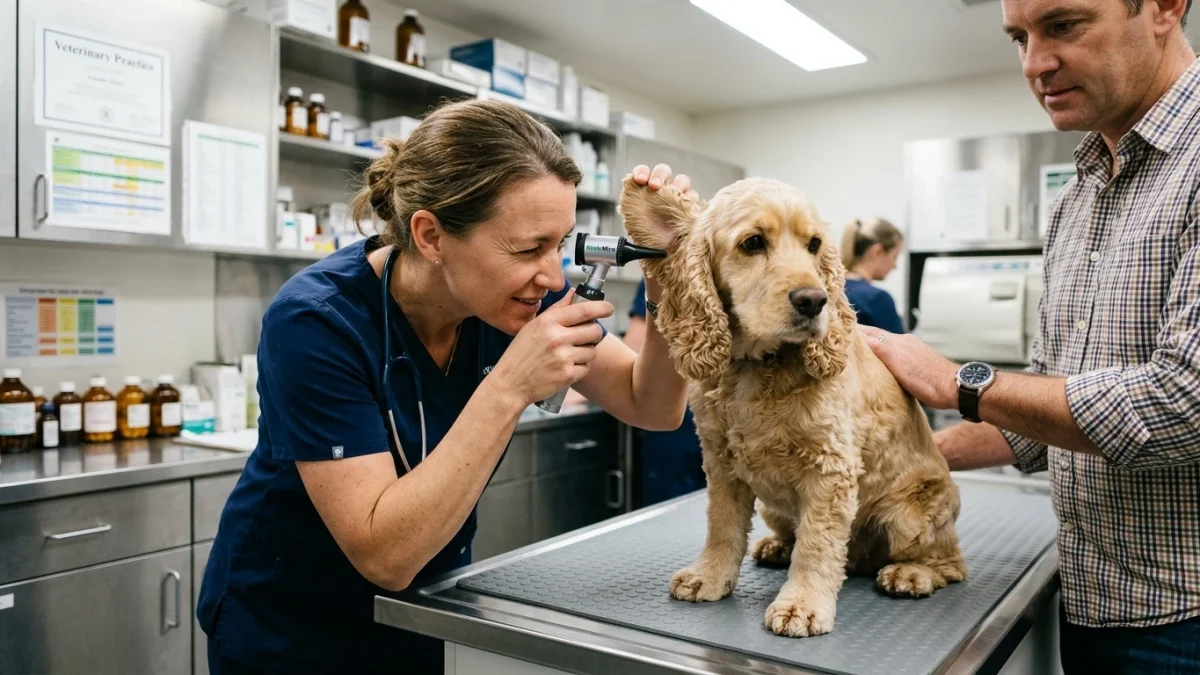
Canine ear infections stem from yeast or bacterial overgrowth within the L-shaped ear canal, producing intense itching, head shaking, and distinct odor. While sweet musty discharge signals Malassezia yeast, foul purulent exudate indicates bacteria. Vigorous shaking risks aural hematoma. Never insert Q-tips or apply home vinegar concoctions; schedule cytology with your veterinarian.
Canine ear infections (otitis externa) represent one of the most frequent reasons dog owners seek veterinary consultations. Because canines possess an intricate ‘L-shaped’ ear canal—where a vertical canal travels downward before taking a sharp right-angle turn into a horizontal canal that terminates at the delicate tympanic membrane (eardrum)—debris, warmth, and moisture become easily trapped. When an otherwise happy dog begins flapping their ears loudly, rubbing their head along carpet runners, or tilting their head with a grimace, owners often detect an unmistakable, pungent odor. Distinguishing whether this inflammation is driven by yeast, bacteria, or foreign bodies—and intervening before violent head shaking ruptures delicate ear flap blood vessels—is crucial for preventing permanent auditory trauma.
Editorial standard
How this guide was prepared
The Clinical Odor & Discharge Profile: Yeast versus Bacterial Otitis
Experienced clinicians frequently suspect the primary micro-organism simply from acoustic, visual, and olfactory inspection, although definitive microscopic cytology remains mandatory:
- Yeast Otitis Externa (Malassezia pachydermatis): Yeast is a normal opportunistic commensal organism of canine skin. When moisture, allergic flares (atopic dermatitis or food allergies), or immunosuppression alter the canal micro-environment, yeast proliferates explosively. Odor Profile: Unmistakably sweet, stale, or musty—frequently described by caregivers as smelling like fermented corn chips, sourdough yeast, or damp mushrooms. Discharge Appearance: Dark brown, reddish-brown, or black waxy debris that coats the canal walls and outer pinna. The canal lining is erythematous (bright red) and profoundly itchy (pruritic), causing the dog to groan with relief when the ear base is massaged.
- Bacterial Otitis Externa (Staphylococcus, Streptococcus, Pseudomonas, Proteus): Bacterial infections frequently arise secondarily to yeast or deep allergies, but severe Gram-negative infections (especially Pseudomonas aeruginosa) represent painful clinical emergencies. Odor Profile: Foul, rancid, sour, or rotting smell that can fill an entire room. Discharge Appearance: Moist, slimy, yellowish-green, or purulent (pus-filled) discharge, often mixed with streaks of blood. Bacterial otitis is characterized by intense pain rather than simple itching; the dog may snap defensively, whimper, or guard their head when anyone approaches the ears.
- Ear Mites (Otodectes cynotis): More common in puppies, outdoor dogs, and rescue animals. Microscopic mites provoke intense irritation, producing a dry, crumbly, black discharge resembling coarse coffee grounds.
Clinical Otic Triage Matrix
Use this clinical matrix to establish the appropriate level of veterinary intervention based on symptom severity:
| Triage Tier | Clinical Signs & Physical Presentation | Mandatory Action |
|---|---|---|
| Tier 1: Immediate Emergency (0–2 Hours) | Ear infection accompanied by a persistent head tilt (holding one ear lower to the ground), loss of balance (circling or falling to one side), involuntary rapid eye flickering (nystagmus), facial droop or inability to blink on one side, or extreme agony upon touching the ear base. | Transport immediately to an emergency veterinary hospital. These signs indicate that bacteria or inflammatory toxins have eroded through the eardrum into the middle and inner ear (otitis media/interna), causing acute peripheral vestibular syndrome and facial nerve neuropathy that requires systemic intervention and emergency imaging. |
| Tier 2: Same-Day Veterinary Evaluation (12–24 Hours) | Ear flap is swollen, fluid-filled, hot, and squishy like a balloon or water balloon (aural hematoma); canal is completely swollen shut (stenosis) with purulent yellow-green discharge; dog is constantly shaking head every few minutes and crying out in pain. | Schedule a same-day veterinary clinical examination. The veterinarian will perform otoscopy, collect in-clinic swab cytology, drain or surgically repair the aural hematoma, and prescribe targeted topical and anti-inflammatory medications. |
| Tier 3: Structured Home Care & Monitoring (24–48 Hours) | Mild redness on the inside of the ear flap; moderate brown waxy discharge with a sweet musty odor; occasional head shaking or scratching; ear canal remains open and non-stenotic; dog happily allows gentle ear examination without signs of pain. | Clean the outer ear canal using a veterinary-approved soothing ear flush. Never use Q-tips. Book a routine veterinary appointment within 2 to 3 days for diagnostic ear swab cytology and prescription antifungal drops. |
The Aural Hematoma: Why Head Shaking Is Dangerous
The canine pinna (ear flap) consists of a thin sheet of flexible cartilage sandwiched between two layers of highly vascularized skin. When a dog shakes their head violently to dislodge itching or deep canal debris, the heavy ear flap slaps against the cranial bones of the skull with extraordinary centrifugal force.
This repetitive mechanical trauma fractures the delicate auricular cartilage and shears the fragile blood vessels running between cartilage and skin. Blood rapidly pools into the newly created dead space, causing the ear flap to swell into a tense, fluid-filled pouch known as an aural hematoma.
If left untreated, an aural hematoma will eventually resorb over weeks, but the resulting fibrous contracture and scarring creates a permanently thickened, crumpled, and deformed ‘cauliflower ear’ that permanently narrows the canal opening and traps future infections. Immediate veterinary drainage, cannulation, or mattress-suture surgery is required to preserve ear architecture.
How to Safely Clean Your Dog’s Ears at Home
Proper ear hygiene removes inflammatory debris and allows medicated drops to contact the epithelial lining, but improper technique causes severe injury:
Step 1: Use Only Veterinary-Approved Flushes: Choose a gentle, alcohol-free veterinary cleanser containing drying agents (like salicylic acid) and mild ceruminolytics designed to dissolve sebum without stinging.
Step 2: Fill the Vertical Canal: Gently elevate the pinna. Point the bottle tip into the canal opening without forcing the nozzle deep inside. Squeeze the bottle until the liquid fills the vertical canal.
Step 3: Perform the ‘Squish’ Massage: While continuing to hold the pinna upright, place your thumb and forefinger at the base of the ear (where the ear cartilage meets the skull). Massage gently for 30 to 45 seconds. You should hear a distinct, wet ‘squishing’ sound as the liquid circulates into the horizontal canal and emulsifies deep debris.
Step 4: Allow the Shake: Step back and let your dog shake their head vigorously. Centrifugal force will propel loosened fluid, wax, and debris out of the horizontal and vertical canals into the outer pinna.
Step 5: Wipe the Outer Concha: Using a soft cotton pad or gauze wrapped around your finger, gently wipe away expelled debris from the ear flap and canal opening. Never push anything into the dark canal.
Dangerous Home Pitfalls: What NOT to Do (Rule S1)
Home ear remedies found on internet forums frequently turn manageable ear infections into irreversible veterinary crises:
- Never insert cotton-tipped swabs (Q-tips) into the canal: Because the canine canal turns sharply inward, inserting a rigid swab cannot navigate the horizontal canal. Instead, the swab acts as a plunger, compacting wax, bacteria, and necrotic debris tightly against the delicate eardrum while risking traumatic tympanic membrane puncture.
- Never pour vinegar, hydrogen peroxide, or rubbing alcohol into the ear: Acetic acid (vinegar) and alcohol are agonizingly painful when applied to ulcerated, inflamed ear epithelium. Furthermore, hydrogen peroxide breaks down into water, creating a warm, damp environment that accelerates yeast and bacterial growth. If the eardrum has even a microscopic tear, these caustic liquids flood the inner ear, destroying the auditory hair cells and causing permanent sensorineural deafness.
- Never use leftover antibiotic ear drops without veterinary cytology: Treating a yeast infection with antibacterial drops destroys harmless bacteria, clearing the field for yeast to multiply out of control. Conversely, using antifungal drops on a virulent bacterial infection allows bacteria to erode the middle ear. Always have your veterinarian perform in-clinic cytology to identify the exact organism.
- Never ignore chronic, recurrent ear infections: Dogs that experience frequent ear infections almost always suffer from an underlying primary systemic condition—most commonly environmental allergies (atopy) or food allergies; if your dog also constantly gnaws at their paws, explore our clinical companion guide on Dog Paw Licking: Allergies vs. Yeast Pododermatitis. Untreated chronic otitis results in irreversible canal calcification and mineralization, ultimately requiring radical total ear canal ablation (TECA) surgery.
Sources
- Guidelines for the Diagnosis and Treatment of Canine Otitis Externa. Veterinary Dermatology / PubMed. Checked September 21, 2026.
- Pathogenesis and Management of Aural Hematoma in Dogs. Compendium on Continuing Education for the Practicing Veterinarian / PubMed. Checked September 21, 2026.
- Ototoxicity of Topically Applied Solutions in Small Animal Veterinary Practice. Veterinary Clinics of North America: Small Animal Practice / PubMed. Checked September 21, 2026.
Caregiver Safety Checklist
- Distinguish yeast (sweet, musty corn-chip smell) from bacterial otitis (foul, rancid odor with painful yellow-green exudate).
- Never insert Q-tips or cotton swabs into the ear canal; swabs compact debris and risk puncturing the delicate eardrum.
- Never use vinegar, alcohol, or peroxide; they cause agonizing pain and risk permanent deafness if the eardrum is ruptured.
- Prevent aural hematomas by seeking veterinary ear swab cytology before violent chronic head shaking ruptures ear flap blood vessels.
Source transparency
Reference mix for this guide
Source labels describe the type of organization behind each reference; they are not a claim that any outside organization reviewed this article.
- Guidelines for the Diagnosis and Treatment of Canine Otitis Externa Government or public agency · pubmed.ncbi.nlm.nih.gov
- Pathogenesis and Management of Aural Hematoma in Dogs Government or public agency · pubmed.ncbi.nlm.nih.gov
- Ototoxicity of Topically Applied Solutions in Small Animal Veterinary Practice Government or public agency · pubmed.ncbi.nlm.nih.gov