
This guide is general education for pet owners. If your pet has urgent symptoms, possible poisoning, injury, breathing trouble, collapse, severe pain, or sudden decline, contact a licensed veterinarian or local emergency service.
Editorial standard
How this guide was prepared
Monitoring pulmonary function and ventilation mechanics represents one of the most sensitive clinical skills for companion animal caregivers. In a dynamic multi-pet household, energetic play sessions, communal excitement, and shared sleeping quarters frequently mask early signs of cardiopulmonary compromise. Subclinical congestive heart failure, feline asthma, and infectious tracheobronchitis develop subtly before manifesting as overt respiratory distress. Mastering the clinical technique of measuring resting respiratory rate establishes an objective baseline to detect disease before acute dyspneic crises occur.
- Immediate Isolation for Coughing or Sneezing: Confine any animal exhibiting acute coughing or nasal discharge to a separate room; infectious respiratory complexes spread rapidly via airborne aerosols and shared water bowls.
- Sequential Care & Hand Hygiene: Handle, feed, and exercise healthy household pets first, attending to the isolated sick pet last; wash hands and change outer garments to avoid fomite transmission.
- Track Nighttime Respiratory Baselines: Monitor sleeping respiratory rates (SRR) individually in cool, quiet sleeping environments to detect early cardiopulmonary decompensation that communal daytime play obscures.
This pulmonary monitoring protocol conforms to veterinary cardiology standards established by the American College of Veterinary Internal Medicine (ACVIM). If any cat or dog exhibits open-mouth breathing, extended neck posture with elbows abducted, prominent abdominal effort, or purple, blue, or pale mucous membranes, transport the animal immediately to the nearest veterinary emergency hospital.
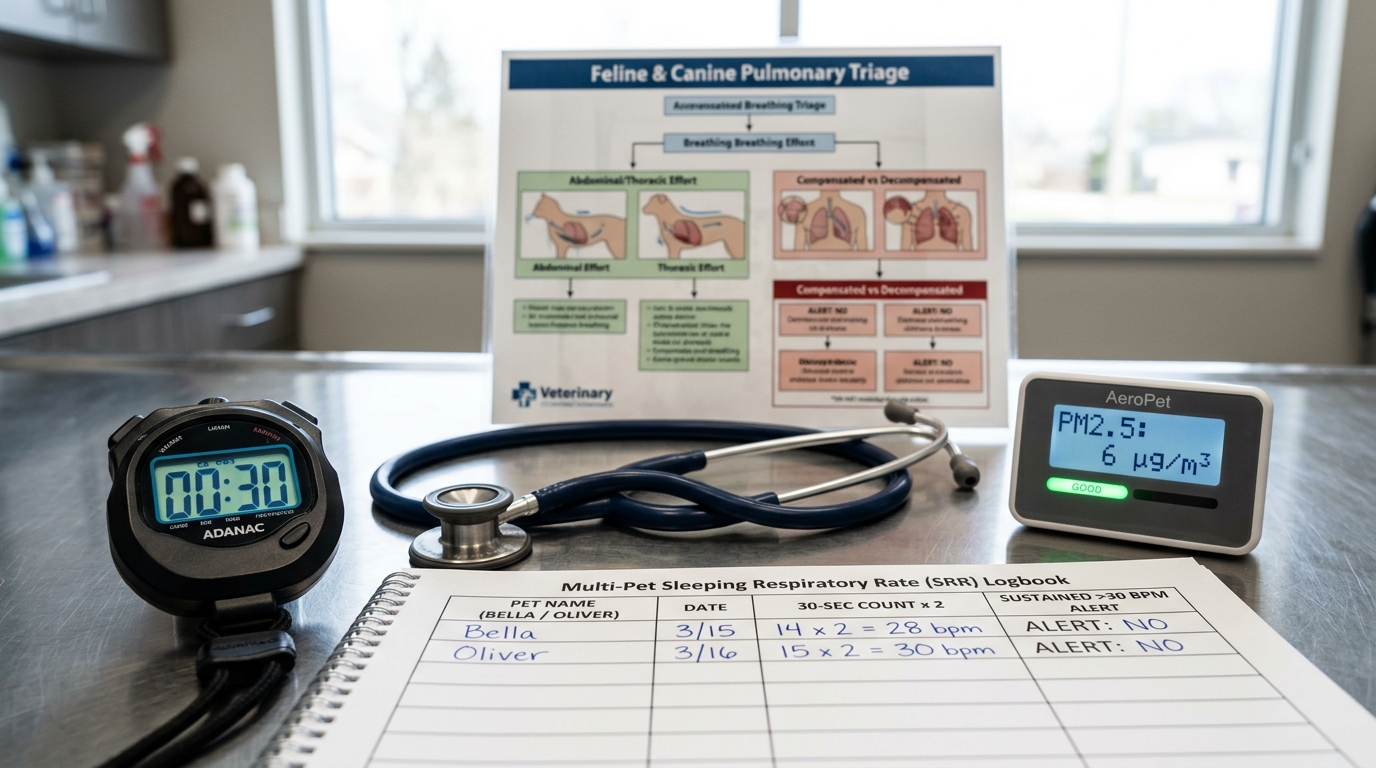
The Physiology of Breathing: Recognizing Compensated vs Decompensated Effort
Pulmonary ventilation relies on smooth, synchronized thoracic excursion. Distinguishing between normal metabolic variations and pathological respiratory distress requires understanding core cardiopulmonary mechanics:
- Resting Respiratory Rate (RRR) Baseline: In healthy adult dogs and cats, the normal sleeping or resting respiratory rate remains strictly below 30 breaths per minute, typically averaging between 16 and 24 breaths per minute. Consistent counts exceeding 30 breaths per minute in a calm animal indicate impending pulmonary edema, pleural effusion, or acute airway bronchospasm.
- Feline Asthma & Airway Hyperreactivity: Feline lower airway disease causes chronic bronchoconstriction and excessive mucus secretion. Affected cats posture low to the ground with their neck outstretched in bouts that mimic hairball expulsions, frequently misinterpreted by multi-pet owners as chronic vomiting.
- Cardiogenic Pulmonary Edema: Mitral valve disease in dogs and hypertrophic cardiomyopathy (HCM) in cats cause left atrial pressure overload, driving transudate fluid directly into pulmonary alveoli. The body compensates by increasing ventilation rate long before coughing or audible wheezing develops.
Clinical Measurement Technique: The 30-Second Resting Count
To obtain clinically valid respiratory data in a multi-pet home, follow this standardized veterinary cardiology measurement protocol:
| Measurement Step | Clinical Standard Operating Procedure | Diagnostic Precision Goal |
|---|---|---|
| Select the Window | Observe the animal only when resting quietly or deeply asleep, separated from exciting communal room activities. | Eliminates physiological elevation caused by play, ambient heat, digestion, or social interactions. |
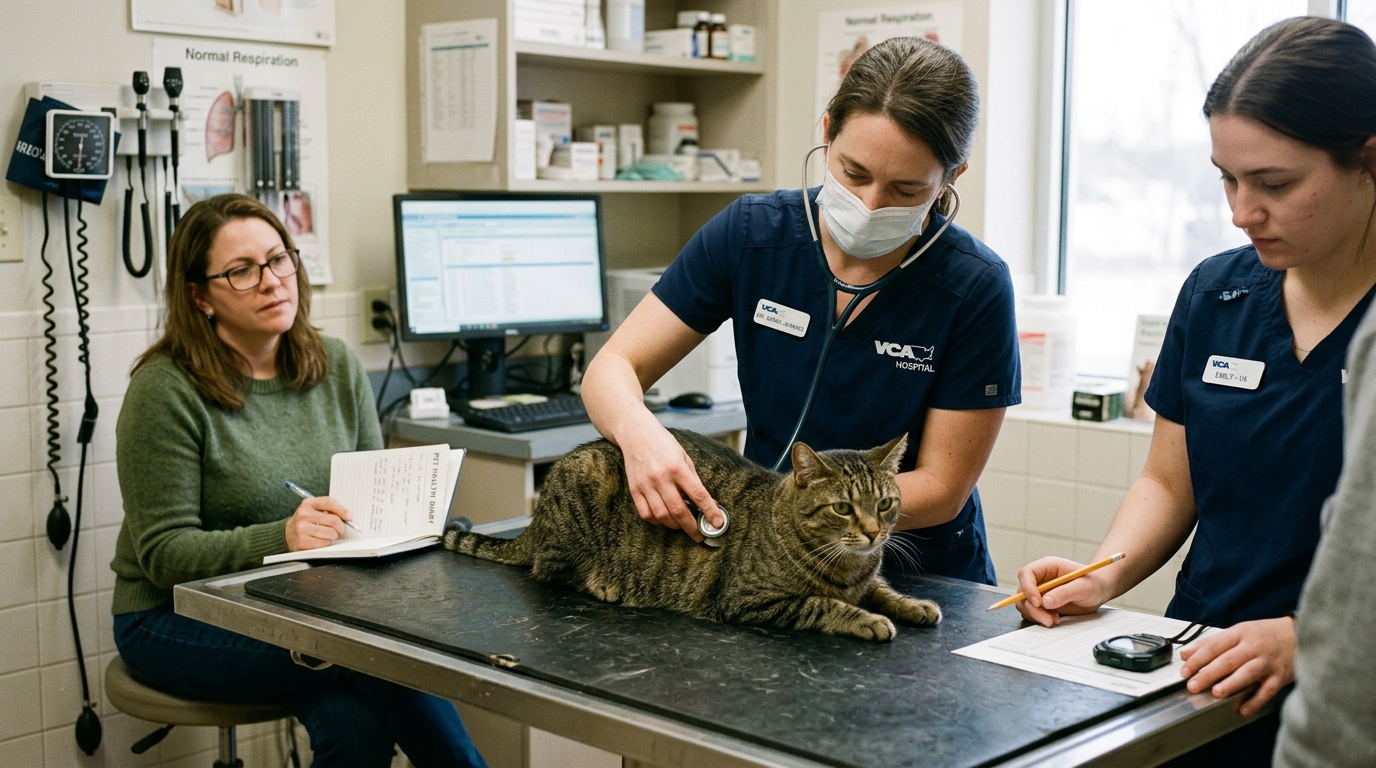
| Count Thoracic Cycles | Observe one full thoracic cycle (one chest rise plus one chest fall equals one single breath). | Averts inaccurate doubling of rates caused by counting inspiration and expiration as separate breaths. |
| Timing & Calculation | Count breath cycles across 30 seconds using a stopwatch, then multiply by 2 to record breaths per minute. | Provides reliable clinical data while minimizing observer fatigue during quiet monitoring periods. |
| Multi-Day Trend Graphing | Record the sleeping respiratory count at the same hour daily across 5 consecutive days in a health log. | Detects subtle upward linear trends (e.g., climbing from 18 to 28 bpm) before fluid decompensation occurs. |
Managing Multi-Pet Environmental Air Quality
Shared indoor environments concentrate pulmonary irritants that provoke chronic bronchospasm and compromise respiratory defenses across resident species:
- Particulate Dust Management: Dusty clay litters release airborne silica dust that triggers acute bronchospasm in asthmatic cats. Transition multi-cat households to low-dust, fragrance-free alternative litters such as paper pellets or wood shavings.
- Eliminating Aerosol Irritants: Prohibit scented room sprays, synthetic plug-in air fresheners, essential oil diffusers (particularly eucalyptus and tea tree oil, which are toxic to felines), and incense.
- Infectious Tracheobronchitis Quarantine: Canine infectious respiratory disease complex (kennel cough) spreads rapidly via aerosolized microdroplets. Isolate coughing dogs immediately from puppies and senior housemates.
Red-Flag Triage Matrix: Cardiopulmonary Escalation Tiers
Evaluate your pet’s respiratory status against this objective clinical triage matrix:
| Triage Tier | Clinical Presentation | Required Action Protocol |
|---|---|---|
| Immediate Emergency (0–2 Hours) | Open-mouth breathing in cats, prominent abdominal pumping effort, neck extended with elbows held wide, pale or cyanotic gums, sudden collapse, or coughing producing pink frothy liquid. | Transport immediately to an emergency hospital. Minimize handling stress, keep the carrier well-ventilated, keep air conditioning running, and notify the clinic en route to prepare an oxygen cage. |
| Urgent Assessment (12–24 Hours) | Sleeping respiratory rate consistently measuring between 32 and 40 breaths per minute, recurrent coughing bouts during rest, exercise intolerance during brief walks, or audible tracheal rattling. | Schedule an urgent same-day veterinary appointment. Keep the animal confined in a cool, quiet room without physical exertion until clinical thoracic radiographs and echocardiography are performed. |
| Routine Home Monitoring | Transient panting after vigorous play in warm room that resolves within 10 minutes of rest, or stable sleeping respiratory rate averaging 18 to 24 breaths per minute. | Continue regular daily RRR monitoring. Log weekly averages and discuss chronic airway maintenance during scheduled annual wellness examinations. |
Never administer human asthma inhalers, bronchodilators, or over-the-counter cough suppressants to pets without specific veterinary prescriptions. Over-the-counter cold medicines containing pseudoephedrine or dextromethorphan induce lethal cardiovascular stimulation and fatal central nervous system seizures.
Frequently Asked Questions
How and when should caregivers measure Sleeping Respiratory Rate (SRR)?
Measure SRR when your pet is in deep, calm sleep (not dreaming). Count one full breath (one rise and fall of the chest) for 30 seconds and multiply by 2. A normal rate is under 30 breaths per minute; sustained readings above 30 bpm warrant contacting your vet.
What is the clinical difference between reverse sneezing, hairballs, and true coughing?
Reverse sneezing consists of rapid, loud inspiratory snorts with an extended neck, often resolving in under a minute. Hairball retching involves rhythmic abdominal heaves ending in fluid or hair expulsion. True coughing presents as extended hacking or wheezing, often pointing to bronchial or cardiac disease.
What breathing signs indicate an immediate life-threatening emergency?
Open-mouth breathing in cats, pale or blue gums, intense abdominal effort while inhaling, flared nostrils, neck extended with elbows held out, or audible chest crackles indicate critical respiratory distress requiring immediate oxygen therapy.
Sources
- ACVIM Consensus Statement on the Diagnosis and Management of Heart Disease. American College of Veterinary Internal Medicine.
- AAFP Guidelines for the Management of Feline Lower Airway Disease. American Association of Feline Practitioners.
- Merck Veterinary Manual: Respiratory Disease in Small Animals. Merck Sharp & Dohme Corp.
Caregiver Safety Checklist
- Normal resting respiratory rate in cats is 20 to 30 breaths per minute; anything above 40 at rest warrants same-day veterinary evaluation, not a scheduled appointment.
- Open-mouth breathing in cats is never normal at rest and is always an emergency — do not delay for observation.
- Count breaths for a full 30 seconds with the pet calm and sleeping; stress from examination inflates the count and produces misleading readings.
Interactive Resting Respiratory Rate (RRR) Counter
Count your resting or sleeping pet's breaths per minute using our timed clinical tap tool. Resting respiratory rate below 30 breaths/min is the veterinary baseline for canine and feline home monitoring.
Printable tools
Download the matching worksheet
Source transparency
Reference mix for this guide
Source labels describe the type of organization behind each reference; they are not a claim that any outside organization reviewed this article.
- ACVIM Consensus Statement on the Diagnosis and Management of Heart Disease Reference source · acvim.org
- AAFP Guidelines for the Management of Feline Lower Airway Disease Veterinary organization · catvets.com
- Merck Veterinary Manual: Respiratory Disease in Small Animals Veterinary organization · merckvetmanual.com

