This guide is general education for pet owners. If your pet has urgent symptoms, possible poisoning, injury, breathing trouble, collapse, severe pain, or sudden decline, contact a licensed veterinarian or local emergency service.
Dosages must be calculated by a licensed veterinarian based on species, weight, and bloodwork. Never administer human medications or self-adjust prescription doses for pets.
Editorial standard
How this guide was prepared
Administering pharmacotherapy in a multi-pet home requires meticulous organizational systems. When multiple companion animals share living quarters, feeding stations, and resting areas, administering daily medications introduces acute hazards of accidental cross-dosing, unobserved food swapping, and species-specific fatal drug toxicity. Before leaving the veterinary pharmacy, preparing a thorough set of clinical questions ensures you possess the knowledge needed to manage multi-animal medical protocols safely.
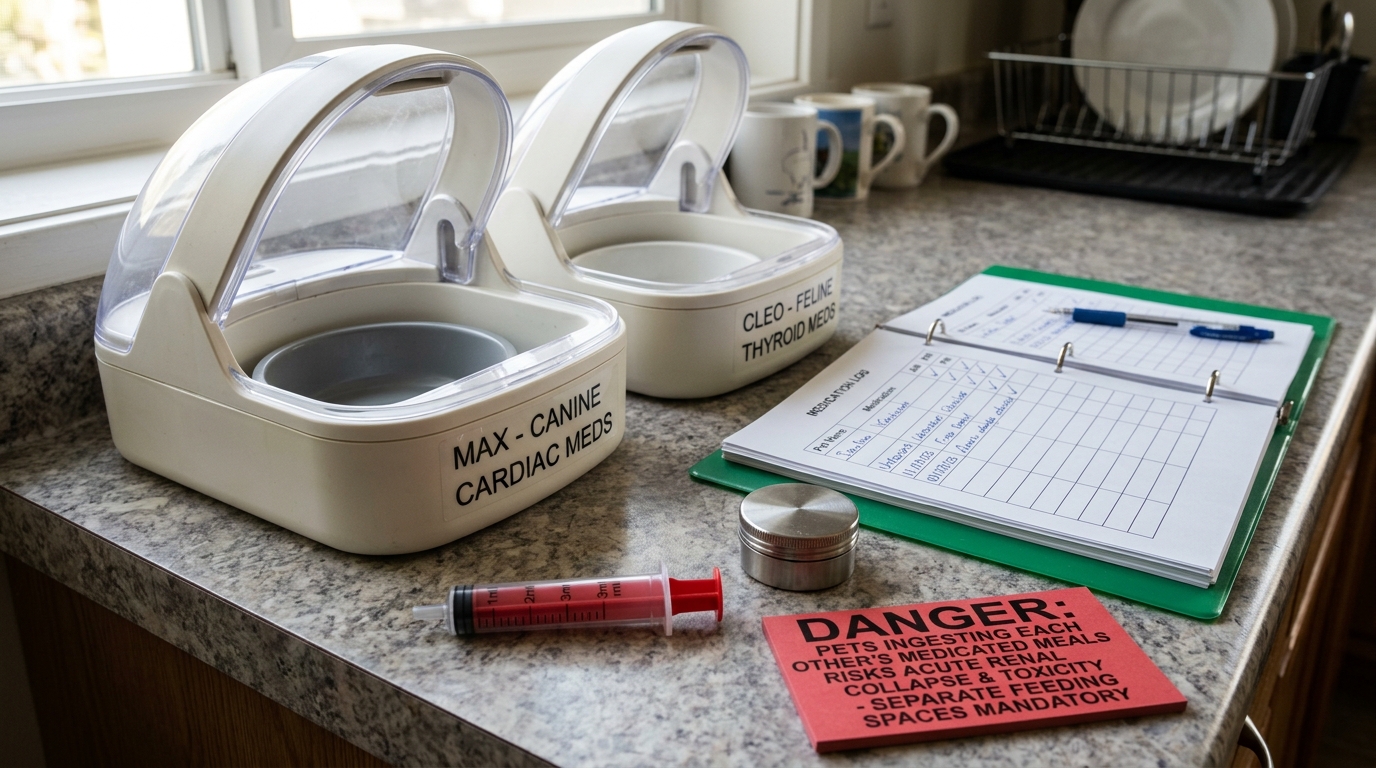
- Separate Animals During Medication Delivery: Administer pills or medicated treats behind closed doors; communal administration risks dominant pets snatching prescription drugs formulated for another animal.
- Secure Flavored Pharmaceuticals in Lockers: Store all chewable medications (especially palatable NSAIDs and parasite preventives) in locked, child-proof cabinets to prevent catastrophic canine gorge toxicity.
- Maintain a Centralized Medication Log: Record every dose immediately on a shared kitchen whiteboard noting the pet’s name, medication, exact dosage, and time to prevent accidental double-dosing.
This pharmaceutical preparation guide complies with veterinary pharmacovigilance guidelines from the American Veterinary Medical Association (AVMA). Never alter prescription dosages, split enteric-coated tablets, or transfer prescribed medications between animals without explicit instructions from your licensed attending veterinarian. If an unintended pet ingests medication, contact your veterinary clinic or an emergency animal poison control center immediately.
The High Stakes of Multi-Animal Medication Administration
Prescription medications tailored for one specific patient can produce catastrophic organ toxicity when ingested by a housemate. Physiological differences between species, distinct body weights, and preexisting hepatic or renal conditions dictate drug safety:
- Canine NSAIDs Ingested by Cats: Non-steroidal anti-inflammatory drugs formulated for canines (such as carprofen, meloxicam, or deracoxib) are flavored to encourage voluntary consumption. If an untreated feline companion finds and eats a discarded canine chewable tablet, severe acute renal necrosis and fatal gastric perforation frequently follow.
- Feline Permethrin Poisoning: Spot-on antiparasitic medications containing concentrated permethrin are safely prescribed for dogs but remain highly lethal to cats. Ingestion via mutual grooming or simple skin contact from bedding can trigger violent generalized seizures and hyperthermia.
- Food-Bowl Confusion: Concealing tablets inside meatballs, cheese, or canned food treats creates significant cross-dosing risks if a dominant, food-motivated pet pushes past a slower eater and swallows the medicated portion.
Core Medication Questions for Your Veterinary Team
Prior to departing the veterinary consultation room, systematically review these five vital medication safety questions with your doctor or veterinary technician:
| Inquiry Area | Target Clinical Question to Ask | Multi-Pet Safety Rationale |
|---|---|---|
| Accidental Ingestion Risk | “If my other dog or cat accidentally swallows this tablet, what are the specific toxic signs, and what emergency action should I take?” | Establishes immediate red-flag symptoms and clarifies whether toxicity occurs at low threshold doses. |
| Separation Timelines | “How long must I physically separate my pets after administering this topical or transdermal medication?” | Prevents mutual grooming from transferring active pharmacological ingredients to vulnerable companions. |
| Administration Delivery | “Can this medication be crushed, dissolved in water, or given directly by mouth if food mixing risks communal theft?” | Determines whether direct oral pilling is mandatory to guarantee 100% dosing accuracy without food competition. |
| Missed Dose Protocol | “If I discover that a meal was only half-eaten or split between pets, should I redose or wait until the next scheduled window?” | Prevents accidental double-dosing while maintaining steady therapeutic blood plasma concentrations. |
| Storage & Disposal | “Does this product require refrigeration or child-proof/pet-proof locking storage away from agile climbers?” | Guards against counter-surfing dogs or climbing cats puncturing plastic medication bottles or blister packs. |
Bulletproof Household Administration Protocols
Establishing reliable household habits eliminates dosing errors and keeps prescription medications segregated:
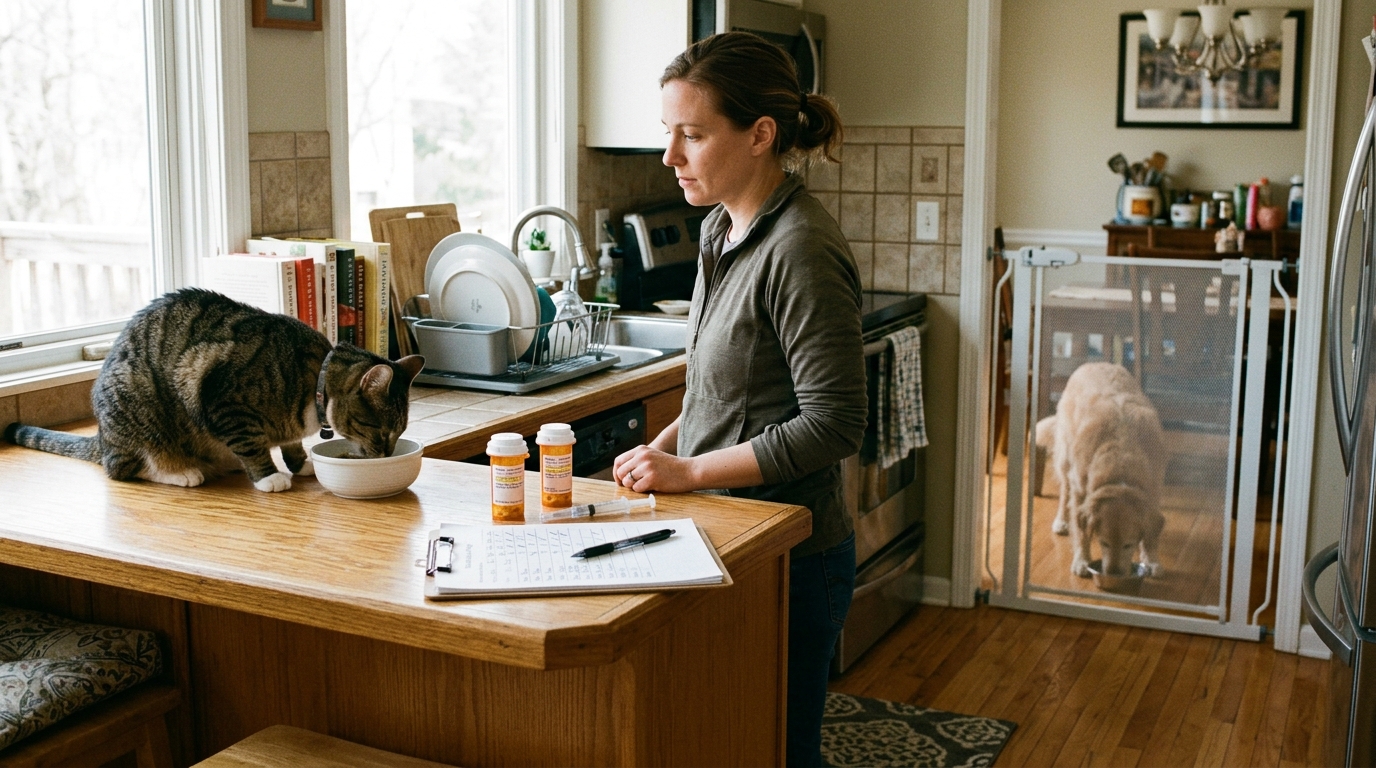
- The Closed-Door Administration Rule: Always administer oral medications inside a private room (such as a bathroom or laundry room) with the door firmly closed. Verify that the tablet has been swallowed by watching for a lick of the nose or offering a plain unmedicated treat before opening the door.
- Color-Coded Medication Bins: Assign each companion animal a distinctly colored storage container for their prescriptions, dosing syringes, and log sheets. Keep all veterinary pharmaceuticals locked in high cabinets rather than resting on open kitchen counters.
- Real-Time Logging: Maintain a written dosing sheet where household members initial the date and exact time of administration immediately after giving a dose, preventing well-meaning family members from administering duplicate doses.
Red-Flag Triage Matrix: Pharmaceutical Exposure Escalation
If you suspect an accidental ingestion or observe severe adverse reactions, consult this triage hierarchy:
| Triage Tier | Clinical Presentation | Required Action Protocol |
|---|---|---|
| Immediate Emergency (0–2 Hours) | Accidental ingestion of human medications (acetaminophen, ibuprofen, ADHD stimulants), feline exposure to canine permethrin, sudden seizures, severe ataxia, collapse, or profound bradycardia. | Transport immediately to an emergency animal hospital. Bring the medication packaging, bottle, or blister pack so emergency clinicians can identify active ingredients and calculate exact toxic thresholds. |
| Urgent Assessment (12–24 Hours) | Intended patient vomiting within 1 hour of oral dosing, mild facial swelling or hives, dark tarry stool (melena), or an unmedicated housemate ingesting a mild supplement. | Contact your attending veterinarian or an animal poison hotline. Do not induce vomiting at home with hydrogen peroxide unless specifically directed by a licensed veterinarian, as this risks severe gastritis and aspiration pneumonia. |
| Routine Medication Follow-up | Minor transient drooling following bitter liquid administration, slight temporary sluggishness known as an expected mild drug side effect, or difficulty administering full prescribed volumes. | Call your veterinary clinic during normal business hours to discuss compounding options (such as tuna-flavored chews or chicken liquids) to ease administration stress. |
Never share prescription antibiotics, pain medications, or ophthalmic ointments between pets, even if their symptoms appear identical. Applying steroid-containing eye ointments to a pet with an undiagnosed corneal ulcer can cause permanent corneal perforation and vision loss.
Frequently Asked Questions
How can I prevent pets from eating each other’s medicated food?
Feed pets in physically separate rooms with closed doors during medication administration, or use microchip-activated automated selective feeders. Supervise mealtime until bowls are empty, and immediately wipe down feeding surfaces to eliminate pharmacological residue before allowing pets to mingle.
What should I do if one pet licks topical medication off another pet?
Separate the animals immediately and check the medication label. If a cat licks a dog’s topical flea or tick medication containing permethrin, bathe the cat’s mouth with clean water and rush to an emergency veterinary clinic immediately with the medication packaging.
How should medications be stored in a home with curious dogs and agile cats?
Store all veterinary and human pharmaceuticals in high, child-proof cabinets or heavy plastic lockboxes with latching lids. Dogs can easily chew through standard child-resistant prescription bottles within minutes, while agile cats can knock containers off open countertops.
Sources
- AVMA Guidelines on Veterinary Prescriptions and Patient Safety. American Veterinary Medical Association.
- ASPCA Animal Poison Control Center Clinical Protocols. American Society for the Prevention of Cruelty to Animals.
- Merck Veterinary Manual: Pharmacology and Toxicology. Merck Sharp & Dohme Corp.
Caregiver Safety Checklist
- Never split or crush extended-release medications without explicit veterinary instruction — altering the delivery mechanism can cause toxicity or treatment failure.
- Store all medications at labeled temperatures; many biologics lose potency above 25C (77F) within 48 hours if left in a warm car or sunny windowsill.
- Contact your veterinarian before giving any OTC pain reliever; ibuprofen and acetaminophen are toxic to both dogs and cats at any dose.
Printable tools
Download the matching worksheet
Source transparency
Reference mix for this guide
Source labels describe the type of organization behind each reference; they are not a claim that any outside organization reviewed this article.
- AVMA Guidelines on Veterinary Prescriptions and Patient Safety Veterinary organization · avma.org
- ASPCA Animal Poison Control Center Clinical Protocols Animal welfare nonprofit · aspca.org
- Merck Veterinary Manual: Pharmacology and Toxicology Veterinary organization · merckvetmanual.com