This guide is general education for pet owners. If your pet has urgent symptoms, possible poisoning, injury, breathing trouble, collapse, severe pain, or sudden decline, contact a licensed veterinarian or local emergency service.
Editorial standard
How this guide was prepared
FIRST — cats are obligate nasal breathers, meaning any open-mouth breathing constitutes a severe, immediate respiratory emergency that demands rapid veterinary intervention.
Quick Answer
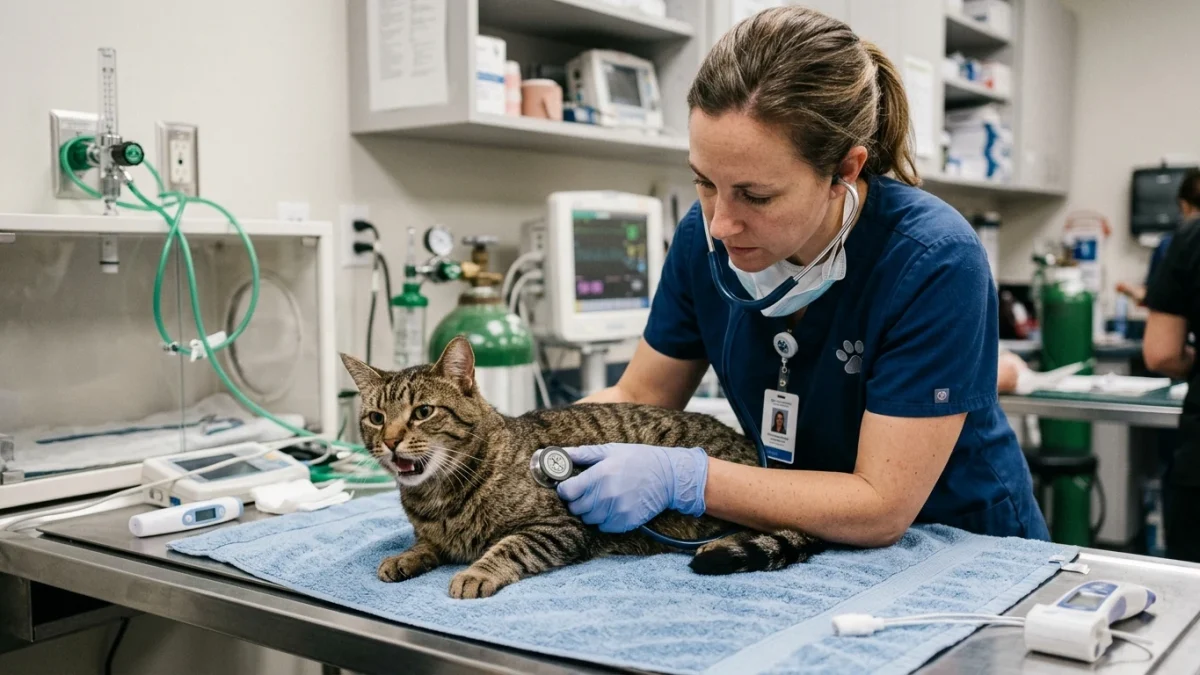
Unlike dogs, cats never pant to cool down under normal circumstances. Open-mouth breathing in felines almost exclusively indicates profound oxygen starvation. The only exception is very brief stress panting after extreme exertion or terror, which must stop within five minutes of resting. Otherwise, a panting cat is experiencing heart failure, fluid accumulating around the lungs (pleural effusion), a severe asthma attack, or major airway obstruction. Rush your cat to the nearest veterinary emergency room immediately. Do not compress their chest. Keep them in a dark, quiet carrier.
Why Cats Never Pant Like Dogs: The Obligate Nasal Breather
Anatomy dictates survival strategies. Canine physiology relies heavily on heat exchange through panting. Dogs are pursuit predators built for endurance, requiring massive thermal regulation via evaporation from their tongue and respiratory tract. Felines evolved strictly as ambush predators. Their respiratory anatomy is designed for short, explosive bursts of speed followed by resting, maintaining strict reliance on nasal breathing.
Airflow routing through a cat’s specialized nasal turbinates performs critical physiological functions. These intricate bony structures warm, filter, and humidify inhaled air before it reaches the delicate alveolar tissues deep within the lungs. Bypassing this sophisticated filtration and conditioning system by opening the mouth signals critical systemic failure. The cat is sacrificing airway protection purely to maximize raw air intake.
Thermoregulation in cats differs entirely from dogs. Cats cool themselves primarily through radiating heat from their ears, sweating exclusively through their paw pads, and saliva evaporation during grooming. They do not pant to regulate core temperature unless they are suffering from life-threatening hyperthermia (heatstroke).
The only physiological exception involves brief, intense physical exertion or acute psychological terror. A young cat chasing a toy vigorously might pant for two or three minutes. Transporting a highly anxious animal in a moving vehicle can occasionally induce stress panting. Crucially, non-emergency panting stops entirely within five minutes of the cat resting in a calm, cool environment. Any panting or open-mouth breathing occurring while the cat is resting is entirely pathological. Tissue hypoxia (low oxygen) begins immediately and leads to irreversible brain and organ damage within minutes.
The Deadly Differential: What’s Stealing Your Cat’s Breath
Veterinary emergency clinicians recognize specific critical conditions underlying feline respiratory distress (dyspnea). You must understand the internal mechanical failures that force a cat to open its mouth to survive.
Pleural Effusion: Fluid accumulates abnormally in the pleural space, the cavity between the lungs and the inner chest wall. Lung expansion becomes physically restricted by the pressure of this surrounding fluid. Cats literally drown internally. The fluid type varies wildly: chyle (chylothorax, milky lymphatic fluid), pus (pyothorax, severe bacterial infection), blood (hemothorax), or modified transudate (often secondary to heart disease). Affected cats adopt a classic “orthopneic” posture: crouching sternally, elbows pulled wide away from the chest wall, and neck extended straight out to align the airway.
Congestive Heart Failure (CHF): Feline heart disease often remains entirely silent until the moment it cascades into a crisis. Hypertrophic Cardiomyopathy (HCM) causes the muscular walls of the heart, particularly the left ventricle, to thicken abnormally inward. Pumping efficiency plummets. Pressure builds backwards into the pulmonary veins. Fluid rapidly leaks directly into the lung tissue (pulmonary edema) or the chest cavity. These patients require immediate diuretics, oxygen therapy, and precise sedation to survive.
Feline Asthma Crisis: A severe allergic cascade triggers massive inflammation, mucus overproduction, and spasmodic constriction of the small airways (bronchioles). Trapped air prevents fresh oxygen exchange. Exhaling becomes incredibly difficult. Chronic underlying asthma may present as periodic coughing that owners mistake for hairballs. Check out our detailed asthma vs. hairball vs. heart guide for deeper clinical context on chronic coughing versus acute crisis.
Pneumothorax: Free air escapes into the chest cavity. This often stems from blunt force trauma (like a car strike, falling from a height, or animal attack) causing lung laceration. Spontaneous pneumothorax can also occur when a weakened lung blister (bulla) ruptures without warning. The trapped air creates positive pressure that collapses the adjacent lung lobes.
Upper Airway Obstruction: Physical blockages prevent air from reaching the lungs regardless of chest effort. Nasopharyngeal polyps (benign inflammatory masses), aggressive tumors (like squamous cell carcinoma), severe laryngeal paralysis, or inhaled foreign objects choke off the trachea. Breathing often sounds incredibly noisy. Stridor (a harsh, high-pitched wheezing sound originating from the throat) heavily suggests upper airway blockage.
Diaphragmatic Hernia: Severe trauma tears the diaphragm, the critical muscular sheet separating the chest cavity from the abdomen. Abdominal organs (liver, stomach, intestines, spleen) spill forward through the tear into the chest cavity, physically crushing the lungs and heart. Breathing effort often appears paradoxical, with the abdomen moving opposite to the chest wall during inspiration.
Pulmonary Thromboembolism (PTE): A blood clot lodges directly in the pulmonary artery vasculature. Blood flow to the lungs abruptly stops, meaning oxygen cannot be absorbed into the bloodstream even if the cat is moving air perfectly well. Severe, sudden open-mouth breathing results without prior coughing.
Profound Anemia: Massive red blood cell loss means the body lacks the physical vehicles to transport oxygen to tissues. The cat breathes heavily and rapidly to try and compensate for the lack of circulating oxygen carriers. Gums will appear stark white or incredibly pale.
Clinical Emergency Triage Matrix
| Tier | Condition | Action Required |
|---|---|---|
| Tier 1: Immediate Emergency (0-2h) | Open-mouth breathing at rest. Blue, purple, or pale grey/white gums. Exaggerated abdominal effort to breathe (stomach heaving forcefully). Collapse, inability to stand, or extreme lethargy. Orthopneic posture (elbows abducted, neck extended). | Rush to ER immediately. Handle with extreme care. Keep carrier dark and cool. Pre-call the hospital to prepare oxygen support. |
| Tier 2: Same-Day Evaluation (12-24h) | Increased resting respiratory rate (RRR) consistently above 40 breaths per minute while deeply asleep. Intermittent panting after minimal exertion (walking across the room). Chronic coughing abruptly increasing in frequency or severity. | Schedule urgent vet visit today. Do not wait overnight. Use our Resting Respiratory Rate tool to accurately measure at home. |
| Tier 3: Home Monitoring | Brief, recognizable stress panting (under 5 minutes) directly following intense play, high heat exposure, or acute psychological stress (e.g., vacuum cleaner, car ride), returning completely to normal, closed-mouth resting breathing. | Monitor closely. Ensure cool, quiet environment. Check gum color visually without causing further stress (should be bright bubblegum pink). |
What to Do While Getting to the ER
Minimizing fear and physical struggle saves lives during respiratory crises. Adrenaline spikes massively increase tissue oxygen demand, which a compromised respiratory system absolutely cannot supply. Forcing a terrified, dyspneic cat to fight restraint frequently triggers fatal cardiac arrest. Handle them with extreme, deliberate gentleness.
Place the cat into a sturdy carrier immediately. Do not attempt to hold them loose in the car. Cover the carrier completely with a light towel or blanket to create a dark, secure environment. Visual isolation drastically reduces anxiety in felines. Ensure cool air flowing from car AC vents reaches the carrier to help lower body temperature and reduce metabolic oxygen demand.
Monitor their gum color quickly by briefly lifting the lip, but do not repeatedly pry their mouth open or force them into unnatural positions. Normal gums are pink. Blue, grey, or stark white gums indicate impending death.
Do NOT hold the cat tightly against your chest. Compression of the thorax restricts their already failing lung expansion. Carrying them wrapped tightly in a restrictive towel or blanket “burrito” is similarly dangerous during a respiratory crisis.
Do NOT offer food, water, or treats. A cat struggling for oxygen cannot swallow properly and risks aspirating liquid or solid material directly into their lungs, instantly worsening their respiratory failure. Emergency teams routinely need to sedate dyspneic cats immediately upon arrival to facilitate intubation, chest tapping (thoracocentesis), or placement in an oxygen cage. An empty stomach prevents dangerous vomiting and aspiration under rapid sedation protocols. For context on sudden refusal of food related to illness, see our feline anorexia triage guide.
Dangerous Home Pitfalls: What NOT to Do (Rule S1)
NEVER attempt to give your cat human asthma inhalers (Albuterol, Fluticasone) without direct veterinary instruction and a prescribed feline-specific spacer device (like an AeroKat). Spraying an inhaler into the air near a cat’s face is completely ineffective and only causes panic.
NEVER administer over-the-counter human allergy medications, antihistamines, or decongestants to treat presumed asthma during an acute crisis. Oral absorption takes hours, which a dying cat does not have. Furthermore, inappropriate dosing of human medications frequently causes fatal neurological or cardiac toxicity in cats.
NEVER attempt “steaming” your cat in a hot, humid bathroom. While occasionally used for mild upper respiratory congestion, high humidity and heat drastically increase oxygen demand and cause rapid hyperthermia, accelerating death in a cat already struggling with lower airway disease or heart failure.
NEVER try to look down their throat with a flashlight or your fingers to find a suspected obstruction. Restraint for this procedure almost always causes fatal cardiac arrest in dyspneic cats.
NEVER diffuse essential oils in the home to “open the airways.” Essential oils are highly toxic to felines and frequently trigger massive airway spasms, worsening asthma attacks.
NEVER administer oral diuretics or heart medications prescribed for a previous pet. Feline drug metabolism requires exacting precision. Giving incorrect cardiac medications causes lethal blood pressure collapse.
NEVER wait “an hour to see if they calm down” if the open-mouth breathing started while the cat was resting or resulted in blue/grey gums.
Sources
- Retrospective study of pleural effusion in 59 cats – Clinical presentation, fluid analysis, and underlying etiologies of fluid accumulation in the feline chest cavity causing severe dyspnea.
- Feline hypertrophic cardiomyopathy: an update – Pathology and disease progression leading to acute congestive heart failure, pulmonary edema, and sudden respiratory distress.
- Diagnosis and management of feline asthma – Emergency management protocols for status asthmaticus, acute airway inflammation, and bronchoconstriction in felines.
Caregiver Safety Checklist
- Confirm resting respiratory rate (RRR) while cat is completely asleep (normal is under 30 breaths per minute).
- Assess gum color rapidly (lift upper lip gently, look for pink versus blue, grey, or white).
- Observe for exaggerated abdominal effort during breathing (heaving sides).
- Prepare a top-loading transport carrier in advance with soft, unrestrictive bedding.
- Identify the nearest 24-hour veterinary emergency facility and program their direct number into your phone.
- Pre-cool the vehicle before placing the crated cat inside during transport.
Interactive Resting Respiratory Rate (RRR) Counter
Count your resting or sleeping pet's breaths per minute using our timed clinical tap tool. Resting respiratory rate below 30 breaths/min is the veterinary baseline for canine and feline home monitoring.
Source transparency
Reference mix for this guide
Source labels describe the type of organization behind each reference; they are not a claim that any outside organization reviewed this article.
- Retrospective study of pleural effusion in 59 cats Government or public agency · pubmed.ncbi.nlm.nih.gov
- Feline hypertrophic cardiomyopathy: an update Government or public agency · pubmed.ncbi.nlm.nih.gov
- Diagnosis and management of feline asthma Government or public agency · pubmed.ncbi.nlm.nih.gov