This guide is general education for pet owners. If your pet has urgent symptoms, possible poisoning, injury, breathing trouble, collapse, severe pain, or sudden decline, contact a licensed veterinarian or local emergency service.
Dosages must be calculated by a licensed veterinarian based on species, weight, and bloodwork. Never administer human medications or self-adjust prescription doses for pets.
Editorial standard
How this guide was prepared
In a bustling multi-pet home, identifying early clinical deviations presents unique diagnostic hurdles. Shared food dishes, communal water fountains, and multi-cat litter boxes frequently obscure which animal is experiencing subtle changes in appetite, hydration, or elimination. When a caregiver senses that a companion animal appears lethargic or unsettled, an unstructured impression fails to provide clinicians with actionable data. Establishing a time-bounded, objective symptom timeline differentiates individual health patterns without causing avoidable handling stress or territorial disruption.
- Isolate for Definitive Output Attribution: When unobserved vomiting or loose stool occurs, temporarily separate suspected animals during feeding and overnight to accurately identify the affected pet.
- Deploy Safe Veterinary Food Markers: Under veterinary direction, adding small amounts of pureed canned pumpkin or pet-safe nutritional markers to food helps definitively match specific bowel movements to individual pets.
- Install Motion-Activated Pet Cameras: Position indoor smart cameras near communal litter box stations and feeding zones to objectively record individual elimination frequency, straining, and water consumption.
This clinical protocol outlines symptom documentation under American Animal Hospital Association (AAHA) and International Society of Feline Medicine (ISFM) standards. A symptom log serves as diagnostic support for your veterinary team and never replaces professional clinical triage. If any pet exhibits acute respiratory distress, sudden collapse, repeated unproductive vomiting, or active urethral straining, transport the animal immediately to an emergency facility rather than compiling records.
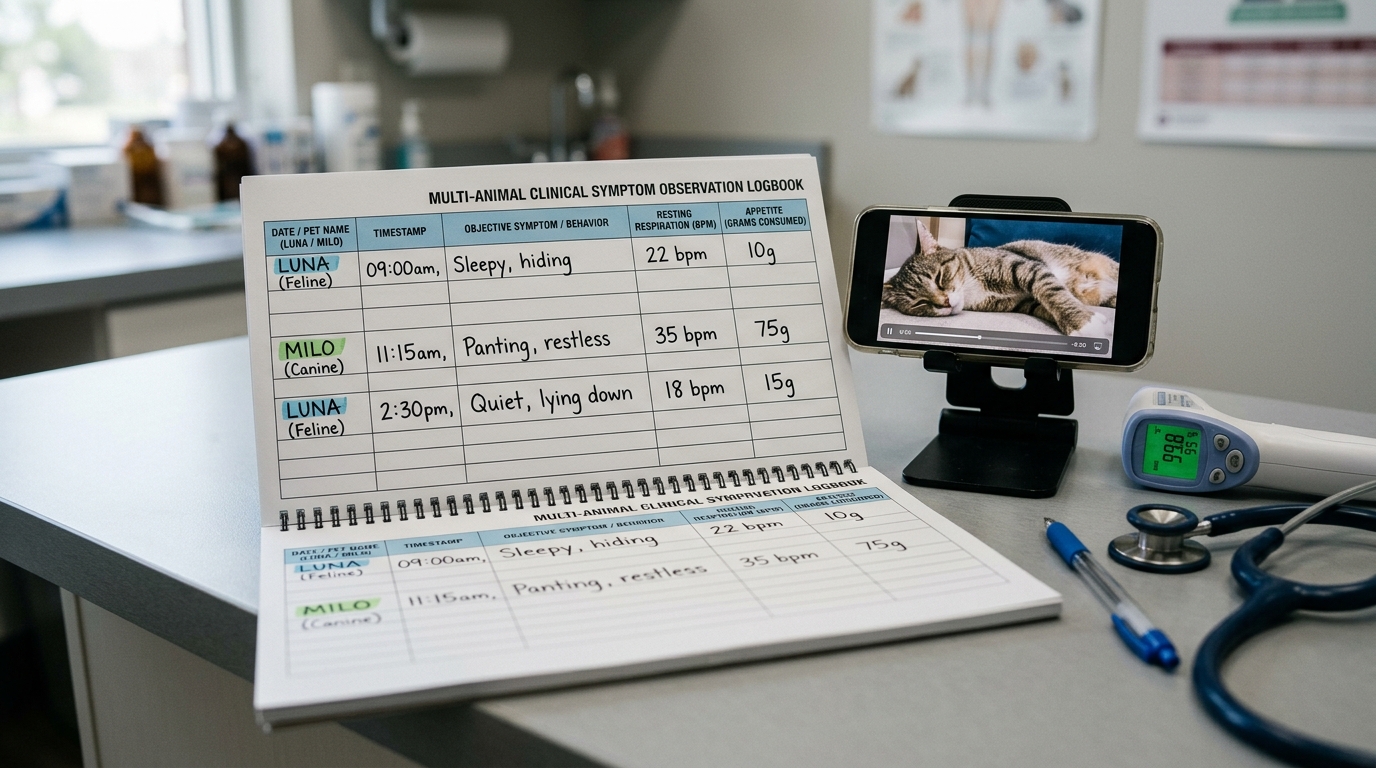
The Multi-Pet Attribution Dilemma: Objective Logging vs Inferred Assumptions
Attributing physiological output accurately in shared households requires isolating verifiable evidence from common assumptions. Communal living frequently leads to delayed veterinary intervention when caregivers mistake one pet’s normal routine for another animal’s declining baseline:
- Elimination Attribution Failure: If a household contains three cats and two litter stations, discovering diarrhea or absent feces provides zero clarity on which cat requires therapy unless direct elimination or temporary isolation confirms the patient.
- Subtle Caloric Compensation: Dominant animals frequently consume rations left behind by a nauseated or hyporexic companion, masking early stages of chronic kidney disease, dental pain, or hepatic lipidosis.
- Subtle Contagion Spread: Respiratory pathogens, enteric parasites such as Giardia, and dermatophytes spread quickly across social groups before clinical manifestations appear obvious. Documenting contact timelines prevents circular re-infection.
Structuring the Time-Bounded Clinical Timeline
Veterinary diagnostics rely on chronological trajectory: knowing whether a symptom began abruptly, fluctuates cyclically, or steadily deteriorates guides differential diagnostic pathways. Medical teams recommend structuring records into precise 24 to 72-hour clinical windows:
| Monitoring Dimension | Objective Observation Standard | Common Diagnostic Trap to Avoid |
|---|---|---|
| Food & Water Intake | Measure exact bowl weights pre- and post-meal; observe direct chewing mechanics and swallow counts. | Assuming an empty communal dish means all resident animals met their individual caloric and hydration baselines. |
| Litter & Toileting | Track frequency of visits, posture duration, and physical output consistency using standardized fecal scoring. | Guessing output attribution based on which pet was last seen exiting the bathroom or utility room. |
| Locomotion & Posture | Film short 5-second videos of unprovoked rising, stair climbing, and spinal curvature from a calm distance. | Forcing an animal to jump or run to test lameness, which provokes orthopedic pain and defensive aggression. |
| Social Interactions | Note changes in grooming solicitation, avoidance behaviors, hiss frequency, and resting location elevation. | Dismissing subtle social withdrawal or uncharacteristic hiding as temporary behavioral mood swings. |

Stress-Free Tracking: Respecting Behavioral Consent
Collecting diagnostic history must never compromise animal welfare. Chasing a frightened cat underneath furniture to inspect mucosal moisture or repeatedly probing a tender abdomen triggers intense sympathetic nervous arousal, skewing vital signs like heart rate and body temperature.
Veterinary behaviorists recommend passive observation. Document spontaneous behaviors during normal household routines. If obtaining a diagnostic video is requested by your veterinary clinic, record the pet from across the room using gentle zoom features without direct eye contact. If capturing the behavior requires cornering, restraining, or distressing the pet, discontinue immediately and describe the presentation verbally to the veterinary team.
Contagion Quarantine Protocols for Multi-Pet Households
When an individual pet manifests symptoms suggestive of communicable illness—such as sneezing with oculonasal discharge, sudden coughing, acute vomiting, or unformed stool—immediate isolation safeguards the remaining household animals:
- Designate a Medical Isolation Room: House the symptomatic animal in a dedicated room equipped with individual litter, food, water, and washable bedding away from central corridors.
- Dedicated Feeding Utensils: Assign distinct food and water dishes. Wash contaminated bowls separately using hot water and clinical-grade veterinary disinfectants.
- Caregiver Biosecurity: Tend to healthy resident pets first before entering the isolation quarters. Wash hands thoroughly with soap and water after handling the symptomatic pet to prevent mechanical vector transmission.
Red-Flag Triage Matrix: Escalating Multi-Pet Symptoms
Use this validated triage hierarchy to determine whether home timeline logging is appropriate or immediate hospital transfer is required:
| Triage Tier | Clinical Presentation | Required Action Protocol |
|---|---|---|
| Immediate Emergency (0–2 Hours) | Sudden collapse, profound respiratory distress (open-mouth breathing in cats, cyanotic gums), active seizures, severe trauma, or acute inability to urinate. | Transport directly to the nearest veterinary emergency clinic. Do not waste critical minutes writing timeline notes; call the facility en route to prepare oxygen and crash carts. |
| Urgent Assessment (12–24 Hours) | Repeated vomiting across 12 hours, total food refusal exceeding 24 hours in cats (risk of hepatic lipidosis), persistent lethargy with fever (>103.5°F), or multiple pets falling ill simultaneously. | Schedule a prompt outpatient clinical consultation. Bring your structured symptom chronology and medication records to assist differential diagnosis. |
| Home Monitoring (24–72 Hours) | Single isolated episode of regurgitation with bright attitude, mild transient appetite drop during routine food transition, or minor superficial skin scratch. | Initiate the 24-hour individual timeline. Track appetite and bowel movements closely while maintaining separated feeding areas. Escalate if symptoms progress. |
Never administer human over-the-counter pain medications (such as acetaminophen, ibuprofen, or aspirin) to dogs or cats. Acetaminophen causes fatal methemoglobinemia and hepatic necrosis in felines, while non-steroidal anti-inflammatory drugs trigger acute renal failure and severe gastrointestinal ulceration.
Frequently Asked Questions
What specific clinical information should be recorded in a pet symptom log?
Note exact dates, times, duration of episodes, descriptions of vomit or stool, behavioral posture, changes in water and food consumption, and brief smartphone video clips of coughing, limping, or tremors.
When does an observed symptom require immediate emergency veterinary evaluation?
Symptoms such as pale or blue gums, extreme lethargy, continuous unassisted vomiting, respiratory distress, abdominal distension, or inability to urinate require immediate emergency care rather than ongoing home logging.
How does maintaining an objective symptom journal assist the veterinary clinical team?
A detailed chronological timeline removes guesswork, identifies disease progression patterns, correlates signs with environmental triggers, and helps veterinarians select targeted diagnostic tests without unnecessary expense.
Caregiver Symptom Documentation Checklist
- Record exact times, duration, and frequency of every vomiting, coughing, or abnormal episode.
- Capture 15 to 30-second videos of unusual gaits, breathing patterns, or tremors to show the clinician.
- Grade stool consistency using the 1 to 7 fecal chart and note any presence of fresh blood or dark melena.
- Track water bowl intake and percentage of normal meal portions consumed across each 24-hour cycle.
- Bring your written or digital log directly to the veterinary examination to assist clinical diagnosis.
Sources
- AAHA/AAFP Feline Life Stage Guidelines. American Animal Hospital Association.
- ISFM Consensus Guidelines on Feline Environmental Needs. International Society of Feline Medicine.
- Journal of the American Veterinary Medical Association (JAVMA). Clinical history recording in multi-animal environments.
Printable tools
Download the matching worksheet
Source transparency
Reference mix for this guide
Source labels describe the type of organization behind each reference; they are not a claim that any outside organization reviewed this article.
- AAHA/AAFP Feline Life Stage Guidelines Veterinary organization · aaha.org
- ISFM Consensus Guidelines on Feline Environmental Needs Veterinary organization · catvets.com
- Journal of the American Veterinary Medical Association (JAVMA) Veterinary organization · avmajournals.avma.org