This guide is general education for pet owners. If your pet has urgent symptoms, possible poisoning, injury, breathing trouble, collapse, severe pain, or sudden decline, contact a licensed veterinarian or local emergency service.
Editorial standard
How this guide was prepared
This clinical guide outlines travel safety and multi-pet reintroduction protocols. If an inter-pet altercation causes deep puncture wounds, uncontrolled bleeding, severe eye trauma, or acute shock during transit, seek immediate emergency veterinary medical care.
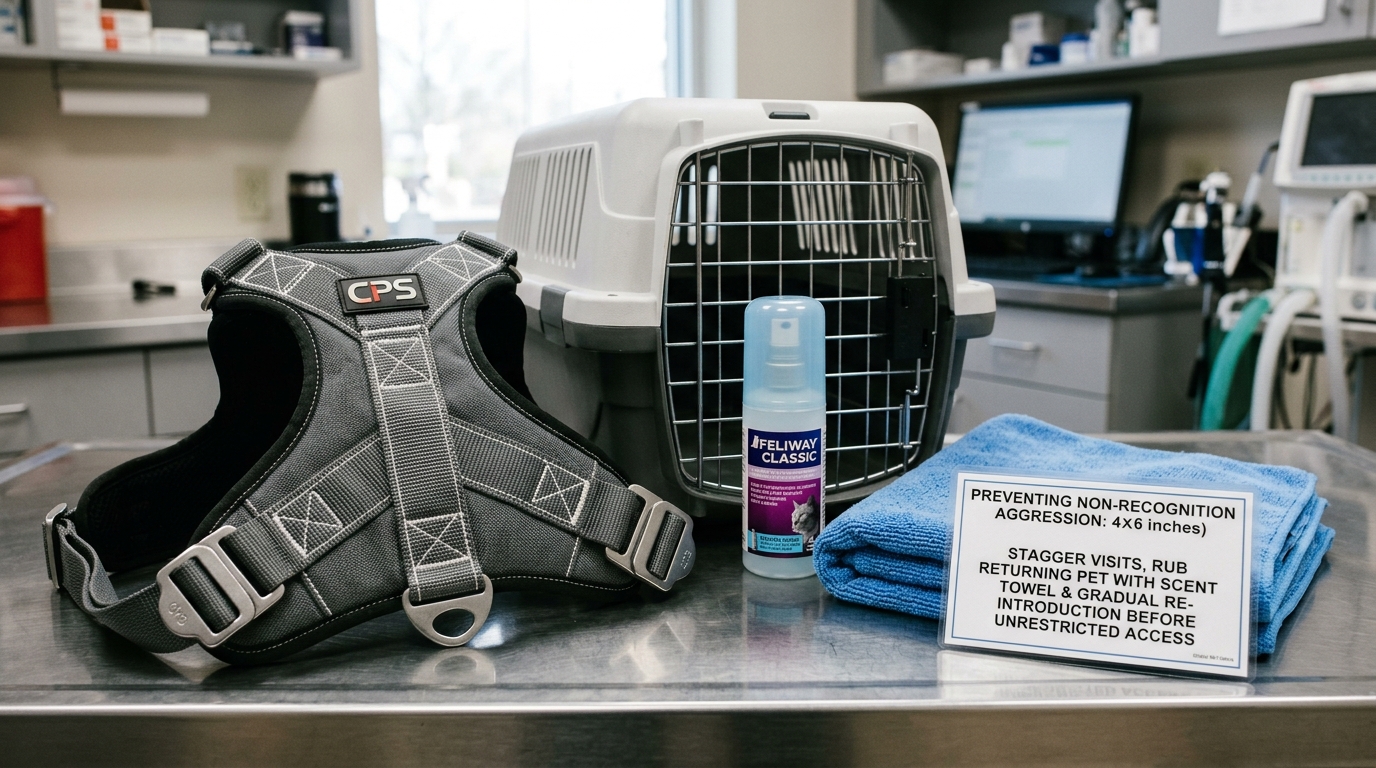
- Pre-Condition Dedicated Carriers: Acclimate every companion animal to their own individual carrier at least 48 hours prior to transport using familiar bedding and synthetic pheromone sprays (Feliway Classic/Adaptil).
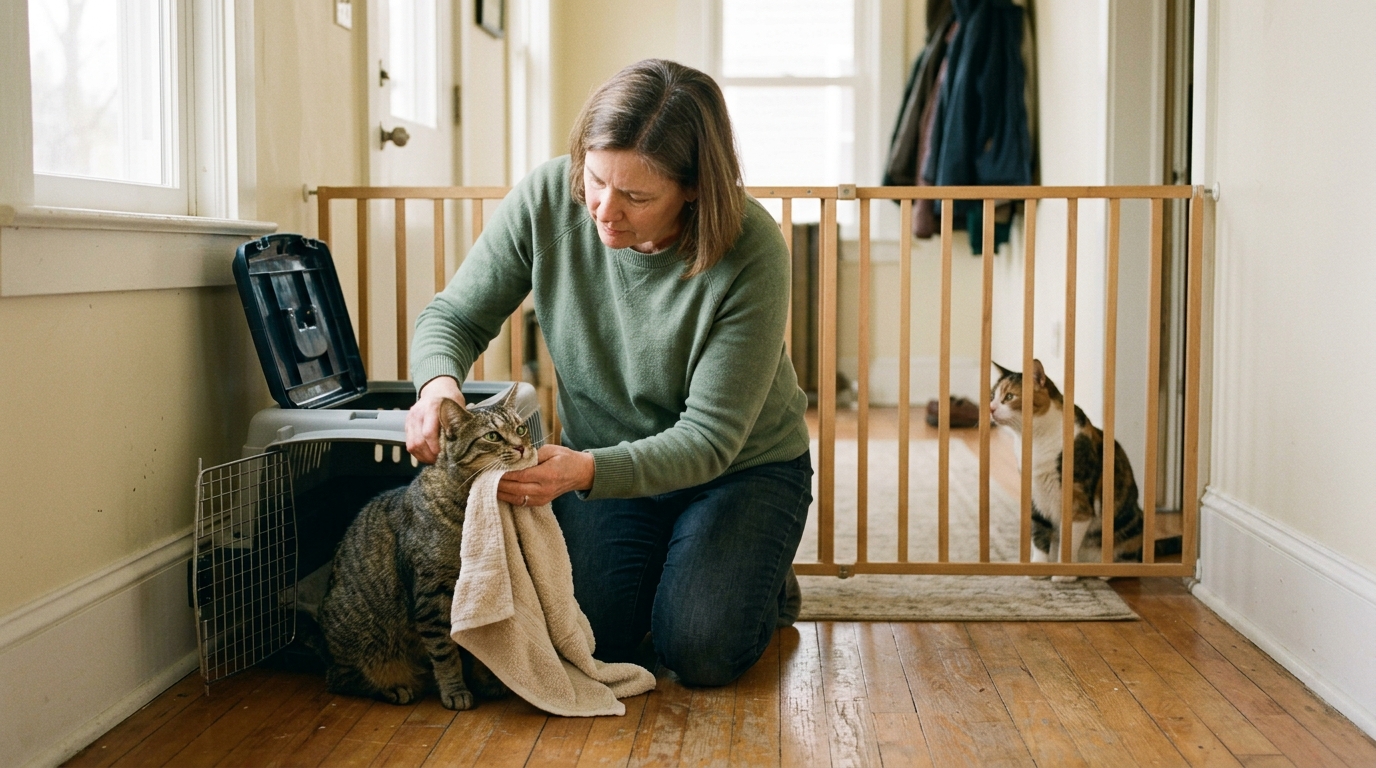
- Prevent Non-Recognition Aggression: Isolate returning pets in a quiet bedroom for 2 to 4 hours after veterinary appointments, allowing foreign clinic and antiseptic scents to dissipate before reuniting with resident animals.
- Maintain Separate Clinical Dossiers: Keep distinct health folders for each animal detailing current body weights, active prescriptions, and specific consultation goals to eliminate caregiver confusion in multi-pet households.
Managing preventive healthcare in a multi-pet home involves complex logistical challenges. Transporting multiple companion animals simultaneously increases the risk of vehicle escape, redirected arousal aggression, and carrier stress. Furthermore, when one treated animal returns from the clinic carrying unfamiliar hospital odors, resident animals can display intense territorial hostility. For multi-pet caregivers, preparing for wellness visits requires structured vehicular safety, staggered clinic staging, and controlled post-visit reintroduction.
The Sensory Mechanism of Non-Recognition Aggression
In multi-cat and mixed-species households, the most disruptive post-clinic complication is feline non-recognition aggression. Cats identify familial housemates primarily through shared olfactory colony scents rather than visual features alone. Understanding this sensory mechanism prevents violent household conflicts:
- Foreign Odor Contamination: During a clinic visit, an animal absorbs volatile hospital scents including chlorhexidine disinfectants, isopropyl alcohol, anal sac secretions, and fear pheromones emitted by other hospitalized patients.
- Perceived Intruder Response: When the patient returns home, resident cats fail to recognize their companion’s olfactory profile. The resident animal perceives the returned pet as an alien territorial intruder, triggering immediate hissing, aggressive stalking, or violent physical attacks that can fracture the long-term inter-pet bond.
- The Scent-Swapping Reintroduction Protocol: Do not immediately release a returned pet into communal living spaces. House the returning animal in a separate sanctuary room for 12 to 24 hours. Rub a clean towel over the forehead and flank of resident pets, then gently stroke the returned animal to blend household odors before allowing visual contact through a baby gate or cracked door.
Vehicular Safety: Center for Pet Safety Standards
Transporting multiple animals in a single vehicle without physical barriers creates severe safety hazards. In the event of a sudden traffic stop or collision, unrestrained pets become high-velocity projectiles, while high anxiety inside the cabin can spark intense redirected fighting. Enforce strict vehicular restraint:
| Transport Category | Center for Pet Safety (CPS) Protocol | Clinical Risk Mitigation |
|---|---|---|
| Feline Patients & Small Dogs | Individual rigid, crash-tested carriers secured with vehicle seatbelts or placed on the floor behind front passenger seats. | Prevents carrier fracturing during sudden deceleration; eliminates vehicle floorboard entrapment; blocks visual eye contact between tense pets. |
| Medium to Large Canines | CPS-certified crash-tested harnesses anchored to factory LATCH restraint points, or crash-rated metal vehicle kennels. | Prevents dog from entering the driver’s footwell or windshield; eliminates inter-dog redirected biting when sirens or traffic provoke acute panic. |
| Single-Carrier Prohibition | Strict Rule: Never place two cats or two dogs in the same carrier, even if they are lifelong bonded siblings. | Confined spatial panic during braking or transit can trigger severe facial lacerations and permanent social trauma between bonded animals. |
Clinic Staging and Staggered Handoff Protocols
Entering a busy veterinary reception lobby with multiple leashed dogs or stacked cat carriers elevates sensory arousal. Dogs may lunge toward unfamiliar patients, while cats experience severe sympathetic distress. Coordinate appointment logistics directly with the veterinary team:
- Parking Lot Staging: Call the reception desk upon arrival in the parking area. Wait inside your air-conditioned vehicle until an examination room is sanitized and ready, bypassing the waiting room entirely.
- Staggered Examination Appointments: If two household pets require annual exams on the same day, request consecutive appointments rather than examining both animals simultaneously in one room. This allows clinicians to focus completely on one patient while the second rests calmly in the vehicle with a caregiver.
- Designated Transporter Roles: In multi-caregiver families, assign distinct responsibilities: one adult manages the physical patient handoff and carrier transport, while the second manages health history documentation, payment, and medication verification.
Red-Flag Triage Matrix: Multi-Pet Transport and Aggression
Use this objective triage matrix to navigate transit emergencies and inter-pet altercations:
| Triage Level | Clinical Manifestations | Required Action Protocol |
|---|---|---|
| Immediate Emergency (0–2 Hours) | Full-thickness bite wounds with penetrating trauma, arterial or pulsatile bleeding, severe eye lacerations or proptosis, sudden respiratory collapse in carrier, hyperthermia (> 104.5°F / 40.3°C) from vehicle heat distress. | Transport immediately to the nearest veterinary emergency critical care facility. Apply firm pressure with clean gauze to bleeding wounds; never use a tourniquet without veterinary instruction. |
| Urgent Assessment (12–24 Hours) | Intense inter-pet territorial aggression where cats cannot be safely integrated after 24 hours of separation, superficial skin scratches showing localized redness or swelling, marked anorexia following clinic return. | Contact your primary veterinarian or a veterinary behaviorist. Bathe the returning pet or wipe down their coat with pet-safe grooming wipes to accelerate hospital odor dissipation. |
| Routine Home Monitoring | Mild initial sniffing and brief, low-level hiss at carrier door that resolves within 2 hours; peaceful resting in separate rooms; normal appetite when meals are offered in separated zones. | Maintain separated feeding, utilize synthetic feline facial pheromone diffusers (e.g., Feliway), and allow pets to re-integrate at their own pace over 24 to 48 hours. |
Safe clinic visits begin with physical security and stress mitigation. If transporting multiple pets poses an unmanageable risk of escape, vehicle distraction, or inter-animal fighting, schedule individual home visits with a mobile veterinarian or book appointments on separate calendar days.
Frequently Asked Questions
How soon after adoption or bringing a pet home should a preventive examination be scheduled?
Schedule the initial comprehensive examination within 48 to 72 hours. This provides prompt detection of shelter-acquired respiratory or parasitic pathogens, confirms immunization history, and establishes a medical baseline before minor subclinical abnormalities escalate.
What records and specimens should caregivers bring to a preventive veterinary consultation?
Bring all shelter or prior veterinary records, vaccine certificates, a complete list of current foods and treats, and a fresh stool sample collected within 4 to 6 hours for intestinal parasite flotation and antigen screening.
How frequently should healthy adult pets attend routine wellness examinations?
Healthy adult dogs and cats require a comprehensive preventive examination at least once annually. Senior pets over 7 years of age benefit from semi-annual visits to detect chronic kidney disease, metabolic changes, and osteoarthritis at early manageable stages.
Sources
- CPS Certified Pet Restraint and Travel Safety Standards. Center for Pet Safety.
- Feline Nonrecognition Aggression: Pathophysiology and Clinical Management. Today’s Veterinary Practice.
- Fear Free Veterinary Visit Guidelines for Multi-Pet Households. American Animal Hospital Association.
Caregiver Safety Checklist
- Bring a written symptom timeline to every preventive visit — veterinarians spend 40% more time on clinical reasoning when owners provide structured timelines vs. verbal recall.
- Ask for a written vaccination record at each appointment; verbal confirmation is not sufficient documentation for boarding facilities or breed registries.
- Request baseline bloodwork (CBC/chemistry) at the first preventive visit for any pet over 7 years — age-related disease caught at baseline is treated months earlier.
Printable tools
Download the matching worksheet
Source transparency
Reference mix for this guide
Source labels describe the type of organization behind each reference; they are not a claim that any outside organization reviewed this article.
- CPS Certified Pet Restraint and Travel Safety Standards Reference source · centerforpetsafety.org
- Feline Nonrecognition Aggression: Pathophysiology and Clinical Management Reference source · todaysveterinarypractice.com
- Fear Free Veterinary Visit Guidelines for Multi-Pet Households Veterinary organization · aaha.org