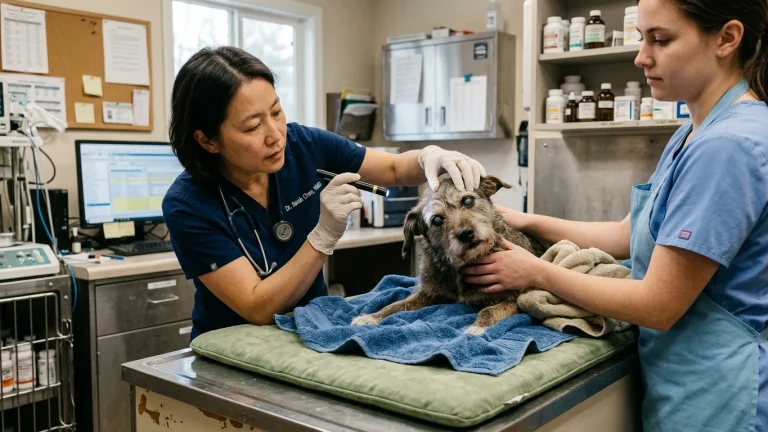
This guide is general education for pet owners. If your pet has urgent symptoms, possible poisoning, injury, breathing trouble, collapse, severe pain, or sudden decline, contact a licensed veterinarian or local emergency service.
Dosages must be calculated by a licensed veterinarian based on species, weight, and bloodwork. Never administer human medications or self-adjust prescription doses for pets.
Editorial standard
How this guide was prepared
This clinical guide outlines observation boundaries and decompression protocols for newly adopted dogs. If your dog exhibits acute collapse, uncontrollable shaking, non-weight-bearing lameness, severe abdominal distention, or pale gums, seek immediate emergency veterinary care.
- The 7- to 10-Day Diet Transition Protocol: Prevent acute osmotic diarrhea and intestinal dysbiosis by gradually blending new food over 7–10 days (25% new, 50% new, 75% new, 100% new).
- Recognizing Subtle Canine & Feline Stress Signals: Monitor for early displacement signals—repetitive lip-licking, exaggerated yawning, avoiding direct gaze, whale eye, and stiff tail tucking—which precede aggressive outbursts.
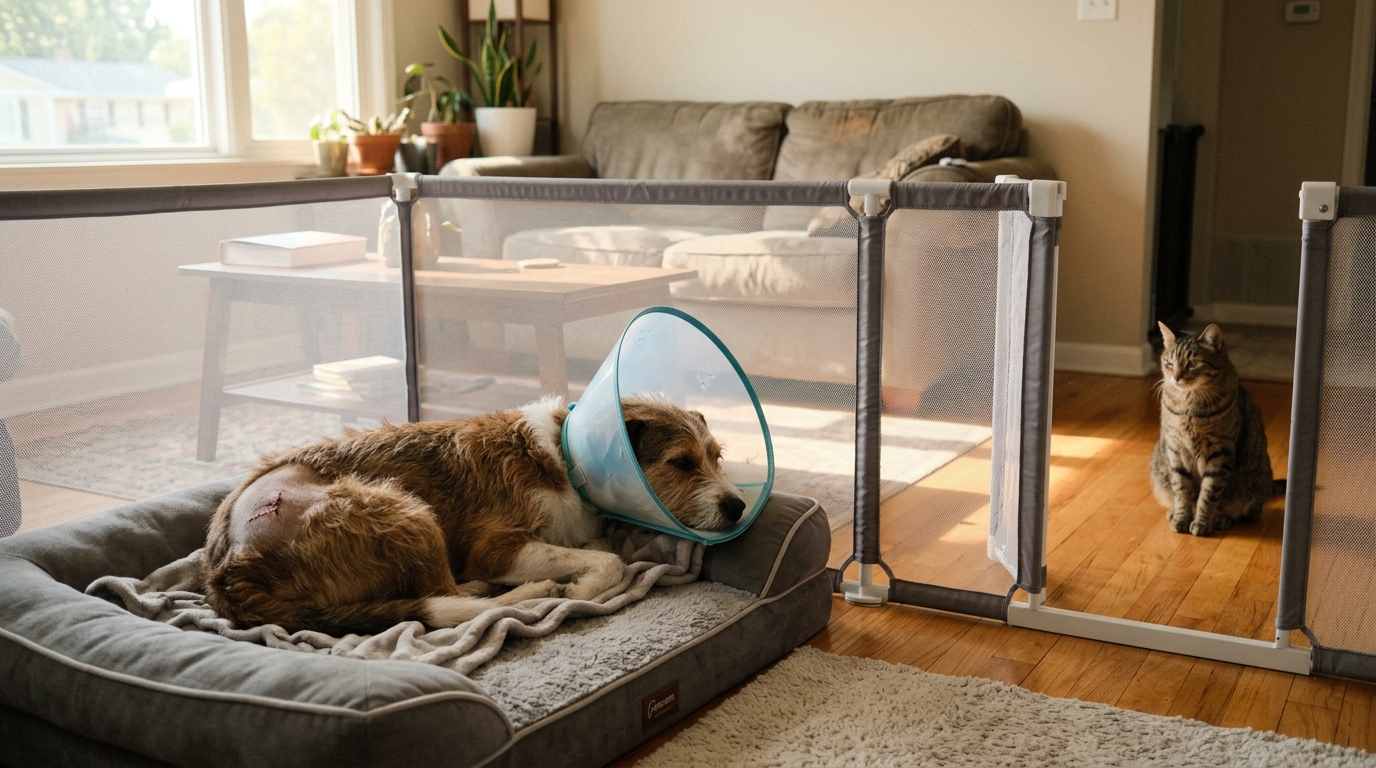
- Controlled Physical Separation: Utilize baby gates, screen doors, and scent-swapping techniques for at least 7 to 14 days before permitting direct, unconstrained physical contact between newly adopted and resident pets.
Introducing a rescue or shelter dog into a multi-pet home produces profound neuroendocrine stress. Cortisol surges from transport, novel environmental odors, and unfamiliar pack dynamics can either mask underlying organic disease or mimic acute clinical deterioration. For adoptive families, safe observation requires distinguishing transient behavioral decompression from emerging medical emergencies through structured resource separation and objective pain assessment.
The Biological Framework: The 3-3-3 Decompression Timeline
Veterinary behavioral medicine recognizes that shelter dogs navigate a predictable three-phase neuroendocrine transition during home acclimation. Understanding this physiological timeline prevents misinterpreting stress responses as established baseline traits:
- First 3 Days (Acute Sensory Overload): Circulating cortisol and catecholamine levels remain markedly elevated. Dogs frequently present with hyper-vigilance, anorexia, reluctance to eliminate, or extreme withdrawal. Mild suppression of appetite or hesitation to defecate during this initial 72-hour window is common, but complete water refusal or continuous vomiting requires immediate intervention.
- First 3 Weeks (Territorial Acclimation): Adrenal baselines begin to normalize as environmental predictability takes hold. The dog begins exploring physical spatial boundaries, learning household routines, and displaying true personality traits. Subtle orthopedic stiffness or chronic skin sensitivities previously masked by acute stress may become clinically observable.
- First 3 Months (Established Baseline): The dog develops genuine biological security, trust, and bonded attachments. Long-term dietary tolerances, true exercise endurance, and permanent social hierarchies with resident pets become clear and reproducible.
Multi-Pet Resource Separation and Intake Measurement
In homes with existing dogs or cats, communal living arrangements severely obscure diagnostic observation. When animals share common food dishes, water fountains, and yard spaces, pet parents cannot determine which individual consumed calories or passed abnormal stool. Enforce strict physical resource separation:
| Resource Domain | Multi-Pet Management Protocol | Clinical Diagnostic Value |
|---|---|---|
| Feeding Stations | Feed animals in separate rooms behind closed doors or solid barriers; pick up uneaten food after 15 minutes. | Quantifies exact gram intake; prevents food-guarding aggression; isolates post-prandial regurgitation or vomiting to a specific dog. |
| Hydration Monitoring | Utilize dedicated water bowls in separated confinement zones; measure volume poured and remaining twice daily. | Detects early polyuria and polydipsia (PU/PD) associated with renal insufficiency, diabetes mellitus, or hyperadrenocorticism. |
| Outdoor Elimination | Walk the newly adopted dog on a 6-foot leash for elimination outings rather than communal free-yard access. | Allows immediate physical inspection of stool consistency, volume, hematochezia, and urinary stream strength and continuity. |
Objective Pain Assessment: Colorado State Canine Acute Pain Scale
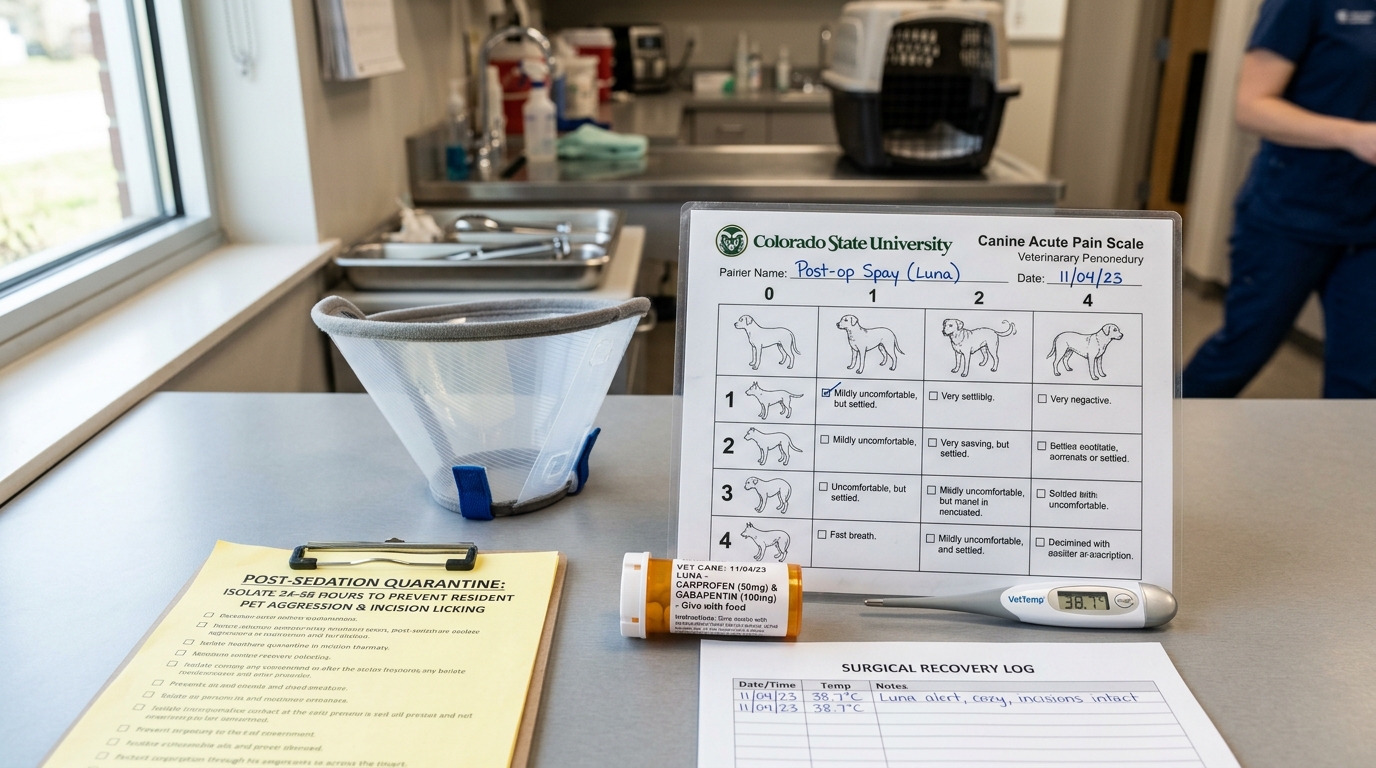
Stoic dogs frequently conceal musculoskeletal or visceral pain, showing only subtle behavioral withdrawal that caregivers mistakenly attribute to “shyness.” Apply the Colorado State University (CSU) Canine Acute Pain Scale to detect objective pain signals:
- Locomotor and Postural Indicators: Look for kyphosis (abnormal roached arching of the spine), a rigid “tucked-up” abdomen, a head-down posture, or reluctance to bear weight evenly on all four limbs. Shifting weight while standing indicates joint or soft-tissue discomfort.
- Mobility Resistance: Note hesitation or refusal when asked to navigate staircases, jump into vehicles, or stand up from slick hardwood floors. Bunny-hopping gait in the pelvic limbs suggests hip dysplasia or cruciate ligament instability.
- Facial and Interactive Markers: Watch for a furrowed brow, glazed eye expression, avoidance of eye contact, or sudden flinching and low-frequency growling when the lumbar spine, hips, or abdomen are lightly touched.
- Strict Prohibition on Human NSAIDs: Never administer human over-the-counter pain medications including acetaminophen (Tylenol), ibuprofen (Advil), naproxen (Aleve), or aspirin. Human NSAIDs induce severe gastric ulceration, intestinal perforation, and acute acute renal tubular necrosis in canines.
Red-Flag Triage Matrix: Safe Observation vs. Clinical Escalation
Use this objective triage matrix to determine whether continued home observation is clinically safe:
| Triage Level | Clinical Manifestations | Required Action Protocol |
|---|---|---|
| Immediate Emergency (0–2 Hours) | Non-weight-bearing lameness with obvious deformity or bone displacement, acute abdominal distention with non-productive retching (gastric dilatation-volvulus risk), sudden inability to stand or walk, pale or blue gums, high fever exceeding 104.0°F (40.0°C). | Transport immediately to the nearest veterinary emergency hospital. Do not attempt home splinting or wait for daytime clinic hours. |
| Urgent Assessment (12–24 Hours) | Persistent moderate limping that does not improve after 24 hours of rest, complete food refusal exceeding 24 hours in adult dogs, progressive lethargy, marked vocalization or snapping upon physical contact, signs of urinary straining. | Schedule a same-day clinical examination with your primary veterinarian for orthopedic palpation, baseline bloodwork, and diagnostic radiography. |
| Routine Home Monitoring | Mild initial hesitation approaching food bowl during the first 48 hours, slight stiffness when rising that resolves within 60 seconds of gentle walking, peaceful sleeping for up to 16 hours daily during decompression. | Maintain low-stimulation routines, provide non-slip rugs on slick flooring, ensure separate feeding, and record daily observations in your pet log. |
Observation is an active clinical process with predefined boundaries. If an observed change in posture, appetite, or mobility fails to resolve within 24 to 48 hours, or if you cannot safely assess an individual pet in a multi-animal home, consult your veterinarian promptly.
Frequently Asked Questions
What behavior is normal during the first 24 hours following veterinary surgery or sedation?
Mild drowsiness, slight unsteadiness when walking, and decreased appetite are common as anesthetic agents clear the body. Persistent hypothermia, pale gums, inability to stand after 24 hours, or uncontrolled vomiting indicate urgent complications.
What does a healthy healing incision look like compared to an infected wound?
A normal incision has clean, well-approximated edges with slight redness and minimal swelling. Redness spreading outward, gaping skin margins, heat, foul odor, or bloody and purulent discharge signals wound breakdown or bacterial infection.
Why is an Elizabethan collar necessary even when the pet appears relaxed?
Pets can open surgical incisions or introduce mouth bacteria in seconds of unsupervised licking. An e-collar or medical recovery garment must stay on continuously until the veterinary surgeon confirms complete closure and removes sutures.
Sources
- . American Animal Hospital Association.
- Educating Clients About Geriatric Pet Care. dvm360.
- Canine Acute Pain Scale. Colorado State University Veterinary Teaching Hospital.
Caregiver Safety Checklist
- Keep a written emergency contact card taped inside a cabinet door: your primary vet’s number, the nearest 24-hour emergency clinic, and ASPCA Poison Control (888-426-4435).
- Never administer human first-aid products (hydrogen peroxide to induce vomiting, antiseptic ointments) without veterinary instruction — several are toxic and some delay proper treatment.
- After any anesthetic event, confine the pet in a safe, quiet space for 12 hours; stumbling, slow blinking, or hypothermia warrant an immediate call, not observation.
Printable tools
Download the matching worksheet
Source transparency
Reference mix for this guide
Source labels describe the type of organization behind each reference; they are not a claim that any outside organization reviewed this article.
- . American Animal Hospital Association.Educating Clients About Geriatric Pet Care Veterinary organization · aaha.org
- Canine Acute Pain Scale Academic or extension · vetmedbiosci.colostate.edu