This guide is general education for pet owners. If your pet has urgent symptoms, possible poisoning, injury, breathing trouble, collapse, severe pain, or sudden decline, contact a licensed veterinarian or local emergency service.
Quick Answer
Safe home observation is appropriate only for mild, single-occurrence symptoms in a pet that remains fully alert, normally hydrated, and responsive—such as a single episode of vomiting with no foreign body ingestion, mild transient loose stool without blood, or brief post-exercise stiffness that resolves with rest. The safe observation window should never exceed 12 to 24 hours. If any severe red flag appears—such as laboured breathing, repeated vomiting, pale or blue gums, extreme lethargy, suspected toxin exposure, or inability to urinate—home monitoring is unsafe and you must seek emergency veterinary care immediately.
Editorial standard
How this guide was prepared
Caring for a newly adopted pet or managing an unexpected symptom requires balancing sensible home observation with timely veterinary intervention. Because dogs and cats cannot verbally describe discomfort and naturally mask pain as an evolutionary survival mechanism, owners often struggle to distinguish between transient, self-limiting indispositions and serious developing pathology. Establishing a structured, time-bounded observation framework removes dangerous guesswork, enabling families to monitor mild behavioral shifts safely while recognizing decisive clinical boundaries where home waiting must immediately end.
Home observation is never passive neglect; it is an active, structured data collection process designed to gather objective physiological indicators for your healthcare team. When managed properly with clear time horizons, home monitoring protects pets from unnecessary clinical stress while ensuring urgent medical emergencies receive immediate professional intervention.
The Three-Tier Clinical Triage Matrix for Pet Parents

Veterinary emergency services categorize patient symptoms into structured triage categories. Applying this three-tier system at home provides immediate clarity:
| Triage Tier | Typical Clinical Signs | Safe Action Plan |
|---|---|---|
| Tier 1: Safe Home Observation (12–24 Hours) | Single vomit without blood; skipped single meal; mild transient soft stool; brief stiffness resolving quickly; pet remains Bright, Alert, and Responsive (BAR). | Isolate from multi-pet conflicts; offer fresh water; monitor food intake; log timeline notes. If not resolved within 24 hours, contact your vet clinic. |
| Tier 2: Same-Day / Next-Day Vet Appointment | Diarrhea lasting over 24 hours; repeated vomiting across 12 hours; squinting or eye discharge; persistent ear scratching; progressive limping; sudden marked increase in water consumption. | Call your family veterinarian to schedule an appointment within 12 to 24 hours. Keep pet rested and do not administer human medications. |
| Tier 3: Immediate Emergency Veterinary Hospital | Laboured breathing or open-mouth breathing in cats; male cat straining without urine; distended painful abdomen with retching; active seizures; pale/blue gums; collapse; toxin ingestion. | Do NOT wait. Transport pet immediately to the nearest 24-hour emergency veterinary hospital. Call en route so the trauma team can prepare. |
The 60-Second Physical Baseline Check
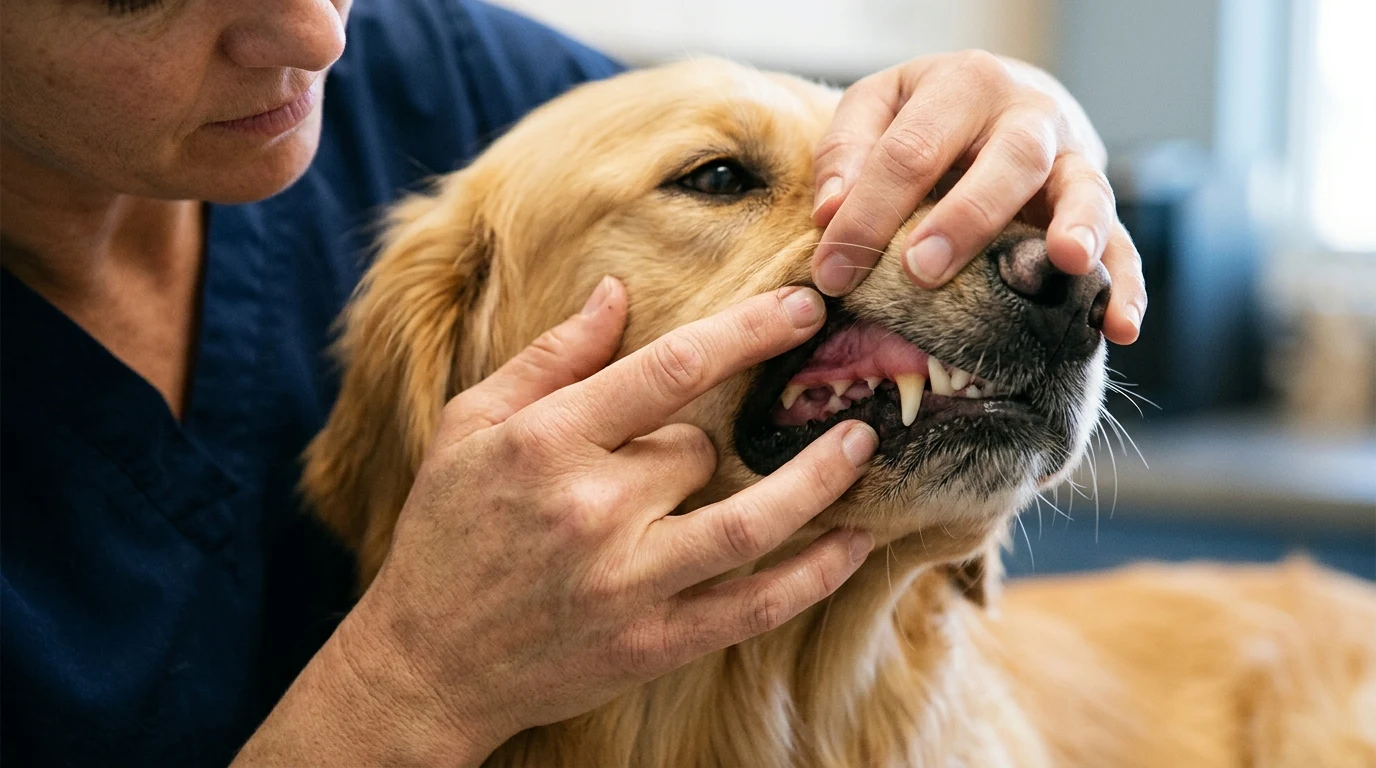
Before deciding to monitor a pet at home, perform this simple 60-second non-invasive physical evaluation to verify that vital systems remain stable:
- 1. Gum Color & Capillary Refill Time (CRT): Gently lift the upper lip. Healthy mucous membranes should be healthy bubblegum pink and moist. Press your finger gently against the gum for 2 seconds and release; the blanched white spot should return to healthy pink in under 2 seconds. White, pale grey, dark red, or yellowish gums require immediate veterinary attention.
- 2. Hydration Skin Turgor: Gently pinch and lift the loose skin over your pet’s shoulder blades, then release. In a well-hydrated animal, the skin snaps back into place instantly. If the skin tent remains elevated or slides down slowly, your pet is dehydrated and needs veterinary fluid support.
- 3. Mentation and Eye Contact: Is your pet responsive to their name, wagging their tail, or following movements with their eyes? A pet that appears dull, disoriented, stuporous, or unresponsive to gentle touch is experiencing systemic compromise.
- 4. Abdominal Comfort: Watch your pet’s posture. A pet experiencing severe abdominal pain often assumes the “prayer position” (front paws and chest on the floor with rear end raised high) or stands with a rigid, hunched spine and guarded belly.
Multi-Pet Household Management During Observation
In households with multiple dogs or cats, attempting to monitor a sick pet in shared living spaces leads to unreliable data and social stress:
- Single-Room Quarantine: Move the observed pet into a quiet, temperature-controlled room (such as a spare bedroom) with their own dedicated food bowls, fresh water dish, and bedding. Review our first vet visit preparation guide for low-stress isolation principles.
- Accurate Elimination Verification: In shared litter boxes or communal yards, it is impossible to determine which pet produced diarrhea, bloody urine, or failed to eliminate. Dedicated isolation gives 100% certainty regarding stool consistency and urinary output.
- Preventing Food Stealing & Stress: Separating animals prevents healthy pets from eating therapeutic bland diets (such as boiled chicken and white rice) and protects the vulnerable animal from resource guarding or bullying. Download our printable Daily Pet Care Routine Tracker to log hourly recovery signs.
When to Contact a Veterinarian Immediately
Home observation must cease immediately if your pet’s condition deteriorates. Seek emergency veterinary hospital care without delay if you notice struggling to breathe, persistent non-productive retching in deep-chested dogs, inability to support body weight, seizure activity, sudden blindness, severe trauma, or signs of intense abdominal pain. When in doubt, calling your local veterinary hospital for triage guidance is always the safest course of action.
Clinical Practice Tool: Veterinary Visit Preparation Sheet
Log chronological symptom changes and behavior shifts cleanly using our clinical Veterinary Visit Preparation Sheet. Download and print your copy of the Veterinary Visit Preparation Sheet, or explore all practical pet care guides in the NewsPet Resource Center.
Sources
- Merck Veterinary Manual: Recognizing and Assessing Animal Emergencies
- American Animal Hospital Association (AAHA): Life Stage Clinical Baselines
- Journal of the American Veterinary Medical Association (JAVMA): Identifying Subtle Abnormalities in Pets
- VCA Animal Hospitals: Emergency Checklist and Triage Protocols for Dogs and Cats
Source transparency
Reference mix for this guide
Source labels describe the type of organization behind each reference; they are not a claim that any outside organization reviewed this article.
- Merck Veterinary Manual: Recognizing and Assessing Animal Emergencies Veterinary organization · merckvetmanual.com
- American Animal Hospital Association (AAHA): Life Stage Clinical Baselines Veterinary organization · aaha.org
- Journal of the American Veterinary Medical Association (JAVMA): Identifying Subtle Abnormalities in Pets Veterinary organization · avmajournals.avma.org
- VCA Animal Hospitals: Emergency Checklist and Triage Protocols for Dogs and Cats Reference source · vcahospitals.com