Editorial standard
How this guide was prepared
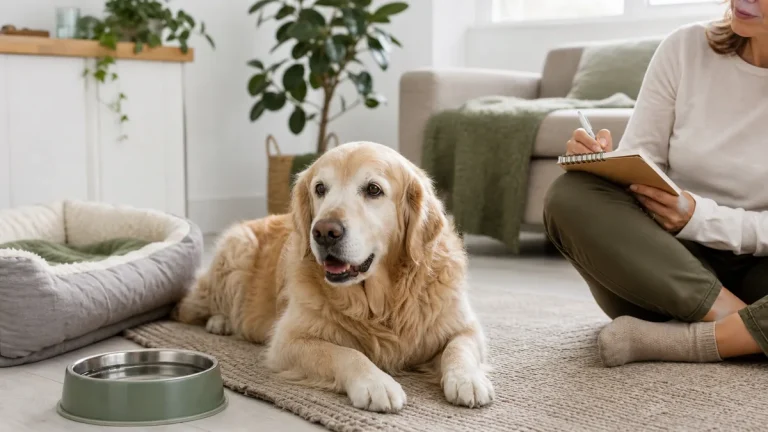
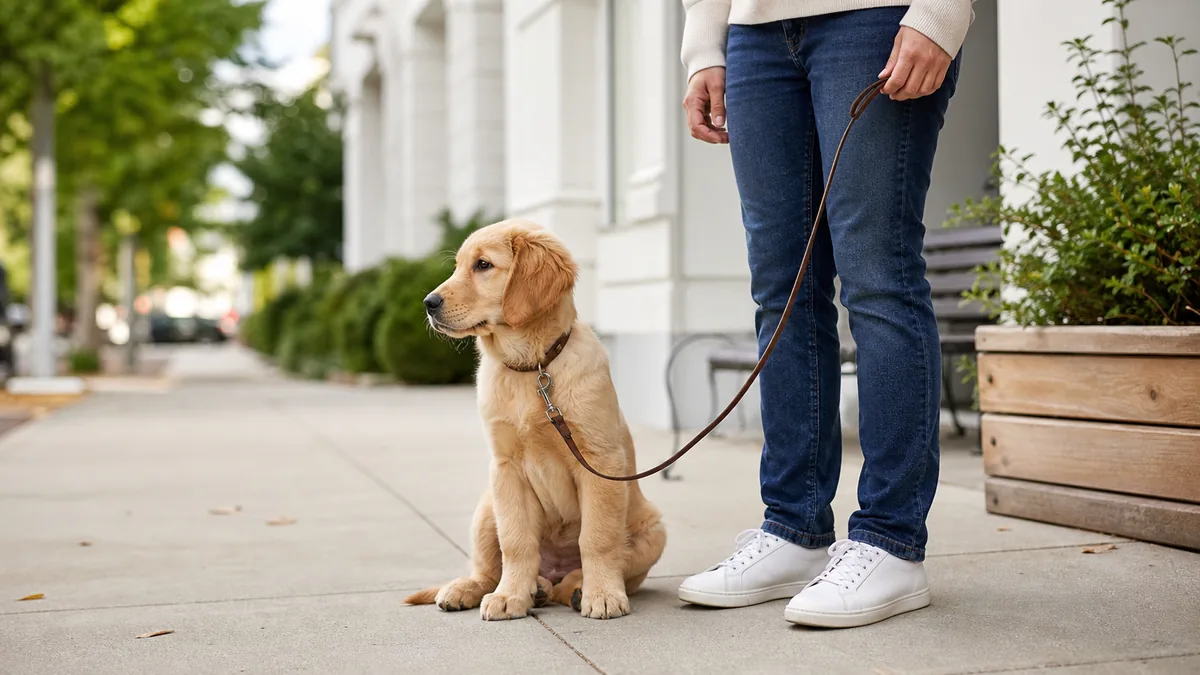
Puppy socialization is a structured developmental process that teaches young canines how to calmly process, evaluate, and recover from novel environmental stimuli without experiencing panic or learned helplessness. Rather than rushing to collect hundreds of chaotic greetings, true socialization focuses on low-pressure observation, voluntary exploration, and systematic counterconditioning during the primary neurodevelopmental window between 3 and 14 weeks of age.
Clinical Quick Answer & Immediate Actions
The primary canine socialization window closes between 12 and 14 weeks of age; experiences during this critical developmental window permanently shape adult emotional resilience. The American Veterinary Society of Animal Behavior (AVSAB) officially advises that behavioral development must not be delayed until the full vaccination series is finished at 16 weeks. Socialization means pairing novel sights, sounds, surfaces, and individuals with high-value rewards at a distance that prevents fear, while avoiding high-risk infectious viral environments.
Caregivers must carefully balance vital behavioral development with infectious disease prophylaxis by arranging protected exposures, consulting local clinical guidance, and learning to read subtle canine stress thresholds before emotional overwhelm occurs. Contact a veterinarian immediately if your puppy shows sudden lethargy, persistent vomiting, severe watery diarrhea, or refusal of food during or after any socialization outing.
The Neurodevelopmental Timeline: Windows of Vulnerability and Learning
Canine neural plasticity evolves across predictable developmental stages. Understanding these physiological phases enables caregivers to calibrate exposure intensity, avoid traumatic fear imprinting, and support emotional resilience throughout adolescence.
1. The Neonatal and Transitional Periods (Weeks 0 to 3)
During the first two weeks of life, neonatal puppies have closed eyes and ear canals. Sensory processing is primarily limited to thermal, tactile, and olfactory cues. Mild, gentle handling (Early Neurological Stimulation) for 3 to 5 seconds per day improves cardiovascular performance, stress tolerance, and endocrine response in later life. By week 3, the transitional period begins as sensory canals open and rudimentary social communication emerges within the litter.
2. The Primary Socialization Window (Weeks 3 to 14)
Between 3 and 14 weeks, the puppy’s brain undergoes massive synaptic proliferation and neuroplastic adaptation. Exploratory drive is at its biological peak, while natural neophobia is remarkably low. What the puppy experiences positively during this specific window becomes categorized as baseline “normal” for the rest of its life. If novel sounds, surfaces, handling postures, and visual silhouettes are not encountered benignly before 14 to 16 weeks, the dog’s default neurochemical response to novelty shifts toward suspicion, fear, and defensive avoidance.
3. The First Fear Imprint Period (Weeks 8 to 10)
Coinciding precisely with the age when many puppies transition into their adoptive homes, a pronounced acute fear imprint period occurs between 8 and 10 weeks of age. During this delicate hormonal shift, a traumatic or terrifying experience (such as a severe veterinary scare, a dog attack, or forceful physical restraint) can permanently imprint fear pathways in the amygdala that require months of counterconditioning to extinguish. Exposures during weeks 8 to 10 must be exceptionally mild, calm, and fully within the puppy’s control.
4. Juvenile Socialization and Secondary Fear Periods (Months 4 to 12)
Socialization does not end when puppyhood closes. During early adolescence (frequently between 6 and 10 months of age), a secondary fear period often emerges, frequently manifesting as sudden barking or suspicion toward objects the puppy previously accepted (such as statues, fire hydrants, or people carrying umbrellas). Handlers must reapply gentle distance desensitization rather than forcing or scolding the adolescent dog.
The Exposure Loop: Observe, Approach, Retreat, and Recover
Constructive socialization operates on a strict four-stage behavioral loop. By implementing this predictable loop, you prevent emotional flooding and teach the young canine that their behavioral communication is recognized and respected.
- Observe from a distance: Position the puppy at an environmental distance where they can clearly see or hear the novel stimulus while maintaining soft eyes, relaxed ear posture, and an appetite for high-value food. If the puppy cannot take food, the stimulus intensity is already too elevated.
- Voluntary approach only: Allow the puppy to choose whether to close the distance. An approach should consist of one or two curious sniffing steps, never forceful dragging on a leash or physical pushing. If the puppy pauses or leans back, honor that decision.
- Proactive retreat: Step backward and provide space at the earliest indication of emotional discomfort. Retreating is not a failure; it proves to the puppy that disengagement is effective and prevents panic escalation.
- Post-event recovery: Provide immediate physiological decompression through sniffing exercises (scatter feeding), quiet rest, familiar hydration, and uninterrupted sleep. Assess how quickly normal eating and sleeping routines resume.
The Six Core Categories of Vet-Safe Socialization
Socialization involves much more than meeting other canines or human strangers. Puppies must habituate to varied sensory dimensions that compose the modern human habitat. The following structured table details safe, low-arousal starting points alongside critical threshold indicators that signal a need to retreat.
| Stimulus Category | Low-Pressure Starting Point | Threshold Warning Sign (Retreat / Pause) | Veterinary & Behavioral Rationale |
|---|---|---|---|
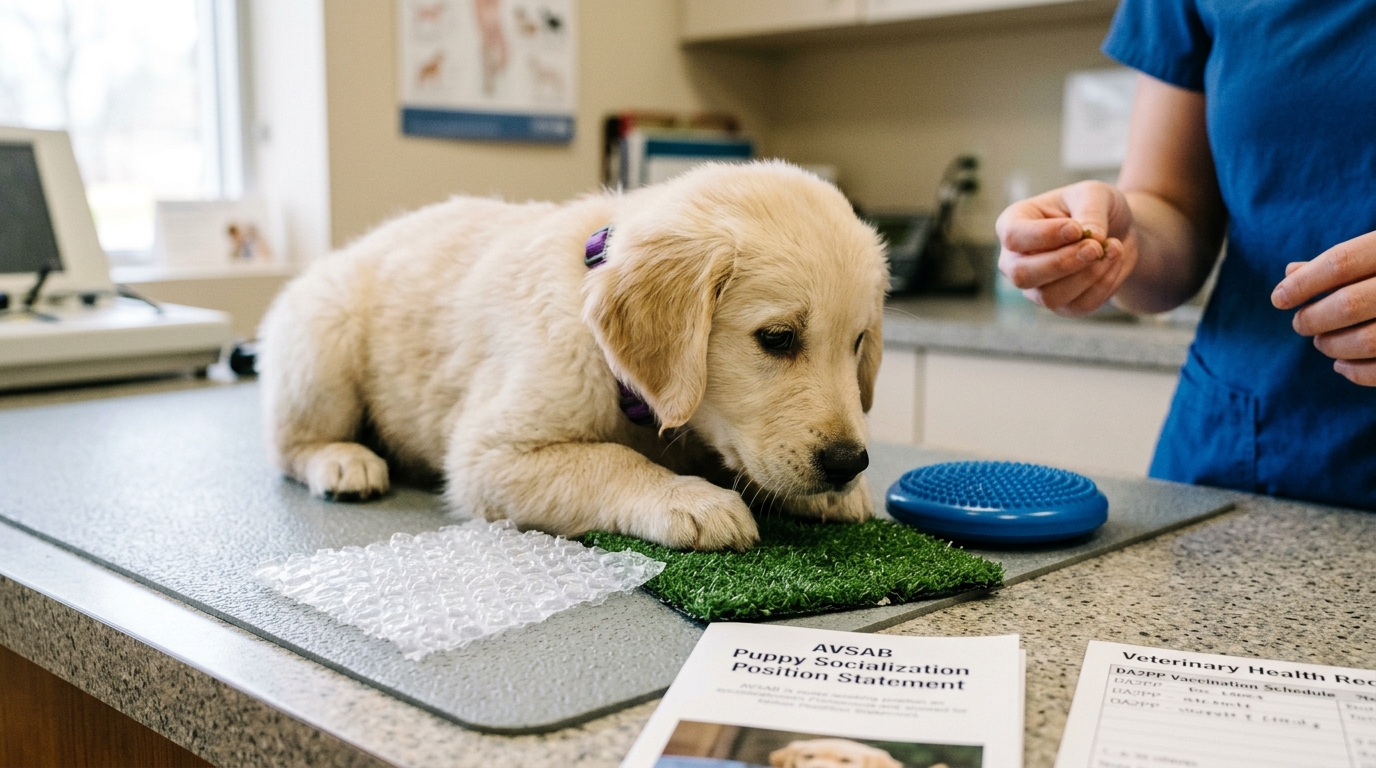
| Tactile Surfaces | Stepping front paws voluntarily onto a rubber bath mat, sheet of cardboard, or dry grass in a secure yard. | Splaying toes, slipping, scrambling backward, lip-licking, or rigid paw lifting. | Builds proprioception and prevents fear of veterinary scale rubber, metal examination tables, slick tile, and wet grass. |
| Auditory Exposure | Playing sound effects (thunder, traffic, fireworks) at a barely audible whisper while the puppy eats meals. | Ears pinned back, stopping eating, scanning the ceiling, trembling, or panting. | Systematic acoustic habituation prevents clinical noise phobias, which have an 80% co-morbidity with separation anxiety. |
| Human Diversity | Watching people wearing high-visibility vests, motorcycle helmets, bulky coats, or carrying umbrellas from 40 feet away. | Whale eye (showing sclera), growling, hiding behind handler’s legs, or rigid immobility. | Puppies do not generalize; a silhouette with an umbrella or bicycle appears biologically distinct from an unencumbered pedestrian. |
| Cooperative Handling | Touching a single paw, lifting a lip for one second, or touching an ear, followed immediately by a high-value treat. | Jerking limb away, stiffening neck, snapping, yawning repeatedly, or squirming frantically. | Prepares the puppy for Fear-Free clinical examinations, blood draws, nail trimming, ear cleanings, and emergency palpation. |
| Transport & Motion | Sitting inside a parked car with the engine off, sniffing the upholstery and receiving treats, then exiting. | Excessive drooling, lip-smacking, nausea retching, rapid shallow breathing, or immobility. | Separates vehicle motion sickness from associative vehicle anxiety, establishing the car as a calm safe zone. |
| Distanced Dog Observation | Sitting 50 feet away outside a dog park or training center, watching calm adult dogs pass without physical greeting. | Hard staring, lunging, hyper-ventilating whine, tucking tail between hind limbs, or freezing. | Teaches canine neutrality and impulse control rather than over-aroused greeting frustration or barrier reactivity. |
Canine Stress Ladder: Decoding Subthreshold vs Overthreshold Signs
Caregivers frequently mistake silence or immobility for calmness. In veterinary behavioral medicine, a frozen, silent puppy is often in a state of profound physiological suppression (acute fear paralysis). Recognizing early calming and displacement signals ensures you intervene long before a puppy reaches panic or defensive aggression.
| Arousal State | Physiological & Behavioral Indicators | Handler Action Required |
|---|---|---|
| Green: Subthreshold (Engaged & Learning) | Soft, almond-shaped eyes; relaxed, curving body posture; open mouth with loose tongue; responsive to name; eagerly takes food; easily disengages from novelty. | Continue current exposure. Maintain distance, reinforce voluntary calm glances, and conclude session after 2 to 5 minutes on a positive note. |
| Yellow: Early Stress Signals (Displacement) | Sudden yawning out of context; rapid tongue flicks / nose licks; brief head turns away from stimulus; ground sniffing that appears frantic; delayed treat taking; furrowed brow. | Increase distance immediately by 15 to 20 feet. Pause physical approach. Do not lure forward; scatter treats on the ground to encourage calming sniffing. |
| Orange: Moderate Stress (Heightened Arousal) | Slow, stiff gait; tail tucked tight against abdomen or held rigid above spine; whale eye (white sclera visible); closed mouth with tight commissures; refusing high-value food; trembling. | Abort the approach. Turn around calmly and walk away. Shield the puppy from visual contact using natural barriers (parked cars, bushes, walls). |
| Red: Overthreshold (Panic or Defensive Response) | Frantic bolting / leash scrambling; high-pitched distress vocalizations; defensive lunging, snarling, or snapping; total shutdown and refusal to move; involuntary elimination. | Emergency exit: gently pick up the puppy if safe, or immediately move 50+ yards away. Seek a quiet, dark environment. Allow several hours for cortisol clearance. |
Balancing Infectious Pathogens Against Behavioral Deprivation
The historical conflict between infectious disease control and behavioral development has caused significant confusion among pet guardians. In decades past, owners were frequently instructed to keep puppies strictly confined indoors on sterile floors until all vaccine boosters (including rabies at 16 weeks) were complete. Today, that obsolete advice is actively rejected by leading veterinary bodies.
The American Veterinary Society of Animal Behavior (AVSAB) explicitly states that behavioral issues–including fear aggression, noise phobias, and separation distress–are the number one cause of death in dogs under three years of age. A puppy kept in physical isolation until 16 weeks misses its irreplaceable window of neurological development, predisposing the dog to lifelong anxieties that are devastatingly difficult to treat.
The AVSAB & AAHA Recommended Compromise
Puppies can safely participate in socialization classes and controlled public observation as early as 7 to 8 days following their first core vaccination (DHPP / DA2PP) and initial deworming, provided the environment conforms to strict biosecurity protocols:
- Sanitized indoor facilities: Socialization classes must take place on non-porous surfaces cleaned with veterinary-grade disinfectants known to kill canine parvovirus (such as accelerated hydrogen peroxide or potassium peroxymonosulfate).
- Health verification: Every participating puppy must have verified documentation of age-appropriate vaccinations, negative fecal flotation or prophylactic deworming, and zero active clinical signs (vomiting, coughing, diarrhea, ocular discharge) for at least 72 hours.
- Carried and elevated observation: Outside the home, carry the puppy in a lightweight sling, backpack, or clean stroller. The puppy can smell city traffic, hear construction equipment, see dogs walking on sidewalks, and observe pedestrians from your arms without their paws ever touching contaminated soil.
- Avoid public canine hotspots: Strictly avoid public parks, dog runs, pet superstore floors, rest stops, and communal water dishes until 10 to 14 days following the final puppy booster at 16 weeks.
- Curated private meetups: Controlled interactions with fully vaccinated, behaviorally stable adult dogs owned by family or friends in private, fenced yards are exceptionally beneficial. Stable adult dogs teach bite inhibition and polite canine social boundaries far better than human instruction.
Age-Milestone Action Plan: 8 to 16 Weeks
To systematically structure your puppy’s early months, use the following developmental roadmap aligned with AAHA canine life stage protocols.
| Age Window | Primary Focus | Recommended Exposures | Safety & Veterinary Precautions |
|---|---|---|---|
| 8 to 10 Weeks | Gentle Acclimation & Fear Imprint Management | Household textures (wood, tile, carpet, bubble wrap); quiet recordings of thunder and traffic; handling ears, paws, and mouth with immediate chicken rewards. | First Fear Imprint Period. Avoid high-intensity novelties. Ensure veterinary wellness check and baseline fecal flotation. Contact a veterinarian immediately if lethargy or diarrhea occurs. |
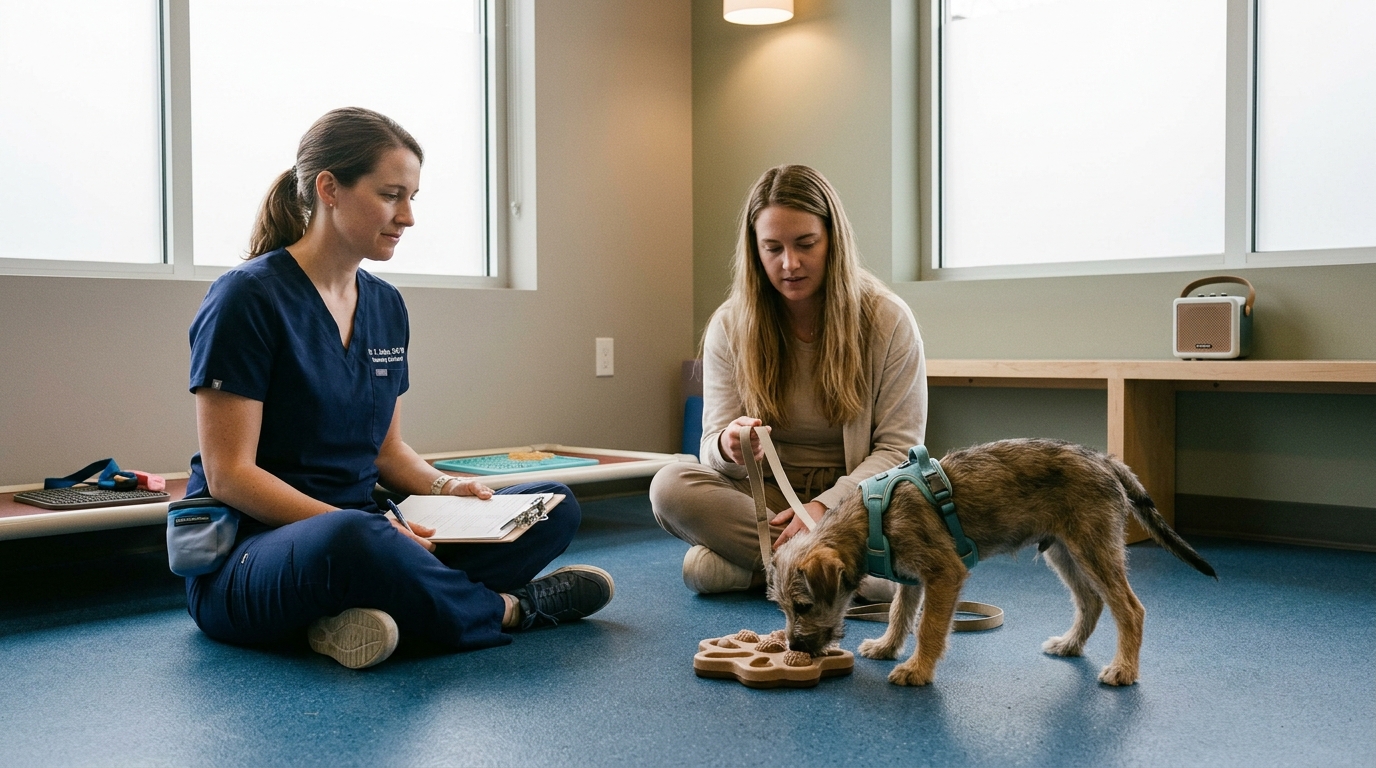
| 10 to 12 Weeks | Sanitized Socialization & Expanded Surfaces | Enrollment in a veterinary-supervised puppy class; carried outdoor observation of traffic, strollers, and delivery vans; exploring wet grass and concrete in private areas. | Verify facility disinfection protocols. Second DHPP booster typically administered around week 10 to 12. No public ground contact. |
| 12 to 14 Weeks | Neutrality Around Stimuli & Cooperative Care | Watching cyclists, joggers, and dogs from a 35-foot perimeter; voluntary cooperative nail trimming; mock clinical exams with stranger handling (gentle touch only). | Final phase of primary socialization window. Reinforce voluntary disengagement and attention shifts toward handler. Third DHPP booster window. |
| 14 to 16 Weeks & Beyond | Post-Vaccination Ground Freedom & Adolescence | Gradual exposure to low-risk public sidewalks (10-14 days post-final booster); polite greetings on loose leash; habituation to novel park settings. | Final core DHPP booster + Rabies vaccination completed. Monitor for early adolescent secondary fear periods. Never force interactions. |
Desensitization vs. Counterconditioning vs. Flooding
Understanding psychological learning theory prevents well-meaning guardians from inadvertently traumatizing their pets. Socialization is an exercise in classical conditioning, not endurance testing.
1. Systematic Desensitization
Desensitization involves presenting a potentially frightening stimulus at such a low intensity (great distance, low volume, minimal speed) that the puppy notices it without triggering an involuntary sympathetic nervous system response. Over repeated brief exposures, the stimulus loses its novelty and becomes baseline white noise.
2. Counterconditioning
Counterconditioning pairs the presence of that low-intensity stimulus with an overwhelmingly positive physiological reward (such as roast chicken, string cheese, or liver pate). The psychological goal is to alter the puppy’s underlying emotional association from apprehension to eager anticipation: “When that strange loud motorcycle passes, wonderful chicken appears!”
3. The Perils of Flooding
Flooding occurs when a puppy is placed directly into an inescapable, high-intensity frightening environment (such as an off-leash dog park, a crowded farmers market, or being passed around an office) with the misguided assumption that the puppy will “get used to it.” Under flood conditions, the puppy’s neurological response often collapses into learned helplessness. While the puppy may appear quiet or compliant, their sympathetic nervous system is flooded with cortisol and adrenaline, drastically increasing the probability of severe fear-based reactivity or bite incidents during adolescence.
Evaluating a Puppy Socialization Class: Clinical Checklist
Not all puppy training classes are created equal. A poorly supervised class where boisterous puppies bully shy individuals can inflict lasting psychological damage. Use this clinical checklist before enrolling:
- Instructor Credentials: Ensure the instructor holds verified, reward-based certifications (e.g., KPA CTP, CPDT-KA, CBCC-KA, or Fear-Free Certified Professional). Avoid trainers who employ choke chains, prong collars, leash corrections, or physical alpha rolls on puppies.
- Biosecurity Standards: The facility must verify at least one age-appropriate core vaccination and deworming per puppy, disinfect all surfaces between groups with veterinary-grade virucides, and immediately isolate any coughing or sneezing dog.
- Structured Play Groups: Puppies must be divided by size, energy level, and behavioral style. A 5-pound toy poodle should never be paired with a 20-pound rambunctious mastiff puppy.
- Enforced Pauses and Calming Breaks: Play bouts should last no more than 60 to 90 seconds, followed by mandatory caregiver recalls and calming treat breaks to prevent over-arousal.
- Safe Retreat Zones: Every pen must include physical obstacles (cardboard boxes, low barriers, owner chairs) where shy or tired puppies can choose to disengage without being pursued.
Home Visitors: Staging Polite, Low-Pressure Greetings
Guests arriving at the home can easily overwhelm a young puppy, resulting in hyper-aroused jumping, mouthing, or fear-based retreats under furniture. Structure guest arrivals to prioritize calm observation:
- Establish a neutral boundary: Place a sturdy exercise pen or baby gate near the living area before guests knock. This prevents the puppy from rushing the doorway and feeling trapped in an entryway corridor.
- Instruct guests in advance: Ask visitors to ignore the puppy completely for the first 10 minutes. Guests should avoid direct eye contact, speaking in high-pitched squeals, or leaning down to pat the puppy’s head.
- The “Toss, Don’t Hand” rule: If the puppy expresses curiosity by approaching with soft body language, ask the guest to toss a small treat behind or beside the puppy. Tossing food away from the human rewards the puppy while providing an immediate, effortless exit path.
- Consent testing: If the puppy approaches a seated visitor and rubs against their legs, allow the visitor to gently stroke the puppy’s chest (not top of the head) for 3 seconds, then remove their hands. If the puppy nudges for more, interaction is consensual. If the puppy steps back, the interaction ends immediately.
When to Contact a Vet or Veterinary Behaviorist
While minor apprehension toward unexpected noises is normal during early development, severe or rigid fear responses require prompt clinical intervention. Contact a veterinarian immediately if your puppy shows sudden lethargy, persistent vomiting, severe watery diarrhea, or refusal of food during or after any socialization outing. Parvovirus, intestinal parasites, and respiratory pathogens can mimic fatigue or behavioral withdrawal in young puppies.
Seek prompt veterinary advice for any sudden behavioral regression, severe distress, or suspected infectious exposure during the early socialization window. If your puppy exhibits persistent terror (trembling uncontrollably, freezing in place for extended periods, evacuating bowels or bladder when approached), displays defensive growling or snapping over food or body handling before 16 weeks, or fails to recover within 30 minutes of returning home, do not wait for the dog to “grow out of it.” Request an immediate referral to a clinical specialist veterinary behaviorist (DACVB) or a certified clinical animal behaviorist.
For more detailed behavioral guidance, review our guide to dog stress signals and bite prevention and explore our evidence-based protocol for reward-based dog training without fear.
Clinical Practice Tool: Puppy Socialization Planner
Structure your puppy’s critical early exposure period safely with our printable Puppy Socialization Planner, tracking low-stress positive exposures across novelty categories. Download and print your copy of the Puppy Socialization Planner, or explore all practical pet care guides in the NewsPet Resource Center.
Frequently Asked Questions
What is the critical developmental window for puppy socialization?
The primary socialization window closes between 12 and 16 weeks of age. During this neurological developmental phase, puppies form foundational associations that determine whether novel stimuli are perceived as safe or threatening.
Can puppies socialize safely before completing all core puppy vaccinations?
Yes, provided biosecurity standards are maintained. The American Veterinary Society of Animal Behavior emphasizes that behavioral problems are the leading cause of death for dogs under three years old. Socialization should occur in sanitized indoor settings or with fully vaccinated adult dogs.
What should a caregiver do if a puppy displays fear or backing away during socialization?
Never force or drag a fearful puppy toward a novel stimulus. Increase distance immediately until the puppy relaxes, offer high-value treats to build positive counterconditioning, and allow the puppy to retreat voluntarily.
Sources
Sources checked: September 8, 2026.
- American Veterinary Society of Animal Behavior (AVSAB): Position Statement on Puppy Socialization
- American Animal Hospital Association (AAHA): 2019 Canine Life Stage Guidelines
- World Small Animal Veterinary Association (WSAVA): Guidelines for the Welfare and Care of Dogs and Cats
- Merck Veterinary Manual: Behavioral Development and Socialization in Canines
- VCA Animal Hospitals: Puppy Socialization and Fear Prevention Protocols
Emergency Triage Matrix: Clinical Presentation & Required Response
| Triage Level | Clinical Signs & Presentation | Immediate Action Protocol |
|---|---|---|
| Tier 1: Immediate Emergency (0–2 Hours) | Acute collapse, hemorrhagic diarrhea, projectile vomiting, or severe fever in an incompletely vaccinated puppy following exposure to public ground or sick animals (parvovirus). | Immediate emergency veterinary transport; in-clinic fecal parvo antigen SNAP test, intensive IV fluid resuscitation, antiemetics, and broad-spectrum IV antimicrobials. |
| Tier 2: Urgent Veterinary Care (Same-Day) | Puppy experiencing severe developmental panic: trembling uncontrollably, involuntary urination, attempting to bolt, or snapping when approached by gentle novel stimuli. | Veterinary consultation; behavioral assessment to prevent generalized anxiety disorder, and enrollment in a certified veterinary-supervised puppy socialization class. |
| Tier 3: Home Monitoring & Scheduled Care | Mild initial hesitation when encountering a novel object (umbrella, bicycle, vacuum cleaner) that resolves within seconds as the puppy investigates voluntarily for a treat. | Continue structured, gentle exposures using the exposure ladder; reward voluntary approach and never force physical contact. |
Rule S1 Boundaries & Puppy Socialization Safety
Protecting a puppy’s behavioral and physical health requires strict clinical boundaries:
- NEVER walk an unvaccinated or incompletely vaccinated puppy on public soil or dog parks: Canine parvovirus persists in soil and public environments for over a year; puppies under 16 weeks must not walk where unknown dogs defecate until fully vaccinated.
- NEVER use flooding or force a frightened puppy toward a scary stimulus: Forcing an overwhelmed puppy to endure terrifying stimuli activates traumatic fear pathways, causing sensitization, phobias, and defensive aggression rather than habituation.
- NEVER allow unruly adult dogs to violently discipline a young puppy: Severe adult dog aggression during sensitive developmental fear periods creates permanent dog-directed fear reactivity and lifelong dog-dog aggression.
- NEVER isolate a puppy in total quarantine until 16 weeks of age: Complete isolation misses the critical socialization window; behavioral issues and aggression resulting from under-socialization are the leading cause of euthanasia in dogs under three years old.
Caregiver Safe Socialization Action Checklist
- Carry the puppy in your arms, a stroller, or a clean tote bag when visiting outdoor environments (cafes, transit hubs, parks) before 16 weeks.
- Pair every novel experience (sirens, men with hats, skateboards, vacuums) with high-value treats so the puppy develops positive conditioned emotional responses.
- Expose the puppy to various indoor textures (hardwood, carpet, tile, bubble wrap, metal grating, linoleum) at their own pace.
- Enroll in a veterinary-approved puppy socialization class held in a sanitized indoor training facility that verifies vaccination status of all puppies.
- Watch the puppy’s body language closely; immediately increase distance from any stimulus that induces lip licking, crouching, or tail tucking.
Related Clinical Guides & Tools
Peer-Reviewed Clinical References & Evidence Grounding
- PMID: 31025326: Characteristics of animal hoarding cases referred to the RSPCA in New South Wales, Australia (Aust Vet J, 2019) (opens in new tab)
- PMID: 28555953: Relationship between sources of pet acquisition and euthanasia of cats and dogs in an animal shelter: a pilot study (Aust Vet J, 2017) (opens in new tab)
- PMID: 33020215: Comparative Brain Imaging Reveals Analogous and Divergent Patterns of Species and Face Sensitivity in Humans and Dogs (J Neurosci, 2020) (opens in new tab)
- Merck Veterinary Manual — Small Animal Clinical Medicine & Emergency Reference (opens in new tab)
Printable tools
Download the matching worksheet
Source transparency
Reference mix for this guide
Source labels describe the type of organization behind each reference; they are not a claim that any outside organization reviewed this article.
- American Veterinary Society of Animal Behavior (AVSAB): Position Statement on Puppy Socialization Veterinary organization · avsab.org
- American Animal Hospital Association (AAHA): 2019 Canine Life Stage Guidelines Veterinary organization · aaha.org
- World Small Animal Veterinary Association (WSAVA): Guidelines for the Welfare and Care of Dogs and Cats Veterinary organization · wsava.org
- Merck Veterinary Manual: Behavioral Development and Socialization in Canines Veterinary organization · merckvetmanual.com
- VCA Animal Hospitals: Puppy Socialization and Fear Prevention Protocols Reference source · vcahospitals.com
- Dog Body Language Chart: 9 Stress Signs Before a B Reference source · newspet.net
- Reward-Based Dog Training: Force-Free Steps & Reference source · newspet.net
- Separation Anxiety in Dogs: What to Do First (Calm Reference source · newspet.net