Editorial standard
How this guide was prepared
A pet nook succeeds or fails on placement and fit. Before setting aside an alcove, shelf, or corner, decide whether that part of the room lets the animal rest, move away, and use the space without competing with doors, feet, noise, heat, or another pet. The right location may be close to family activity without sitting inside its busiest path.
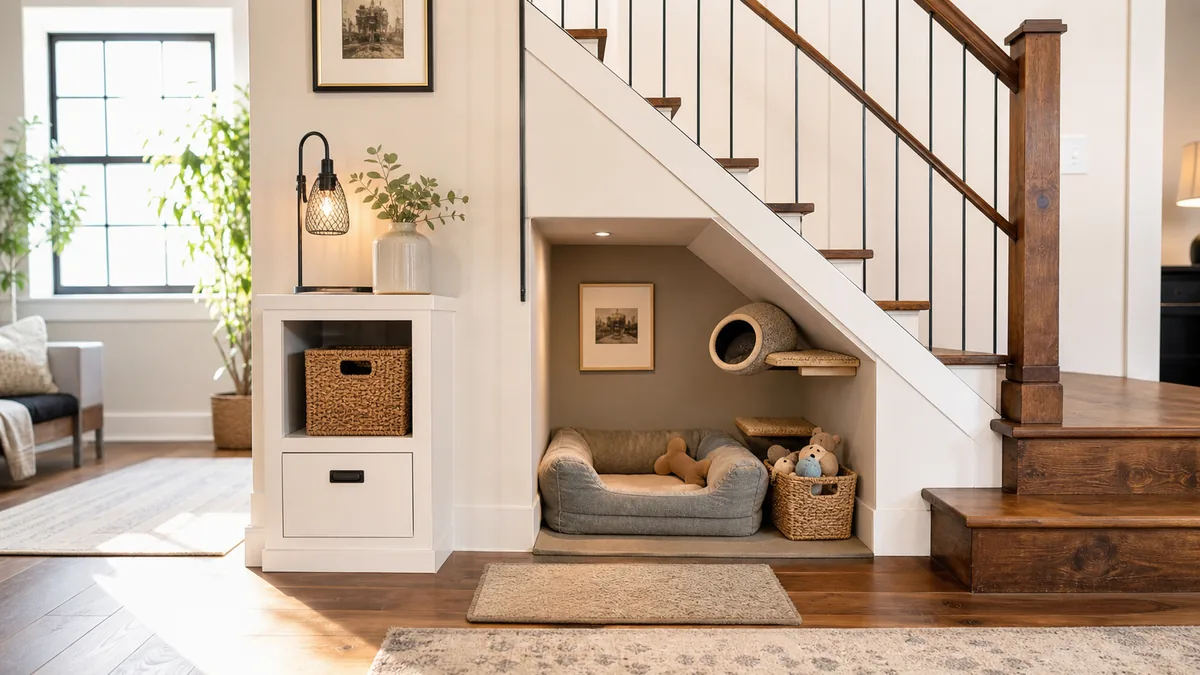
- Perimeter Placement Over High-Traffic Hallways: Locate pet nooks along room perimeters or alcoves where the animal can maintain sightlines on household activity without being startled, stepped over, or cornered.
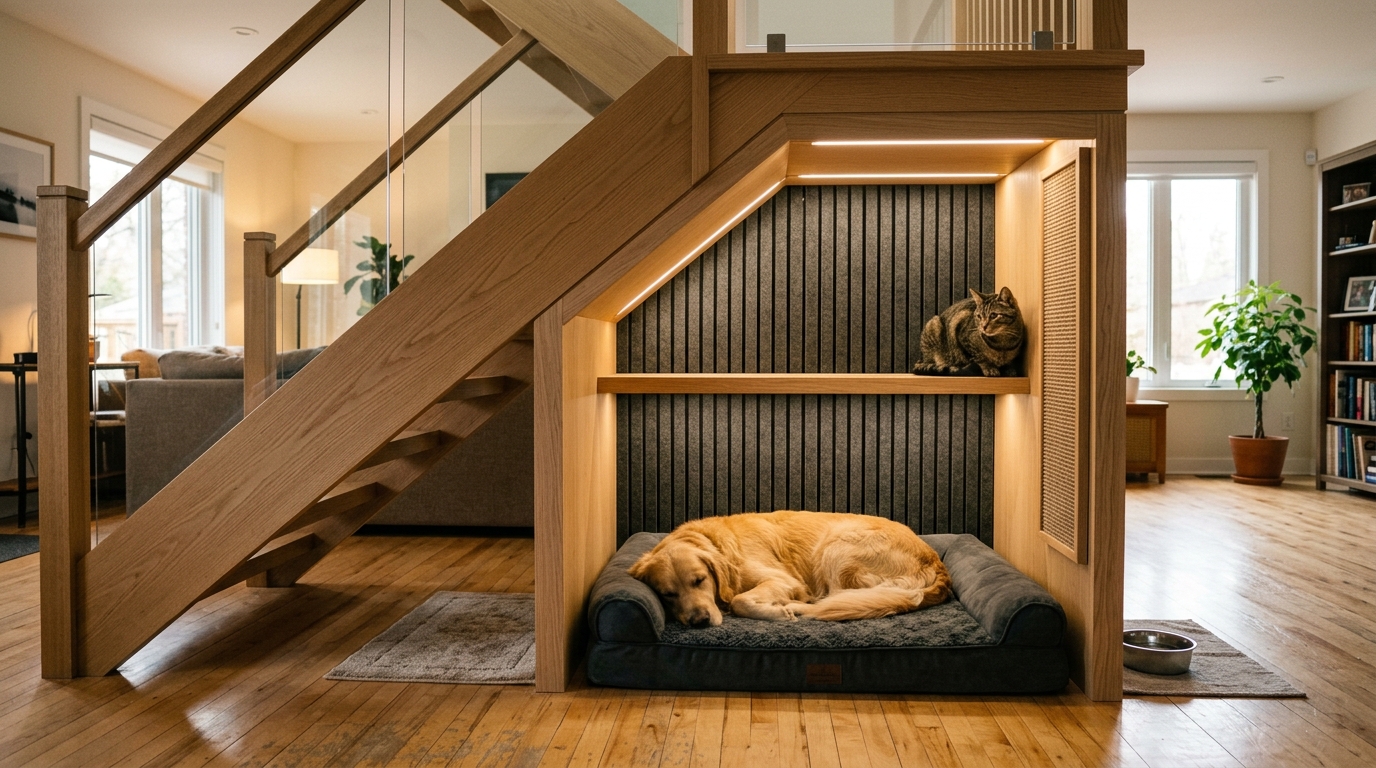
- Species-Specific Vertical & Horizontal Zoning: Cats thrive on elevated perches and vertical wall steps providing multi-tier surveillance; dogs require secure, floor-level cushioned beds protected by solid backing walls.
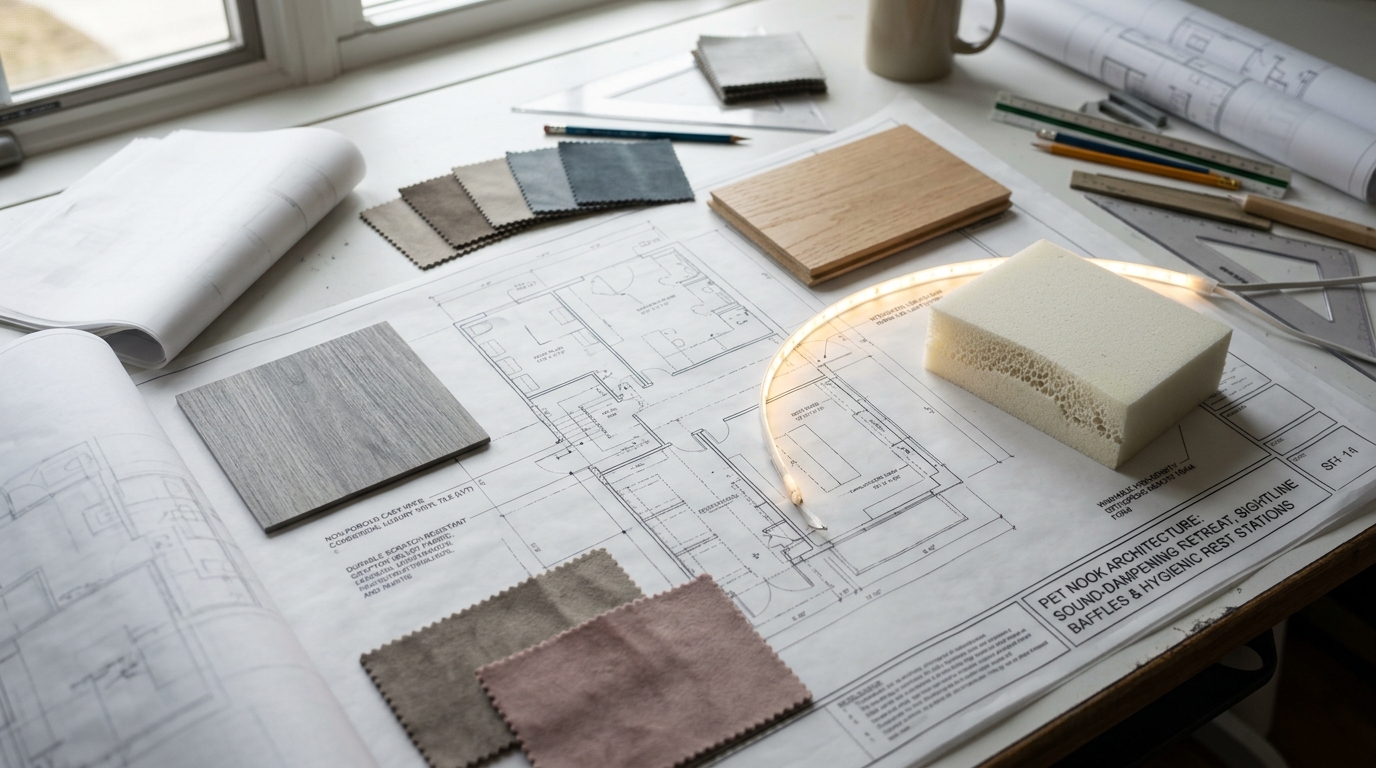
- Microclimate & Acoustic Comfort: Keep rest zones away from vibrating appliances, loud entertainment speakers, cold floor drafts, and direct heat exhaust vents; utilize sound-dampening washable fabrics to enhance relaxation.
Watch the household at the times your dog or cat normally settles. A quiet corner at noon may become a dinner-time bottleneck; a bright window may overheat in the afternoon; an under-bench bay may become hard to leave when bags collect around it. Plan for the room as it is actually used, then fit the nook to the animal.
Map the room against the animal
Use this compact fit planner on each possible location. A candidate does not need to be perfect, but it should not solve one need by creating another.
| Fit point | Check in the real room | Adjust before settling on the spot |
|---|---|---|
| Traffic and noise | People can pass without stepping over the pet, and doors, speakers, appliances, or play do not repeatedly interrupt rest. | Move the nook beyond the main route while keeping the household within sight if the pet prefers company. |
| Temperature and light | The space stays comfortable through the day, with no persistent draft, direct heater output, or harsh direct sun. | Test it at different hours; add shade or choose another wall rather than expecting bedding to correct the room. |
| Entry and escape | The animal can enter, turn, and leave freely; a cat has a route that does not end beside a dog or child. | Clear stored items, secure doors, and keep more than one route where another pet could control the approach. |
| Surface grip | Paws do not slide during stepping up, turning, stretching, or getting out of bed. | Add a stable non-slip layer that extends beyond the bed, step, or landing point. |
| Dog fit | The dog can lie on its side, stretch, change position, and rest without being crowded by furniture. | Widen the floor area or move to a less enclosed position. |
| Cat choice | The cat can choose height, hiding, scratching, or an open view instead of being limited to one exposed bed. | Pair the resting place with a stable perch, hide, scratcher, or alternate level. |
| Cleaning access | Bedding lifts out and hands or tools can reach every edge where fur, litter, mud, or moisture gathers. | Leave clearance around removable parts and avoid sealing fabric into a built-in cavity. |
| Multi-pet access | No animal can block the only entrance, stare down from the route, or claim every nearby resting place. | Separate routes and provide another comparable rest option elsewhere. |
| Voluntary use | The pet enters, settles, and leaves without being placed there or repeatedly coaxed. | Change one feature at a time and observe again before making the setup permanent. |
Fit a dog rest zone to the dog
For a dog, the nook’s main job is usually uninterrupted rest. The RSPCA’s dog-environment guidance emphasizes a comfortable, dry resting area where a dog can relax undisturbed. In a home, that often means the edge of a living room or bedroom rather than the center of a walkway. Keep enough open floor in front of the bed for a full turn and an easy rise.
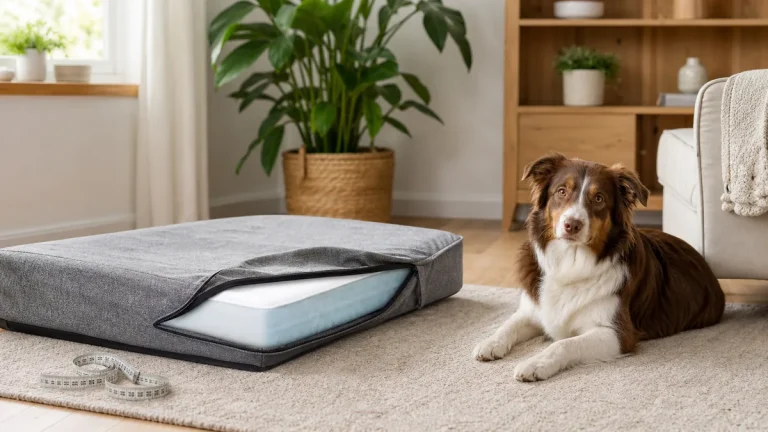
Measure the dog in a natural stretched sleeping position and compare that with the usable inner sleeping area, not the bed’s outside dimensions. If bed dimensions, support, and washability are the next decision, use this dog bed size, support, and cleaning guide. The selected bed should not fill the nook so tightly that the dog must back out or step directly onto a slick floor.
Enclosure is optional, not automatically comforting. A dog that chooses open floor may prefer a bed with a wall behind it and a clear view across the room. A dog already comfortable resting in an open crate may use that familiar setup, provided ventilation and the doorway remain clear. Whichever form you try, keep access voluntary and do not let shelves, hooks, or storage hang into headroom.
Give a cat several usable choices
A cat nook works best as a small network rather than a single sleeping pad. Ohio State’s indoor-cat guidance describes needs that include safe resting places, separated resources, opportunities for play and predatory behavior, and positive, predictable interaction. Within the nook, translate that into at least two choices: for example, an elevated open perch plus a covered hide, or a window level plus a lower scratcher.
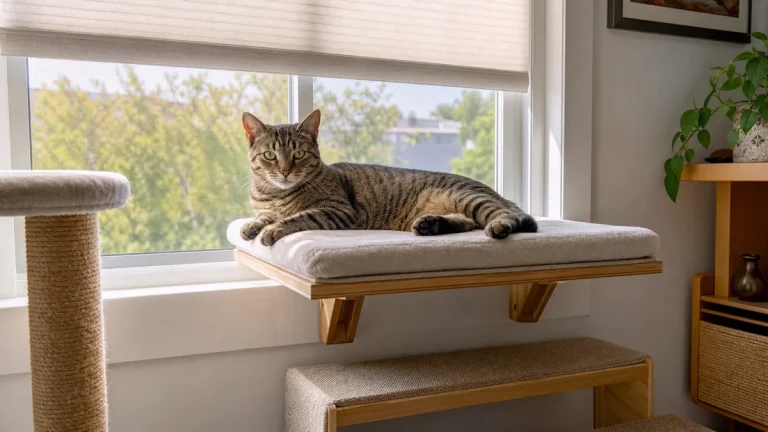
Height must be stable and reachable in both directions. Use grippy landing surfaces, enough width for turning, and a route that does not require a leap across a doorway. For a location attached to glass, screens, cords, brackets, and load limits become the next checks; review the cat window perch safety and enrichment guide before installing it. Provide shade or an alternate resting level so the cat can move away from direct sun.
Place a scratcher near the approach or waking area, where stretching and marking already happen. A box, covered bed, or open-front cube can supply hiding without trapping the cat. The ASPCA’s feline enrichment examples show how simple objects and rotated activities can add choice; when the next question extends beyond this one corner, use the indoor cat enrichment guide to plan play, climbing, foraging, and resting opportunities across the home.
Prevent one pet from controlling the nook
In a dog-and-cat home, nearby resting areas can work, but one shared entrance often cannot. A floor-level dog bed and an elevated cat resting place should have separate approaches, with no jump-down point that lands beside the dog. Keep the cat’s route away from narrow hallways, door swings, and furniture gaps where passing can be interrupted.
Multiple cats also need more than a nominal second bed. If both choices sit on the same shelf or behind the same doorway, one cat may still control access to both. Spread comparable resting options across the room or into another room, and make sure each has a usable approach and exit. Watch the route, not just the occupied bed: waiting at a distance, turning back, fixed staring, or following another animal out can reveal blocking.
Do not place food, water, litter, or all preferred resting spots inside one compact station. These resources create different traffic patterns and cleaning demands. A nook can support rest and observation while essential resources remain distributed where each animal can reach them without passing a competitor.
Design the edges for grip and cleaning
The floor around a nook is part of the setup. A bed on smooth tile may stay in place while the dog’s feet slide beside it; a cat shelf may be carpeted while the takeoff surface below is polished. Extend secure grip across the full movement path. Mats should lie flat, resist bunching, and stay clear of doors and ventilation openings.
Plan the cleaning motion before adding fixed panels. You should be able to lift bedding without dismantling the nook, wipe the back and side surfaces, and reach beneath any raised platform. Washable covers need enough clearance for removal. Wipeable wall protection can help beside a dog bed, while a removable litter-catching or scratch-debris mat can protect the floor near a cat route.
Store leads, toys, towels, and grooming items only in closed or stable storage the pet cannot pull down. Keep cleaning products, medicines, plastic bags, cords, and small swallowable parts secured elsewhere or behind a reliable closure. Storage should never narrow an exit as the basket fills or turn the roof of a bed into an overloaded shelf.
Trial the location before making it permanent
Start with familiar items: the current bed, blanket, box, scratcher, or perch surface. Place them in a candidate location for several normal household cycles and note whether the animal chooses the spot for the job you intended. For rest, look for voluntary entry, loose posture, position changes, settled sleep, and an unhurried exit. For a cat lookout, note whether the cat can approach and leave without scanning for another animal.
If the nook is ignored, change one variable rather than adding more equipment. Move it out of the traffic line, reduce direct sun, add grip, open the view, increase cat height, or widen an exit. Then observe again. Repeated voluntary use is stronger evidence of fit than a single visit prompted by treats or attention.
Recheck after furniture moves, seasonal temperature changes, or a new pet alters the room’s routes. A sudden change in mobility or resting habits merits veterinary advice rather than being treated only as a layout problem. Otherwise, let observed use decide whether the setup stays temporary, moves, or is ready for a permanent finish.
Sources
Sources checked: July 10, 2026.
- RSPCA: Creating a good home for your dog (opens in new tab)
- ASPCA: Feline DIY Enrichment (opens in new tab)
- Ohio State Indoor Pet Initiative: Basic Indoor Cat Needs (opens in new tab)
Printable tools
Download the matching worksheet
Source transparency
Reference mix for this guide
Source labels describe the type of organization behind each reference; they are not a claim that any outside organization reviewed this article.
- RSPCA: Creating a good home for your dog Reference source · rspca.org.uk
- ASPCA: Feline DIY Enrichment Animal welfare nonprofit · aspca.org
- Ohio State Indoor Pet Initiative: Basic Indoor Cat Needs Academic or extension · indoorpet.osu.edu