This guide is general education for pet owners. If your pet has urgent symptoms, possible poisoning, injury, breathing trouble, collapse, severe pain, or sudden decline, contact a licensed veterinarian or local emergency service.
Dosages must be calculated by a licensed veterinarian based on species, weight, and bloodwork. Never administer human medications or self-adjust prescription doses for pets.
Editorial standard
How this guide was prepared
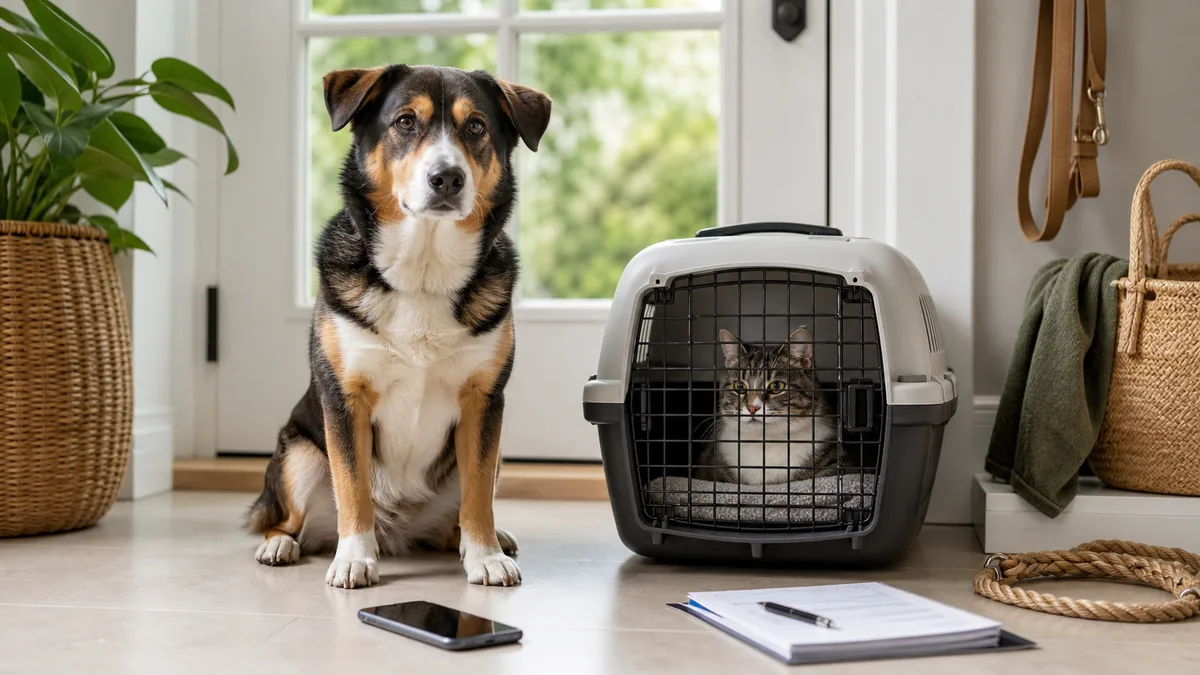
Returning home from a veterinary appointment or clinical surgery presents distinct environmental challenges in a multi-pet household. An animal recovering from anesthesia, sedation, or therapeutic injections arrives carrying foreign clinical odors, altered neurological reflexes, and diminished defensive capabilities. Unmonitored reintegration risks non-recognition aggression, accidental trauma, wound dehiscence, and dangerous cross-grooming of topical medications. Establishing a structured post-clinical observation protocol protects both the recovering patient and healthy resident animals.
- Prevent Subtle Resource Monopolization: Distribute water bowls, food dishes, and rest beds across multiple separate rooms so assertive pets cannot block hallways or restrict access for timid housemates.
- Monitor Post-Change Elimination Shifts: Track litter box and outdoor elimination habits closely after household changes; social tension frequently manifests as inappropriate urination or stress-induced cystitis.
- Conduct Individual Tactile Body Audits: In busy multi-pet households, perform weekly hands-on body condition checks to detect gradual weight loss or hidden dermatological lesions that group dynamics easily mask.
This post-clinical recovery guide aligns with American Animal Hospital Association (AAHA) surgical care standards. If a recovering pet displays pale, gray, or blue gums, hypothermia with persistent shivering, deep unarousable sedation past designated discharge hours, active surgical wound hemorrhaging, or respiratory distress, contact your veterinary surgical team immediately.
Etiology of Olfactory-Induced Feline Non-Recognition Aggression
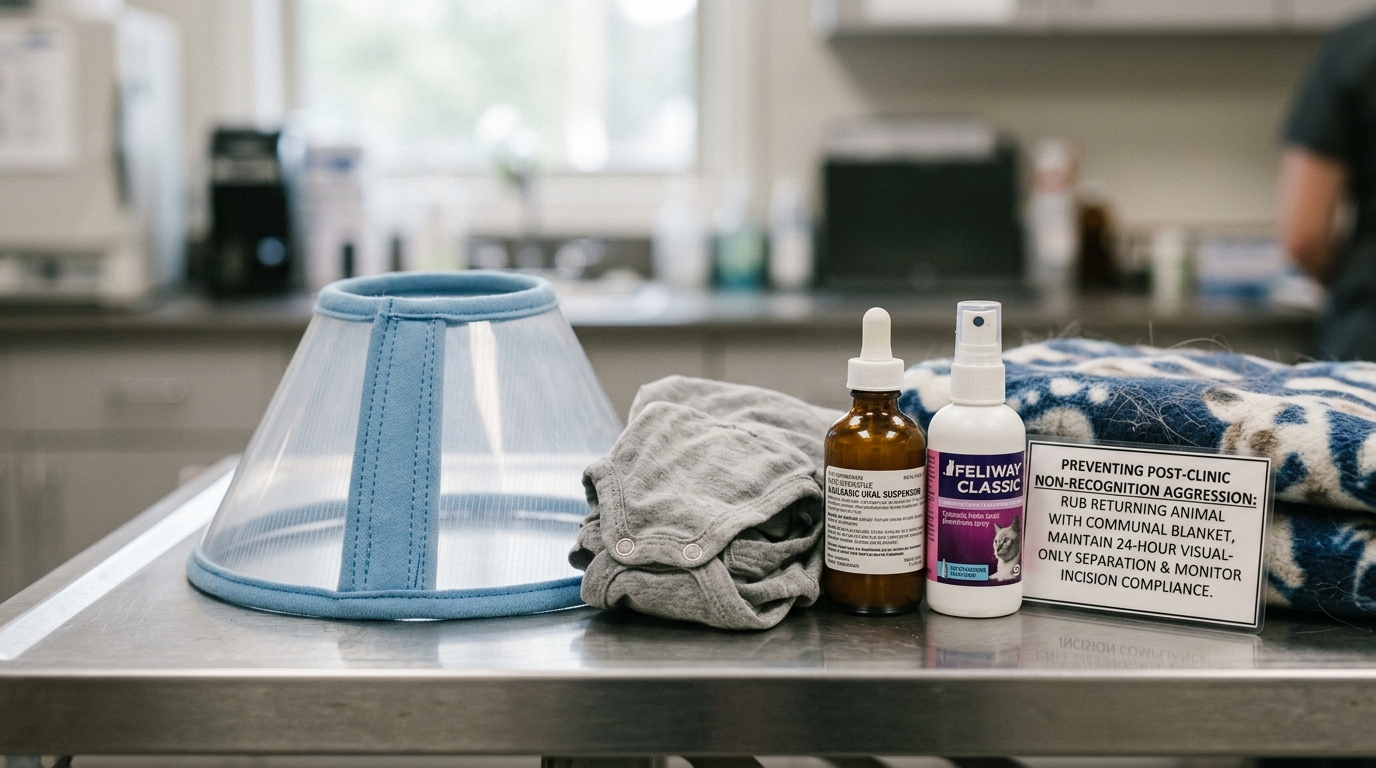
Companion animals, particularly domestic felines, rely heavily on olfactory signatures to maintain communal harmony. When an animal spends several hours in an animal hospital, their natural sebum scent is replaced by isopropyl alcohol, chlorhexidine scrubs, synthetic anesthetics, and stress pheromones from other hospitalized patients.
Resident pets frequently view the returning animal as an unfamiliar intruder. This olfactory disconnect triggers intense territorial defensiveness, leading to immediate hissing, swatting, or severe physical attacks. Simultaneously, a groggy or disoriented patient lacks the equilibrium and cognitive speed required to diffuse social tension, turning minor posturing into serious household fighting.
Surgical and Sedation Recovery Safeguards
Patients recovering from general anesthesia or diagnostic sedation require strict environmental containment during the first 12 to 24 hours:
| Recovery Parameter | Clinical Protocol Guideline | Multi-Pet Hazard Controlled |
|---|---|---|
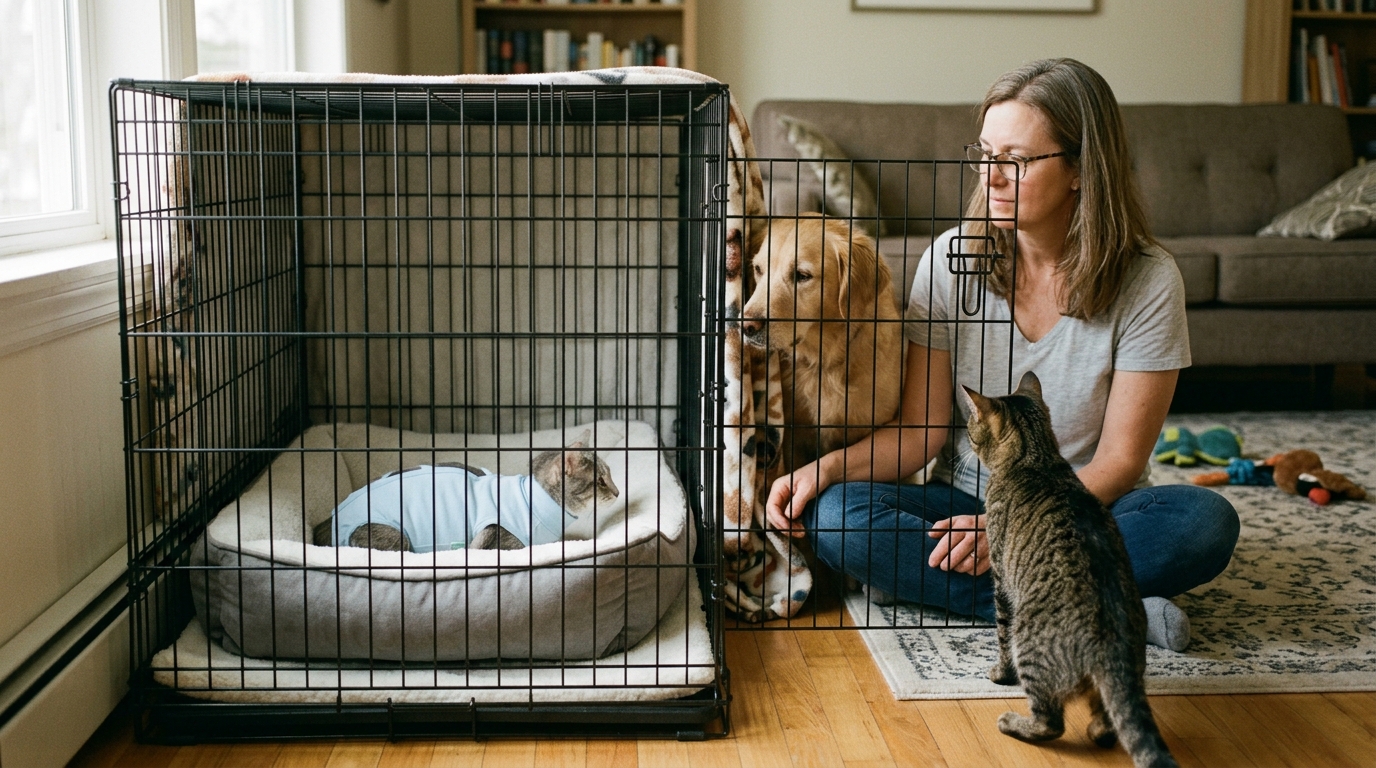
| Environmental Confinement | House the recovering animal in a quiet, climate-controlled room with low bedding and zero vertical jump hazards. | Prevents falls caused by residual ataxia; eliminates territorial ambush from energetic housemates. |
| Incision & Dressing Shielding | Maintain an Elizabethan collar (E-collar) or recovery suit at all times until suture removal. | Stops communal grooming partners from licking incisions and introducing oral bacteria into surgical sites. |
| Water & Food Titration | Offer small sips of water and one-third of a normal meal only once swallowing reflexes and head stability are fully restored. | Averts life-threatening pulmonary aspiration caused by depressed pharyngeal tone during early recovery. |
| Scent Exchange Integration | Rub a clean towel across healthy pets’ cheeks and stroke the recovering animal’s flank before reintroduction. | Re-establishes familiar communal pheromones, diminishing defensive territorial suspicion. |
Preventing Accidental Topical Medication Toxicity
Multi-pet homes face severe toxicity risks when recovering animals receive topical dermatological treatments, ophthalmic ointments, or transdermal analgesics. Companion dogs and cats frequently groom each other as part of social bonding:
- Feline Permethrin Sensitivity: Canine spot-on treatments containing synthetic pyrethroids or permethrin cause fatal neurotoxicity in cats. A cat grooming a recently treated dog or brushing against contaminated bedding can develop life-threatening tremors and seizures within hours.
- Transdermal Ointment Ingestion: Feline transdermal medications (such as methimazole or mirtazapine applied to the inner ear pinna) must never be ingested orally by other household animals. Keep pets separated until topical medications have completely dried and absorbed.
- Fentanyl Patch Ingestion: If a postoperative patient wears a transdermal fentanyl analgesic patch, ingestion by a curious housemate delivers a lethal opioid overdose. Keep the surgical patient strictly segregated and inspect patch adhesion every four hours.
Controlled Reintroduction Protocol
Never release a recovering patient directly into shared communal living areas. Follow this stepwise reintroduction workflow once the animal is fully awake, ambulatory, and eating normally:
- Step 1: Visual and Olfactory Scent Swap: Allow resident pets to sniff the patient through a closed door or baby gate for 15 to 30 minutes without physical contact.
- Step 2: Supervised Leashed Interaction: For canine households, keep dogs on loose leashes during the initial greeting to prevent enthusiastic jumping or rough play near incisions.
- Step 3: Separate Feeding Stations: Feed pets in distinct rooms with closed doors to prevent resource competition while the patient is operating at reduced metabolic speed.
Red-Flag Triage Matrix: Post-Visit Recovery Escalation
Monitor your recovering pet against these objective clinical benchmarks:
| Triage Tier | Clinical Presentation | Required Action Protocol |
|---|---|---|
| Immediate Emergency (0–2 Hours) | Profound hypothermia (<99.0°F), pale or cyanotic mucous membranes, active arterial incision bleeding, unresponsiveness, or respiratory rate exceeding 40 breaths/minute at rest. | Transport immediately to an open emergency hospital. Wrap the animal in a warm fleece blanket, keep head and neck extended, and alert the facility en route. |
| Urgent Assessment (12–24 Hours) | Persistent vomiting of water or food, marked lethargy beyond 18 hours post-discharge, pronounced incision redness or seroma swelling, or resident pets actively attempting to attack the patient. | Contact the discharging veterinary surgeon. Maintain strict physical room separation and withhold further solid food until advised. |
| Routine Home Monitoring | Mild grogginess during the initial 6 hours post-discharge, slight hesitancy climbing onto low bedding, or soft vocalization when resting comfortably. | Maintain a warm, dimly lit recovery room. Provide fresh water in shallow bowls and monitor incision cleanliness twice daily until suture removal. |
Never administer extra human sedatives, pain relievers, or leftover medications to calm a restless recovering animal. Unprescribed pharmacological combinations risk fatal central nervous system depression and acute hepatic or renal failure.
Frequently Asked Questions
What behavior is normal during the first 24 hours following veterinary surgery or sedation?
Mild drowsiness, slight unsteadiness when walking, and decreased appetite are common as anesthetic agents clear the body. Persistent hypothermia, pale gums, inability to stand after 24 hours, or uncontrolled vomiting indicate urgent complications.
What does a healthy healing incision look like compared to an infected wound?
A normal incision has clean, well-approximated edges with slight redness and minimal swelling. Redness spreading outward, gaping skin margins, heat, foul odor, or bloody and purulent discharge signals wound breakdown or bacterial infection.
Why is an Elizabethan collar necessary even when the pet appears relaxed?
Pets can open surgical incisions or introduce mouth bacteria in seconds of unsupervised licking. An e-collar or medical recovery garment must stay on continuously until the veterinary surgeon confirms complete closure and removes sutures.
Sources
- AAHA Anesthesia and Monitoring Guidelines for Dogs and Cats. American Animal Hospital Association.
- ISFM Guidelines on Practical Feline Wellbeing: Post-discharge care. International Society of Feline Medicine.
- Merck Veterinary Manual: Management of Postoperative Complications. Merck Sharp & Dohme Corp.
Caregiver Safety Checklist
- Keep a written emergency contact card taped inside a cabinet door: your primary vet’s number, the nearest 24-hour emergency clinic, and ASPCA Poison Control (888-426-4435).
- Never administer human first-aid products (hydrogen peroxide to induce vomiting, antiseptic ointments) without veterinary instruction — several are toxic and some delay proper treatment.
- After any anesthetic event, confine the pet in a safe, quiet space for 12 hours; stumbling, slow blinking, or hypothermia warrant an immediate call, not observation.
Printable tools
Download the matching worksheet
Source transparency
Reference mix for this guide
Source labels describe the type of organization behind each reference; they are not a claim that any outside organization reviewed this article.
- AAHA Anesthesia and Monitoring Guidelines for Dogs and Cats Veterinary organization · aaha.org
- ISFM Guidelines on Practical Feline Wellbeing: Post-discharge care Veterinary organization · catvets.com
- Merck Veterinary Manual: Management of Postoperative Complications Veterinary organization · merckvetmanual.com

