
This guide is general education for pet owners. If your pet has urgent symptoms, possible poisoning, injury, breathing trouble, collapse, severe pain, or sudden decline, contact a licensed veterinarian or local emergency service.
Editorial standard
How this guide was prepared
This clinical guide outlines objective symptom logging protocols for busy households under American Animal Hospital Association standards. If your pet exhibits sudden respiratory distress, acute unresponsiveness, severe repetitive vomiting, or painful abdominal distension, bypass home documentation and seek immediate emergency veterinary intervention.
- Centralized Family Symptom Group: Establish a dedicated digital chat or shared smartphone note where all household members instantly log the time, frequency, and nature of abnormal behaviors or illness signs.
- Quantifiable Objective Metrics: Record exact, objective data points (e.g., ‘vomited bile twice between 7 AM and 10 AM’) rather than subjective impressions (‘acting unwell’) to provide actionable diagnostic timelines.
- Immediate Logging of Trash Indiscretions: Document any suspected ingestion of table scraps, foreign objects, or landscaping materials chronologically, enabling veterinarians to determine precise intervention windows.
When companion animals experience fluctuating gastrointestinal, dermatological, or respiratory symptoms, busy households often struggle to construct an accurate clinical narrative. With multiple family members departing for work or school at different hours, individual observations remain disconnected. When presenting a pet for diagnostic evaluation, vague statements like “he has been feeling sick recently” force veterinarians to rely on broad, expensive exploratory diagnostics rather than targeted therapeutic interventions.
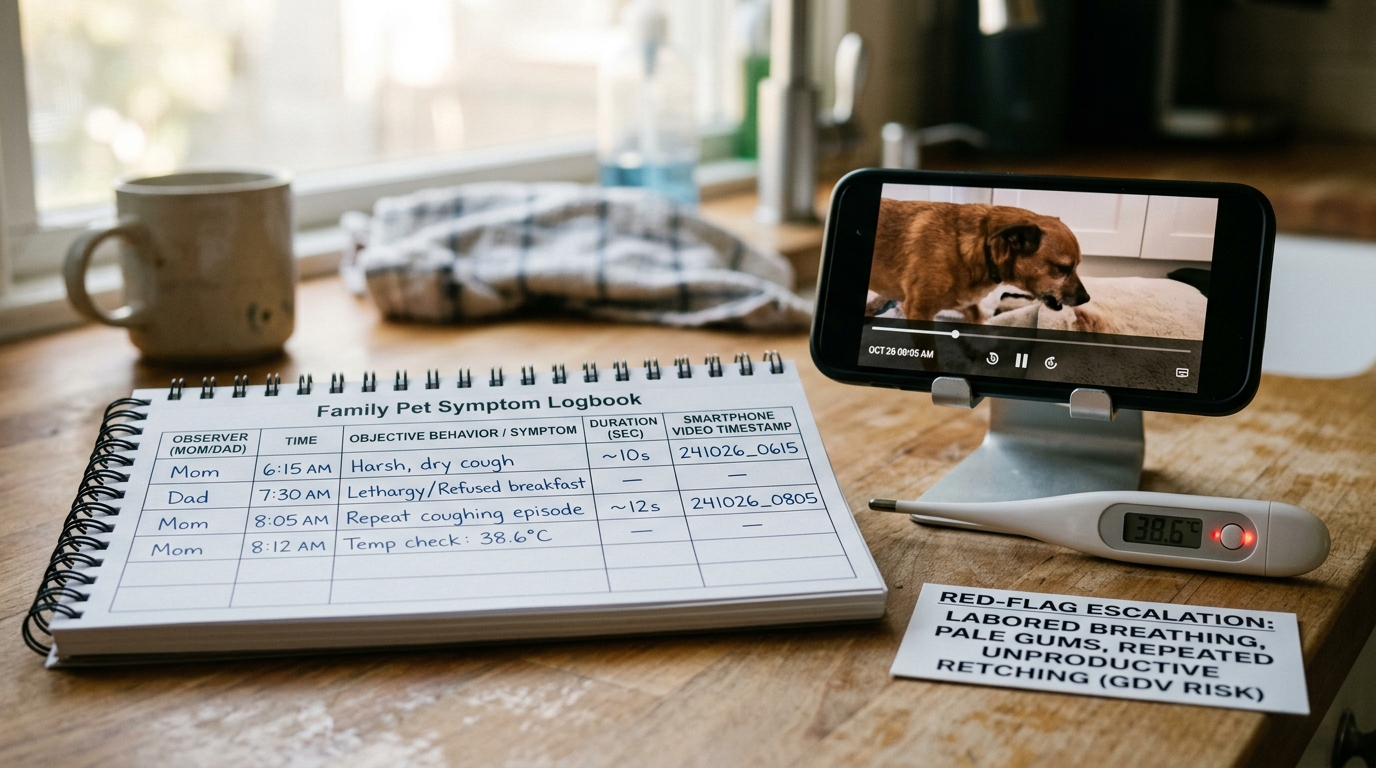
The Objective Vitals Log: Transforming Subjective Guesswork
Clinical veterinarians require precise chronological and physiological parameters to formulate effective diagnostic differential plans. Rather than recording subjective impressions like “low energy,” train all household caregivers to document standardized biomarkers:
- Hydration Assessment via Skin Turgor: Gently lift the loose skin over the shoulder blades into a tent and release. In a fully hydrated animal, the skin snaps back in under 1.0 second. A delay extending past 2.0 to 3.0 seconds demonstrates clinically significant dehydration (6% to 8% fluid deficit) demanding professional intervention.
- Gastrointestinal Characterization: Record whether an expulsion event constitutes true projectile vomiting (active abdominal heave with retching) or passive esophageal regurgitation (undigested food expelled without abdominal effort immediately following ingestion).
- Standardized Stool Quality Scoring: Utilize the clinical 1-to-7 Bristol-type veterinary stool scale. Classify movements from Type 1 (hard, dry pellets indicating constipation) through Type 4 (firm, segmented, leaves no residue) to Type 7 (watery diarrhea with zero structural consistency).
- Mucous Membrane Hydration & Color: Examine gingiva above the canine teeth. Gums should feel slippery and moist like human oral mucosa, displaying an even pink hue. Sticky, dry, pale white, or bright brick-red gums indicate systemic physiological distress.
Multi-Caregiver Communication Protocols for Working Homes
Communication failures represent the primary cause of missed clinical escalations in active homes. Establishing a frictionless, centralized logging station in the kitchen or beside pet feeding supplies eliminates diagnostic blind spots:
| Observation Domain | Objective Metric to Log | Clinical Diagnostic Utility |
|---|---|---|
| Temporal Onset | Exact timestamp of first abnormal episode and total frequency across 24 hours. | Helps clinicians differentiate acute toxin ingestion from chronic progressive inflammatory bowel conditions. |
| Fluid Intake & Output | Milliliters of water consumed from measured bowl and count of outdoor urination breaks. | Detects early metabolic shifts including chronic renal insufficiency, diabetic ketoacidosis, and Cushingoid disease. |
| Video Evidence | Record 15-to-20-second smartphone clips of abnormal breathing, coughing, or limping. | Overcomes the white-coat masking reflex where pets conceal signs of pain or lameness once inside the examination room. |

Chronological Structuring: Preparing the Diagnostic Intake Brief
Before heading to your veterinary appointment, consolidate household notes into a single-page chronological summary. Document the exact sequence of symptom evolution: did inappetence precede diarrhea, or did fever and lethargy trigger refusal of meals?
Include a comprehensive list of all current medications, dietary ingredients, treat brands, and potential environmental exposures, such as recent trail hikes, visits to communal dog parks, or access to household garbage cans. Organized chronological context accelerates the physical examination and focuses diagnostic testing on the most probable organ systems.
Red-Flag Triage Matrix: Symptom Severity & Action Tiers
Use this objective triage matrix to determine whether documented symptoms permit continued home observation or demand immediate emergency transit:
| Triage Tier | Clinical Presentation | Required Action Protocol |
|---|---|---|
| Immediate Emergency (0–2 Hours) | Repeated unproductive retching with progressive abdominal swelling (GDV alert), pale or blue mucous membranes, resting respiratory rate over 40 breaths per minute, sudden collapse. | Halt all home logging. Transport pet immediately to the nearest 24-hour veterinary emergency critical care center. Call ahead to notify the emergency team of suspected surgical emergency. |
| Urgent Assessment (12–24 Hours) | More than three vomiting or watery diarrhea episodes in 12 hours, complete refusal of water exceeding 18 hours, marked lethargy with rectal temperature above 103.5°F (39.7°C). | Contact your primary veterinarian to request a same-day urgent assessment or drop-off medical work-in slot. Bring your timeline log for rapid technician intake. |
| Routine Home Monitoring | Single isolated loose stool with normal energy, slight reduction in morning kibble consumption, brief transient lameness that resolves within two hours. | Record timestamp and details in your household shared log. Offer measured water and schedule a routine consultation if symptoms persist past 48 hours. |
Under no circumstances should human pain relievers, anti-diarrheals, or anti-emetics be administered without explicit veterinary direction. Symptom tracking protocols are designed exclusively to inform licensed clinical diagnosis, never to replace professional medical examination.
Caregiver Decision Tree: Common Observation Dilemmas
Working family members prevent contradictory notes when observing the same pet
Establish a single physical or cloud-based timeline log where observations must include three objective metrics: the exact timestamp, the quantifiable observation (e.g., “vomited 15 ml clear fluid containing unchewed grass” rather than “felt sick”), and the observer’s initials. Avoid subjective adjectives such as “seems off” or “looked sad.” Designating one primary family liaison to present the combined timeline during veterinary consultations prevents conflicting caregiver statements and eliminates diagnostic confusion.
Should video recordings replace written symptom logs during veterinary consultations?
Video recordings complement but do not replace structured written logs. A high-definition 15-to-30-second video of an episodic event—such as reverse sneezing, a focal seizure, abnormal gait, or coughing fits—is clinically invaluable because animals frequently mask symptoms inside veterinary exam rooms due to sympathetic adrenaline surges. Pair the video with written notes specifying frequency per 24 hours, duration of each episode, and post-event behavior to give clinicians complete diagnostic context.
Frequently Asked Questions
What specific clinical information should be recorded in a pet symptom log?
Note exact dates, times, duration of episodes, descriptions of vomit or stool, behavioral posture, changes in water and food consumption, and brief smartphone video clips of coughing, limping, or tremors.
When does an observed symptom require immediate emergency veterinary evaluation?
Symptoms such as pale or blue gums, extreme lethargy, continuous unassisted vomiting, respiratory distress, abdominal distension, or inability to urinate require immediate emergency care rather than ongoing home logging.
How does maintaining an objective symptom journal assist the veterinary clinical team?
A detailed chronological timeline removes guesswork, identifies disease progression patterns, correlates signs with environmental triggers, and helps veterinarians select targeted diagnostic tests without unnecessary expense.
Caregiver Symptom Documentation Checklist
- Record exact times, duration, and frequency of every vomiting, coughing, or abnormal episode.
- Capture 15 to 30-second videos of unusual gaits, breathing patterns, or tremors to show the clinician.
- Grade stool consistency using the 1 to 7 fecal chart and note any presence of fresh blood or dark melena.
- Track water bowl intake and percentage of normal meal portions consumed across each 24-hour cycle.
- Bring your written or digital log directly to the veterinary examination to assist clinical diagnosis.
Sources
- AAHA Canine Healthcare Guidelines. American Animal Hospital Association.
- AAFP Clinical Practice Guidelines. American Association of Feline Practitioners.
- Merck Veterinary Clinical Observation Standards. Merck Veterinary Manual.
Printable tools
Download the matching worksheet
Source transparency
Reference mix for this guide
Source labels describe the type of organization behind each reference; they are not a claim that any outside organization reviewed this article.
- AAHA Canine Healthcare Guidelines Veterinary organization · aaha.org
- AAFP Clinical Practice Guidelines Veterinary organization · catvets.com
- Merck Veterinary Clinical Observation Standards Veterinary organization · merckvetmanual.com

