
This guide is general education for pet owners. If your pet has urgent symptoms, possible poisoning, injury, breathing trouble, collapse, severe pain, or sudden decline, contact a licensed veterinarian or local emergency service.
Dosages must be calculated by a licensed veterinarian based on species, weight, and bloodwork. Never administer human medications or self-adjust prescription doses for pets.
Editorial standard
How this guide was prepared
This clinical guide outlines parasite prevention schedules and missed-dose recovery based on Companion Animal Parasite Council (CAPC) and American Heartworm Society (AHS) standards. If your dog exhibits acute tremors, stumbling, seizures, or persistent vomiting following medication, seek immediate emergency veterinary medical care.
- Consolidate into All-in-One Formulations: Select veterinary broad-spectrum chewable medications that protect against fleas, ticks, heartworm microfilariae, and intestinal parasites in a single monthly dose to streamline administration.
- Automate Reminders & Delivery: Eliminate missed doses by anchoring administration to the 1st of every month, setting automated smartphone calendar alerts, and subscribing to veterinary auto-ship home delivery services.
- Centralized Household Charting: Log parasite preventive dates on a shared family calendar to prevent missed administrations or accidental toxic double-dosing across multi-pet households.
In dynamic family households, monthly routine pet treatments often slip through the cracks. Between travel, school activities, and shifting work routines, caregivers frequently discover that a dog’s monthly heartworm, flea, or tick preventative was missed by weeks or even months. In veterinary pharmacology, handling a missed preventative dose requires following strict biological algorithms based on parasite developmental cycles rather than guessing or impulsively doubling medication.
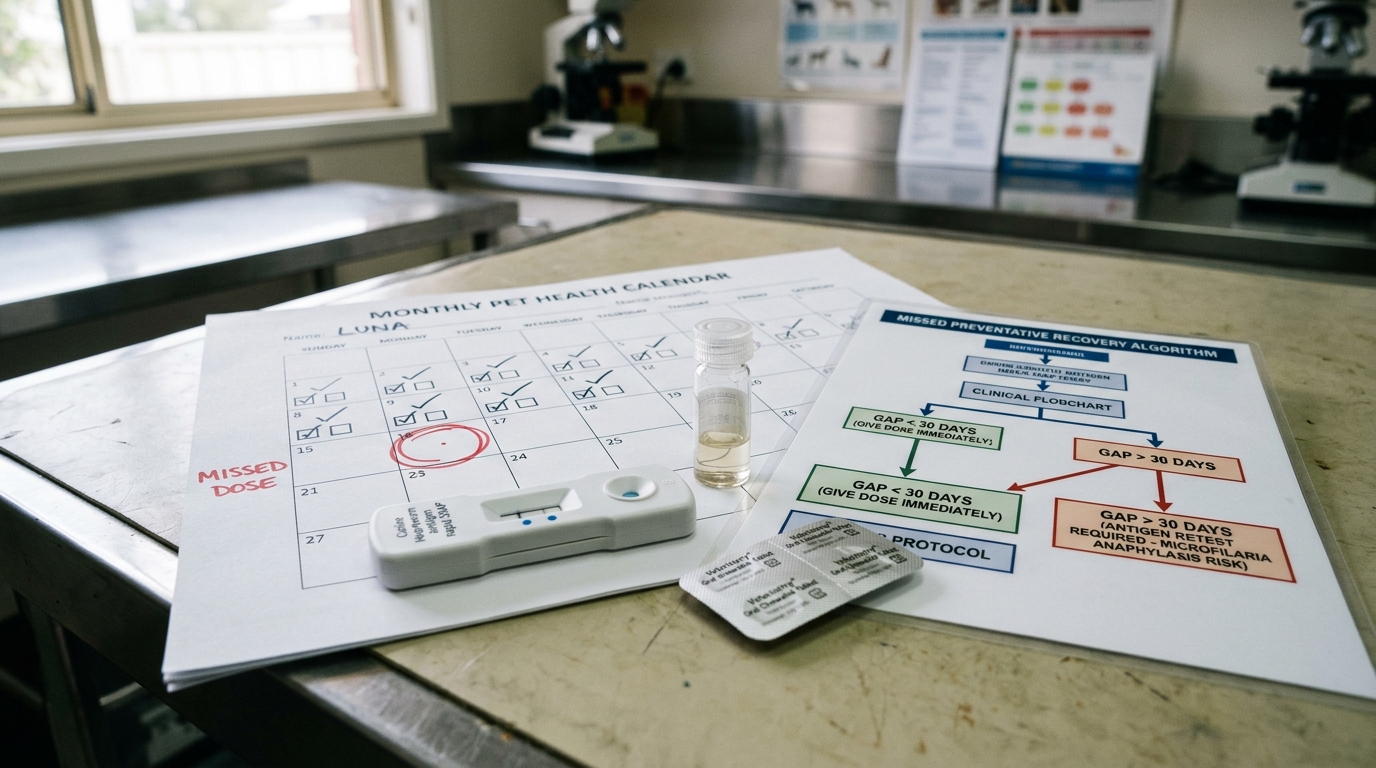
The Biological Algorithm for Missed Preventative Doses
Heartworm preventatives (macrocyclic lactones such as ivermectin, milbemycin oxime, and moxidectin) function retroactively: each monthly dose kills heartworm larvae (L3 and L4 stages) acquired from mosquito bites during the preceding 30 days. When an administration window is missed, larvae begin maturing into juvenile adults that are resistant to standard monthly preventative doses. Follow this evidence-based recovery protocol:
| Time Elapsed Since Due Date | Biological Parasite Stage Risk | Required Clinical Protocol |
|---|---|---|
| 1 to 14 Days Overdue | Larvae remain in early tissue stages (L3/L4) susceptible to macrocyclic lactones. | Administer the single prescribed monthly dose immediately. Reset the monthly administration calendar to this new date, and continue continuous year-round prevention. |
| 15 to 60 Days Overdue | A cohort of larvae may have advanced toward juvenile stages, approaching macrocyclic lactone resistance thresholds. | Administer a single prescribed dose immediately. Maintain strict monthly dosing without interruption, and schedule a heartworm antigen and microfilaria blood re-test at 6 months post-lapse to detect delayed seroconversion. |
| Over 6 Months Overdue | Heartworms acquired during the lapse may have reached mature adult stages and begun producing circulating microfilariae. | DO NOT administer preventative blindly. Contact your veterinarian for immediate blood testing. Administering macrocyclic lactones to a dog with high microfilaria burdens can provoke fatal anaphylactoid shock due to massive larval lysis. |
Multi-Caregiver Verification: Preventing Double-Dosing Accidents
While missed doses represent an efficacy concern, accidental double-dosing in multi-caregiver households represents a serious toxicological hazard. When two adult family members both administer a medication on the same morning without communicating, the patient receives a double dose of neuroactive insecticides:
- Physical Blister Pack Attachment: Store the pet’s preventative packaging on a high, child-proof shelf inside a designated pet medication bin. Affix a physical calendar directly to the box where the administering caregiver must initial immediately upon administration.
- Never Split Chews Across Animals: In homes with multiple dogs of varying sizes, never cut a large-dog soft chew in half for smaller dogs. Soft chews are manufactured via extrusion processes where active pharmaceutical ingredients are not blended uniformly. Splitting chews risks delivering an acute overdose to one dog and ineffective sub-therapeutic dosing to the other.
- Isoxazoline Class Precautions: Oral flea and tick preventatives of the isoxazoline class (afoxolaner, fluralaner, sarolaner, lotilaner) target insect GABA receptors. Although well-tolerated in most canines, the FDA emphasizes that dogs with a history of idiopathic epilepsy or tremors require veterinary neurological clearance prior to administration.
- Store Away from Food Storage: Highly palatable flavored soft chews are readily consumed in bulk by dogs who breach pantry doors. Acute ingestion of an entire 6-month or 12-month supply of isoxazolines causes severe ataxia, tremors, and profound gastrointestinal distress requiring urgent gastric decontamination.

Red-Flag Triage Matrix: Parasite Prevention Adverse Events
Use this objective triage matrix to monitor your dog following any preventative administration or accidental overdose:
| Triage Level | Clinical Manifestations | Required Action Protocol |
|---|---|---|
| Immediate Emergency (0–2 Hours) | Generalized muscle tremors, ataxia (drunken stumbling, loss of balance), acute seizures, profound facial swelling, projectile vomiting within 60 minutes of ingestion, cyanotic or pale gums, sudden collapse. | Transport immediately to the nearest veterinary emergency hospital. Bring the medication box or foil blister pack with exact milligrams and lot numbers for toxicological management. |
| Urgent Assessment (12–24 Hours) | Refusal of all meals exceeding 24 hours, persistent lethargy with reluctance to rise, severe watery diarrhea or hematochezia (fresh red blood in stool), intense focal pruritus or redness at a topical application site. | Schedule a same-day clinical examination with your primary veterinarian. If a topical spot-on caused localized irritation, bathe the dog thoroughly with mild dish soap (e.g., Dawn) in lukewarm water to remove residual skin oils. |
| Routine Home Monitoring | Single transient soft stool, mild temporary fatigue lasting under 12 hours, minor salivation immediately following oral administration. | Ensure constant access to fresh water, offer a bland meal, and record the event details in your permanent home medical record. |
Parasite prevention must be prescribed by a licensed veterinarian based on current physical examination findings, accurate body weight, and regional vector transmission patterns. Never administer expired preventatives, off-label formulations, or products intended for a different species.
Frequently Asked Questions
Why must dogs undergo heartworm antigen testing before starting or restarting preventives?
Administering certain heartworm preventives to an animal with circulating microfilariae can trigger a rapid die-off that leads to severe, potentially fatal anaphylactic shock. Testing confirms negative status and protects therapeutic safety.
Are oral parasite chewables better than topical spot-on medications?
Both options provide strong protection when administered consistently. Oral isoxazoline chews cannot be washed off by bathing or swimming and prevent exposure to children and other pets, while topical options are ideal for pets with food allergies or history of seizures.
Do strictly indoor cats require routine flea and heartworm prevention?
Yes. Heartworms are transmitted by mosquitoes that easily enter homes through windows or doors, and fleas frequently hitchhike indoors on clothing or other animals. Because feline heartworm disease has no approved medical cure, continuous prevention is critical.
Sources
- Current Canine Guidelines for the Prevention, Diagnosis, and Management of Heartworm Infection in Dogs. American Heartworm Society.
- Canine Parasite Control Guidelines. Companion Animal Parasite Council.
- FDA Fact Sheet About Potential Adverse Events Associated with Isoxazoline Flea and Tick Products. U.S. Food and Drug Administration.
Caregiver Safety Checklist
- Never use permethrin-based flea products on cats or in households with cats — even residue from a treated dog can cause feline permethrin toxicosis, a fatal emergency.
- Confirm heartworm status before starting macrocyclic lactone preventives in dogs; administering these in a heartworm-positive dog can trigger fatal shock.
- Check product labels for the minimum age and weight — many OTC flea products are toxic to kittens under 8 weeks or under 2 pounds.
Printable tools
Download the matching worksheet
Source transparency
Reference mix for this guide
Source labels describe the type of organization behind each reference; they are not a claim that any outside organization reviewed this article.
- Current Canine Guidelines for the Prevention, Diagnosis, and Management of Heartworm Infection in Dogs Reference source · heartwormsociety.org
- Canine Parasite Control Guidelines Reference source · capcvet.org
- FDA Fact Sheet About Potential Adverse Events Associated with Isoxazoline Flea and Tick Products Government or public agency · fda.gov