
This guide is general education for pet owners. If your pet has urgent symptoms, possible poisoning, injury, breathing trouble, collapse, severe pain, or sudden decline, contact a licensed veterinarian or local emergency service.
Dosages must be calculated by a licensed veterinarian based on species, weight, and bloodwork. Never administer human medications or self-adjust prescription doses for pets.
Editorial standard
How this guide was prepared
Managing internal and external parasites in foster companion animals represents a foundational pillar of rescue medicine and household biosecurity. Companion animals entering rescue systems frequently carry heavy parasite burdens acquired in overcrowded shelters, rural environments, or neglected outdoor conditions. Unidentified fleas, ticks, ear mites, roundworms, hookworms, and microscopic protozoan parasites (such as Giardia and Coccidia) present acute hazards to the health of the foster patient and threaten to contaminate living quarters, infecting resident household pets and human family members. Implementing a comprehensive antiparasitic protocol protects all household occupants.
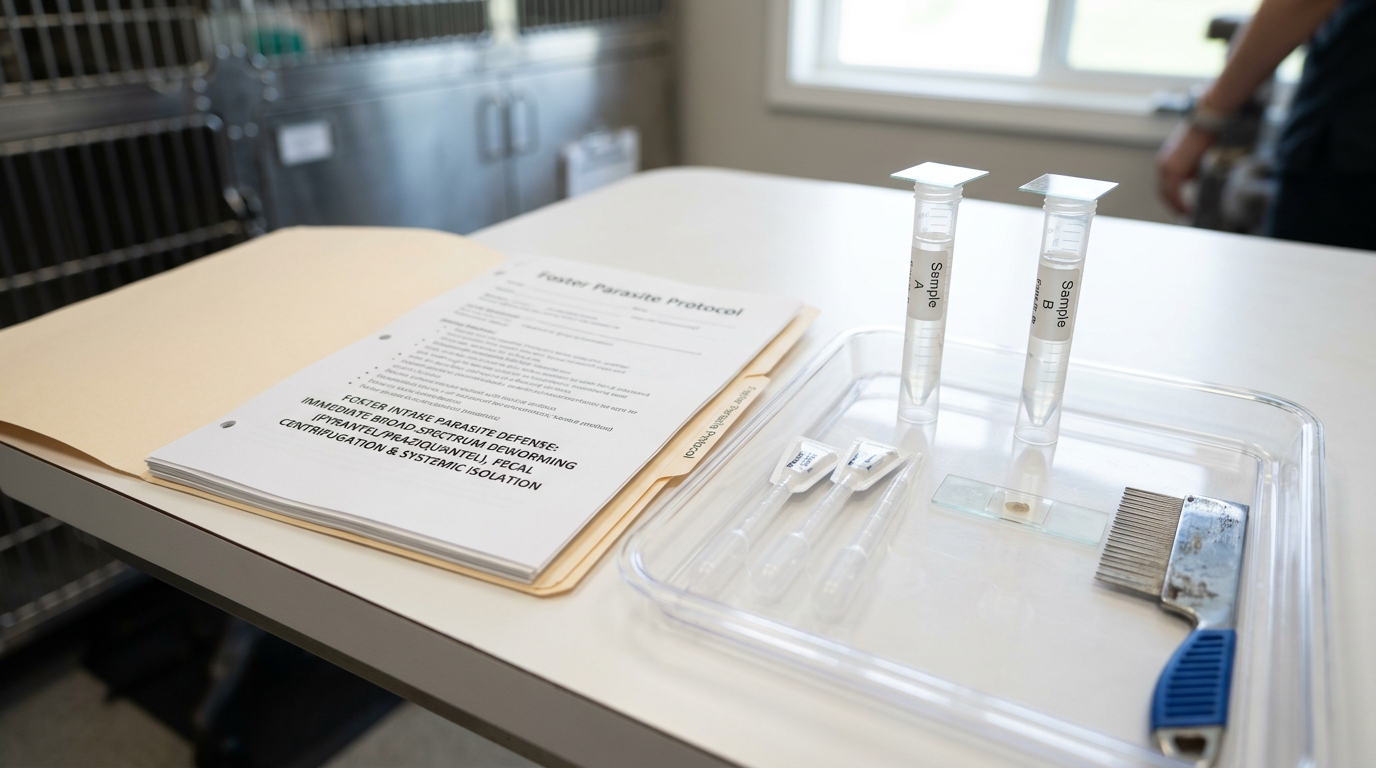
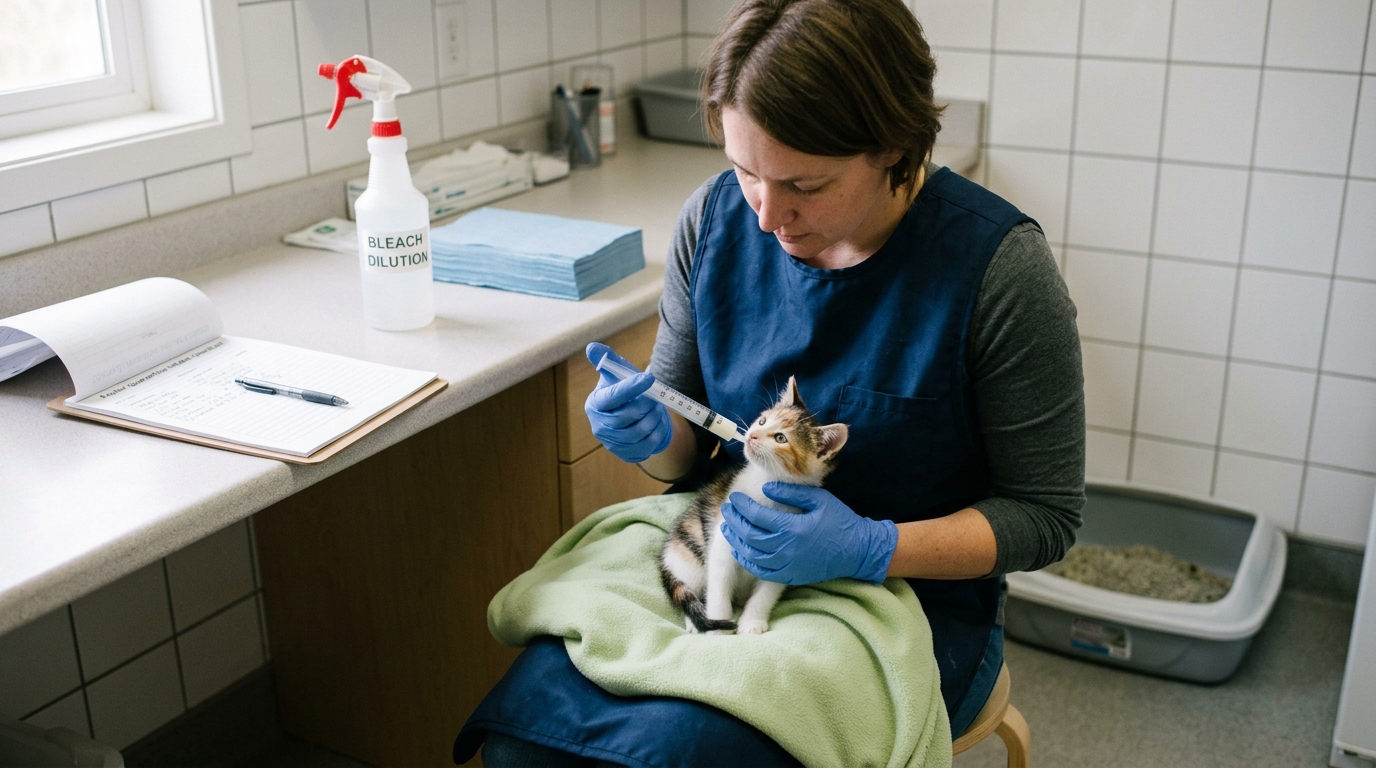
- Deliver Prompt Broad-Spectrum Shelter Deworming: Treat incoming foster pets with protocol-mandated anthelmintics (such as fenbendazole or pyrantel) immediately upon intake to halt environmental shedding.
- Maintain Yard Sanitation to Stop Re-Infection: Collect and bag outdoor fecal matter immediately to prevent soil seeding with hardy Giardia cysts or zoonotic hookworm larvae.
- Verify Clean Fecal Clearance Before Permanent Placement: Obtain a negative follow-up fecal centrifugal flotation test prior to handing off a foster pet to an adopting household with other companion animals.
This foster parasite prevention protocol conforms to guidelines established by the Companion Animal Parasite Council (CAPC) and the Association of Shelter Veterinarians (ASV). Never apply canine-specific topical flea and tick treatments containing permethrin or synthetic pyrethroids to cats. Feline permethrin toxicosis causes violent muscle tremors, hyperthermia, and intractable seizures requiring emergency intensive care.
The Parasite Burden in Rescue Medicine: Common Pathogens
Foster caregivers frequently encounter resilient parasites that require targeted clinical management:
- Zoonotic Hookworms and Roundworms: Ancylostoma (hookworms) and Toxocara (roundworms) shed microscopic ova in fecal matter. Hookworm larvae penetrate intact human skin causing cutaneous larva migrans, while roundworm eggs cause visceral and ocular larva migrans in children. Immediate intake deworming stops environmental contamination.
- Flea Infestations & Tapeworm Cycles: Fleas serve as the intermediate host for the tapeworm Dipylidium caninum. A foster animal grooming fleas ingests the tapeworm cysticercoid, resulting in intestinal tapeworm infestation characterized by visible white segments around the perineum.
- Protozoan Cysts (Giardia & Coccidia): Giardia duodenalis cysts and Cystoisospora oocysts survive for weeks in damp environments. Ingestion through contaminated water, communal bowls, or grooming soiled coats causes severe, foul-smelling diarrhea in young or stressed foster animals.
- Heartworm Microfilariae Exposure: Adult dogs entering foster care from heartworm-endemic regions must undergo diagnostic antigen and microfilaria testing before initiating preventive or adulticide therapy.
The Standardized Foster Intake Parasite Protocol
Follow this multi-tiered antiparasitic protocol for all incoming foster animals:
| Parasite Management Tier | Clinical Standard Operating Procedure | Biosecurity Protection Objective |
|---|---|---|
| Immediate External Ectoparasiticide | Administer an approved veterinary oral or topical flea/tick adulticide upon physical arrival. | Kills adult fleas within 12 to 24 hours, preventing flea egg deposition in foster home carpets and furniture. |
| Broad-Spectrum Intake Deworming | Administer broad-spectrum anthelmintics (such as pyrantel pamoate or fenbendazole) upon intake, repeated in 14 days. | Clears adult nematodes in the gut; second dose eliminates newly matured larvae that survived initial treatment. |
| Centrifugal Fecal Flotation | Submit a fresh fecal sample to the shelter veterinary clinic for microscopic centrifugal flotation. | Identifies microscopic protozoan cysts (Giardia, Coccidia) requiring specific antiprotozoal medications. |
| Strict Fecal Sanitation | Scoop dog feces immediately outdoors; double-bag litter box waste and discard in outdoor trash receptacles. | Prevents infectious parasite eggs from embryonating in soil or litter stations, breaking the reinfection cycle. |
Environmental Sanitation and Preventing Household Infestation
Maintain strict environmental hygiene during the foster animal’s initial quarantine period:
- Washable Bedding Cycles: Line foster crates and sleeping areas with washable blankets. Wash bedding weekly in hot water exceeding 130°F (55°C) and machine-dry on high heat for at least 30 minutes to kill flea eggs and protozoal cysts.
- Disinfecting Hard Surfaces: Clean hard floors and plastic crates using accelerated hydrogen peroxide or quaternary ammonium disinfectants approved for veterinary pathogen eradication. Standard bleach requires a 1:32 dilution and 10 minutes of wet contact time to inactivate parvo and fungal spores.
- Separate Resident Pet Prevention: Verify that all resident household pets maintain active, year-round prescription flea, tick, and heartworm prevention to ensure they remain biologically protected against accidental cross-exposure.
Red-Flag Triage Matrix: Parasite Complications and Chemical Sensitivity
Evaluate your foster pet against these clinical triage thresholds:
| Triage Tier | Clinical Presentation | Required Action Protocol |
|---|---|---|
| Immediate Emergency (0–2 Hours) | Feline exposure to canine permethrin (severe muscle tremors, stumbling, seizures, hyperthermia), acute dyspnea in heartworm-positive dogs, or pale gums indicating severe flea anemia. | Transport immediately to an emergency veterinary hospital. If topical chemical exposure occurred within 30 minutes, wash skin with lukewarm water and mild dish detergent; transport immediately. |
| Urgent Assessment (12–24 Hours) | Intense pruritus resulting in open excoriations and secondary bacterial pyoderma, persistent diarrhea with visible parasite segments, or heavy tick infestation. | Schedule a daytime appointment with your primary veterinarian. Obtain an approved prescription parasiticide and submit a fresh stool sample for diagnostic flotation. |
| Routine Home Monitoring | Occasional single flea discovered on an otherwise healthy, energetic dog or cat, or scheduled administration date for monthly preventive. | Administer approved prescription product according to label instructions. Vacuum home carpets thoroughly and wash all pet bedding in hot water. |
Never apply unregulated supermarket flea powders, cheap over-the-counter dips, or essential oils (such as eucalyptus, pennyroyal, or tea tree oil) to foster pets. These compounds cause severe acute contact dermatitis, chemical burns, neurotoxicity, and fatal respiratory depression.
Frequently Asked Questions
Why must dogs undergo heartworm antigen testing before starting or restarting preventives?
Administering certain heartworm preventives to an animal with circulating microfilariae can trigger a rapid die-off that leads to severe, potentially fatal anaphylactic shock. Testing confirms negative status and protects therapeutic safety.
Are oral parasite chewables better than topical spot-on medications?
Both options provide strong protection when administered consistently. Oral isoxazoline chews cannot be washed off by bathing or swimming and prevent exposure to children and other pets, while topical options are ideal for pets with food allergies or history of seizures.
Do strictly indoor cats require routine flea and heartworm prevention?
Yes. Heartworms are transmitted by mosquitoes that easily enter homes through windows or doors, and fleas frequently hitchhike indoors on clothing or other animals. Because feline heartworm disease has no approved medical cure, continuous prevention is critical.
Sources
- CAPC Recommendations for Parasite Control in Dogs and Cats. Companion Animal Parasite Council.
- ASV Guidelines for Standards of Care: Parasite Control. Association of Shelter Veterinarians.
- Merck Veterinary Manual: Pharmacology of Antiparasitics in Shelter Settings. Merck Sharp & Dohme Corp.
Caregiver Safety Checklist
- Never use permethrin-based flea products on cats or in households with cats — even residue from a treated dog can cause feline permethrin toxicosis, a fatal emergency.
- Confirm heartworm status before starting macrocyclic lactone preventives in dogs; administering these in a heartworm-positive dog can trigger fatal shock.
- Check product labels for the minimum age and weight — many OTC flea products are toxic to kittens under 8 weeks or under 2 pounds.
Source transparency
Reference mix for this guide
Source labels classify the institutional category of the references cited above.