This guide is general education for pet owners. If your pet has urgent symptoms, possible poisoning, injury, breathing trouble, collapse, severe pain, or sudden decline, contact a licensed veterinarian or local emergency service.
Dosages must be calculated by a licensed veterinarian based on species, weight, and bloodwork. Never administer human medications or self-adjust prescription doses for pets.
Editorial standard
How this guide was prepared
Canine respiratory sounds frequently cause immense anxiety for pet owners, especially when an otherwise healthy dog suddenly begins making alarming, honking, or snorting noises that mimic choking or suffocation. Because the canine upper airway, nasopharynx, and trachea are sensitive to environmental irritants, infectious pathogens, and anatomical abnormalities, distinguishing between harmless paroxysmal episodes and progressive pulmonary diseases is an essential skill for every dog parent. Learning to recognize the clinical distinctions between reverse sneezing, kennel cough, tracheal collapse, and cardiac coughing allows caregivers to respond appropriately without panicking.
Clinical Quick Answer & Immediate Actions
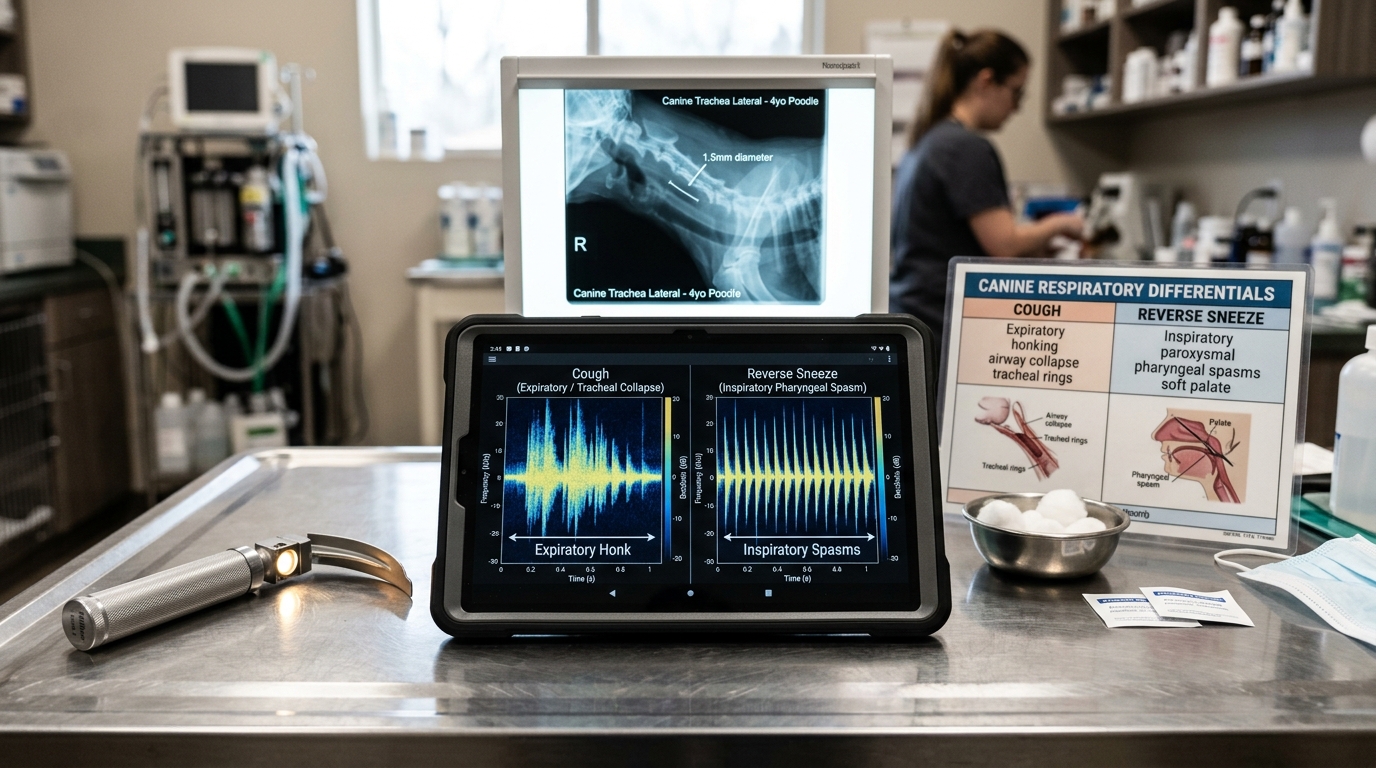
Reverse sneezing is a dramatic but benign nasopharyngeal spasm characterized by rapid, loud inspiratory snorting through the nose with an extended neck. In contrast, true canine coughing involves forceful expiratory chest contraction, often producing a goose-honk sound or gagging terminal retch that indicates tracheobronchial disease.
While many episodes of rapid snorting are benign and self-limiting, persistent or evolving coughing fits should never be ignored. In dogs, coughing serves as a protective reflex indicating irritation, foreign matter, or fluid accumulation within the airway, providing crucial diagnostic clues regarding tracheal integrity, infectious exposure, and cardiovascular health.
Symptom Matrix: Differentiating Canine Respiratory Sounds
Understanding how air moves during an episode reveals the underlying physiological mechanism:
| Respiratory Condition | Airflow & Sound Pattern | Physical Posture & Demeanor | Common Underlying Causes |
|---|---|---|---|
| Reverse Sneezing | Rapid, rhythmic INHALATIONS through nose; loud snorting/honking sound | Stands still, elbows turned out, neck fully extended; looks startled but recovers immediately | Dust, pollen, pulling on collar, excited greeting, rapid temperature shift |
| Kennel Cough (CIRD Complex) | Forceful EXHALATION; loud, persistent, dry “goose-honk” cough ending in a terminal gag | Coughs repeatedly during light exertion or when collar presses against throat; may retch white foam | Infectious viral/bacterial agents: Bordetella bronchiseptica, parainfluenza, canine adenovirus-2 |
| Tracheal Collapse | Dry, harsh, dry-honking cough; worsens with heat, excitement, or humidity | Common in toy breeds (Yorkies, Pomeranians, Chihuahuas); exercise intolerance, dynamic airway collapse | Progressive hypocellularity and loss of glycosaminoglycans in tracheal cartilage rings |
| Cardiac Cough (Heart Failure) | Soft, wet, bubbling, or hacking cough; worse at rest, nighttime, or early morning | Lethargic, reduced stamina on walks, increased sleeping respiratory rate (>30 bpm) | Left-sided congestive heart failure (MMVD), pulmonary edema pressing on left mainstem bronchus |
How to Help a Dog During a Reverse Sneezing Episode
While reverse sneezing sounds terrifying, it does not cause asphyxiation or neurological harm. If your dog experiences an episode:
- Stay Calm: Dogs absorb owner panic. Speak in a soothing, quiet voice so your pet does not become anxious.
- Gently Massage the Throat: Stroking your dog’s throat softly helps relax the pharyngeal muscles and stimulates a swallowing reflex that resets the soft palate.
- Brief Nostril Occlusion: Gently covering your dog’s nostrils with your thumb and forefinger for one to two seconds forces the dog to breathe through their mouth, which instantly clears the nasopharyngeal spasm.
- Offer a Small Treat or Water: Offering a tiny piece of food or a sip of water triggers voluntary swallowing, restoring normal palate alignment.
- Film the Episode: If episodes occur frequently, record a 15-second smartphone video to show your veterinary clinician. Combine this with our pet symptom tracking timeline guide.
When Coughing Signals Kennel Cough or Tracheal Collapse
If your dog is exhibiting true coughing rather than reverse sneezing, veterinary assessment is necessary to prevent secondary complications:
- Infectious Tracheobronchitis (Kennel Cough): Highly contagious via airborne droplets, shared water bowls, and dog park socialization. Dogs typically require supportive cough suppressants, anti-inflammatories, or targeted antibiotics if secondary bacterial pneumonia threatens. Review our guide on lifestyle dog vaccines for Bordetella protection.
- Managing Tracheal Collapse: If your small dog has been diagnosed with tracheal collapse, immediately replace all neck collars with an ergonomic, chest-distributing harness. Avoid smoke exposure, manage body weight strictly, and use veterinary bronchodilators during flare-ups.
Environmental Triggers & Airway Protection at Home
Minimizing household airborne irritants dramatically reduces the frequency and severity of both reverse sneezing spasms and chronic coughing episodes in sensitive canines:
- Eliminate Aerosols and Diffusers: Scented room sprays, plug-in deodorizers, incense, and essential oil diffusers (particularly eucalyptus, tea tree, and citrus oils) cause intense airway hyperreactivity. Avoid using chemical cleaning sprays near your dog; consult our safe pet cleaning guide.
- Maintain Clean Indoor Air: Place a high-efficiency particulate air (HEPA) filter in the room where your dog sleeps, and vacuum carpets weekly with a sealed HEPA vacuum to extract dust mites and environmental pollens.
- Optimal Indoor Humidity: Keep indoor relative humidity between 40% and 50%. Dry winter heating parches tracheal mucosal linings, making cartilage rings more prone to dynamic collapse and irritation during exercise.
- Strict Weight Management: In toy breeds with collapsing tracheas, excess thoracic body fat places immense mechanical compression against airways, worsening breathing resistance and triggering chronic paroxysmal coughing fits.
When to Contact a Veterinarian Immediately
Respiratory distress requires immediate emergency intervention. Seek emergency veterinary hospital care without delay if your dog demonstrates bluish, purple, or pale gums (cyanosis), collapses during or after a coughing fit, breathes with open nostrils flared and severe abdominal pumping, coughs up blood or pink frothy liquid, or has a sleeping respiratory rate exceeding 35 to 40 breaths per minute. Call your veterinary emergency clinic immediately to ensure oxygen therapy is prepared upon arrival.
Clinical Practice Tool: Veterinary Visit Preparation Sheet
Record respiratory episodes, coughing frequency, and video timestamps for your vet with our Veterinary Visit Preparation Sheet. Download and print your copy of the Veterinary Visit Preparation Sheet, or explore all practical pet care guides in the NewsPet Resource Center.
Frequently Asked Questions
How can caregivers distinguish between a reverse sneeze and infectious kennel cough in dogs?
A reverse sneeze consists of rapid, loud inspiratory snorts through the nose with the neck extended, resolving in seconds. Kennel cough manifests as a persistent, dry hacking expiratory cough that sounds like a goose honk, often ending with a retch.
What clinical signs indicate that a dog’s cough is a cardiac emergency rather than kennel cough?
Coughing accompanied by rapid resting breathing rate (over 30 breaths/min during sleep), exercise intolerance, blueish gums, and coughing primarily when lying down indicates congestive heart failure requiring immediate veterinary care.
How is infectious canine tracheobronchitis (kennel cough) transmitted and managed?
Kennel cough spreads via airborne droplets in boarding facilities and dog parks. Mild cases require rest, harness walking, and humidity therapy, while secondary bacterial cases require veterinary-prescribed antimicrobial therapy.
Emergency Triage Matrix: Clinical Presentation & Required Response
| Triage Level | Clinical Signs & Presentation | Immediate Action Protocol |
|---|---|---|
| Tier 1: Immediate Emergency (0–2 Hours) | Coughing culminating in syncopal collapse (fainting), cyanotic (blue/purple) tongue or gums, acute dynamic tracheal collapse with severe inspiratory stridor, pink frothy discharge. | Immediate emergency veterinary transport; administer gentle handling, cool air flow, and emergency oxygen supplementation upon arrival. |
| Tier 2: Urgent Veterinary Care (1–2 Days) | Persistent goose-honk cough lasting > 5–7 days, cough producing white foam followed by retching, concurrent fever or appetite loss, cough that worsens at night or during light exercise. | Veterinary clinical examination, thoracic radiography, and infectious respiratory screening; isolate dog from other canines to prevent contagion. |
| Tier 3: Home Monitoring & Calming Maneuvers | Isolated paroxysmal reverse sneezing bouts lasting < 60 seconds with rapid sniffing sounds, completely resolved with normal breathing and energy immediately afterward. | Gently massage the throat, briefly occlude nostrils to stimulate swallowing, transition to a walking chest harness, and monitor episode frequency. |
Rule S1 Boundaries & Canine Respiratory Warnings
Airway irritation requires gentle supportive handling; forceful interventions cause severe structural trauma:
- NEVER squeeze or compress the trachea: Pinching the throat to abort reverse sneezing or coughing damages delicate tracheal cartilage rings and triggers acute spasms.
- NEVER administer human cough suppressants or decongestants: Human formulations containing pseudoephedrine, phenylephrine, or acetaminophen cause toxic cardiac arrhythmias, severe hypertension, and acute canine hepatic failure.
- NEVER use a neck collar on a coughing dog: Collar pressure against the ventral neck exacerbates tracheal collapse and mechanical tracheitis; dogs must walk exclusively on wide-chest harnesses.
- NEVER expose a coughing dog to communal canine environments: Canine infectious respiratory pathogens (Bordetella, canine parainfluenza) are highly contagious via aerosolized droplets; isolate the dog until cleared by a vet.
Caregiver Respiratory Assessment & Care Checklist
- During a reverse sneezing spasm: gently stroke your dog’s throat and briefly cover their nostrils for 1 to 2 seconds to encourage swallowing and clear the soft palate.
- Record high-resolution video footage of the episode showing both acoustic sounds and chest wall movements for veterinary diagnostic review.
- Replace all neck collars with a supportive, non-restrictive chest harness for daily walks.
- Introduce cool-mist humidification into the dog’s resting area to soothe inflamed tracheobronchial mucous membranes.
- Isolate your dog from other canines if infectious tracheobronchitis (kennel cough) is suspected.
Related Clinical Guides & Tools
Peer-Reviewed Clinical References & Evidence Grounding
- PMID: 26780854: Canine tracheal collapse (J Small Anim Pract, 2016) (opens in new tab)
- PMID: 16711613: Canine chronic inflammatory rhinitis (Clin Tech Small Anim Pract, 2006) (opens in new tab)
- PMID: 19761477: Canine granulocytic anaplasmosis: a review (J Vet Intern Med, 2009) (opens in new tab)
- Merck Veterinary Manual — Small Animal Clinical Medicine & Emergency Reference (opens in new tab)
Source transparency
Reference mix for this guide
Source labels classify the institutional category of the references cited above.

