This guide is general education for pet owners. If your pet has urgent symptoms, possible poisoning, injury, breathing trouble, collapse, severe pain, or sudden decline, contact a licensed veterinarian or local emergency service.
Editorial standard
How this guide was prepared
Smoke inhalation resulting from residential house fires, brushfires, or closed-space heating accidents is a life-threatening veterinary emergency that inflicts devastating multi-organ trauma on dogs and cats. When an animal is trapped in a fire environment, respiratory failure occurs through a destructive pathophysiological triad: acute thermal burns to the upper airway, severe chemical irritation of the tracheobronchial tree from toxic combustion byproducts, and lethal systemic asphyxiation caused by carbon monoxide and hydrogen cyanide inhalation. Because pets frequently hide under beds or inside closets during a blaze, their exposure duration in low-oxygen, particulate-dense microenvironments is exceptionally high. Without immediate emergency stabilization and continuous high-flow oxygen therapy, victims rapidly succumb to progressive laryngeal edema, asphyxiation, non-cardiogenic pulmonary edema, or irreversible anoxic brain injury.
Quick Answer: First Aid for Pet Smoke Inhalation
If your dog or cat has been rescued from a burning building, garage fire, or heavy smoke environment, move them immediately into fresh open air. Check their breathing: look for open-mouth panting, high-pitched stridor (squeaking gasps), soot around the nostrils, or cherry-red/bluish gums. Keep your pet calm and gently wipe soot from the face with a damp cloth. Do NOT force oral water. Transport your pet immediately to an emergency veterinary hospital for 100% flow-by medical oxygen; smoke inhalation injuries frequently worsen dramatically over the first 24 to 48 hours as internal airway swelling and chemical pneumonia peak.
The Pathophysiological Triad of Fire Inhalation Injuries
Fire produces complex internal trauma through three distinct biological mechanisms:
1. Thermal Airway Injury: Because dry air has low heat capacity, direct thermal burning is largely restricted to the upper respiratory tract—including the nares, pharynx, larynx, and vocal folds. Inhaling superheated gases causes acute mucosal denudation, massive cellular swelling, and laryngeal edema. Within 2 to 6 hours post-exposure, the swollen glottis can physically occlude the trachea, producing complete mechanical airway obstruction.
2. Chemical Tracheobronchitis and Alveolitis: Burning synthetic materials—such as plastics, furniture foam, carpets, and construction polymers—releases toxic particulates and corrosive gases, including sulfur dioxide, chlorine, hydrogen chloride, phosgene, and ammonia. When these gases dissolve in the moist mucosal lining of the lower airways, they form strong acids and alkalis that destroy the mucociliary escalator. Bronchial epithelial sloughing and surfactant deactivation lead to diffuse alveolar collapse (atelectasis) and delayed non-cardiogenic pulmonary edema.
3. Systemic Carbon Monoxide and Cyanide Asphyxiation: Carbon monoxide (CO) binds to hemoglobin with an affinity exceeding 200 times that of oxygen, forming carboxyhemoglobin (COHb). Carboxyhemoglobin shifts the oxygen-hemoglobin dissociation curve to the left, preventing remaining oxygen from dissociating into ischemic tissues. Concurrently, inhaled hydrogen cyanide poisons mitochondrial cytochrome oxidase, halting cellular aerobic respiration even in the presence of oxygen.
Clinical Emergency Triage Matrix
| Triage Tier | Clinical Presentation | Required Action |
|---|---|---|
| Tier 1: Immediate Critical Emergency (0-1h) | Stridor (loud, high-pitched inspiratory wheezing); open-mouth breathing with neck extended; cherry-red, purple, or pale gums; altered mental status, stupor, or seizures; singed facial whiskers with mucosal blistering; severe full-thickness dermal burns. | Administer flow-by oxygen immediately if emergency responders have pet rescue masks. Transport to veterinary intensive care unit immediately. Prepare for emergency endotracheal intubation or tracheostomy, IV shock resuscitation, and burn wound debridement. |
| Tier 2: Urgent Veterinary Care (1-4h) | Heavy soot deposition around nose and mouth; persistent hacking cough or gagging; tachypnea (>40 breaths/min at rest); corneal squinting and eye discharge; pet restless and refusing food post-fire rescue. | Proceed directly to an emergency veterinary hospital. Delayed pulmonary edema and chemical pneumonitis commonly develop 12 to 24 hours following initial smoke exposure. |
| Tier 3: Same-Day Evaluation (4-8h) | Brief exposure to smoke near exterior structure without soot on face; normal resting respiratory rate (<30 breaths/min); bright mental status; clear lung sounds upon gentle auscultation. | Keep pet indoors in a clean, quiet, well-ventilated room. Schedule an urgent veterinary consultation for baseline thoracic radiographs, corneal fluorescein staining, and pulse oximetry. |
Dangerous Home Pitfalls: What NOT to Do (Rule S1)
- NEVER submerge a fire victim pet in cold water or ice: Dousing a burned pet in cold water precipitates catastrophic hypothermia, which dramatically impairs coagulation and cardiac output. Use cool, clean tap-water moistened towels applied only to localized burn areas, leaving the rest of the body dry and warm.
- NEVER force fluids or milk down a coughing pet’s throat: Inhaled smoke blunts the sensory nerves of the larynx and soft palate. Forcing liquids into the mouth inevitably directs fluid into the trachea, causing fatal secondary aspiration pneumonia.
- NEVER rely on home pulse oximeter readings: Standard pulse oximeters cannot distinguish between oxyhemoglobin and carboxyhemoglobin. A pet dying of carbon monoxide poisoning can show a falsely reassuring “99% SpO2” reading on consumer monitors while cellular tissues are completely suffocating.
- NEVER assume an animal is fine because they walked out of the fire alive: Chemical pneumonitis, carbonaceous tracheobronchitis, and delayed pulmonary edema peak 24 to 48 hours after fire exposure. Discharging or keeping a pet at home without medical monitoring during this window frequently ends in sudden death.
The Critical Role of 100% Medical Oxygen Therapy
The single most potent and life-saving intervention for smoke inhalation is the immediate delivery of high-concentration, humidified 100% medical oxygen. In room air (21% oxygen), the biological half-life of carboxyhemoglobin in dogs and cats is approximately 250 minutes (over 4 hours). During this prolonged period, the brain and myocardium suffer devastating hypoxia.
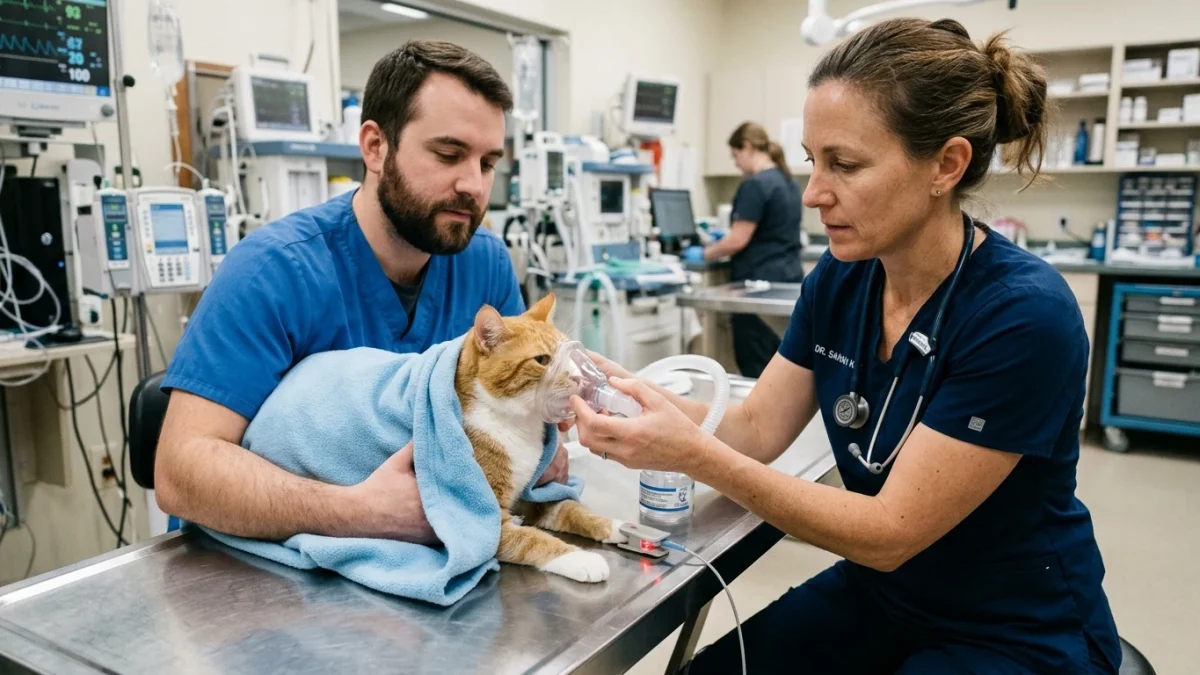
When the animal breathes 100% medical oxygen delivered via an intensive care oxygen cage, tight-fitting pet rescue mask, or high-flow nasal cannula, the elimination half-life of carboxyhemoglobin plummets to under 30 minutes. High partial pressures of oxygen physically displace carbon monoxide molecules from hemoglobin binding sites and dissolve surplus oxygen directly into blood plasma, immediately restoring cellular oxygen delivery and mitigating reperfusion injury.
Frequently Asked Questions
What does cherry-red gum color mean in a fire victim?
Cherry-red mucous membranes are a classic clinical indicator of acute carbon monoxide poisoning. The carboxyhemoglobin complex possesses a bright red pigmentation that imparts an intense red hue to the gums, tongue, and nail beds. Unlike healthy pink gums, cherry-red gums indicate severe systemic hypoxia and represent an urgent requirement for 100% oxygen therapy.
How do veterinarians diagnose lung damage after smoke inhalation?
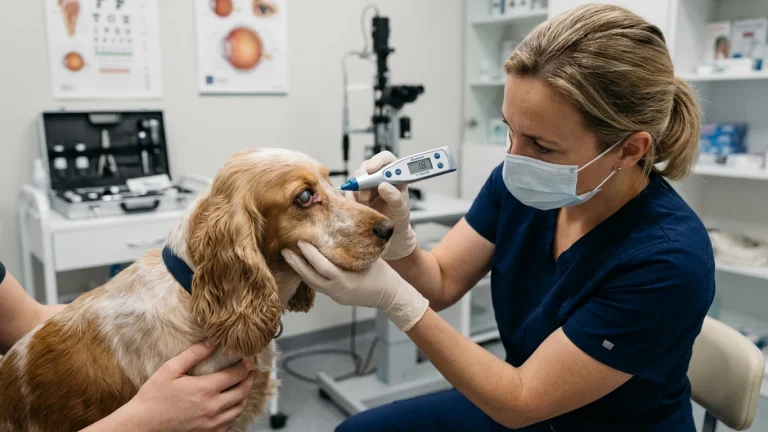
Emergency veterinarians utilize thoracic radiography (chest X-rays) to evaluate for peribronchial cuffing, alveolar infiltration, and pulmonary edema. However, initial X-rays taken immediately after a fire may appear deceptive or normal; repeat imaging at 24 and 48 hours is standard practice. Clinicians also perform arterial blood gas analysis, co-oximetry, and corneal fluorescein staining to identify concurrent corneal burns from heat and smoke particles.
What long-term complications can occur after recovering from smoke inhalation?
Pets that survive acute smoke inhalation may develop long-term chronic bronchitis, tracheal stenosis (narrowing of the windpipe due to thermal scarring), recurrent bacterial pneumonia, and permanent neurological deficits (delayed post-hypoxic leukoencephalopathy) resulting from prolonged cerebral anoxia. Close follow-up veterinary care and pulmonary monitoring are vital during the 60-day recovery window.
Scientific Sources and Literature
- Drobatz KJ, et al. “Smoke inhalation injury in dogs and cats: 45 cases (1988-1996).” Journal of the American Veterinary Medical Association. PMID: 24792445
- Mariani CL. “Carbon monoxide poisoning in dogs and cats: pathophysiology and hyperbaric oxygen treatment.” Journal of Veterinary Emergency and Critical Care. PMID: 27863121
- Vaughn L, et al. “Evaluation of risk factors for mortality in small animals with smoke inhalation: 78 cases (2005-2015).” Journal of Small Animal Practice. PMID: 31057430
Caregiver Emergency Smoke Inhalation Action Checklist
- Remove pet immediately to fresh outdoor air; ensure your own personal safety before rescue.
- Gently clear soot and mucus from the nose, lips, and eyes using a clean, damp cloth.
- Never submerge burned skin in cold water or ice; use cool, damp towels only on localized areas.
- Request flow-by oxygen immediately from on-scene firefighters using specialized pet oxygen masks (such as Pet FIDO masks).
- Transport the pet calmly in a well-ventilated carrier, avoiding tight restraint around the neck or chest.
- Proceed directly to a 24-hour veterinary emergency center equipped with oxygen chambers and intensive respiratory care.
Source transparency
Reference mix for this guide
Source labels describe the type of organization behind each reference; they are not a claim that any outside organization reviewed this article.
- Cat Open-Mouth Breathing & Respiratory Distress Reference source · newspet.net
- Dog Coughing & Gagging: Tracheal vs Cardiac Triage Reference source · newspet.net
- Dog Bleeding Wound & Hemorrhage First Aid Reference source · newspet.net
- Dog Shaking & Lethargic Differential Triage Reference source · newspet.net
- PMID: 24792445 Government or public agency · pubmed.ncbi.nlm.nih.gov
- PMID: 27863121 Government or public agency · pubmed.ncbi.nlm.nih.gov
- PMID: 31057430 Government or public agency · pubmed.ncbi.nlm.nih.gov